Flat meme coins are failing. Discover how APEMARS Stage 7 cohorts create layered scarcity while XRP and MYX navigate volatility.Flat meme coins are failing. Discover how APEMARS Stage 7 cohorts create layered scarcity while XRP and MYX navigate volatility.

XRP Price Prediction Rebounds as MYX Cools, While APEMARS Stage 7 Interplanetary Hype Ignites Top Crypto Coins With 9,763%+ ROI

2026/02/14 04:15
7 min di lettura
Per feedback o dubbi su questo contenuto, contattateci all'indirizzo crypto.news@mexc.com.
APEMARS

Why do most meme coins feel like a crowded elevator where everyone got on at the same floor? In the typical market cycle, every buyer enters under the same flat conditions, leading to a lack of structural depth. Meanwhile, the broader industry is reacting to fresh Bitcoin news and shifting liquidity. XRP price prediction models are being tested by new institutional frameworks, and MYX Finance is feeling the heat of a technical reset. In this environment, the search for top crypto coins often leads to projects that offer a more sophisticated entry architecture.

APEMARS is disrupting the “flat community” trope by introducing structured cohorts. Instead of a single entry point, the mission is divided into 23 distinct stages. This means Stage 1 and Stage 7 participants enter under completely different scarcity profiles, creating a layered psychological foundation that is rare in the meme coin space. As the mission progresses, this structure rewards early timing with lower entry levels. This unique approach is why $APRZ is gaining traction among top crypto coins for those seeking a more organized path to the Red Planet.

APEMARS ($APRZ): Top Crypto Coins Embrace the Power of Structured Cohorts

APEMARS is currently refueling at Stage 7, priced at $0.00005576. With over $200K raised and 11 billion tokens sold to more than 940 holders, the mission is gaining serious thrust. It stands out among top crypto coins by replacing random hype with a 23-stage mission log. High-yield staking offers a 63% APY, inspired by the freezing Martian climate, while deflationary supply is managed through strategic burn events at four key checkpoints. This ensures that as the mission advances, the supply tightens systematically.

Apemars banner426426

The momentum-based presale mechanics ensure that each stage operates as its own scarcity tier. By the time the project reaches its intended listing price of $0.0055, the transparent pricing gap will have rewarded those who recognized the value of early access. This structure provides a clear roadmap, differentiating APEMARS from the chaotic launches typical of the sector. It is a mission engineered for longevity, combining cinematic lore with robust tokenomics to secure its place among the top crypto coins.

The Strategic Trajectory: A Stage 7 Investment Scenario

A $5,000 allocation at the current Stage 7 price of $0.00005576 secures approximately 89,670,014 APRZ tokens. If the token reaches its intended listing price of 0.0055, this represents a theoretical ROI of 9763%+. For the earliest crew members, the ROI until Stage 7 has already hit 228.19%. This scenario highlights how the stage-based model creates a defined advantage for those who act before the next supply contraction.

Your Flight Manual: How to Secure Your Seat in the APEMARS Mission

Joining the mission is a straightforward process for any crypto-native participant. First, connect a compatible Web3 wallet to the official APEMARS dashboard. Ensure you have ETH or USDT on the Ethereum network to facilitate the contribution. Select the amount of $APRZ you wish to acquire at the current Stage 7 rate and confirm the transaction. Once completed, you are officially part of the crew, positioned ahead of the next price increase as the mission moves toward Stage 8.

MYX Finance ($MYX): Long Squeeze Triggers Sharp Price Correction

The price of MYX Finance decreased by 10.47% to $3.00 in the last 24 hours. This sudden move was fueled by a brutal long squeeze that flushed out over $527K in leveraged positions. While the MVRV Z-score has reset from overheated levels, the market remains on edge. Traders are closely watching the current support zone, as a decisive break lower could open a path toward much deeper technical targets.

This volatility is often linked to broader Bitcoin news cycles that impact decentralized exchange utility. Recent data shows a decline in open interest for major pairs, suggesting that investors are stepping back to re-evaluate risk. For those tracking top crypto coins, the MYX correction serves as a reminder that speculative euphoria eventually meets the reality of fair value. Whether the price stabilizes here depends on a return of trading volume and platform activity.

XRP ($XRP): Ripple Leadership Reaffirms Commitment Amid Market Dip

The price of XRP decreased by 2.61% to $1.34 in the last 24 hours. Despite the red candles, Ripple CEO Brad Garlinghouse recently sent a clear message to the community, stating that the “XRP family” remains the company’s top priority. This reaffirmation comes as the XRP Ledger prepares for technical milestones, including native lending protocols and potential ETF integrations. The long-term XRP price prediction remains a hot topic as the asset moves from experimental utility toward large-scale financial infrastructure.

Ripple executives continue to position XRP at the heart of their institutional DeFi framework. This strategic alignment is designed to support real-time settlements and auto-bridging across various tokenized assets. While the current price reflects broader market cooling, the underlying mission to build an “Internet of Value” remains unchanged. Investors are looking toward the upcoming XRP Community Day for further clarity on how these institutional goals will drive future demand.

APEMARS

Conclusion

The current state of top crypto coins shows a market in transition. MYX Finance is navigating a necessary deleveraging phase, while XRP continues to anchor its institutional narrative despite a minor 2.61% decline. Both projects illustrate the importance of monitoring Bitcoin news and technical support levels. As the market reprices risk, the focus is shifting toward projects with transparent structures and sustainable community momentum.APEMARS stands out in this landscape by offering a defined 23-stage progression that rewards early timing. Stage 7 provides a clear entry point at $0.00005576 before the mission advances and scarcity increases. For those seeking the latest rankings, the platform best crypto to buy now offers comprehensive research on the most promising projects. According to the “best crypto to buy now” website, APEMARS is a standout for its unique cohort structure. You can find all the latest information on “thebestcryptotobuynow” to see how $APRZ compares to current XRP price prediction trends and MYX recovery signals.

Apemars

For More Information:

Website: Visit the Official APEMARS Website

Telegram: Join the APEMARS Telegram Channel

Twitter: Follow APEMARS ON X (Formerly Twitter)

Frequently Asked Questions For Top Crypto Coins

What is the “Structured Cohort” model in APEMARS? 

Unlike flat meme coins, APEMARS uses 23 stages to create different entry groups. This ensures that Stage 1 and Stage 7 participants enter under different scarcity conditions, creating layered psychological support for the token.

What is the current price and ROI potential for Stage 7? 

Stage 7 is priced at $0.00005576. With an intended listing price of $0.0055, the theoretical ROI from this stage is 9763%+. Earlier participants have already seen a 228.19% ROI through stage progression.

Why did MYX Finance experience a 10.47% drop? 

The decline was caused by a “long squeeze” that liquidated over $527K in positions. This reset the MVRV Z-score from a danger zone of 4.731 down to a more stable 2.309.

Is Ripple still focusing on XRP for its future products? 

Yes, CEO Brad Garlinghouse recently reaffirmed that XRP sits at the center of everything Ripple does, emphasizing its role in payments, liquidity, and the expanding institutional DeFi framework.

How does the APEMARS staking system work? 

Holders can earn a 63% APY by staking their tokens. This rate is a symbolic reference to Mars’ average temperature. Rewards are locked for two months post-launch to ensure ecosystem stability.

Glossary of Terms

  • Cohort: A group of participants entering at the same stage.
  • Long Squeeze: A market event forcing long-position holders to sell.
  • MVRV Z-Score: A metric used to identify overvalued or undervalued conditions.
  • Deflationary: A model where token supply decreases over time.
  • Staking: Locking tokens to earn rewards and support the network.
  • Bridge Asset: A token used to facilitate swaps between different currencies.
  • Presale: An early phase where tokens are sold before public listing.
  • Burn Event: The permanent removal of tokens from the circulating supply.
  • ROI: Return on Investment, the percentage gain on an initial contribution. 
  • ERC-20: The technical standard for tokens on the Ethereum blockchain.

This article is not intended as financial advice. Educational purposes only.

Disclaimer: gli articoli ripubblicati su questo sito provengono da piattaforme pubbliche e sono forniti esclusivamente a scopo informativo. Non riflettono necessariamente le opinioni di MEXC. Tutti i diritti rimangono agli autori originali. Se ritieni che un contenuto violi i diritti di terze parti, contatta crypto.news@mexc.com per la rimozione. MEXC non fornisce alcuna garanzia in merito all'accuratezza, completezza o tempestività del contenuto e non è responsabile per eventuali azioni intraprese sulla base delle informazioni fornite. Il contenuto non costituisce consulenza finanziaria, legale o professionale di altro tipo, né deve essere considerato una raccomandazione o un'approvazione da parte di MEXC.

Potrebbe anche piacerti

UNI Price Prediction: Testing $4.17 Upper Band Resistance, Targets $4.50 by April 2026
UNI Price Prediction: Testing $4.17 Upper Band Resistance, Targets $4.50 by April 2026

Uniswap trades at $3.88 with neutral RSI at 51.98. Technical analysis suggests potential breakout to $4.17 upper Bollinger Band, with bullish targets reaching $
Condividi
BlockChain News2026/03/12 17:21
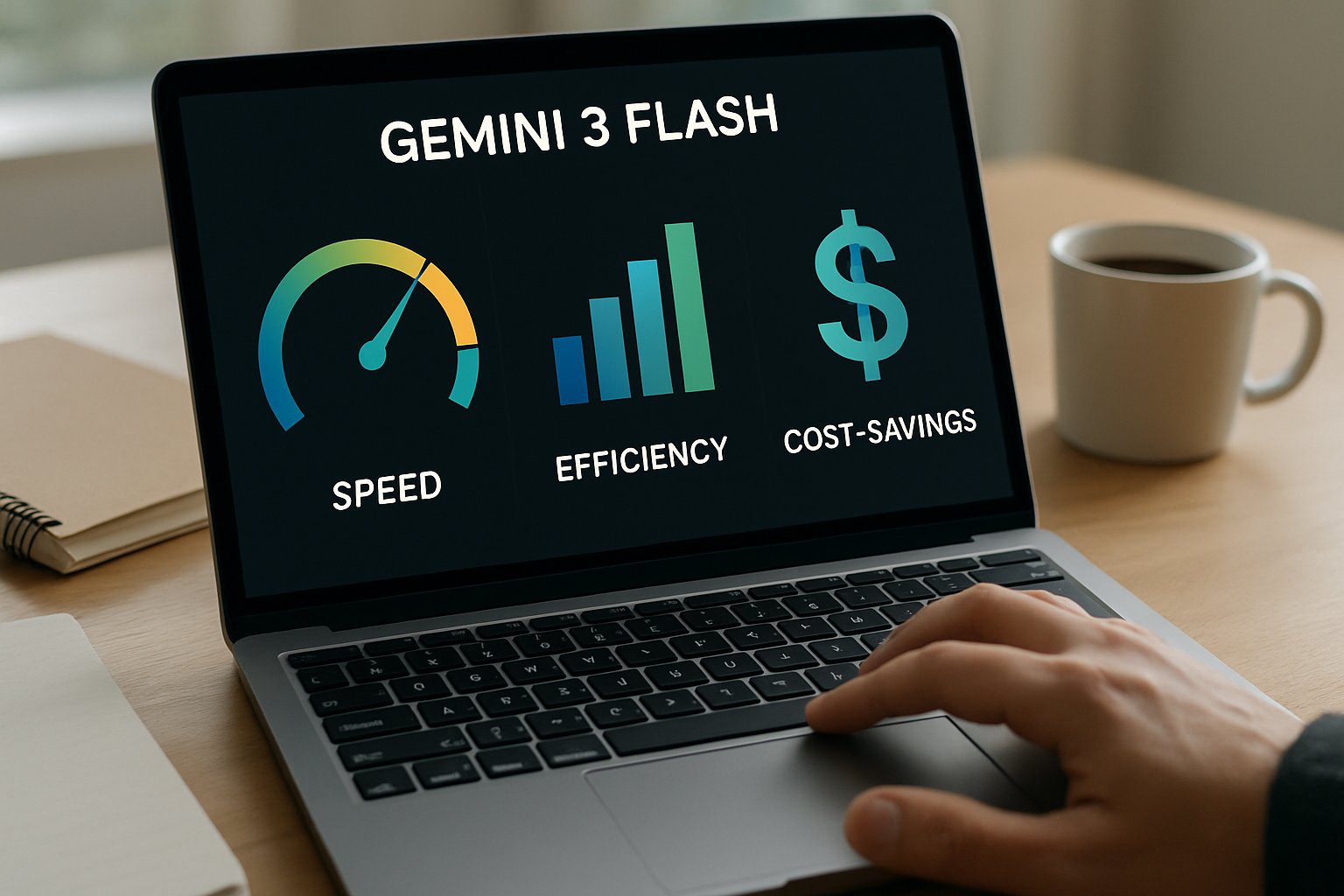
Speed, Cost, and Intelligence: How Kie.ai’s Gemini 3 Flash API Balances Performance and Budget for Developers

Speed, Cost, and Intelligence: How Kie.ai’s Gemini 3 Flash API Balances Performance and Budget for Developers

Integrating AI into applications is a balancing act between performance, cost, and intelligence. Traditionally, high-performance AI models come with steep costs
Condividi
Techbullion2026/03/12 16:55
Cash Flow Valuation HyperLiquid: Could $HYPE Reach $385 in Five Years?

Cash Flow Valuation HyperLiquid: Could $HYPE Reach $385 in Five Years?

Author: G3ronimo Compiled by: TechFlow HyperLiquid has grown into a mature crypto-native exchange, with the majority of its net fees programmatically distributed directly to token holders through an "Assistance Fund" (AF). This design makes $HYPE one of the few tokens capable of being valued based on cash flow. To date, most valuations of HyperLiquid have relied on traditional multiples, comparing it to established financial platforms like Coinbase and Robinhood, using EBITDA or revenue multiples as a reference. Unlike traditional corporate stocks, where management typically retains and reinvests earnings at their discretion, HyperLiquid systematically returns 93% of transaction fees directly to token holders through a support fund. This model creates predictable and quantifiable cash flows, making it well-suited for detailed discounted cash flow (DCF) analysis rather than static multiple comparisons. Our methodology begins by determining $HYPE's cost of capital. We then invert the current market price to determine the market-implied future earnings. Finally, we apply growth projections to these earnings streams and compare the resulting intrinsic value to today's market price, revealing the valuation gap between current pricing and fundamental value. Why choose discounted cash flow (DCF) over a multiple? While other valuation methods compare HyperLiquid to Coinbase and Robinhood via EBITDA multiples, these methods have the following limitations: The difference between the corporate and token structures: Coinbase and Robinhood are corporate stocks, whose capital allocation is guided by the board of directors, and profits are retained and reinvested by management; while HyperLiquid systematically returns 93% of trading fees directly to token holders through a relief fund. Direct Cash Flow: HyperLiquid's design generates predictable cash flows that are well-suited to DCF models, rather than static multiples. Growth and risk characteristics: DCFs are able to explicitly model different growth scenarios and risk adjustments, whereas multiples may not adequately capture growth and risk dynamics. Determining an appropriate discount rate To determine our cost of equity, we start with reference data from the public market and adjust for cryptocurrency-specific risks: Cost of equity (r) ≈ Risk-free rate + β × Market risk premium + Crypto/illiquidity premium Beta Analysis Based on regression analysis with the S&P 500: Robinhood (HOOD): Beta of 2.5, implied cost of equity of 15.6%; Coinbase (COIN): Beta of 2.0, implied cost of equity of 13.6%; HyperLiquid (HYPE): Beta is 1.38 and the implied cost of equity is 10.5%. At first glance, $HYPE appears to have a lower beta, and therefore a lower cost of equity than Robinhood and Coinbase. However, the R² value reveals an important limitation: HOOD: The S&P 500 explains 50% of its returns; COIN: The S&P 500 explains 34% of its return; HYPE: The S&P 500 only explains 5% of its returns. $HYPE’s low R² suggests that traditional stock market factors are insufficient to explain its price fluctuations, and crypto-native risk factors need to be considered. risk assessment Despite $HYPE’s lower beta, we still adjust its discount rate from 10.5% to 13% (which is more conservative compared to COIN’s 13.6% and HOOD’s 15.6%) for the following reasons: Lower governance risk: Direct programmatic distribution of 93% of fees reduces concerns about corporate governance. In contrast, COIN and HOOD do not return any earnings to shareholders, and their capital allocation is determined by management. Higher Market Risk: $HYPE is a crypto-native asset and is subject to additional regulatory and technological uncertainties. Liquidity considerations: Token markets are generally less liquid than established stock markets. Get the Market Implied Price (MIP) Using our 13% discount rate, we can reverse engineer the market’s implied earnings expectations at the current $HYPE token price of approximately $54: Current market expectations: 2025: Total revenue of $700 million 2026: Total revenue of $1.4 billion Terminal growth: 3% annual growth thereafter These assumptions yield an intrinsic value of approximately $54, which is consistent with current market prices. This suggests that the market is pricing in modest growth based on current fee levels. At this point we need to ask a question: Does the market-implied price (MIP) reflect future cash flows? Alternative growth scenarios @Keisan_Crypto presents an attractive 2-year and 5-year bull market scenario. Original tweet link: Click here Two-year bull market forecast According to @Keisan_Crypto’s analysis, if HyperLiquid achieves the following goals: Annualized fees: $3.6 billion Aid fund income: $3.35 billion (93% of fees) Result: HYPE's intrinsic value is $128 (140% undervalued at current price) Related links Five-year bull market scenario Under a five-year bull market scenario (link), he predicts that transaction fees will reach $10 billion annually, with $9.3 billion accruing to $HYPE. He assumes HyperLiquid's global market share will grow from its current 5% to 50% by 2030. Even if it doesn't reach 50% market share, these figures are still achievable with a smaller market share as global trading volumes continue to grow. Five-year bull market forecast Annualized fees: $10 billion Aid fund income: $9.3 billion Result: HYPE's intrinsic value is $385 (600% undervalued at current price) Related links While this valuation is lower than Keisan's $1,000 target, the difference stems from our assumption of normalized earnings growth at 3% annually thereafter, while Keisan's model uses a cash flow multiple. We believe using cash flow multiples to project long-term value is problematic, as market multiples are volatile and can vary significantly over time. Furthermore, the multiples themselves incorporate earnings growth assumptions, while using the same cash flow multiple five years from now as one or two years later implies that growth levels from 2030 onward will be consistent with those in 2026/2027. Therefore, the multiples are more appropriate for short-term asset pricing. However, regardless of which model is used, $HYPE remains undervalued; this is a subtle difference. Additional Value Driver: USDH Under the Native Market model, USDH will use 50% of its stablecoin revenue for buybacks similar to a bailout fund. As a result, $HYPE can increase its free cash flow by $100 million (50% of $200 million) annually. Looking ahead five years, if USDH's market capitalization reaches $25 billion (currently still one-third of USDC's, and an even smaller portion of the total stablecoin market five years from now), its annual revenue could reach $1 billion. Following the same 50% distribution model, this would generate an additional $500 million in free cash flow per year for the aid fund. This would value each token at over $400. Excluding Value Drivers: HIP-3 and HyperEVM This DCF analysis intentionally excludes two important potential value drivers that are not amenable to cash flow modeling. Clearly, these would provide additional incremental value and could therefore be evaluated separately using different valuation methodologies and then added to this valuation. Summarize Our DCF analysis indicates that if HyperLiquid can maintain its growth trajectory and market position, the $HYPE token is significantly undervalued. The token's unique feature of programmatic fee distribution makes it particularly suitable for cash flow-based valuation methodologies. Methodological Notes This analysis builds on research by @Keisan_Crypto and @GLC_Research. The DCF model is open source and can be modified at the following link: https://valypto.xyz/project/hyperliquid/oNQraQIg Market data and forecasts are subject to change, and models should be updated promptly based on the latest information.
Condividi
PANews2025/09/19 08:00
