The post Learn the Facts About XRP Tundra: How Half a Dozen Independent Audits Spell Success For TUNDRA Token appeared on BitcoinEthereumNews.com. By November 2025, XRP Tundra had already cleared six independent verifications before trading began. Its smart contracts were examined by Cyberscope, Solidproof, and FreshCoins. The developer team completed full identity verification through Vital Block KYC, and both implementations — on Solana and the XRP Ledger — were validated on-chain. This process produced a rare result in the presale market: documented proof of security and ownership before public launch. It explains why the project’s ninth presale phase has already surpassed $2 million, with token prices and emission logic confirmed by external reviewers rather than marketing teams. Here’s what those verifications actually prove — and how they define TUNDRA’s early success. Fact 1 — Tundra Operates Across Two Verified Blockchains XRP Tundra was built to run natively on both the XRP Ledger and Solana.The XRPL hosts TUNDRA-X, the governance and reserve token. Solana powers TUNDRA-S, which handles yield and utility through its high-throughput network. Both deployments have independent verification trails — each chain requires unique contract addresses, signature proofs, and validation hashes. That dual architecture gives Tundra two visible ledgers of accountability, one optimized for governance stability and the other for DeFi execution. Early audit reports confirmed that interaction between the two token systems is locked to predetermined ratios. No bridge or admin function can alter emission data or mint new supply. In technical terms, Tundra established cross-chain trust without custodial risk — a design verified in public testnets months before the presale. Fact 2 — Contract Logic Was Audited Before Public Access The first three audits examined the project’s codebase line by line. Cyberscope reviewed contract compilation and verified non-editable emission logic. Solidproof retested Cryo Vault staking functions to ensure rewards follow fixed APY schedules. FreshCoins validated distribution mechanics and confirmed that presale bonus cannot exceed declared limits. These reviews established… The post Learn the Facts About XRP Tundra: How Half a Dozen Independent Audits Spell Success For TUNDRA Token appeared on BitcoinEthereumNews.com. By November 2025, XRP Tundra had already cleared six independent verifications before trading began. Its smart contracts were examined by Cyberscope, Solidproof, and FreshCoins. The developer team completed full identity verification through Vital Block KYC, and both implementations — on Solana and the XRP Ledger — were validated on-chain. This process produced a rare result in the presale market: documented proof of security and ownership before public launch. It explains why the project’s ninth presale phase has already surpassed $2 million, with token prices and emission logic confirmed by external reviewers rather than marketing teams. Here’s what those verifications actually prove — and how they define TUNDRA’s early success. Fact 1 — Tundra Operates Across Two Verified Blockchains XRP Tundra was built to run natively on both the XRP Ledger and Solana.The XRPL hosts TUNDRA-X, the governance and reserve token. Solana powers TUNDRA-S, which handles yield and utility through its high-throughput network. Both deployments have independent verification trails — each chain requires unique contract addresses, signature proofs, and validation hashes. That dual architecture gives Tundra two visible ledgers of accountability, one optimized for governance stability and the other for DeFi execution. Early audit reports confirmed that interaction between the two token systems is locked to predetermined ratios. No bridge or admin function can alter emission data or mint new supply. In technical terms, Tundra established cross-chain trust without custodial risk — a design verified in public testnets months before the presale. Fact 2 — Contract Logic Was Audited Before Public Access The first three audits examined the project’s codebase line by line. Cyberscope reviewed contract compilation and verified non-editable emission logic. Solidproof retested Cryo Vault staking functions to ensure rewards follow fixed APY schedules. FreshCoins validated distribution mechanics and confirmed that presale bonus cannot exceed declared limits. These reviews established…

Learn the Facts About XRP Tundra: How Half a Dozen Independent Audits Spell Success For TUNDRA Token

2025/11/05 20:24
4 min di lettura
Per feedback o dubbi su questo contenuto, contattateci all'indirizzo crypto.news@mexc.com.

By November 2025, XRP Tundra had already cleared six independent verifications before trading began. Its smart contracts were examined by Cyberscope, Solidproof, and FreshCoins. The developer team completed full identity verification through Vital Block KYC, and both implementations — on Solana and the XRP Ledger — were validated on-chain.

This process produced a rare result in the presale market: documented proof of security and ownership before public launch. It explains why the project’s ninth presale phase has already surpassed $2 million, with token prices and emission logic confirmed by external reviewers rather than marketing teams. Here’s what those verifications actually prove — and how they define TUNDRA’s early success.

Fact 1 — Tundra Operates Across Two Verified Blockchains

XRP Tundra was built to run natively on both the XRP Ledger and Solana.
The XRPL hosts TUNDRA-X, the governance and reserve token. Solana powers TUNDRA-S, which handles yield and utility through its high-throughput network. Both deployments have independent verification trails — each chain requires unique contract addresses, signature proofs, and validation hashes. That dual architecture gives Tundra two visible ledgers of accountability, one optimized for governance stability and the other for DeFi execution.

Early audit reports confirmed that interaction between the two token systems is locked to predetermined ratios. No bridge or admin function can alter emission data or mint new supply. In technical terms, Tundra established cross-chain trust without custodial risk — a design verified in public testnets months before the presale.

Fact 2 — Contract Logic Was Audited Before Public Access

The first three audits examined the project’s codebase line by line. Cyberscope reviewed contract compilation and verified non-editable emission logic. Solidproof retested Cryo Vault staking functions to ensure rewards follow fixed APY schedules. FreshCoins validated distribution mechanics and confirmed that presale bonus cannot exceed declared limits.

These reviews established the framework investors now see: TUNDRA-S at $0.147 and TUNDRA-X at $0.0735 in Phase 9, backed by verified code that controls supply mathematically. All token operations occur through the audited contracts themselves, a fact confirmed across all three reports.

Fact 3 — Liquidity Stability Is Enforced Through DAMM V2

XRP Tundra uses Meteora’s Dynamic Automated Market Maker V2 (DAMM V2) for its Solana pools. The model introduces an exponential fee scheduler that begins near 50% and gradually decreases to normal trading levels over 24 hours. This setup makes front-running and early dumping economically unviable. Permanent liquidity locks keep a baseline reserve, while dynamic fees ensure organic price discovery as volume grows.

Auditors reviewed these parameters as part of the technical assessment, confirming that liquidity protection is embedded at code level, not dependent on manual control. It’s the main reason early volatility — the factor that kills most new tokens — is contained before listing.

Fact 4 — Developer Identities Are Publicly Verified

While most DeFi launches hide ownership, Tundra’s developers are registered under Vital Block’s KYC certificate. The verification links the founding entity and core engineers to corporate identifiers, matching the wallet signers that appeared in the audit records.

This dual transparency — identity plus code — creates an accountability chain rarely seen in presales. It also means any subsequent update, vault modification, or liquidity adjustment can be traced to the same verified owners. For institutional participants who require human attribution, this step turns an experimental DeFi project into a compliant-ready platform.

Fact 5 — Verified Data Confirms Market Traction

Every verified layer has translated into measurable traction. Phase 9 of the presale has exceeded $2 million in total raised capital. Each buyer receives audited token contracts, visible bonus calculations, and traceable presale receipts on-chain. The listing targets — $2.5 for TUNDRA-S and $1.25 for TUNDRA-X — are tied to the same emission logic confirmed by auditors. Those aren’t speculative numbers; they’re derived from verified token-supply math.

Even ecosystem components like Cryo Vaults and Arctic Spinner — which provide staking and instant bonus rewards — were included in audit testing to confirm fair distribution and non-editable logic. 

As analyst HotCuppaCrypto noted in a recent breakdown, audited presales are becoming the only presales institutional money will touch. XRP Tundra fits that profile: verifiable documents first, liquidity next, and staking activation scheduled only after every audit clears.

Half a dozen audits already prove success — follow XRP Tundra’s verified launch.

Buy Tundra Now: official XRP Tundra website
How To Buy Tundra: step-by-step guide
Security and Trust: Cyberscop audit
Join the Community: Telegram

Source: https://www.cryptopolitan.com/learn-the-facts-about-xrp-tundra-how-half-a-dozen-independent-audits-spell-success-for-tundra-token/
Disclaimer: gli articoli ripubblicati su questo sito provengono da piattaforme pubbliche e sono forniti esclusivamente a scopo informativo. Non riflettono necessariamente le opinioni di MEXC. Tutti i diritti rimangono agli autori originali. Se ritieni che un contenuto violi i diritti di terze parti, contatta crypto.news@mexc.com per la rimozione. MEXC non fornisce alcuna garanzia in merito all'accuratezza, completezza o tempestività del contenuto e non è responsabile per eventuali azioni intraprese sulla base delle informazioni fornite. Il contenuto non costituisce consulenza finanziaria, legale o professionale di altro tipo, né deve essere considerato una raccomandazione o un'approvazione da parte di MEXC.

Potrebbe anche piacerti

And the Big Day Has Arrived: The Anticipated News for XRP and Dogecoin Tomorrow

And the Big Day Has Arrived: The Anticipated News for XRP and Dogecoin Tomorrow

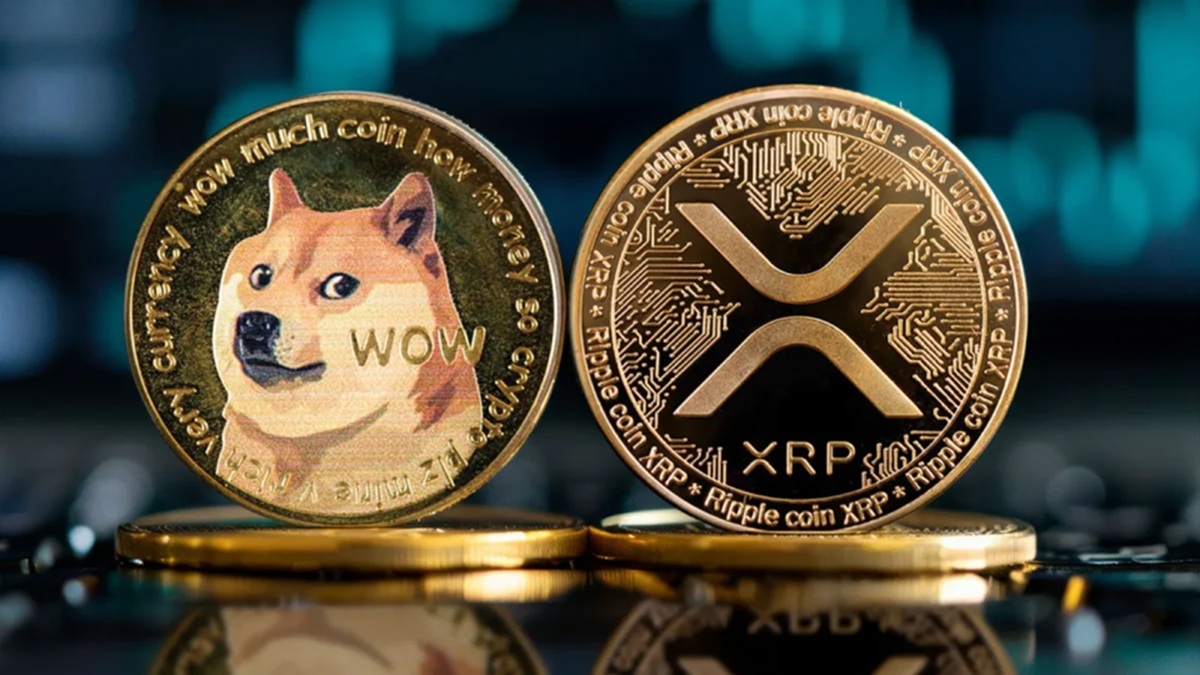
The first-ever ETFs for XRP and Dogecoin are expected to launch in the US tomorrow. Here's what you need to know. Continue Reading: And the Big Day Has Arrived: The Anticipated News for XRP and Dogecoin Tomorrow
Condividi
Coinstats2025/09/18 04:33
Swiss Franc Intervention: Critical Analysis of SNB’s 2025 Policy and Safe-Haven Resilience

Swiss Franc Intervention: Critical Analysis of SNB’s 2025 Policy and Safe-Haven Resilience

BitcoinWorld Swiss Franc Intervention: Critical Analysis of SNB’s 2025 Policy and Safe-Haven Resilience ZURICH, March 2025 – The Swiss National Bank faces mounting
Condividi
bitcoinworld2026/03/16 23:10
Cashing In On University Patents Means Giving Up On Our Innovation Future

Cashing In On University Patents Means Giving Up On Our Innovation Future

The post Cashing In On University Patents Means Giving Up On Our Innovation Future appeared on BitcoinEthereumNews.com. “It’s a raid on American innovation that would deliver pennies to the Treasury while kneecapping the very engine of our economic and medical progress,” writes Pipes. Getty Images Washington is addicted to taxing success. Now, Commerce Secretary Howard Lutnick is floating a plan to skim half the patent earnings from inventions developed at universities with federal funding. It’s being sold as a way to shore up programs like Social Security. In reality, it’s a raid on American innovation that would deliver pennies to the Treasury while kneecapping the very engine of our economic and medical progress. Yes, taxpayer dollars support early-stage research. But the real payoff comes later—in the jobs created, cures discovered, and industries launched when universities and private industry turn those discoveries into real products. By comparison, the sums at stake in patent licensing are trivial. Universities collectively earn only about $3.6 billion annually in patent income—less than the federal government spends on Social Security in a single day. Even confiscating half would barely register against a $6 trillion federal budget. And yet the damage from such a policy would be anything but trivial. The true return on taxpayer investment isn’t in licensing checks sent to Washington, but in the downstream economic activity that federally supported research unleashes. Thanks to the bipartisan Bayh-Dole Act of 1980, universities and private industry have powerful incentives to translate early-stage discoveries into real-world products. Before Bayh-Dole, the government hoarded patents from federally funded research, and fewer than 5% were ever licensed. Once universities could own and license their own inventions, innovation exploded. The result has been one of the best returns on investment in government history. Since 1996, university research has added nearly $2 trillion to U.S. industrial output, supported 6.5 million jobs, and launched more than 19,000 startups. Those companies pay…
Condividi
BitcoinEthereumNews2025/09/18 03:26