And here’s the twist: it’s rarely the ones you already know. By the time everyone and their grandma is talking […] The post Next Crypto to Explode by 2026 – Coins to Keep on Your Radar appeared first on Coindoo.And here’s the twist: it’s rarely the ones you already know. By the time everyone and their grandma is talking […] The post Next Crypto to Explode by 2026 – Coins to Keep on Your Radar appeared first on Coindoo.

Next Crypto to Explode by 2026 – Coins to Keep on Your Radar

2025/08/23 00:46

And here’s the twist: it’s rarely the ones you already know. By the time everyone and their grandma is talking about Bitcoin, Ethereum, or Solana, the biggest gains are already gone. That’s why fresh eyes should be on the new names rising quietly under the radar like EarthMeta that is often described as the next crypto coin set to explode.

So, how do you spot them before the fireworks begin? 

Why could 2025 be the turning point for altcoins?

Here’s the deal: crypto runs in cycles. It’s not random chaos (well, it looks like chaos sometimes, but it’s organized chaos). Every four years, Bitcoin goes through what’s called a halving cycle. That’s when the reward for mining Bitcoin gets cut in half, making it scarcer. Historically, this has always triggered the next big bull run.

Think of it like Starbucks announcing they’re only going to make half the amount of pumpkin spice lattes this fall. People will panic, stock up, and suddenly your $5 latte is selling on eBay for $50. Scarcity breeds demand. Same logic.

In 2025, ETFs (exchange-traded funds) will likely be fully rolled out in traditional markets, and institutions will have one foot (or maybe both feet) firmly planted in crypto. Translation: more money flooding in, more attention, more legitimacy. That sets the stage for altcoins : the smaller cryptos to shine. Because once Bitcoin soaks up the first wave of attention, people start looking at the smaller coins and asking: “Okay, where’s my 100x?” That’s when things get really interesting.

Altcoin season vs Bitcoin dominance: The big switch

Here’s something that confuses newcomers: why do some coins moon while others just sit there like that treadmill you bought in January and never used again? The answer is tied to something called Bitcoin dominance.

When Bitcoin dominance is high, it means most of the money in crypto is parked in BTC. It’s like everyone at the party is standing around one person telling the same story. But when Bitcoin dominance falls, the crowd starts wandering, giving attention to smaller projects. That’s altcoin season, the magical time when obscure coins suddenly pump like they’ve been shot out of a cannon.

So, if you want to know when the next crypto coins are set to explode by 2026, you need to watch that Bitcoin dominance chart. Once BTC cools down, altcoins get their time under the spotlight.

Post-crash accumulation: The secret ingredient

Let’s talk about something nobody likes: crashes. Yes, they hurt. Yes, they wipe out portfolios. Yes, they make you question your life choices. But here’s the irony: post-crash projects are often the ones that outperform the most.

Why? Because when the hype is gone, only serious builders stick around. The scammers pack up, the noise dies down, and what’s left are the teams quietly building solid projects without distraction. By the time the next bull run rolls in, these projects are fully developed and ready for mass adoption.

Think about Amazon after the dot-com crash. Everyone laughed, said “the internet is dead,” and dumped their shares. Fast forward a decade, and people who held onto Amazon are laughing all the way to their private islands. Same principle in crypto. Now, here’s where EarthMeta fits in. It didn’t technically launch at the bottom of a crash, but it went through the tough market conditions of April, a time when many projects stalled, slowed, or simply vanished. Instead of retreating, EarthMeta kept building, releasing features, expanding staking, and pushing forward while the market was gloomy. That resilience matters. It shows the team wasn’t here just for hype but for the long game.

This timing is important because projects that prove they can build in bad weather often grow into giants when the sun comes back out. And with EarthMeta already riding the early wave of recovery, it positions itself as a standout example of why post-crash persistence pays off.

Next Crypto to Explode by 2026 – Our List of Coins to Keep on Your Radar: 

  • EarthMeta (EMT)
  • Toncoin (TON)
  • Dogecoin (DOGE)
  • Solana (SOL)
  • XRP (XRP)
  • Cardano (ADA)
  • Hyperliquid (HYPE)

Now that we’ve mapped out the key players, let’s dive deeper into each one and explore the systems they’re powering and the roles they’re playing across the broader crypto landscape.

1. EarthMeta (EMT)

EarthMeta (EMT) is increasingly recognized as one of the most promising blockchain projects with the potential to become the next crypto coin set to explode by 2026. At its core, EarthMeta redefines the metaverse by replacing the over-saturated “land tile” model used by platforms like Decentraland and The Sandbox with a realistic, scarcity-driven system of city NFTs tied directly to real-world geography. With only about 150,000 cities available worldwide, scarcity is guaranteed, and scarcity in crypto almost always drives value.
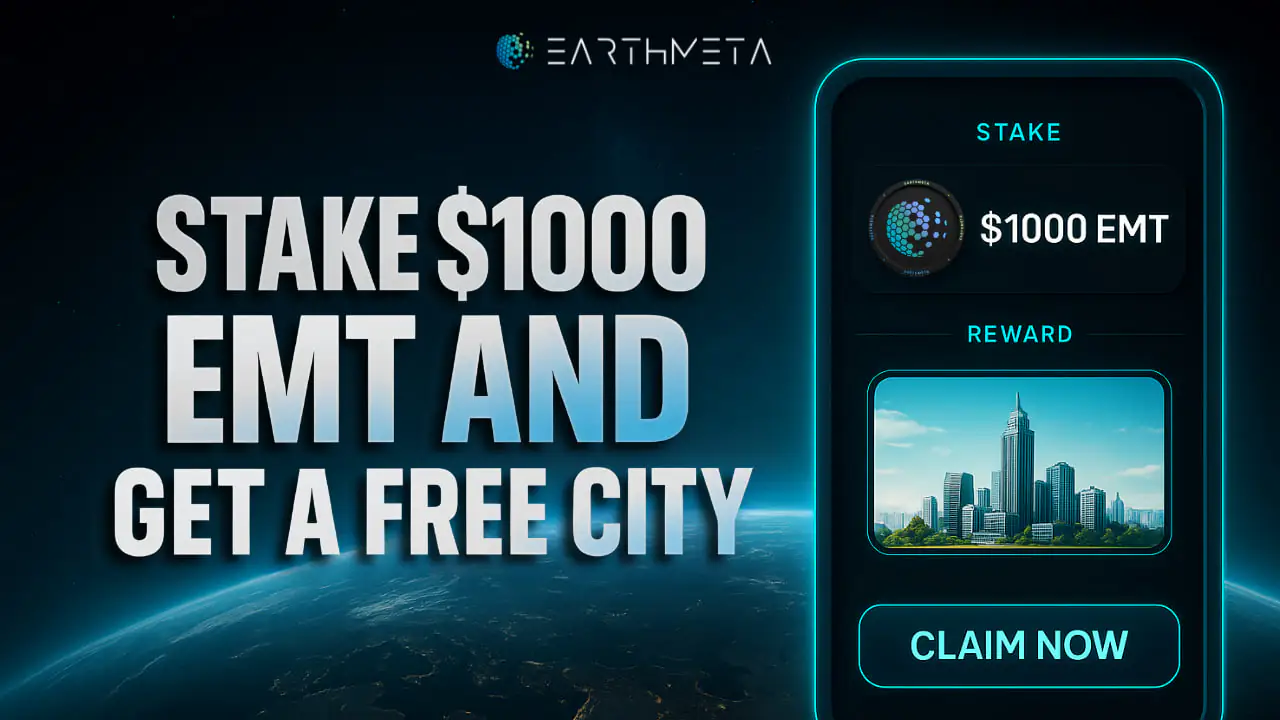
Making it the best crypto to stake, the concept of EarthMeta is simple yet powerful: by staking EMT tokens, participants unlock free city NFTs that act as rewards-generating assets. Governors collect 1% tax on every transaction within their city, while those who rise to president status in their country collect even more from nationwide activity. Unlike most metaverse projects that rely on speculation, EarthMeta cities are already being bought and sold for over $20,000, with high daily trades proving the system works.

What makes EarthMeta stand out is its dual reward system: staking EMT provides traditional APY yields, while also granting users virtual land that can appreciate massively in utility. This model means users aren’t betting only on token growth, they are tied to an asset-backed economy with recurring transaction revenues. It’s part DeFi, part metaverse, and part digital nation-state, offering more dimensions than most crypto projects on the market.

Looking ahead, EarthMeta’s roadmap promises exponential utility growth. Soon, it will launch 3D building tools so governors can develop their cities, increasing engagement and competition. AR and VR integrations are planned, bringing digital cities closer to the real world and creating immersive ownership experiences. On top of this, EarthMeta’s DAO governance is already allowing city owners to propose and vote on proposals such as border adjustments, making it one of the few projects where token holders directly shape the economy.

With its growing community, successful marketplace activity, and a clear vision, EarthMeta checks the boxes users look for when identifying the next breakout project. Just as Solana in 2020 or Ethereum in 2016 seemed under the radar before their massive runs, EarthMeta today represents that “sweet spot” of timing: launched, growing, but not yet mainstream.

By 2026, EarthMeta could be remembered as the project that combined scarcity, governance, and real-world mapping to deliver one of the biggest success stories in crypto. For those searching for the next crypto coin set to explode, EarthMeta is a name that cannot be ignored.

2. Toncoin (TON)

Most crypto projects aim to reach users. Being second on our list of next crypto that might explode, Toncoin is already inside where users are. Telegram, one of the world’s largest messaging platforms, has integrated Toncoin directly, transforming chat into a gateway for payments, apps, identity, and automation. That native access isn’t theoretical, it’s being rolled out across hundreds of millions of users.
Toncoin stands apart by turning messaging into infrastructure. Every feature from its microtransactions and DNS to its encrypted storage and VPN alternatives is designed for frictionless Web3 use inside Telegram.

Here’s what makes Toncoin hard to ignore by 2026:

  • Native access to Telegram’s user base without needing separate wallets or browsers
  • Scalable architecture built on dynamic sharding faster, parallel chains that auto-adjust
  • Real-world services like decentralized payments, VPN (TON Proxy), file storage, and domain names
  • Developer incentives through built-in smart contract tools and dApp frameworks
  • USDT integration lets users send stablecoin payments as easily as a text

If crypto is becoming more about integration than isolation, Toncoin is already where the next generation of usage is forming. It’s not trying to be a future gateway, it’s already one.

3. Dogecoin (DOGE)

What started as a parody of crypto culture is now one of its most recognized symbols. But Dogecoin isn’t just surviving because of its humor or history, it’s still in the conversation because people keep using it. With a fast block time, low fees, and wide recognition, it’s become a real transactional layer for online communities and even businesses.
DOGE remains relevant because of three key things: accessibility, cultural recognition, and now, growing infrastructure. With Libdogecoin, developers can now build DOGE-compatible tools without deep crypto knowledge. This shift makes it easier to turn DOGE into an actual building block.

Elon Musk’s continued endorsement and its integration into payment options for companies like Tesla, AMC, and Twitch give DOGE a unique place: a coin with real-world exposure.

The relaunch of the Dogecoin Foundation, now supported by figures like Vitalik Buterin and Jared Birchall (for Musk), signals that this isn’t a meme on autopilot, it’s a project with a roadmap and backing.

By 2026, Dogecoin may not be the most technically complex protocol. But if crypto becomes about usage and familiarity, it’s one of the few that already has both and knows what to do with them, making it a top altcoin to watch in 2026 and still one of the best meme coins with real-world utility.

4. Solana (SOL)

Not every protocol tries to reinvent the wheel, some just focus on making it faster. Solana does that by combining proof-of-history with proof-of-stake, allowing it to process transactions at a speed few chains can match. That’s not just a stat, it’s a design choice that enables real-time dApps, scalable NFT markets, and low-latency DeFi, making it one of the top cryptos to watch before the next bull run.
What makes Solana relevant heading into 2026 isn’t just speed, it’s the ecosystem forming around it. From high-volume exchanges to gaming platforms, developers are choosing Solana because it lets them build fast, update quickly, and reach users without slowing down. This developer migration is one reason why analysts often point to it as a cryptocurrency with high potential growth in the coming cycle.

The protocol isn’t perfect; past outages have raised concerns, but it has continued to iterate, grow, and ship. New tooling, community expansion, and integration with institutional platforms suggest it’s positioning for long-term utility.

SOL is more than a token, it’s the fuel for a smart contract network focused on low cost, high performance, and open access. As demand for scalable chains increases, Solana’s architecture remains one of the few that can handle scale without sacrificing throughput.

In a market moving from concept to functionality, Solana is already operating where others are still testing.

5. XRP (XRP)

While many tokens chase innovation, XRP quietly operates where it matters most, moving value across borders at scale. With its own blockchain, the XRP Ledger (XRPL), this system is built not just for speed, but for practical utility. Transactions settle in seconds, fees remain minimal, and the network consumes far less energy than traditional proof-of-work chains, which is why it’s often highlighted among the best cryptocurrencies for cross-border payments.

What positions XRP for continued relevance is its focus on financial-grade architecture. The XRPL doesn’t just process transactions it enables tokenization, cross-currency transfers, and now serves as a foundation for stablecoins and CBDC pilots. DDevelopers can deploy assets, build custom rules, or create decentralized exchanges all from a chain that has functioned since 2012 without a halt, making it one of the top blockchain projects for institutional adoption.

Its unique Federated Consensus model removes mining from the equation. Instead, validators across institutions, universities, and independent operators reach agreement efficiently ensuring reliability without centralized control.

Ripple’s ongoing case with the SEC remains a major storyline, but regardless of the legal outcome, the XRPL continues to evolve. With expanding integrations and developer tools, XRP is shaping up to be not just fast but adaptable.

By 2026, as blockchain leans into regulated infrastructure and scalable value movement, XRP’s long-term foundation may prove more relevant than ever.

6. Cardano (ADA)

Rather than rushing to market, Cardano took the longer route peer-reviewed, academically driven, and built to evolve. Its layered architecture and use of the Ouroboros proof-of-stake protocol set it apart as a chain designed for sustainability and technical resilience.
With smart contract support now live and development tooling expanding, Cardano is shifting from potential to execution. From identity verification tools to traceable supply chains, Cardano’s framework is already being deployed across sectors where blockchain’s core strengths integrity and transparency can be put to use. This focus on real-world integration is why ADA often ranks high among top altcoins for utility and scalability.

The platform’s phased approach, including the Shelley, Goguen, and Basho upgrades, reflects its goal: create a decentralized ecosystem where applications and governance evolve together. Tools like Plutus, its smart contract language, are designed to be secure yet flexible enabling developers to build with long-term reliability in mind.

ADA, the native asset, enables participation in the network’s consensus and governance. With high developer activity and an expanding community, Cardano’s steady progress may position it as a critical infrastructure layer as more use cases move on-chain.

By 2026, as Web3 leans toward durable, scalable systems, Cardano’s deliberate pace may prove its greatest strength not flashy, but fundamentally sound.

7. Hyperliquid (HYPE)

Hyperliquid doesn’t follow the traditional playbook; it rewrites it entirely. Built as its own Layer 1 blockchain, the protocol focuses on performance, transparency, and seamless Perpetual Futures trading. Rather than relying on off-chain components like most decentralized exchanges, Hyperliquid operates a fully on-chain order book, making trades verifiable and tamper-resistant directly on the protocol, a feature that’s fueling its reputation as one of the best new crypto projects for 2026.
Its consensus mechanism, HyperBFT, enables fast finality and high throughput, essential for real-time, high-leverage trading. The platform removes Gas Fees, supports up to 50x leverage, and provides instant trade execution, all critical for active traders looking for speed and clarity. This performance-driven model is why some analysts call HYPE a next altcoin set to explode in the derivatives market.

The system supports EVM compatibility and a growing set of on-chain primitives like HIP-1 and HIP-2 assets, creating space for more apps to build directly into its architecture. The development team comes from backgrounds at MIT, Harvard, and Caltech, and the project remains self-funded, maintaining strategic freedom.

As one of the few chains offering native perpetual futures with zero-cost trading and complete on-chain transparency, Hyperliquid is positioned as a new infrastructure layer not just a DEX, but a trading-centric chain. With rising volume and strong user engagement, its trajectory suggests broader adoption ahead of 2026.

Conclusion: Next crypto coins set to explode by 2026

If there’s one thing history teaches us, it’s that the next crypto coins set to explode by 2026 won’t necessarily be the ones already dominating headlines today. By the time Bitcoin and Ethereum absorb the spotlight, the real outsized returns are often hiding in altcoins still building under the radar. That’s why projects like EarthMeta, Toncoin, Dogecoin, Solana, XRP, Cardano, and Hyperliquid stand out : not just because they’re trending, but because they bring real-world use cases, communities, and infrastructure that could drive adoption in the next cycle.

From best meme coins with real-world utility like Dogecoin, to cryptocurrencies for cross-border payments like XRP, to top altcoins for scalability and utility like Cardano and Solana, each of these projects represents a different pillar of where crypto is heading. And then there are the newcomers like EarthMeta redefining digital ownership, or Hyperliquid creating a next-generation blockchain for derivatives trading : proof that innovation in crypto is far from slowing down.

As 2025 leads into the next halving-driven bull run, the key is positioning early. Watching Bitcoin dominance, tracking altcoin season, and identifying low cap cryptos with high potential growth will be what separates those who simply ride the wave from those who catch the breakout moments.

By 2026, the list of winners may look very different from today’s rankings. But if history repeats, it will be the next altcoins to watch before the bull run, not the obvious giants, that deliver life-changing gains.

Which crypto coin is set to explode by 2026?

While expert commentary varies, EarthMeta (EMT) remains our pick as the most compelling candidate based on its scarcity-driven metaverse model, dual utility through staking and virtual land ownership, and growing marketplace activity. Its trajectory suggests it could become one of the strongest altcoins to watch before the next bull run.

What’s the next big cryptocurrency for 2026?

The next big cryptocurrency is likely to come from projects that mix real-world use cases with active communities. EarthMeta is positioned first, as it blends DeFi, metaverse ownership, and governance in a way few others do. Alongside EMT, experts often point to Solana for scalability, XRP for cross-border payments, and Dogecoin for mass adoption.

What are experts predicting for top crypto in 2026?

Most experts predict Bitcoin and Ethereum will continue to dominate, but the real growth may come from altcoins. Still a crypto under $1, EarthMeta is increasingly highlighted as a top crypto to watch by 2026, since it has proven resilience post-crash and offers multiple income streams for users. Alongside it, Solana, Cardano, and Hyperliquid are also frequently mentioned as likely leaders in the next cycle.


This publication is sponsored. Coindoo does not endorse or assume responsibility for the content, accuracy, quality, advertising, products, or any other materials on this page. Readers are encouraged to conduct their own research before engaging in any cryptocurrency-related actions. Coindoo will not be liable, directly or indirectly, for any damages or losses resulting from the use of or reliance on any content, goods, or services mentioned. Always do your own research.

The post Next Crypto to Explode by 2026 – Coins to Keep on Your Radar appeared first on Coindoo.

Disclaimer: The articles reposted on this site are sourced from public platforms and are provided for informational purposes only. They do not necessarily reflect the views of MEXC. All rights remain with the original authors. If you believe any content infringes on third-party rights, please contact service@support.mexc.com for removal. MEXC makes no guarantees regarding the accuracy, completeness, or timeliness of the content and is not responsible for any actions taken based on the information provided. The content does not constitute financial, legal, or other professional advice, nor should it be considered a recommendation or endorsement by MEXC.

You May Also Like

What can save you, my crypto world?

What can save you, my crypto world?

Author: Nancy, PANews “I wasted eight years of my life in the crypto industry.” Aevo co-founder Ken Chan published an article denouncing the crypto industry as having degenerated into a "super casino," a post that quickly went viral in online communities both domestically and internationally. Behind the millions of views, the community debate exploded. Supporters saw it as a wake-up call, bursting the bubble, while opponents viewed it as a betrayal by those who had already benefited. Putting aside the emotional outbursts, this debate reflects the collective anxiety and cyclical confusion within the industry currently facing liquidity shortages and a narrative vacuum. Turned into a super casino? What's wrong with the crypto ecosystem? In this lengthy article, Ken Chan candidly admits that the past eight years have been a journey from idealism to disillusionment. As a libertarian and programmer deeply influenced by the works of Ayn Rand, he was a staunch believer in the cypherpunk spirit, viewing Bitcoin as "a private bank for the rich." However, after eight years of full-time dedication to the industry, he painfully admitted that even though he had made money, he still felt that those eight years of his youth had been completely wasted. The narrative most often uttered by industry practitioners is "completely replacing the existing financial system with blockchain," but this is merely a propaganda slogan; they are simply maintaining the world's largest online casino, operating 24/7. This misperception stems from a drastically distorted industry incentive mechanism. In reality, no one cares about genuine technological iteration. Market participants are blindly pouring funds into the next Layer 1 public chain, attempting to bet on the next Solana. This speculative mentality has fueled an inflated market capitalization of hundreds of billions of dollars. In fact, there are quite a few zombie public blockchains nowadays. Even emerging high-performance blockchains that have raised tens or even hundreds of millions of dollars are not immune to the airdrop craze and incentive subsidy activities, leaving very few real users. This is like building countless highways in a desert, but there are no cities or factories along the way, only a group of speculators reselling land. The data also confirms this predicament. According to DeFiLlama, in the past 24 hours, only 15 chains had on-chain DEX transaction volumes exceeding 10 million, and only 4 chains met the requirement of having millions of daily active addresses. On this "ghost town" of over-saturated infrastructure, Ken argues that spot DEXs, perpetual contracts, prediction markets, and the Meme coin platform are essentially gambling tools. For example, the former Meme culture has been replaced by an industrialized "coin issuance pipeline," becoming an on-chain casino of extreme PvP; and the frequent interactions across many applications are not driven by genuine needs, but rather by the pursuit of points for airdrops. As Ken points out, while VCs can write 5,000-word essays outlining grand visions, the reality is that these games are constantly consuming the existing funds of retail and institutional investors. What makes Ken Chan even more uncomfortable is the industry's subversion of common business sense. Here, making money through token issuance, market making, and profit-taking is far easier than refining a product. The market is flooded with tokens that have "high FDV and low liquidity," projects with no real revenue yet boasting valuations of billions of dollars, and so-called governance tokens that are nothing more than liquidity tools for investors to exit. This environment where bad money drives out good not only deprives practitioners of the ability to identify sustainable businesses but also instills a highly toxic "financial nihilism" in the younger generation. With traditional assets becoming increasingly unaffordable, Generation Z is exhibiting its own form of "financial rebellion." According to a recent Financial Times article, the deteriorating housing affordability in the United States is profoundly changing Generation Z's financial and consumption behaviors, even driving some young people to speculate in cryptocurrencies and generating feelings of economic nihilism. Besides cryptocurrencies, trendy stocks, collectible toys, leveraged ETFs, and prediction markets are all financial trends among young people. Ken Chan's accusations resonated with many. For example, Tangent founder Jason Choi lamented that we already have countless low-cost/fast blockchains, lax regulatory systems, massive overfunding since 2017, and thousands of developers delivering smart contracts over the past decade. Yet, an AI company is about to IPO at a price exceeding the total market capitalization of all cryptocurrencies except Bitcoin and stablecoins. Inversion Capital founder Santiago Roel Santos points out that this is a sobering reminder of reality for the entire industry. Today, the crypto industry has only about 40 million monthly active users (MAU), while Facebook had 845 million MAU at its IPO and a market capitalization of approximately $100 billion; OpenAI currently has about 800 million MAU and its most recent valuation was $500 billion. To have a $10 trillion asset class, we need at least a billion users. Crypto KOL YQ cited an older article stating that many crypto OGs have chosen to leave the market after questioning their initial beliefs. In the current cycle, highly speculative projects like memes, perpetual tokens, and prediction markets remain resilient, while the value of many infrastructure and social projects is increasingly difficult to prove. This is undoubtedly the most difficult phase for startups, VCs, traders, and users, and the market is rife with "pump and dump" schemes using leveraged perpetual tokens to manipulate small-cap or older coins. In this environment, it's crucial to acknowledge the facts and accept reality. Whether you're a VC or an entrepreneur, the only way to survive is to continuously adjust your direction and consistently deliver products. Navigating the cycles of crypto sentiment, "the forest needs to be cleared of dead trees." Many industry professionals believe that Ken Chan's negative emotions are essentially a typical "retreat the ladder after getting ashore" mentality. As a beneficiary of the existing system, he made his fortune in the crypto market, yet he turned around and criticized this ladder to wealth as dirty. At the same time, his aversion to financial nihilism ignored the fact that for countless ordinary people around the world, this bubble-filled market remains one of the few channels for upward social mobility. Moreover, AEVO's price has already fallen by more than 98% from its all-time high. Regarding the current predicament of the crypto market, Ken believes the industry is merely spinning its wheels, but many proponents see it as a necessary growing pain in technological development. We cannot negate the entire financial city that is rising from the ground just because we see people losing money in a casino. If we turn our attention to high-inflation countries like Argentina, Turkey, and Nigeria, we find that stablecoins such as USDT and USDC have become de facto "hard currency." Local people rely on them to protect their meager savings from hyperinflation, and this financial system has effectively served tens of millions of people. Meanwhile, Bitcoin is no longer just a geek's toy; it's becoming part of the balance sheets of sovereign wealth funds, national government reserves (such as in El Salvador and Bhutan), and top hedge funds. Ethereum's technical components have been established as a global public blockchain standard and have gained recognition from Wall Street capital. Furthermore, with assets such as stocks, bonds, and real estate rapidly being put on-chain, financial efficiency is experiencing a substantial leap. On the technological front, countless developers are making breakthroughs in cutting-edge fields such as zero-knowledge proofs (ZK), censorship-resistant networks, and quantum resistance. These are the real undercurrents behind the noisy crypto market. Regarding the "casino analogy," Haseeb, a partner at Dragonlfy, points out that the cryptocurrency space has never lacked casinos. The first blockbuster application on Bitcoin was Satoshi Dice (2012). The first blockbuster smart contract on Ethereum was King of the Ether Throne (2015), which was essentially a Ponzi scheme. Once programmable money exists, people's first instinct is always to bet and play games—this is human nature. The crypto world has always had its hottest casinos: ICO casinos, DeFi, NFTs, and now MEME coins. The forms change, but the essence remains the same. While casinos are glamorous and attract attention on social media, focusing solely on their superficiality will cause you to miss the more important stories. He further points out that cryptocurrencies are becoming a superior financial vehicle, reshaping the nature of money and subtly altering the power relationship between individuals and governments. Bitcoin has begun to challenge national sovereignty, with governments incorporating it into their balance sheets; stablecoins are influencing monetary policy, prompting central banks to scramble to respond; and the scale and value of permissionless financial protocols like Uniswap and AAVE have surpassed many unicorn fintech companies. The world is undergoing a profound shift around cryptocurrencies. “This transformation is slower than many anticipated, but that’s how technology diffusion always is,” Haseeb stated. Three years after ChatGPT’s launch, generative AI still hasn’t been reflected in GDP or employment data; the Industrial Revolution took 50 years to truly impact productivity; and the widespread adoption of the internet took over 20 years. Expecting it to replace the world’s most regulated financial system within a mere five years is unrealistic. If you’re frustrated because you didn’t become rich from participating in a MEME project, take a deep breath; the industry doesn’t owe anyone wealth. In fact, pessimism and a sense of “mental surrender” on the timeline aren’t necessarily bad things. Pantera Capital partner Mason Nystrom also believes that a pessimistic view of cryptocurrencies and their social value is wrong. While speculation and abuse exist in the cryptocurrency space, and its casinos are real and large-scale, with many people losing money at the tables, it also contains a great deal of overlooked positive social value. He explained that Bitcoin has become a global, non-sovereign asset that anyone in the world with an internet connection can hold. It provides a veto/exit mechanism for people worldwide, transferring economic control from nations to individuals. Stablecoins offer more efficient and secure financial services to people around the world, with faster disbursement, higher returns, and lower costs. The lack of returns from banks for depositors, high fees for cross-border remittances, and the 2.9% transaction fee for e-commerce are all being reshaped by stablecoins, bringing tangible social value. Lending platforms like Aave and Morpho enable people worldwide to access over-collateralized loans. The low-collateral lending market will further unleash enormous social benefits, reduce capital costs, and create significant positive externalities. Furthermore, blockchain will enable global users to access previously restricted financial products such as stocks, bonds, insurance, and credit. Permissionless financing allows any good idea to gain support based on its own value. A more transparent, efficient, and low-cost market is itself an improvement for society. Mason Nystrom also stated that cryptocurrencies are building a completely new financial system. Some will build casinos, some will build payment networks, some will build speculative instruments, and others will build inclusive credit infrastructure. This new financial system will not be perfect, but it will far surpass the current state. If we only see the casino aspect of cryptocurrencies, perhaps we should take a step back and look at all the benefits that cryptocurrencies have brought to and will continue to bring to society from a more macro perspective. The crypto industry is currently experiencing a low point, and Ken's post is less a reflection and more an emotional outpouring after a failed startup. Projects like Aevo are not uncommon in their difficulties; this is precisely the survival of the fittest the industry is undergoing. In the past few years, the sector has seen an oversupply of projects lacking real value and unable to deliver viable products. The current pain is simply squeezing out the bubble that has accumulated. Just as forests need to be regularly cleared of dead trees to prevent decay from spreading, the same applies to the crypto industry. Let those who are weary, lost, or only here for speculation leave naturally, and the air will become clear. Either change your mindset and refocus on the future, or make way for those still building. This journey has just begun and is far from over.
Share
PANews2025/12/08 18:28
Lovable AI’s Astonishing Rise: Anton Osika Reveals Startup Secrets at Bitcoin World Disrupt 2025

Lovable AI’s Astonishing Rise: Anton Osika Reveals Startup Secrets at Bitcoin World Disrupt 2025

BitcoinWorld Lovable AI’s Astonishing Rise: Anton Osika Reveals Startup Secrets at Bitcoin World Disrupt 2025 Are you ready to witness a phenomenon? The world of technology is abuzz with the incredible rise of Lovable AI, a startup that’s not just breaking records but rewriting the rulebook for rapid growth. Imagine creating powerful apps and websites just by speaking to an AI – that’s the magic Lovable brings to the masses. This groundbreaking approach has propelled the company into the spotlight, making it one of the fastest-growing software firms in history. And now, the visionary behind this sensation, co-founder and CEO Anton Osika, is set to share his invaluable insights on the Disrupt Stage at the highly anticipated Bitcoin World Disrupt 2025. If you’re a founder, investor, or tech enthusiast eager to understand the future of innovation, this is an event you cannot afford to miss. Lovable AI’s Meteoric Ascent: Redefining Software Creation In an era where digital transformation is paramount, Lovable AI has emerged as a true game-changer. Its core premise is deceptively simple yet profoundly impactful: democratize software creation. By enabling anyone to build applications and websites through intuitive AI conversations, Lovable is empowering the vast majority of individuals who lack coding skills to transform their ideas into tangible digital products. This mission has resonated globally, leading to unprecedented momentum. The numbers speak for themselves: Achieved an astonishing $100 million Annual Recurring Revenue (ARR) in less than a year. Successfully raised a $200 million Series A funding round, valuing the company at $1.8 billion, led by industry giant Accel. Is currently fielding unsolicited investor offers, pushing its valuation towards an incredible $4 billion. As industry reports suggest, investors are unequivocally “loving Lovable,” and it’s clear why. This isn’t just about impressive financial metrics; it’s about a company that has tapped into a fundamental need, offering a solution that is both innovative and accessible. The rapid scaling of Lovable AI provides a compelling case study for any entrepreneur aiming for similar exponential growth. The Visionary Behind the Hype: Anton Osika’s Journey to Innovation Every groundbreaking company has a driving force, and for Lovable, that force is co-founder and CEO Anton Osika. His journey is as fascinating as his company’s success. A physicist by training, Osika previously contributed to the cutting-edge research at CERN, the European Organization for Nuclear Research. This deep technical background, combined with his entrepreneurial spirit, has been instrumental in Lovable’s rapid ascent. Before Lovable, he honed his skills as a co-founder of Depict.ai and a Founding Engineer at Sana. Based in Stockholm, Osika has masterfully steered Lovable from a nascent idea to a global phenomenon in record time. His leadership embodies a unique blend of profound technical understanding and a keen, consumer-first vision. At Bitcoin World Disrupt 2025, attendees will have the rare opportunity to hear directly from Osika about what it truly takes to build a brand that not only scales at an incredible pace in a fiercely competitive market but also adeptly manages the intense cultural conversations that inevitably accompany such swift and significant success. His insights will be crucial for anyone looking to understand the dynamics of high-growth tech leadership. Unpacking Consumer Tech Innovation at Bitcoin World Disrupt 2025 The 20th anniversary of Bitcoin World is set to be marked by a truly special event: Bitcoin World Disrupt 2025. From October 27–29, Moscone West in San Francisco will transform into the epicenter of innovation, gathering over 10,000 founders, investors, and tech leaders. It’s the ideal platform to explore the future of consumer tech innovation, and Anton Osika’s presence on the Disrupt Stage is a highlight. His session will delve into how Lovable is not just participating in but actively shaping the next wave of consumer-facing technologies. Why is this session particularly relevant for those interested in the future of consumer experiences? Osika’s discussion will go beyond the superficial, offering a deep dive into the strategies that have allowed Lovable to carve out a unique category in a market long thought to be saturated. Attendees will gain a front-row seat to understanding how to identify unmet consumer needs, leverage advanced AI to meet those needs, and build a product that captivates users globally. The event itself promises a rich tapestry of ideas and networking opportunities: For Founders: Sharpen your pitch and connect with potential investors. For Investors: Discover the next breakout startup poised for massive growth. For Innovators: Claim your spot at the forefront of technological advancements. The insights shared regarding consumer tech innovation at this event will be invaluable for anyone looking to navigate the complexities and capitalize on the opportunities within this dynamic sector. Mastering Startup Growth Strategies: A Blueprint for the Future Lovable’s journey isn’t just another startup success story; it’s a meticulously crafted blueprint for effective startup growth strategies in the modern era. Anton Osika’s experience offers a rare glimpse into the practicalities of scaling a business at breakneck speed while maintaining product integrity and managing external pressures. For entrepreneurs and aspiring tech leaders, his talk will serve as a masterclass in several critical areas: Strategy Focus Key Takeaways from Lovable’s Journey Rapid Scaling How to build infrastructure and teams that support exponential user and revenue growth without compromising quality. Product-Market Fit Identifying a significant, underserved market (the 99% who can’t code) and developing a truly innovative solution (AI-powered app creation). Investor Relations Balancing intense investor interest and pressure with a steadfast focus on product development and long-term vision. Category Creation Carving out an entirely new niche by democratizing complex technologies, rather than competing in existing crowded markets. Understanding these startup growth strategies is essential for anyone aiming to build a resilient and impactful consumer experience. Osika’s session will provide actionable insights into how to replicate elements of Lovable’s success, offering guidance on navigating challenges from product development to market penetration and investor management. Conclusion: Seize the Future of Tech The story of Lovable, under the astute leadership of Anton Osika, is a testament to the power of innovative ideas meeting flawless execution. Their remarkable journey from concept to a multi-billion-dollar valuation in record time is a compelling narrative for anyone interested in the future of technology. By democratizing software creation through Lovable AI, they are not just building a company; they are fostering a new generation of creators. His appearance at Bitcoin World Disrupt 2025 is an unmissable opportunity to gain direct insights from a leader who is truly shaping the landscape of consumer tech innovation. Don’t miss this chance to learn about cutting-edge startup growth strategies and secure your front-row seat to the future. Register now and save up to $668 before Regular Bird rates end on September 26. To learn more about the latest AI market trends, explore our article on key developments shaping AI features. This post Lovable AI’s Astonishing Rise: Anton Osika Reveals Startup Secrets at Bitcoin World Disrupt 2025 first appeared on BitcoinWorld.
Share
Coinstats2025/09/17 23:40


