

Trump’s Fed Nomination: Mixed Signals on Bitcoin, US Liquidity
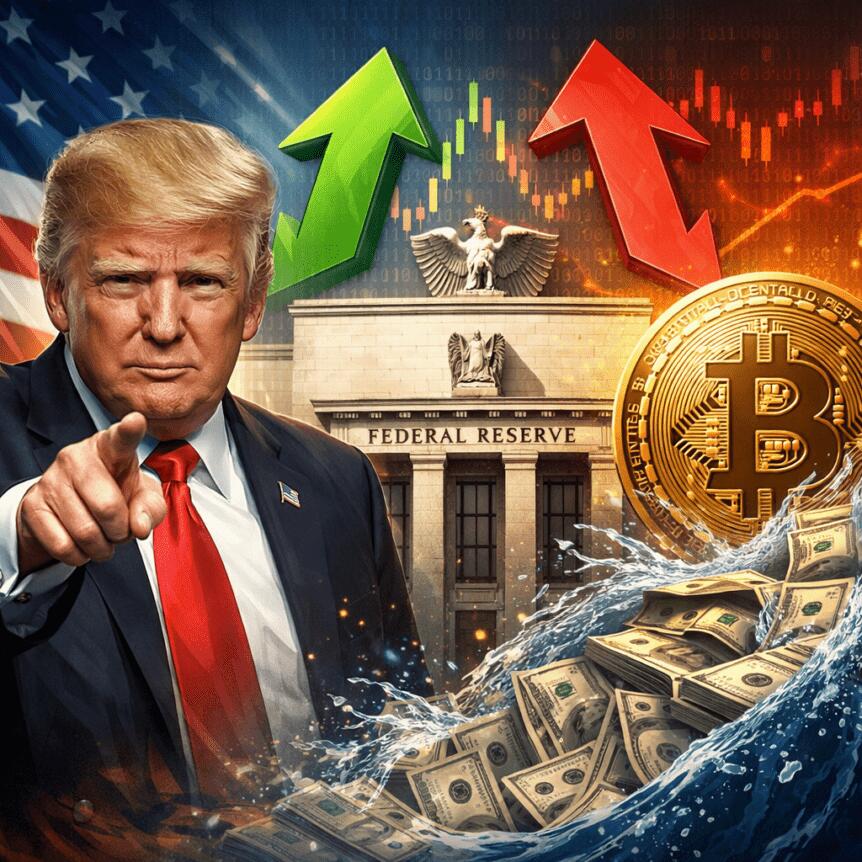
President Donald Trump has tapped former Federal Reserve governor Kevin Warsh to lead the central bank, a move that has rippled through crypto markets and liquidity expectations in the U.S. ahead of a potential Senate confirmation. The nomination was announced on Friday, with Warsh positioned to succeed Jerome Powell when Powell’s term ends in May, pending congressional approval. The prospect of Warsh at the helm arrives as markets wrestle with a mixed macro backdrop: a Fed that could continue a gradual easing trajectory, even as liquidity conditions remain a dominant driver for risk assets, including digital currencies. In this environment, crypto traders are weighing whether Warsh’s stance on balance sheet policy could tilt liquidity in or out of the market and how that could influence price action across the sector.
Key takeaways
- Warsh’s nomination signals a possible continuation of an easing-friendly trajectory, but his approach to the balance sheet could complicate liquidity expectations for risk assets, including Bitcoin (CRYPTO: BTC).
- Market liquidity remains a critical variable for crypto traders, with Bitcoin and other assets often reacting more to liquidity shifts than to the Fed Funds Rate alone.
- Warsh’s reportedly skeptical posture on balance-sheet expansion may translate into a lower-liquidity environment if adhered to, potentially weighing on risk assets and precious metals.
- Fed rate expectations appear mixed: most traders expect no rate change at the March 18 meeting, while a growing share anticipates a 25-basis-point cut by the June 17 gathering.
- Over the recent weekend, crypto markets retraced significantly, losing roughly $250 billion in aggregate market capitalization as part of a broader risk-off move across stocks and commodities driven by liquidity worries.
Sentiment: Neutral
Price impact: Negative. A liquidity-focused sell-off coincided with Warsh’s nomination, underscoring how liquidity conditions are shaping crypto and risk-asset pricing more than policy signals themselves.
Market context: The nomination arrives as traders parse whether the Fed will balance rate relief with restraint on its balance sheet, a dynamic that has historically shaped liquidity conditions impacting crypto liquidity, risk assets, and traditional markets alike. Analysts have emphasized that while central-bank policy remains important, liquidity regimes can drive outsized moves in crypto, particularly during periods of policy ambiguity or fiscal-mueled uncertainty.
Why it matters
The coming confirmation fight over Kevin Warsh’s candidacy to chair the Federal Reserve stands at the intersection of policy and liquidity—a nexus that has become a focal point for crypto traders. Warsh’s background includes a formidably hawkish stance on some policy levers, yet his reported skepticism about expanding the central bank’s balance sheet raises the possibility of a more conservative approach to liquidity provision. For a market that has shown acute sensitivity to liquidity shifts, that stance could imply more cautious conditions for speculative assets, including Bitcoin (CRYPTO: BTC).
Crypto markets have already been caught in a broader risk-off wave that spilled into digital assets over the weekend, with analysts citing a liquidity drought as a major driver behind the drawdown in crypto as well as equities and precious metals. The pullback and the subsequent debate about Warsh’s influence on the Fed’s balance-sheet trajectory underscore a broader narrative: in the current regime, liquidity is a primary determinant of price action. If Warsh pushes for balance-sheet shrinkage or slower expansion, traders could face a less forgiving environment where even modest liquidity withdrawals produce outsized price moves in high-beta assets, including major cryptocurrencies.
On balance, investors are watching the policy conversation through the prism of liquidity rather than short-term rate moves alone. A prominent view circulating among market watchers is that a more cautious balance-sheet stance could offset some of the immediate rate-cut expectations, potentially delivering a “lower-liquidity but higher-volatility” regime for crypto markets. That dynamic is already being reflected in the way traders respond to every whisper of central-bank maneuvering, with Bitcoin and other tokens often moving in step with shifts in risk appetite and funding conditions rather than with the cadence of policy announcements themselves. This environment amplifies the importance of cross-asset liquidity signals, and it helps explain why whispers about a slower expansion of the Fed balance sheet can trigger risk-off moves even before a concrete policy decision is made.
The policy debate also intersects with the broader macro narrative, including how other instruments and markets react to liquidity changes. Notably, commentary from market observers points to a potential decoupling between rate-path expectations and liquidity trajectories. If the Fed maintains rate paths while constraining balance-sheet growth, investors may recalibrate risk positions, leading to more pronounced drawdowns in crypto during periods of liquidity tightening. This framework aligns with the observed response to Warsh’s nomination, where the market’s reaction reflects fears of a tighter funding environment rather than a straightforward shift in interest rates alone.
The discussion on policy comes amid a chorus of voices highlighting that liquidity, not just policy, is the primary driver of crypto price dynamics. For example, discussions around the so-called “US liquidity drought” have been cited as a central factor in recent selloffs, underscoring why investors are calibrating their expectations for how Warsh’s tenure could reshape liquidity channels across financial markets. The implications extend beyond Bitcoin to the wider crypto ecosystem, where liquidity conditions shape funding costs, investor appetite for risk, and the potential for dramatic price swings during periods of stress.
Interest rate cut expectations. Source: CMEgroupThe point is not simply whether rate cuts occur, but how the Fed’s balance-sheet stance interacts with liquidity. Warsh’s nomination has injected a layer of uncertainty into how the Fed might balance rate relief against potential liquidity tightening. Traders will be watching for guidance on the Fed’s approach to asset purchases, collateral management, and broader balance-sheet normalization in the weeks ahead. In the interim, the market consensus remains that March’s meeting could leave rates unchanged, with a non-trivial share of participants penciling in a 25-basis-point cut for June, aligning with expectations that the next big policy pivot would occur later in the year, once Powell’s term concludes.
The backdrop to all of this includes a broader market narrative about why liquidity matters so intensely for crypto. Market liquidity is not simply about the level of cash on hand; it’s about the ease with which investors can access funding, the cost of capital, and the willingness of market makers to provide liquidity during stressed periods. When liquidity tightens, crypto prices can become more volatile as traders compete for scarce funding. Conversely, ample liquidity tends to smooth price action, allowing markets to absorb shocks more readily. Warsh’s nomination thus sits at a crucial juncture: it could either sustain a gradual easing environment with manageable liquidity or prompt a more cautious posture that reduces liquidity provision and heightens sensitivity to funding conditions.
For readers following the policy debate, several anchors remain in focus. The FedWatch framework from CME Group shows a split expectation: around 85% of participants anticipate no rate change at the March 18 meeting, while the market sentiment for a June 17 rate cut climbs modestly higher, with roughly half of surveyed participants factoring in a 25-bp cut. These probabilities illustrate how the market is pricing policy in tandem with evolving liquidity expectations, a combination that bears directly on crypto funding scenarios and price volatility in the near term.
Related: Crypto loses speculative edge as AI and robotics attract capital: Delphi
In this landscape, investors and builders alike are watching for signals that can clarify the path forward for liquidity and policy. Warsh’s nomination adds a new layer to an ongoing debate about how the Fed will navigate the tension between rate relief and balance-sheet restraint. The next few weeks could provide clearer signals about whether the central bank leans toward expanding or contracting liquidity, and crypto markets will likely respond in ways that reflect those shifts more directly than they did in the lead-up to Warsh’s nomination.
What to watch next
- Senate confirmation votes for Kevin Warsh and any accompanying policy briefings on balance-sheet strategy.
- Statements or testimonies outlining the Fed’s plans for asset purchases or balance-sheet normalization.
- March 18 Federal Reserve meeting results and commentary on near-term policy trajectories.
- June 17 Federal Reserve meeting expectations and any signals about the pace of balance-sheet adjustments.
- Liquidity indicators and cross-asset funding conditions to gauge how crypto markets respond to shifts in liquidity supply.
Sources & verification
- Official mention of Warsh’s nomination and framing of the potential policy path (Friday announcement).
- Comments on Warsh’s balance-sheet stance and its implications for liquidity and QE-type measures.
- Weekend market data indicating a broad sell-off and a roughly $250 billion decline in crypto market capitalization as a liquidity-driven move.
- Market expectations data from CME Group’s FedWatch tool outlining March and June meeting expectations.
- Quoted insights from analysts on US liquidity conditions and their impact on crypto and equities.
Markets reaction and key details
The nomination of Kevin Warsh to chair the Federal Reserve has stirred a nuanced dialogue about the future path of U.S. monetary policy and, crucially, the liquidity landscape for crypto markets. Warsh’s approach—further details of which will emerge during the confirmation process—has led traders to consider the possibility of continued rate relief in the near term, paired with a more cautious stance on expanding the balance sheet. Such a combination could sustain a conditional easing trajectory while increasing the sensitivity of markets to shifts in liquidity, a dynamic that crypto traders know well. Bitcoin (CRYPTO: BTC) and the broader digital asset space are likely to react not merely to rate decisions but to how freely funding channels remain accessible during stress periods.
The past weekend’s price action underscored the central role of liquidity. The crypto market experienced a broad retreat as risk sentiment soured across equities and precious metals, in what analysts described as a liquidity-driven correction. Raoul Pal’s commentary pointing to the US liquidity drought as a primary driver of the downturn has been cited in multiple analyses as evidence that policy moves may be overshadowed by the funding environment. While some traders see Warsh’s nomination as a signal that the Fed could keep easing options on the table, others worry that a contractionary tilt on the balance sheet could compress liquidity more than anticipated, potentially keeping downward pressure on high-beta assets during periods of stress.
From a market-structure perspective, the money-flow narrative remains central. Traders examine how the Fed’s balance-sheet framework might influence the availability of collateral, the cost of funding, and the propensity of institutions to extend leverage in crypto markets. The CME’s forward-looking probabilities reflect a nuanced picture: while a March rate hold remains the baseline for many, a subset of participants expects a June cut, suggesting that the policy path remains uncertain and tightly coupled with liquidity dynamics. The interplay between policy expectations and liquidity conditions will likely determine how quickly the crypto space can recover from the weekend’s slide and whether new support can emerge in the absence of a sharp expansion in bank reserves or other funding channels.
As the nomination unfolds, crypto investors are weighing how this appointment will shape the environment in which digital assets trade. The consensus remains that liquidity is the main lens through which investors assess risk assets, including Bitcoin, which means that the Warsh narrative will continue to influence pricing avenues—especially if the balance-sheet policy signals point toward tighter funding conditions in the months ahead. The next set of policy statements, confirmed meetings, and liquidity metrics will be critical in determining whether the crypto market can stabilize or whether further volatility lies ahead as investors recalibrate their models for a liquidity-sensitive regime.
This article was originally published as Trump’s Fed Nomination: Mixed Signals on Bitcoin, US Liquidity on Crypto Breaking News – your trusted source for crypto news, Bitcoin news, and blockchain updates.
Mohlo by se vám také líbit

Why Multicoin Capital’s Kyle Samani Is Leaving Crypto for AI and Robotics

Bitcoin Bulls Need to Reclaim This Key Level for a New Run at $125K
