BitcoinWorld Stunning Bitcoin Price Prediction: Analyst Forecasts $85K-$95K Range by Year-End Are you wondering where Bitcoin might be headed as we approach the end of the year? A fascinating new analysis suggests we could see BTC trading in a specific range that might surprise many investors. According to Paul Howard of Wincent, Bitcoin is expected to trade sideways between $85,000 and $95,000 through December. This Bitcoin […] This post Stunning Bitcoin Price Prediction: Analyst Forecasts $85K-$95K Range by Year-End first appeared on BitcoinWorld.BitcoinWorld Stunning Bitcoin Price Prediction: Analyst Forecasts $85K-$95K Range by Year-End Are you wondering where Bitcoin might be headed as we approach the end of the year? A fascinating new analysis suggests we could see BTC trading in a specific range that might surprise many investors. According to Paul Howard of Wincent, Bitcoin is expected to trade sideways between $85,000 and $95,000 through December. This Bitcoin […] This post Stunning Bitcoin Price Prediction: Analyst Forecasts $85K-$95K Range by Year-End first appeared on BitcoinWorld.

Stunning Bitcoin Price Prediction: Analyst Forecasts $85K-$95K Range by Year-End
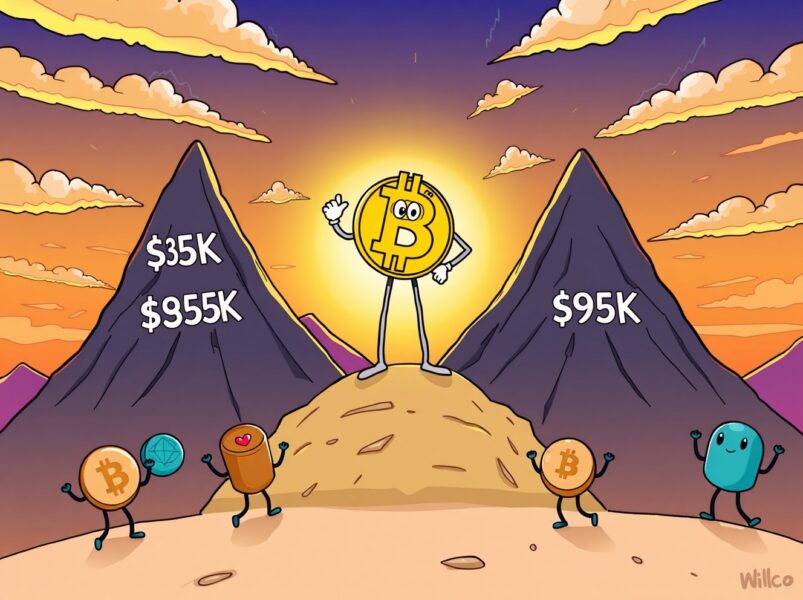
A vibrant cartoon illustration showing Bitcoin confidently positioned between $85K and $95K price targets with altcoins celebrating nearby.

BitcoinWorld

Stunning Bitcoin Price Prediction: Analyst Forecasts $85K-$95K Range by Year-End

Are you wondering where Bitcoin might be headed as we approach the end of the year? A fascinating new analysis suggests we could see BTC trading in a specific range that might surprise many investors. According to Paul Howard of Wincent, Bitcoin is expected to trade sideways between $85,000 and $95,000 through December. This Bitcoin price prediction comes with important insights about market liquidity and potential opportunities in the broader cryptocurrency space.

What’s Behind This Bitcoin Price Prediction?

Paul Howard’s analysis, reported by CoinDesk, points to several key factors influencing this forecast. The analyst suggests that low liquidity typically seen in December could limit any significant rebound for Bitcoin. This means we might not see dramatic price swings upward or downward during the holiday season. However, this stability could create interesting opportunities elsewhere in the crypto market.

Howard makes an important observation about market dynamics. When Bitcoin trades sideways without clear direction, it often creates space for alternative cryptocurrencies to shine. This phenomenon has occurred multiple times in crypto history, where periods of Bitcoin consolidation have led to what traders call “altcoin seasons.”

How Could Macroeconomic Factors Impact This Forecast?

The analyst identifies one particularly important event that could influence this Bitcoin price prediction. Howard points to the Bank of Japan’s upcoming interest rate decision as a potential market mover. Here’s why this matters:

  • If the BoJ maintains current interest rates, it could restore demand for risk assets globally
  • This scenario would create positive momentum for Bitcoin alongside traditional assets like gold and stocks
  • The decision could either validate or challenge the predicted trading range

This connection between central bank policies and cryptocurrency markets highlights how interconnected global finance has become. Bitcoin no longer operates in isolation but responds to the same macroeconomic forces that affect traditional markets.

What Does This Mean for Altcoin Investors?

Howard’s analysis contains particularly good news for altcoin enthusiasts. The analyst specifically noted that a stagnant Bitcoin could create favorable conditions for alternative cryptocurrencies. This happens for several reasons:

  • When Bitcoin isn’t making dramatic moves, investor attention shifts to other opportunities
  • Traders often rotate profits from Bitcoin into promising altcoin projects
  • Development teams continue building regardless of Bitcoin’s price action

This potential scenario suggests that even if Bitcoin remains range-bound, the broader cryptocurrency market could see significant activity. Savvy investors might use this period to research promising altcoin projects with strong fundamentals.

Should You Trust This Bitcoin Price Prediction?

While Howard’s analysis provides valuable insights, remember that all price predictions come with uncertainty. The cryptocurrency market remains notoriously volatile and subject to unexpected developments. However, understanding the reasoning behind this Bitcoin price prediction can help you make more informed decisions.

Consider these factors when evaluating any market forecast:

  • The track record and methodology of the analyst
  • Current market conditions and historical patterns
  • Your own investment timeline and risk tolerance
  • Broader economic indicators beyond cryptocurrency markets

The most successful investors use predictions as one tool among many, rather than as definitive guides to action.

Conclusion: Preparing for Multiple Scenarios

Whether Bitcoin ultimately trades in the predicted $85K-$95K range or follows a different path, the key takeaway is preparation. Howard’s analysis reminds us that December typically brings lower liquidity, which means potentially less dramatic price movements. This Bitcoin price prediction also highlights how traditional financial events, like central bank decisions, increasingly influence cryptocurrency markets.

The most exciting aspect might be the potential ripple effects on altcoins. A range-bound Bitcoin could create the perfect environment for alternative cryptocurrencies to capture investor attention and potentially deliver significant returns. As always, diversification and careful research remain your best allies in navigating these markets.

Frequently Asked Questions

What is the main reason behind the $85K-$95K Bitcoin price prediction?

The prediction primarily stems from expected low market liquidity in December combined with current technical analysis patterns. The analyst believes these factors will keep Bitcoin trading within this specific range.

How reliable are cryptocurrency price predictions?

While analysts use sophisticated models and historical data, cryptocurrency markets remain highly volatile. Predictions should be considered educated estimates rather than guarantees, and investors should always conduct their own research.

Why would a stagnant Bitcoin help altcoins?

When Bitcoin isn’t making dramatic price moves, investors often look for opportunities elsewhere. This attention shift, combined with potential profit rotation from Bitcoin to altcoins, can create favorable conditions for alternative cryptocurrencies.

What should I watch for that might change this prediction?

Key factors include the Bank of Japan’s interest rate decision, unexpected regulatory developments, major institutional moves into or out of Bitcoin, and broader stock market performance.

Is December typically a bad month for cryptocurrency trading?

December often sees reduced trading volume due to holidays, which can lead to lower liquidity and potentially less dramatic price movements. However, this doesn’t necessarily mean it’s a “bad” month—just different market conditions.

Should I adjust my investment strategy based on this prediction?

While considering expert analysis is wise, your strategy should primarily reflect your financial goals, risk tolerance, and investment timeline. Predictions should inform rather than dictate your decisions.

Found this analysis helpful? Share this article with fellow cryptocurrency enthusiasts on your social media platforms to continue the conversation about Bitcoin’s potential trajectory and what it means for the broader market.

To learn more about the latest Bitcoin trends, explore our article on key developments shaping Bitcoin price action and institutional adoption.

This post Stunning Bitcoin Price Prediction: Analyst Forecasts $85K-$95K Range by Year-End first appeared on BitcoinWorld.

Tržní příležitosti
Logo Bitcoin
Kurz Bitcoin(BTC)
$89 549,45
$89 549,45$89 549,45
+0,58%
USD
Graf aktuální ceny Bitcoin (BTC)
Prohlášení: Články sdílené na této stránce pochází z veřejných platforem a jsou poskytovány pouze pro informační účely. Nemusí nutně reprezentovat názory společnosti MEXC. Všechna práva náleží původním autorům. Pokud se domníváte, že jakýkoli obsah porušuje práva třetích stran, kontaktujte prosím service@support.mexc.com a my obsah odstraníme. Společnost MEXC nezaručuje přesnost, úplnost ani aktuálnost obsahu a neodpovídá za kroky podniknuté na základě poskytnutých informací. Obsah nepředstavuje finanční, právní ani jiné odborné poradenství, ani by neměl být považován za doporučení nebo podporu ze strany MEXC.

Mohlo by se vám také líbit

The Channel Factories We’ve Been Waiting For

The Channel Factories We’ve Been Waiting For

The post The Channel Factories We’ve Been Waiting For appeared on BitcoinEthereumNews.com. Visions of future technology are often prescient about the broad strokes while flubbing the details. The tablets in “2001: A Space Odyssey” do indeed look like iPads, but you never see the astronauts paying for subscriptions or wasting hours on Candy Crush.  Channel factories are one vision that arose early in the history of the Lightning Network to address some challenges that Lightning has faced from the beginning. Despite having grown to become Bitcoin’s most successful layer-2 scaling solution, with instant and low-fee payments, Lightning’s scale is limited by its reliance on payment channels. Although Lightning shifts most transactions off-chain, each payment channel still requires an on-chain transaction to open and (usually) another to close. As adoption grows, pressure on the blockchain grows with it. The need for a more scalable approach to managing channels is clear. Channel factories were supposed to meet this need, but where are they? In 2025, subnetworks are emerging that revive the impetus of channel factories with some new details that vastly increase their potential. They are natively interoperable with Lightning and achieve greater scale by allowing a group of participants to open a shared multisig UTXO and create multiple bilateral channels, which reduces the number of on-chain transactions and improves capital efficiency. Achieving greater scale by reducing complexity, Ark and Spark perform the same function as traditional channel factories with new designs and additional capabilities based on shared UTXOs.  Channel Factories 101 Channel factories have been around since the inception of Lightning. A factory is a multiparty contract where multiple users (not just two, as in a Dryja-Poon channel) cooperatively lock funds in a single multisig UTXO. They can open, close and update channels off-chain without updating the blockchain for each operation. Only when participants leave or the factory dissolves is an on-chain transaction…
Sdílet
BitcoinEthereumNews2025/09/18 00:09
Gold Hits $3,700 as Sprott’s Wong Says Dollar’s Store-of-Value Crown May Slip
Gold Hits $3,700 as Sprott’s Wong Says Dollar’s Store-of-Value Crown May Slip

The post Gold Hits $3,700 as Sprott’s Wong Says Dollar’s Store-of-Value Crown May Slip appeared on BitcoinEthereumNews.com. Gold is strutting its way into record territory, smashing through $3,700 an ounce Wednesday morning, as Sprott Asset Management strategist Paul Wong says the yellow metal may finally snatch the dollar’s most coveted role: store of value. Wong Warns: Fiscal Dominance Puts U.S. Dollar on Notice, Gold on Top Gold prices eased slightly to $3,678.9 […] Source: https://news.bitcoin.com/gold-hits-3700-as-sprotts-wong-says-dollars-store-of-value-crown-may-slip/
Sdílet
BitcoinEthereumNews2025/09/18 00:33
AI in Sports: The Controversial Experiment of the Oakland Ballers’ AI Manager

AI in Sports: The Controversial Experiment of the Oakland Ballers’ AI Manager

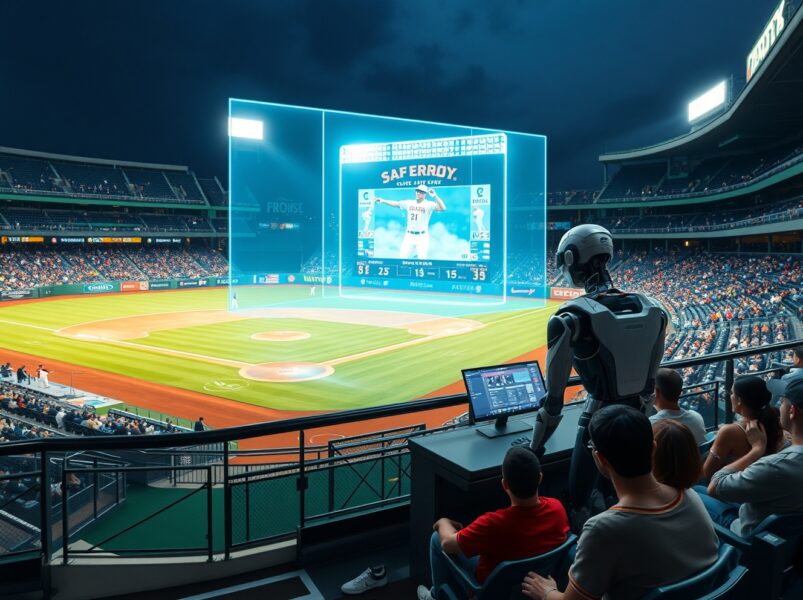
BitcoinWorld AI in Sports: The Controversial Experiment of the Oakland Ballers’ AI Manager In the rapidly evolving landscape of technology, the boundaries of innovation are constantly being pushed. For those immersed in the world of cryptocurrency and blockchain, the concept of decentralized decision-making and experimental technology is familiar territory. So, when an independent baseball team decided to let an AI manage a game, it naturally sparked a fascinating conversation. This bold move by the Oakland Ballers wasn’t just about baseball; it was a profound experiment in AI in sports, echoing the spirit of disruption and questioning traditional structures that resonates deeply within the tech community. The Mathematical Heart of Baseball and the Rise of AI in Sports Baseball, often called America’s pastime, is more than just a game of skill and athleticism; it’s a deeply mathematical sport. Every pitch, every swing, every defensive shift can be broken down into granular statistics. Major League teams employ legions of data engineers to crunch numbers, seeking minute advantages that can influence managerial decisions. This data-driven approach, while effective, sometimes leads to an almost absurd level of overanalysis, reminiscent of Mr. Burns in that classic Simpsons episode, who famously pulled an eight-time all-star for Homer Simpson based on ‘playing the percentages.’ This deep analytical foundation makes baseball a prime candidate for technological experimentation, especially with artificial intelligence. The integration of AI in sports isn’t just a futuristic fantasy; it’s becoming a tangible reality, promising to optimize strategies, enhance player performance analysis, and even redefine the role of human coaches. From predictive analytics for player injuries to real-time strategic adjustments, AI offers a new lens through which to view and manage athletic competition. The Oakland Ballers, with their independent spirit, decided to take this concept further than most, venturing into uncharted territory. The Oakland Ballers’ Bold Experiment with Baseball AI The story of the Oakland Ballers is one of resilience and innovation. Founded by edtech entrepreneur Paul Freedman, the Ballers emerged as a beacon of hope for Oakland baseball fans after the painful departure of the Major League A’s. Though a minor league team, the ‘Oakland B’s’ quickly garnered a national following, winning a title in just two seasons. This unique position—a major league team in a minor league market—gave them the freedom to experiment in ways larger leagues couldn’t. Freedman explained to Bitcoin World, "We can play with things and experiment with things way before the MLB or NBA or any of those leagues could do something." This experimental ethos led them to a groundbreaking partnership with Distillery, an AI company, to develop software capable of managing a baseball game in real time. The core of this initiative was to see how a sophisticated Baseball AI could perform under live game conditions. Unlike previous fan-controlled experiments where humorous decisions often trumped strategic ones, this AI initiative aimed for pure data-driven optimization. The implications of such an experiment extend beyond the diamond, touching upon how artificial intelligence might reshape various industries, including those reliant on complex, real-time decision-making. Navigating AI Decision-Making on the Field The choice of baseball for this AI experiment was deliberate. As Freedman noted, "Baseball is the perfect place to do an initial experiment like this, because it is so data-driven, and decisions are made very analytically." The slow pace between pitches allows ample time for an AI system to process data and recommend actions. Distillery trained OpenAI’s ChatGPT on an immense dataset, including over a century of baseball statistics and specific Ballers game data, to mimic the strategic thinking of their human manager, Aaron Miles. The goal wasn’t to replace human ingenuity but to augment it. Freedman clarified, "What the AI did was figure out what our human coach would have done – the ingenuity on strategy and the concepts came from [Miles], and the ability to use the data and recognize patterns… is what the AI did throughout the course of the game." This highlights a critical distinction in the current state of AI decision-making: AI as a powerful tool for optimization, rather than an autonomous replacement for human expertise. During the AI-controlled game, the system performed remarkably, making almost identical decisions to Miles regarding pitching changes, lineup adjustments, and pinch hitters. The only instance where Miles had to intervene was due to a player’s unexpected illness, a scenario outside the AI’s programmed scope. This singular override underscores the enduring necessity of human oversight for unforeseen circumstances and ethical considerations. The manager himself, Aaron Miles, embraced the experiment with good humor, even offering the tablet running the AI for a handshake with the opposing manager, a symbolic gesture of technology meeting tradition. Aspect Human Manager (Aaron Miles) AI Manager (Distillery’s AI) Decision-making Basis Experience, intuition, real-time observation, data analysis Centuries of baseball data, Ballers’ game history, pattern recognition via ChatGPT Key Decisions Made Pitching changes, lineup construction, pinch hitters Identical decisions to Miles for pitching changes, lineup, pinch hitters Override Instances Miles overrode AI once due to player illness Required human override for unexpected player health issue Outcome of Game Smooth execution of managerial strategy Smooth execution, mirroring human decisions The Critical Role of Fan Engagement and Backlash Despite the smooth execution of the AI’s managerial duties, the experiment triggered an unexpected wave of backlash from the Oakland Ballers’ dedicated fanbase. For many, the involvement of companies like OpenAI, which powered Distillery’s AI, felt like a betrayal. Fans expressed concerns that such enterprises prioritize "winning" the AI race over thorough safety testing and ethical deployment. This sentiment was amplified by the recent history of corporate greed that led to the departure of multiple professional sports franchises from Oakland, creating a deep-seated mistrust among locals. Comments like "There goes the Ballers trying to appeal to Bay Area techies instead of baseball fans" highlighted a perceived disconnect. The issue wasn’t just about AI; it was about the broader cultural tension between technological advancement and community values. Fan engagement, crucial for any sports team, proved to be a double-edged sword. While fans had previously embraced novel concepts like fan-controlled games, the AI experiment touched a nerve related to corporate influence and the perceived erosion of authenticity. Paul Freedman acknowledged the unforeseen negative reaction, stating, "It never feels good to have your fans be like, ‘We hate this.’" The Ballers do not intend to repeat this specific AI experiment. However, the experience sparked a vital conversation about the ethical implications and societal acceptance of new technologies. This public discourse, though initially uncomfortable, is essential for navigating the complex future of AI. It underscores that while technology can optimize processes, the human element—emotion, community, and trust—remains paramount. A Look Ahead: Balancing Innovation and Community in the Age of AI The Oakland Ballers’ experiment serves as a compelling case study in the ongoing dialogue surrounding artificial intelligence. It showcased the impressive capabilities of AI in sports for data-driven strategy while simultaneously revealing the critical importance of public perception and fan engagement. The journey of the Oakland Ballers, from a team born out of protest to pioneers in sports technology, reflects a broader societal challenge: how to embrace innovation without alienating the communities it serves. As AI continues to integrate into various aspects of life, including sports and even the financial sector where cryptocurrencies thrive, understanding its practical applications and potential pitfalls becomes increasingly vital. The Ballers’ experience reminds us that while AI can be an incredible tool for optimization, the human touch, ethical considerations, and genuine connection with stakeholders are indispensable. The conversation about AI’s role in our future has just begun, and experiments like these, even with their bumps, are crucial steps in shaping that dialogue responsibly. To learn more about the latest AI in sports trends, explore our article on key developments shaping AI features, institutional adoption, and future applications. This post AI in Sports: The Controversial Experiment of the Oakland Ballers’ AI Manager first appeared on BitcoinWorld.
Sdílet
Coinstats2025/09/23 04:45