Polygon has restored full network stability after a software bug temporarily disrupted milestone finality and forced some nodes offline, according to an official incident report published on the project’s status page. The issue began early Wednesday when a bug affecting Bor, Polygon’s block producer, and Erigon, its data access layer, caused disruptions across parts of the ecosystem. While the blockchain itself continued to produce blocks, some Remote Procedure Call (RPC) services and validators halted, forcing providers to rewind to the last finalized block and resynchronize. Polygon Executes Emergency Hard Fork to Resolve Finality Bug Polygon engineers confirmed the bug was preventing node progress under certain configurations, though restarting affected nodes resolved the issue for several validators and RPC providers. At the time, Polygonscan, the network’s block explorer, showed no block updates for more than five hours. Polygon later explained that Polygonscan’s nodes had halted after a faulty milestone produced by Heimdall, the project’s consensus engine. A company representative said that the team was working with Polygonscan to switch to functioning nodes that had not halted, stressing that block production remained live. “Checkpoint finality is working as expected within 15 minutes,” the team said in an update at 08:52 UTC, sharing an alternative link where real-time block production could be tracked. Analysis revealed the problem stemmed from Heimdall’s finality gadget, which is responsible for producing milestones every few seconds. Although checkpoints to Ethereum were still being posted every 20 minutes, milestones, which provide faster, deterministic finality, were not being processed. This left local fast finality delayed even as the main chain continued adding blocks. To address the problem, Polygon rolled out emergency updates: Bor version 2.2.11-beta2 and Heimdall version 0.3.1, the latter requiring a hard fork. The upgrade, executed at 3 p.m. UTC, deleted the faulty milestone and purged it from node databases. Polygon confirmed soon after that the hard fork was successfully completed and that both milestones and checkpoints were once again finalizing normally.Source: Polygonscan “The hard fork has been successfully completed, and milestones are now processing normally along with state sync. Checkpoints are going through, and consensus finalization has been fully restored on Polygon PoS,” the team wrote in a statement on X. Polygon Foundation co-founder and CEO Sandeep Nailwal later explained that the disruption originated from a faulty milestone proposal that pushed some Bor nodes onto divergent forks. This triggered short-term instability not accounted for in the system. He emphasized that while checkpoint finality on Ethereum had remained active throughout, local milestone finality was delayed. “Milestones are a lightweight alternative to checkpoints, enabling faster, deterministic finality for transactions, even before a checkpoint is submitted to Ethereum,” Nailwal said. “The root cause came from a faulty milestone proposal. We rolled out fixes on both Heimdall and Bor. With these fixes now live, nodes are not stuck, and consensus is finalizing normally.” Nailwal described the event as part of the growing pains of scaling Polygon’s proof-of-stake chain but said each challenge strengthens its resilience. “There will be growing pains with any ambitious upgrade. But each one makes Polygon PoS stronger on our road to GigaGas throughput,” he said, adding that more upgrades are planned to boost capacity and reliability. Polygon engineers continue to monitor the network to ensure stability and are investigating how the faulty milestone was introduced. Despite the temporary setback, the network has resumed normal operations, with blocks, milestones, and checkpoints processing in real time Polygon’s Reliability Questioned After Finality Bug, TVL Down 87% From Peak Polygon developers have deployed a hard fork to fix a bug that temporarily halted block production on its proof-of-stake chain, restoring the network after several hours of disruption. The issue, tied to transaction finality, left exchanges and DeFi protocols unable to process deposits or withdrawals as they waited for confirmation guarantees. The outage drew criticism from Polymarket traders, who argued that a blockchain hosting one of the sector’s largest prediction markets should not face such problems. “It might have gone unnoticed because no one was using it, but this has been going on for about two hours,” one trader posted, pointing to the risk of reversals during the downtime. TokenPocket, a multichain stablecoin wallet, also paused Polygon transactions after observing that no new blocks had been finalized for over an hour. The incident comes just weeks after Polygon’s Heimdall v2 upgrade, designed to cut finality times to five seconds and improve validator coordination. That update followed the July 1 Bhilai hard fork, which raised throughput to 1,000 transactions per second and integrated Ethereum’s Pectra EIPs. Despite these efforts, network reliability remains a concern, as Polygon’s total value locked has dropped from a $9.43 billion peak in 2021 to $1.2 billion today, per DeFiLlama. The chain’s native token, POL, has fallen 3.4% on the day and is down 30% year-to-date, trading at $0.27. Meanwhile, another Ethereum Layer-2, Linea, faced a separate outage earlier today when its mainnet sequencer stalled, causing a 67-minute pause in block production. While Linea has already deployed a fix, developers are questioning whether the two disruptions are linked. Linea has not disclosed the cause of its downtime. Both events highlight the fragility of scaling networks that have become essential to Ethereum’s broader ecosystemPolygon has restored full network stability after a software bug temporarily disrupted milestone finality and forced some nodes offline, according to an official incident report published on the project’s status page. The issue began early Wednesday when a bug affecting Bor, Polygon’s block producer, and Erigon, its data access layer, caused disruptions across parts of the ecosystem. While the blockchain itself continued to produce blocks, some Remote Procedure Call (RPC) services and validators halted, forcing providers to rewind to the last finalized block and resynchronize. Polygon Executes Emergency Hard Fork to Resolve Finality Bug Polygon engineers confirmed the bug was preventing node progress under certain configurations, though restarting affected nodes resolved the issue for several validators and RPC providers. At the time, Polygonscan, the network’s block explorer, showed no block updates for more than five hours. Polygon later explained that Polygonscan’s nodes had halted after a faulty milestone produced by Heimdall, the project’s consensus engine. A company representative said that the team was working with Polygonscan to switch to functioning nodes that had not halted, stressing that block production remained live. “Checkpoint finality is working as expected within 15 minutes,” the team said in an update at 08:52 UTC, sharing an alternative link where real-time block production could be tracked. Analysis revealed the problem stemmed from Heimdall’s finality gadget, which is responsible for producing milestones every few seconds. Although checkpoints to Ethereum were still being posted every 20 minutes, milestones, which provide faster, deterministic finality, were not being processed. This left local fast finality delayed even as the main chain continued adding blocks. To address the problem, Polygon rolled out emergency updates: Bor version 2.2.11-beta2 and Heimdall version 0.3.1, the latter requiring a hard fork. The upgrade, executed at 3 p.m. UTC, deleted the faulty milestone and purged it from node databases. Polygon confirmed soon after that the hard fork was successfully completed and that both milestones and checkpoints were once again finalizing normally.Source: Polygonscan “The hard fork has been successfully completed, and milestones are now processing normally along with state sync. Checkpoints are going through, and consensus finalization has been fully restored on Polygon PoS,” the team wrote in a statement on X. Polygon Foundation co-founder and CEO Sandeep Nailwal later explained that the disruption originated from a faulty milestone proposal that pushed some Bor nodes onto divergent forks. This triggered short-term instability not accounted for in the system. He emphasized that while checkpoint finality on Ethereum had remained active throughout, local milestone finality was delayed. “Milestones are a lightweight alternative to checkpoints, enabling faster, deterministic finality for transactions, even before a checkpoint is submitted to Ethereum,” Nailwal said. “The root cause came from a faulty milestone proposal. We rolled out fixes on both Heimdall and Bor. With these fixes now live, nodes are not stuck, and consensus is finalizing normally.” Nailwal described the event as part of the growing pains of scaling Polygon’s proof-of-stake chain but said each challenge strengthens its resilience. “There will be growing pains with any ambitious upgrade. But each one makes Polygon PoS stronger on our road to GigaGas throughput,” he said, adding that more upgrades are planned to boost capacity and reliability. Polygon engineers continue to monitor the network to ensure stability and are investigating how the faulty milestone was introduced. Despite the temporary setback, the network has resumed normal operations, with blocks, milestones, and checkpoints processing in real time Polygon’s Reliability Questioned After Finality Bug, TVL Down 87% From Peak Polygon developers have deployed a hard fork to fix a bug that temporarily halted block production on its proof-of-stake chain, restoring the network after several hours of disruption. The issue, tied to transaction finality, left exchanges and DeFi protocols unable to process deposits or withdrawals as they waited for confirmation guarantees. The outage drew criticism from Polymarket traders, who argued that a blockchain hosting one of the sector’s largest prediction markets should not face such problems. “It might have gone unnoticed because no one was using it, but this has been going on for about two hours,” one trader posted, pointing to the risk of reversals during the downtime. TokenPocket, a multichain stablecoin wallet, also paused Polygon transactions after observing that no new blocks had been finalized for over an hour. The incident comes just weeks after Polygon’s Heimdall v2 upgrade, designed to cut finality times to five seconds and improve validator coordination. That update followed the July 1 Bhilai hard fork, which raised throughput to 1,000 transactions per second and integrated Ethereum’s Pectra EIPs. Despite these efforts, network reliability remains a concern, as Polygon’s total value locked has dropped from a $9.43 billion peak in 2021 to $1.2 billion today, per DeFiLlama. The chain’s native token, POL, has fallen 3.4% on the day and is down 30% year-to-date, trading at $0.27. Meanwhile, another Ethereum Layer-2, Linea, faced a separate outage earlier today when its mainnet sequencer stalled, causing a 67-minute pause in block production. While Linea has already deployed a fix, developers are questioning whether the two disruptions are linked. Linea has not disclosed the cause of its downtime. Both events highlight the fragility of scaling networks that have become essential to Ethereum’s broader ecosystem

Polygon Hard Fork Fixes Bug That Knocked Nodes Offline — Network Back Online

Polygon has restored full network stability after a software bug temporarily disrupted milestone finality and forced some nodes offline, according to an official incident report published on the project’s status page.

The issue began early Wednesday when a bug affecting Bor, Polygon’s block producer, and Erigon, its data access layer, caused disruptions across parts of the ecosystem.

While the blockchain itself continued to produce blocks, some Remote Procedure Call (RPC) services and validators halted, forcing providers to rewind to the last finalized block and resynchronize.

Polygon Executes Emergency Hard Fork to Resolve Finality Bug

Polygon engineers confirmed the bug was preventing node progress under certain configurations, though restarting affected nodes resolved the issue for several validators and RPC providers.

At the time, Polygonscan, the network’s block explorer, showed no block updates for more than five hours. Polygon later explained that Polygonscan’s nodes had halted after a faulty milestone produced by Heimdall, the project’s consensus engine.

A company representative said that the team was working with Polygonscan to switch to functioning nodes that had not halted, stressing that block production remained live.

“Checkpoint finality is working as expected within 15 minutes,” the team said in an update at 08:52 UTC, sharing an alternative link where real-time block production could be tracked.

Analysis revealed the problem stemmed from Heimdall’s finality gadget, which is responsible for producing milestones every few seconds.

Although checkpoints to Ethereum were still being posted every 20 minutes, milestones, which provide faster, deterministic finality, were not being processed. This left local fast finality delayed even as the main chain continued adding blocks.

To address the problem, Polygon rolled out emergency updates: Bor version 2.2.11-beta2 and Heimdall version 0.3.1, the latter requiring a hard fork. The upgrade, executed at 3 p.m. UTC, deleted the faulty milestone and purged it from node databases.

Polygon confirmed soon after that the hard fork was successfully completed and that both milestones and checkpoints were once again finalizing normally.
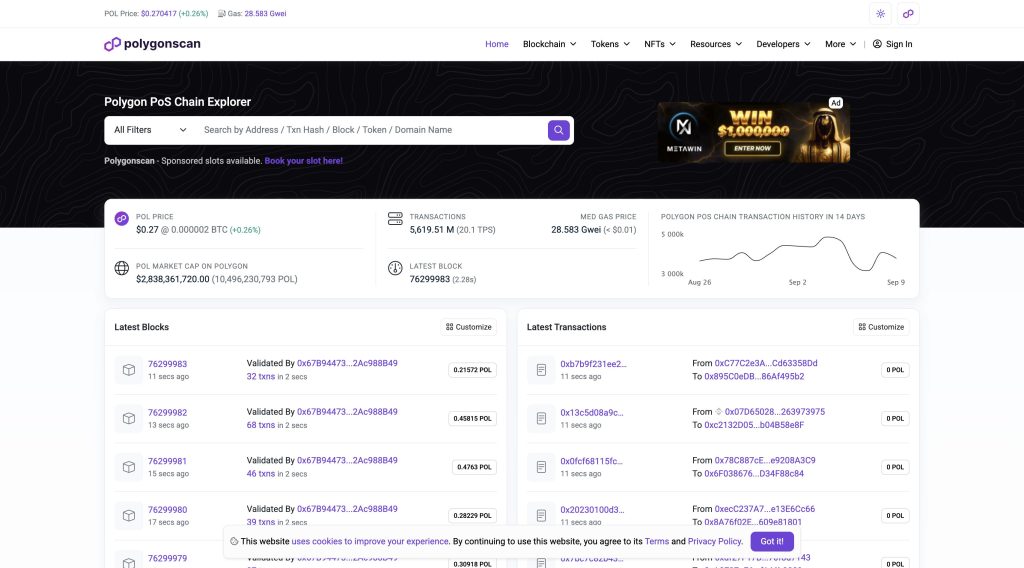
Source: Polygonscan

“The hard fork has been successfully completed, and milestones are now processing normally along with state sync. Checkpoints are going through, and consensus finalization has been fully restored on Polygon PoS,” the team wrote in a statement on X.

Polygon Foundation co-founder and CEO Sandeep Nailwal later explained that the disruption originated from a faulty milestone proposal that pushed some Bor nodes onto divergent forks. This triggered short-term instability not accounted for in the system.

He emphasized that while checkpoint finality on Ethereum had remained active throughout, local milestone finality was delayed.

“Milestones are a lightweight alternative to checkpoints, enabling faster, deterministic finality for transactions, even before a checkpoint is submitted to Ethereum,” Nailwal said. “The root cause came from a faulty milestone proposal. We rolled out fixes on both Heimdall and Bor.

With these fixes now live, nodes are not stuck, and consensus is finalizing normally.”

Nailwal described the event as part of the growing pains of scaling Polygon’s proof-of-stake chain but said each challenge strengthens its resilience. “There will be growing pains with any ambitious upgrade.

But each one makes Polygon PoS stronger on our road to GigaGas throughput,” he said, adding that more upgrades are planned to boost capacity and reliability.

Polygon engineers continue to monitor the network to ensure stability and are investigating how the faulty milestone was introduced.

Despite the temporary setback, the network has resumed normal operations, with blocks, milestones, and checkpoints processing in real time

Polygon’s Reliability Questioned After Finality Bug, TVL Down 87% From Peak

Polygon developers have deployed a hard fork to fix a bug that temporarily halted block production on its proof-of-stake chain, restoring the network after several hours of disruption.

The issue, tied to transaction finality, left exchanges and DeFi protocols unable to process deposits or withdrawals as they waited for confirmation guarantees.

The outage drew criticism from Polymarket traders, who argued that a blockchain hosting one of the sector’s largest prediction markets should not face such problems. “It might have gone unnoticed because no one was using it, but this has been going on for about two hours,” one trader posted, pointing to the risk of reversals during the downtime.

TokenPocket, a multichain stablecoin wallet, also paused Polygon transactions after observing that no new blocks had been finalized for over an hour.

The incident comes just weeks after Polygon’s Heimdall v2 upgrade, designed to cut finality times to five seconds and improve validator coordination.

That update followed the July 1 Bhilai hard fork, which raised throughput to 1,000 transactions per second and integrated Ethereum’s Pectra EIPs. Despite these efforts, network reliability remains a concern, as Polygon’s total value locked has dropped from a $9.43 billion peak in 2021 to $1.2 billion today, per DeFiLlama.

The chain’s native token, POL, has fallen 3.4% on the day and is down 30% year-to-date, trading at $0.27.

Meanwhile, another Ethereum Layer-2, Linea, faced a separate outage earlier today when its mainnet sequencer stalled, causing a 67-minute pause in block production.

While Linea has already deployed a fix, developers are questioning whether the two disruptions are linked. Linea has not disclosed the cause of its downtime.

Both events highlight the fragility of scaling networks that have become essential to Ethereum’s broader ecosystem.

Sorumluluk Reddi: Bu sitede yeniden yayınlanan makaleler, halka açık platformlardan alınmıştır ve yalnızca bilgilendirme amaçlıdır. MEXC'nin görüşlerini yansıtmayabilir. Tüm hakları telif sahiplerine aittir. Herhangi bir içeriğin üçüncü taraf haklarını ihlal ettiğini düşünüyorsanız, kaldırılması için lütfen service@support.mexc.com ile iletişime geçin. MEXC, içeriğin doğruluğu, eksiksizliği veya güncelliği konusunda hiçbir garanti vermez ve sağlanan bilgilere dayalı olarak alınan herhangi bir eylemden sorumlu değildir. İçerik, finansal, yasal veya diğer profesyonel tavsiye niteliğinde değildir ve MEXC tarafından bir tavsiye veya onay olarak değerlendirilmemelidir.

Ayrıca Şunları da Beğenebilirsiniz

U.S. Court Finds Pastor Found Guilty in $3M Crypto Scam

U.S. Court Finds Pastor Found Guilty in $3M Crypto Scam

The post U.S. Court Finds Pastor Found Guilty in $3M Crypto Scam appeared on BitcoinEthereumNews.com. Crime 18 September 2025 | 04:05 A Colorado judge has brought closure to one of the state’s most unusual cryptocurrency scandals, declaring INDXcoin to be a fraudulent operation and ordering its founders, Denver pastor Eli Regalado and his wife Kaitlyn, to repay $3.34 million. The ruling, issued by District Court Judge Heidi L. Kutcher, came nearly two years after the couple persuaded hundreds of people to invest in their token, promising safety and abundance through a Christian-branded platform called the Kingdom Wealth Exchange. The scheme ran between June 2022 and April 2023 and drew in more than 300 participants, many of them members of local church networks. Marketing materials portrayed INDXcoin as a low-risk gateway to prosperity, yet the project unraveled almost immediately. The exchange itself collapsed within 24 hours of launch, wiping out investors’ money. Despite this failure—and despite an auditor’s damning review that gave the system a “0 out of 10” for security—the Regalados kept presenting it as a solid opportunity. Colorado regulators argued that the couple’s faith-based appeal was central to the fraud. Securities Commissioner Tung Chan said the Regalados “dressed an old scam in new technology” and used their standing within the Christian community to convince people who had little knowledge of crypto. For him, the case illustrates how modern digital assets can be exploited to replicate classic Ponzi-style tactics under a different name. Court filings revealed where much of the money ended up: luxury goods, vacations, jewelry, a Range Rover, high-end clothing, and even dental procedures. In a video that drew worldwide attention earlier this year, Eli Regalado admitted the funds had been spent, explaining that a portion went to taxes while the remainder was used for a home renovation he claimed was divinely inspired. The judgment not only confirms that INDXcoin qualifies as a…
Paylaş
BitcoinEthereumNews2025/09/18 09:14
MSCI’s Proposal May Trigger $15B Crypto Outflows

MSCI’s Proposal May Trigger $15B Crypto Outflows

MSCI's plan to exclude crypto-treasury companies could cause $15B outflows, impacting major firms.
Paylaş
CoinLive2025/12/19 13:17
This U.S. politician’s suspicious stock trade just returned over 200% in weeks

This U.S. politician’s suspicious stock trade just returned over 200% in weeks

The post This U.S. politician’s suspicious stock trade just returned over 200% in weeks appeared on BitcoinEthereumNews.com. United States Representative Cloe Fields has seen his stake in Opendoor Technologies (NASDAQ: OPEN) stock return over 200% in just a matter of weeks. According to congressional trade filings, the lawmaker purchased a stake in the online real estate company on July 21, 2025, investing between $1,001 and $15,000. At the time, the stock was trading around $2 and had been largely stagnant for months. Receive Signals on US Congress Members’ Stock Trades Stocks Stay up-to-date on the trading activity of US Congress members. The signal triggers based on updates from the House disclosure reports, notifying you of their latest stock transactions. Enable signal The trade has since paid off, with Opendoor surging to $10, a gain of nearly 220% in under two months. By comparison, the broader S&P 500 index rose less than 5% during the same period. OPEN one-week stock price chart. Source: Finbold Assuming he invested a minimum of $1,001, the purchase would now be worth about $3,200, while a $15,000 stake would have grown to nearly $48,000, generating profits of roughly $2,200 and $33,000, respectively. OPEN’s stock rally Notably, Opendoor’s rally has been fueled by major corporate shifts and market speculation. For instance, in August, the company named former Shopify COO Kaz Nejatian as CEO, while co-founders Keith Rabois and Eric Wu rejoined the board, moves seen as a return to the company’s early innovative spirit.  Outgoing CEO Carrie Wheeler’s resignation and sale of millions in stock reinforced the sense of a new chapter. Beyond leadership changes, Opendoor’s surge has taken on meme-stock characteristics. In this case, retail investors piled in as shares climbed, while short sellers scrambled to cover, pushing prices higher.  However, the stock is still not without challenges, where its iBuying model is untested at scale, margins are thin, and debt tied to…
Paylaş
BitcoinEthereumNews2025/09/18 04:02