The post Fetch.ai-Ocean Protocol Feud Ends With Token Return Agreement appeared on BitcoinEthereumNews.com. AltcoinsCrypto News A heated standoff between two of the biggest names in decentralized artificial intelligence has ended with a handshake instead of a courtroom battle. Fetch.ai and Ocean Protocol, once partners in a high-profile AI token merger, have agreed to settle their conflict privately – a move that returns millions in disputed tokens and allows both sides to move forward. A Deal That Ends Weeks of Tension After weeks of public accusations, Fetch.ai CEO Humayun Sheikh offered Ocean Protocol a straightforward way out: return the tokens and the legal threats would vanish. According to sources close to the negotiations, Ocean accepted the proposal and will send back roughly 286 million FET tokens, worth an estimated $120 million, to Fetch.ai’s community pool. The talks were reportedly mediated by GeoStaking, a validator node known within the Fetch.ai ecosystem, which played a key role in calming tensions and finalizing terms. With this, a potentially damaging legal confrontation was avoided – a rare outcome in an industry where disputes often escalate to drawn-out litigation. 📣Tune in live today at 20:00 UTC to an open conversation with https://t.co/kJ9URVqmjT CEO – Humayun Sheikh as we openly discuss Ocean’s response and claims. https://t.co/hKfrCBIKjC — Fetch.ai (@Fetch_ai) October 23, 2025 Origins of the Conflict The disagreement dates back to the Artificial Superintelligence (ASI) Alliance, launched in March 2024, which sought to merge three decentralized AI ecosystems = Fetch.ai, SingularityNET, and Ocean Protocol – under a single digital asset. The plan aimed to unify liquidity and development resources by converting each project’s token into FET, later to be rebranded as ASI. But cracks began to show when Ocean Protocol abruptly withdrew from the alliance. Fetch.ai accused Ocean of transferring and allegedly liquidating large amounts of converted FET tokens – nearly 286 million units, according to Sheikh – without community… The post Fetch.ai-Ocean Protocol Feud Ends With Token Return Agreement appeared on BitcoinEthereumNews.com. AltcoinsCrypto News A heated standoff between two of the biggest names in decentralized artificial intelligence has ended with a handshake instead of a courtroom battle. Fetch.ai and Ocean Protocol, once partners in a high-profile AI token merger, have agreed to settle their conflict privately – a move that returns millions in disputed tokens and allows both sides to move forward. A Deal That Ends Weeks of Tension After weeks of public accusations, Fetch.ai CEO Humayun Sheikh offered Ocean Protocol a straightforward way out: return the tokens and the legal threats would vanish. According to sources close to the negotiations, Ocean accepted the proposal and will send back roughly 286 million FET tokens, worth an estimated $120 million, to Fetch.ai’s community pool. The talks were reportedly mediated by GeoStaking, a validator node known within the Fetch.ai ecosystem, which played a key role in calming tensions and finalizing terms. With this, a potentially damaging legal confrontation was avoided – a rare outcome in an industry where disputes often escalate to drawn-out litigation. 📣Tune in live today at 20:00 UTC to an open conversation with https://t.co/kJ9URVqmjT CEO – Humayun Sheikh as we openly discuss Ocean’s response and claims. https://t.co/hKfrCBIKjC — Fetch.ai (@Fetch_ai) October 23, 2025 Origins of the Conflict The disagreement dates back to the Artificial Superintelligence (ASI) Alliance, launched in March 2024, which sought to merge three decentralized AI ecosystems = Fetch.ai, SingularityNET, and Ocean Protocol – under a single digital asset. The plan aimed to unify liquidity and development resources by converting each project’s token into FET, later to be rebranded as ASI. But cracks began to show when Ocean Protocol abruptly withdrew from the alliance. Fetch.ai accused Ocean of transferring and allegedly liquidating large amounts of converted FET tokens – nearly 286 million units, according to Sheikh – without community…

Fetch.ai-Ocean Protocol Feud Ends With Token Return Agreement

AltcoinsCrypto News

A heated standoff between two of the biggest names in decentralized artificial intelligence has ended with a handshake instead of a courtroom battle.

Fetch.ai and Ocean Protocol, once partners in a high-profile AI token merger, have agreed to settle their conflict privately – a move that returns millions in disputed tokens and allows both sides to move forward.

A Deal That Ends Weeks of Tension

After weeks of public accusations, Fetch.ai CEO Humayun Sheikh offered Ocean Protocol a straightforward way out: return the tokens and the legal threats would vanish. According to sources close to the negotiations, Ocean accepted the proposal and will send back roughly 286 million FET tokens, worth an estimated $120 million, to Fetch.ai’s community pool.

The talks were reportedly mediated by GeoStaking, a validator node known within the Fetch.ai ecosystem, which played a key role in calming tensions and finalizing terms. With this, a potentially damaging legal confrontation was avoided – a rare outcome in an industry where disputes often escalate to drawn-out litigation.

Origins of the Conflict

The disagreement dates back to the Artificial Superintelligence (ASI) Alliance, launched in March 2024, which sought to merge three decentralized AI ecosystems = Fetch.ai, SingularityNET, and Ocean Protocol – under a single digital asset. The plan aimed to unify liquidity and development resources by converting each project’s token into FET, later to be rebranded as ASI.

But cracks began to show when Ocean Protocol abruptly withdrew from the alliance. Fetch.ai accused Ocean of transferring and allegedly liquidating large amounts of converted FET tokens – nearly 286 million units, according to Sheikh – without community consent. Ocean’s founder Bruce Pon denied wrongdoing, maintaining that the team acted transparently and that market volatility, not token movements, caused FET’s price decline.

Turning Conflict Into Cooperation

With the new deal in place, both projects are now expected to refocus on their shared ambitions – developing AI-powered decentralized systems and expanding their respective Web3 ecosystems. Insiders say the agreement could mark the first step toward repairing relations and possibly rekindling collaboration between the two.

The decision to settle privately also reflects growing maturity within the blockchain sector, where public disputes can quickly erode investor confidence. Analysts note that this outcome contrasts sharply with previous token controversies that have dragged on for months and resulted in fragmented communities.

Looking Forward

The settlement effectively closes one of the most talked-about feuds in the decentralized AI world. For Fetch.ai, reclaiming the disputed tokens strengthens its position as it continues building the ASI framework. For Ocean Protocol, avoiding a court battle helps preserve credibility while allowing the team to double down on data-focused infrastructure.

Though both sides have refrained from celebrating publicly, the outcome signals a pragmatic shift: instead of letting conflict derail innovation, two ambitious AI pioneers chose cooperation – an uncommon yet promising direction for a rapidly evolving sector.


The information provided in this article is for educational purposes only and does not constitute financial, investment, or trading advice. Coindoo.com does not endorse or recommend any specific investment strategy or cryptocurrency. Always conduct your own research and consult with a licensed financial advisor before making any investment decisions.

Author

Alex is an experienced financial journalist and cryptocurrency enthusiast. With over 8 years of experience covering the crypto, blockchain, and fintech industries, he is well-versed in the complex and ever-evolving world of digital assets. His insightful and thought-provoking articles provide readers with a clear picture of the latest developments and trends in the market. His approach allows him to break down complex ideas into accessible and in-depth content. Follow his publications to stay up to date with the most important trends and topics.

Next article

Source: https://coindoo.com/fetch-ai-ocean-protocol-feud-ends-with-token-return-agreement/

Piyasa Fırsatı
Sleepless AI Logosu
Sleepless AI Fiyatı(AI)
$0.03704
$0.03704$0.03704
-3.54%
USD
Sleepless AI (AI) Canlı Fiyat Grafiği
Sorumluluk Reddi: Bu sitede yeniden yayınlanan makaleler, halka açık platformlardan alınmıştır ve yalnızca bilgilendirme amaçlıdır. MEXC'nin görüşlerini yansıtmayabilir. Tüm hakları telif sahiplerine aittir. Herhangi bir içeriğin üçüncü taraf haklarını ihlal ettiğini düşünüyorsanız, kaldırılması için lütfen service@support.mexc.com ile iletişime geçin. MEXC, içeriğin doğruluğu, eksiksizliği veya güncelliği konusunda hiçbir garanti vermez ve sağlanan bilgilere dayalı olarak alınan herhangi bir eylemden sorumlu değildir. İçerik, finansal, yasal veya diğer profesyonel tavsiye niteliğinde değildir ve MEXC tarafından bir tavsiye veya onay olarak değerlendirilmemelidir.

Ayrıca Şunları da Beğenebilirsiniz

U.S. Coinbase Premium Turns Negative Amid Asian Buying Surge

U.S. Coinbase Premium Turns Negative Amid Asian Buying Surge

U.S. institutional demand falls as Asian markets buy Bitcoin dips, causing negative Coinbase premium.
Paylaş
CoinLive2025/12/23 14:20
Crucial ETH Unstaking Period: Vitalik Buterin’s Unwavering Defense for Network Security

Crucial ETH Unstaking Period: Vitalik Buterin’s Unwavering Defense for Network Security

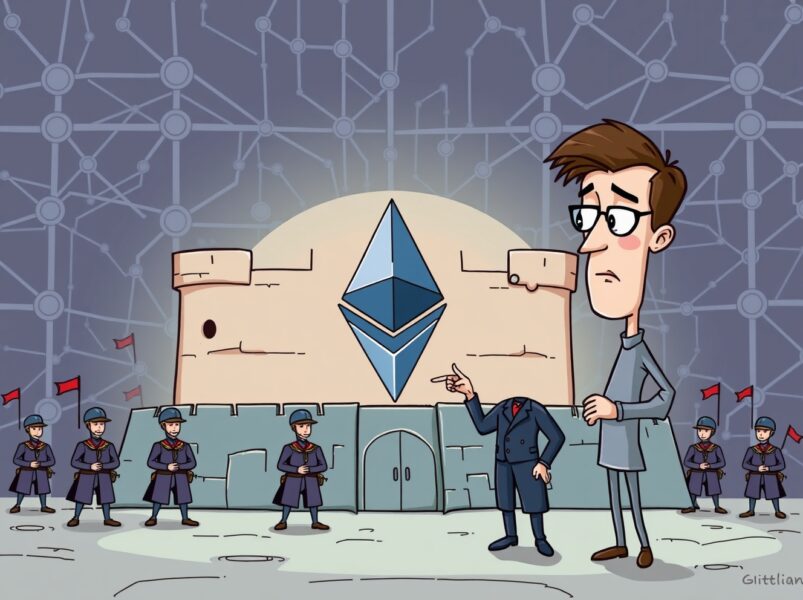
BitcoinWorld Crucial ETH Unstaking Period: Vitalik Buterin’s Unwavering Defense for Network Security Ever wondered why withdrawing your staked Ethereum (ETH) isn’t an instant process? It’s a question that often sparks debate within the crypto community. Ethereum founder Vitalik Buterin recently stepped forward to defend the network’s approximately 45-day ETH unstaking period, asserting its crucial role in safeguarding the network’s integrity. This lengthy waiting time, while sometimes seen as an inconvenience, is a deliberate design choice with profound implications for security. Why is the ETH Unstaking Period a Vital Security Measure? Vitalik Buterin’s defense comes amidst comparisons to other networks, like Solana, which boast significantly shorter unstaking times. He drew a compelling parallel to military operations, explaining that an army cannot function effectively if its soldiers can simply abandon their posts at a moment’s notice. Similarly, a blockchain network requires a stable and committed validator set to maintain its security. The current ETH unstaking period isn’t merely an arbitrary delay. It acts as a critical buffer, providing the network with sufficient time to detect and respond to potential malicious activities. If validators could instantly exit, it would open doors for sophisticated attacks, jeopardizing the entire system. Currently, Ethereum boasts over one million active validators, collectively staking approximately 35.6 million ETH, representing about 30% of the total supply. This massive commitment underpins the network’s robust security model, and the unstaking period helps preserve this stability. Network Security: Ethereum’s Paramount Concern A shorter ETH unstaking period might seem appealing for liquidity, but it introduces significant risks. Imagine a scenario where a large number of validators, potentially colluding, could quickly withdraw their stake after committing a malicious act. Without a substantial delay, the network would have limited time to penalize them or mitigate the damage. This “exit queue” mechanism is designed to prevent sudden validator exodus, which could lead to: Reduced decentralization: A rapid drop in active validators could concentrate power among fewer participants. Increased vulnerability to attacks: A smaller, less stable validator set is easier to compromise. Network instability: Frequent and unpredictable changes in validator numbers can lead to performance issues and consensus failures. Therefore, the extended period is not a bug; it’s a feature. It’s a calculated trade-off between immediate liquidity for stakers and the foundational security of the entire Ethereum ecosystem. Ethereum vs. Solana: Different Approaches to Unstaking When discussing the ETH unstaking period, many point to networks like Solana, which offers a much quicker two-day unstaking process. While this might seem like an advantage for stakers seeking rapid access to their funds, it reflects fundamental differences in network architecture and security philosophies. Solana’s design prioritizes speed and immediate liquidity, often relying on different consensus mechanisms and validator economics to manage security risks. Ethereum, on the other hand, with its proof-of-stake evolution from proof-of-work, has adopted a more cautious approach to ensure its transition and long-term stability are uncompromised. Each network makes design choices based on its unique goals and threat models. Ethereum’s substantial value and its role as a foundational layer for countless dApps necessitate an extremely robust security posture, making the current unstaking duration a deliberate and necessary component. What Does the ETH Unstaking Period Mean for Stakers? For individuals and institutions staking ETH, understanding the ETH unstaking period is crucial for managing expectations and investment strategies. It means that while staking offers attractive rewards, it also comes with a commitment to the network’s long-term health. Here are key considerations for stakers: Liquidity Planning: Stakers should view their staked ETH as a longer-term commitment, not immediately liquid capital. Risk Management: The delay inherently reduces the ability to react quickly to market volatility with staked assets. Network Contribution: By participating, stakers contribute directly to the security and decentralization of Ethereum, reinforcing its value proposition. While the current waiting period may not be “optimal” in every sense, as Buterin acknowledged, simply shortening it without addressing the underlying security implications would be a dangerous gamble for the network’s reliability. In conclusion, Vitalik Buterin’s defense of the lengthy ETH unstaking period underscores a fundamental principle: network security cannot be compromised for the sake of convenience. It is a vital mechanism that protects Ethereum’s integrity, ensuring its stability and trustworthiness as a leading blockchain platform. This deliberate design choice, while requiring patience from stakers, ultimately fortifies the entire ecosystem against potential threats, paving the way for a more secure and reliable decentralized future. Frequently Asked Questions (FAQs) Q1: What is the main reason for Ethereum’s long unstaking period? A1: The primary reason is network security. A lengthy ETH unstaking period prevents malicious actors from quickly withdrawing their stake after an attack, giving the network time to detect and penalize them, thus maintaining stability and integrity. Q2: How long is the current ETH unstaking period? A2: The current ETH unstaking period is approximately 45 days. This duration can fluctuate based on network conditions and the number of validators in the exit queue. Q3: How does Ethereum’s unstaking period compare to other blockchains? A3: Ethereum’s unstaking period is notably longer than some other networks, such as Solana, which has a two-day period. This difference reflects varying network architectures and security priorities. Q4: Does the unstaking period affect ETH stakers? A4: Yes, it means stakers need to plan their liquidity carefully, as their staked ETH is not immediately accessible. It encourages a longer-term commitment to the network, aligning staker interests with Ethereum’s stability. Q5: Could the ETH unstaking period be shortened in the future? A5: While Vitalik Buterin acknowledged the current period might not be “optimal,” any significant shortening would likely require extensive research and network upgrades to ensure security isn’t compromised. For now, the focus remains on maintaining robust network defenses. Found this article insightful? Share it with your friends and fellow crypto enthusiasts on social media to spread awareness about the critical role of the ETH unstaking period in Ethereum’s security! To learn more about the latest Ethereum trends, explore our article on key developments shaping Ethereum’s institutional adoption. This post Crucial ETH Unstaking Period: Vitalik Buterin’s Unwavering Defense for Network Security first appeared on BitcoinWorld.
Paylaş
Coinstats2025/09/18 15:30
USD/JPY jumps to near 148.30 as Fed Powell’s caution on rate cuts boosts US Dollar

USD/JPY jumps to near 148.30 as Fed Powell’s caution on rate cuts boosts US Dollar

The post USD/JPY jumps to near 148.30 as Fed Powell’s caution on rate cuts boosts US Dollar appeared on BitcoinEthereumNews.com. USD/JPY climbs to near 148.30 as Fed’s Powell didn’t endorse aggressive dovish stance. Fed’s Powell warns of slowing job demand and upside inflation risks. Japan’s Jibun Bank Manufacturing PMI declines at a faster pace in September. The USD/JPY pair trades 0.45% higher to near 148.30 during the European trading session on Wednesday. The pair gains sharply as the US Dollar (USD) outperforms a majority of its peers, following comments from Federal Reserve (Fed) Chair Jerome Powell that the central bank needs to be cautious on further interest rate cuts. During the press time, the US Dollar Index (DXY), which tracks the Greenback’s value against six major currencies, rises almost 0.4% to near 97.60. The USD Index resumes its upside journey after a two-day corrective move. On Tuesday, Fed’s Powell stated at the Greater Providence Chamber of Commerce that the upside inflation risks and labor market concerns have posed a challenging situation for the central bank, which is prompting officials to exercise caution on further monetary policy easing. Powell also stated that the current interest rate range is “well positioned to respond to potential economic developments”. Fed Powell’s comments were similar to statements from Federal Open Market Committee (FOMC) members St. Louis Fed President Alberto Musalem, Atlanta Fed President Raphael Bostic, and Cleveland Fed President Beth Hammack who stated on Monday that the central bank needs to cautious over unwinding monetary policy restrictiveness further, citing persistent inflation risks. Going forward, investors will focus on the US Durable Goods Orders and Personal Consumption Expenditure Price Index (PCE) data for August, which will be released on Thursday and Friday, respectively. In Japan, the manufacturing business activity has declined again in September. Preliminary Jibun Bank Manufacturing PMI data came in lower at 48.4 against 49.7 in August. Economists had anticipated the Manufacturing PMI to…
Paylaş
BitcoinEthereumNews2025/09/25 01:31