Senators Float Mined in America Act to Boost BTC Mining, Codify Reserve
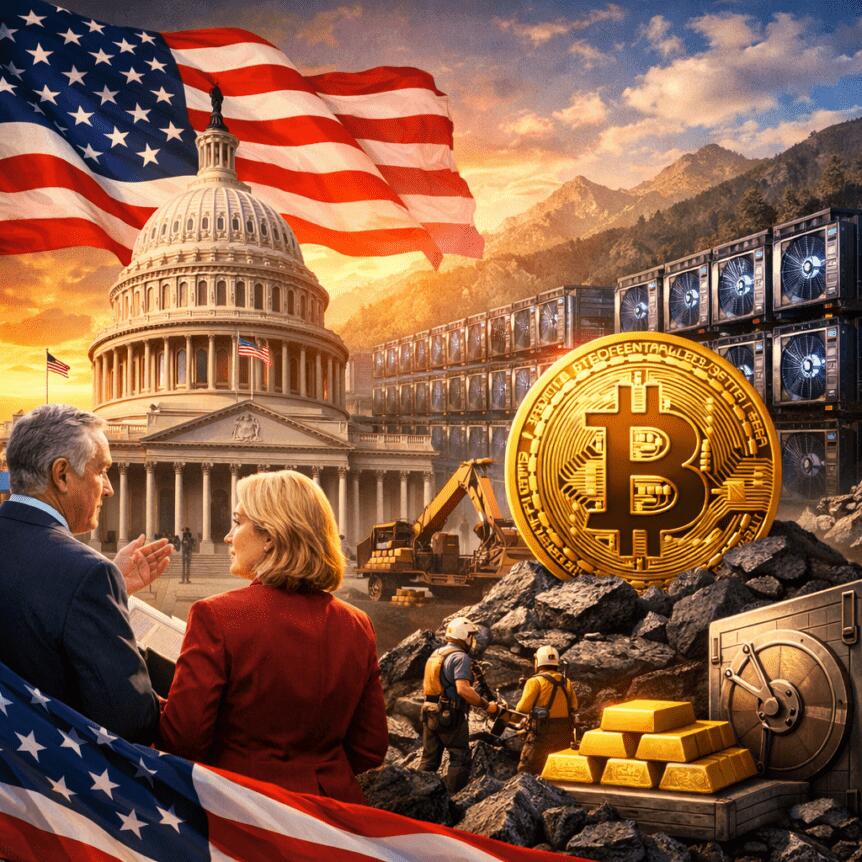
A pair of U.S. Republican senators unveiled the Mined in America Act on Monday, a bid to bring more Bitcoin mining manufacturing back onshore and to codify a Strategic Bitcoin Reserve envisioned by an earlier executive action. The bill would create a voluntary “Mined in America” certification for crypto mining facilities and mining pools; certified operations would be required to phase out mining hardware tied to foreign adversaries and support domestic manufacturing of mining gear.
This effort arrives as the United States has established itself as a global hub for Bitcoin mining hashrate following China’s 2021 crackdown. Today, the U.S. accounts for roughly 38% of the Bitcoin network’s hashrate, more than double that of Russia, which sits in second place. The draft legislation also directs federal agencies to help U.S. manufacturers develop more secure and energy-efficient mining equipment and seeks to formalize the Strategic Bitcoin Reserve, a concept associated with previous executive actions.
Key takeaways
- The Mined in America Act would create a voluntary certification for mining facilities and pools, with a requirement to phase out equipment tied to foreign adversaries and to bolster domestic manufacturing.
- The bill would task the National Institute of Standards and Technology and the Manufacturing Extension Partnership with assisting U.S. producers in developing more secure and energy-efficient crypto mining hardware.
- It also seeks to codify a Strategic Bitcoin Reserve, linking the certification program to a broader national strategy for the digital-asset sector.
- Despite U.S. dominance in hashrate, most mining hardware is produced abroad; industry observers point to China-based manufacturers as a continued share of supply.
- Recent enforcement events—such as the temporary seizure of Bitmain ASIC miners at U.S. ports by customs authorities—highlight ongoing supply-chain and compliance challenges for miners.
A pathway to certification and onshoring mining hardware
Senators Bill Cassidy and Cynthia Lummis introduced the Mined in America Act to formalize a domestic-first approach to crypto mining operations. The proposed certification would be voluntary for mining facilities and pools, with the aim of creating a vetted network of onshore participants. Proponents argue that certified entities would commit to gradually phasing out equipment sourced from companies tied to foreign adversaries, while simultaneously supporting the growth of U.S.-based manufacturing capacity.
In backing the measure, Cassidy framed digital asset mining as an important part of the American economy and said the industry should be developed domestically. The sponsor’s office highlighted the potential for a self-reinforcing cycle: certified operations and a stronger domestic supply chain could feed into a more resilient grid, while advancing the Strategic Bitcoin Reserve concept.
The bill would also assign a role to U.S. science and industry agencies. Specifically, the National Institute of Standards and Technology (NIST) and the Manufacturing Extension Partnership would be asked to collaborate with domestic manufacturers to design more secure and energy-efficient mining hardware. The drafting argues that better equipment and secure operations could reduce risk in energy markets and enhance national security considerations tied to the crypto ecosystem.
Strategic Bitcoin Reserve and regulatory alignment
Integral to the proposal is a formalized pathway to a Strategic Bitcoin Reserve, a concept associated with executive actions in past years. The bill would seek to codify the framework for such a reserve, aligning it with broader federal support for the mining sector and the domestic manufacturing base. Supporters argue that a U.S.-backed reserve could provide strategic liquidity for the network, while critics warn about potential political and market implications of state-backed asset strategies.
Advocates assert that the Mined in America Act would help reduce reliance on foreign manufacturing, while connecting mining operations to critical energy infrastructure. Dennis Porter, CEO of the Satoshi Action Fund and an advocate for the bill, described the legislation as breaking dependency on foreign supply chains by fostering domestic manufacturing, certifying compliant mining operations, and linking those efforts to grid improvements and the Strategic Bitcoin Reserve pathway.
Context: supply-chain dynamics and enforcement realities
The United States has become a leading Bitcoin mining nation by hashrate after China’s crackdown, hosting about 38% of the network’s hashrate—well above Russia, the next-largest contributor. Yet, the composition of mining hardware remains heavily concentrated in foreign hands. Industry observers note that a substantial majority of mining gear is manufactured by two Chinese firms, Bitmain and MicroBT, underscoring why domestic manufacturing incentives are viewed as strategically important by supporters of the act.
Recent regulatory and enforcement actions have also shaped the current landscape. In late 2024, the U.S. Customs and Border Protection paused shipments of thousands of Bitmain ASIC miners at several ports due to compliance concerns, a disruption felt by operators and brokers alike. Luxor Technology, a notable mining firm, reported that seized miners were initially believed to be misclassified as illegal imports of radio frequency devices, illustrating the friction between import controls and the crypto hardware market. These episodes highlight the practical challenges miners face in moving equipment across borders and the potential leverage such events hold for policy debates about onshoring mining activity.
Given this backdrop, proponents of the Mined in America Act frame the legislation as a structural shift—aligning policy with a renewed domestic manufacturing push, a voluntary certification tied to responsible sourcing, and a formal mechanism for a Strategic Bitcoin Reserve. As Cassidy put it in his statement, digital asset mining is a big part of the economy and deserves to be developed here in the United States. Porter echoed the sentiment, arguing that the bill creates a virtuous cycle of domestic manufacturing, certified operations, and energy infrastructure, all connected to a strategic reserve.
The proposal arrives at a moment when policymakers across the spectrum are weighing how to balance national security concerns, energy costs, and the growth of an increasingly globalized crypto ecosystem. While it aims to reduce foreign dependence, the precise impact on miners’ costs, hardware access, and market dynamics will hinge on how the certification is designed, how the reserve is operationalized, and the interplay with existing export controls and port inspections.
What remains uncertain is how broadly industry participants will embrace a voluntary certification scheme and whether Congress will translate this proposal into law amid competing priorities. Investors, miners, and hardware manufacturers will likely watch closely for details on eligibility, compliance costs, and timelines for any regulatory milestones that could reshape the U.S. mining landscape.
Readers should monitor updates on whether the bill progresses through committee and how federal agencies translate the certification framework into practical standards for equipment security, energy efficiency, and supply-chain resilience.
This article was originally published as Senators Float Mined in America Act to Boost BTC Mining, Codify Reserve on Crypto Breaking News – your trusted source for crypto news, Bitcoin news, and blockchain updates.
Ayrıca Şunları da Beğenebilirsiniz

Claude Code has been found to have two caching bugs that could silently increase API costs by 10-20 times.

US President Trump willing to end Iran war without reopening Strait of Hormuz – WSJ