

Nigerian James Aliyu sentenced to over 7 years in the US for ₦5.6 billion scam
A Nigerian national, James Aliyu, who directed a massive international cybercrime operation from his home in Sandton, Johannesburg, has been sentenced to 90 months in a United States federal prison.
James Junior “Oldsoldier” Aliyu, aged 30, was the last defendant sentenced in a large-scale business email compromise and money laundering scheme that victimised Americans for almost a decade.
Following his arrest in Sandton in 2022, Aliyu was extradited to the US, where he pleaded guilty last year to conspiracy to commit wire fraud and money laundering.
In addition to his seven-and-a-half-year prison sentence, the US District Court for Maryland ordered Aliyu to pay $2,389,130 (approximately ₦3.3 billion) in restitution. The sentencing marks the end of a decade-long investigation into a cell of the Black Axe confraternity that used sophisticated techniques to deceive businesses and individuals out of millions.
From early 2017, Aliyu and his co-conspirators gained unauthorised access to the email servers of various organisations, allowing them to monitor sensitive business communications. The group specialised in spoofing emails, a technique where the sender’s address is forged to appear as a legitimate contact, such as a business partner or a senior executive.
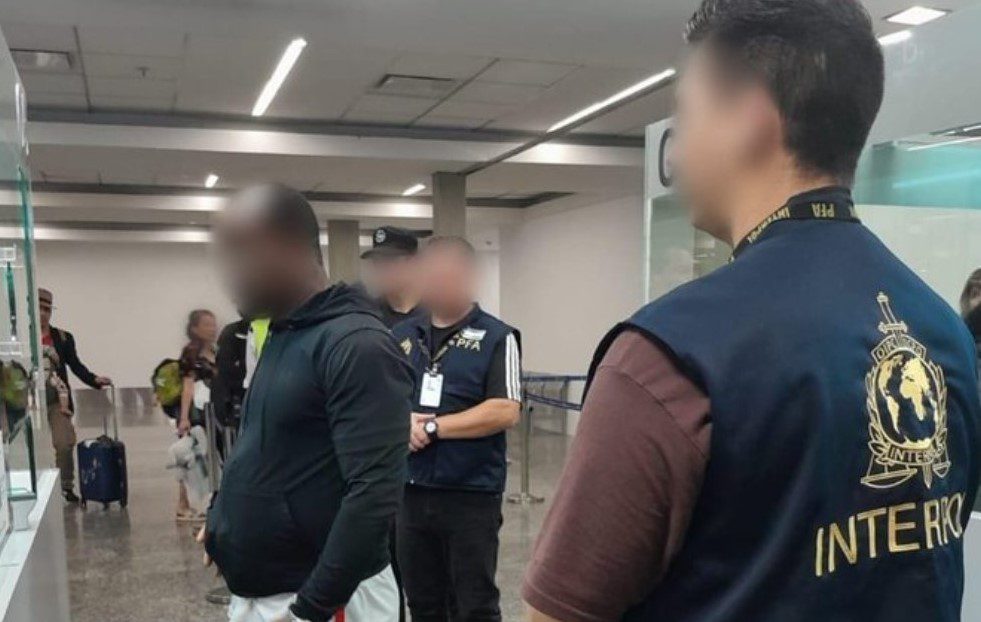 IM: INTERPOL
As part of a plea agreement with the US Department of Justice, Aliyu admitted guilt for his involvement in intended losses exceeding $4.16 million (approximately ₦5.74 billion).
Victims were successfully defrauded of at least $1.57 million (approximately ₦2.16 billion), with Aliyu personally controlling at least $1.19 million (approximately ₦1.64 billion) of the laundered funds. After the money was deposited into drop accounts, the group used account transfers, cash withdrawals, and cashier’s checks to hide who really owned the money and where it came from.
Aliyu lived in Sandton, South Africa, an affluent area, and he was known for displaying his extravagant lifestyle on social media even as the investigation against him grew more serious.
International operation brings down cybercrime network
Aliyu’s arrest was the result of a high-stakes operation involving Interpol, the South African Police Service, and the Directorate for Priority Crime Investigation (Hawks). The investigation, also called the Fomukong (Albanky) case and Operation Red Card, spanned a decade and involved coordinated efforts across multiple countries.
Cybercrime investigator Stephen Dougherty, who helped track the network and now works at Rexxfield, described the case as an example of what international cooperation can achieve.
“This case stands as a powerful example of what true interagency and international cooperation can accomplish in the fight against cybercrime,” Dougherty reflected on LinkedIn.
 Cybercrime investigator Stephen Dougherty
He credited the success to the combined efforts of the US Secret Service, Homeland Security Investigations, Interpol, and the critical contributions of South African authorities.
Also read: FBI names Nigerian tech founder Izunna Okonkwo in $41m insider trading probe
Dougherty explained that the extradition and sentencing of Aliyu was not only a warning to cybercriminals but also gave hope to victims.
The human cost of cybercrime
Dougherty noted that such success did not come without sacrifice, as agents and investigators missed birthdays, anniversaries, and time with their families.
Without revealing specifics about the impact on victims, he said individuals like Aliyu and the networks behind them cause real harm. “You were not forgotten. You were fought for. And justice was served.” Dougherty added.
The case highlights the growing sophistication of cybercrime networks operating across African countries whilst targeting victims globally.
 SAPS, Hawks, and Interpol officers during Operation Jackal (Source: MyBroadband)
Business Email Compromise schemes have become one of the most financially damaging forms of cybercrime, costing businesses billions of dollars annually through carefully crafted impersonation attacks.
Aliyu’s sentencing serves as a reminder that cybercriminals can be tracked, extradited, and prosecuted regardless of where they operate, particularly when international law enforcement agencies coordinate their efforts.
The post Nigerian James Aliyu sentenced to over 7 years in the US for ₦5.6 billion scam first appeared on Technext.
Ayrıca Şunları da Beğenebilirsiniz

Dogecoin Price Climbs as Crypto Market Rebounds

‘Missed the Bitcoin Bus’ With 600 BTC 16 Years Ago and Satoshi Around: $42.7 Million Now

