Crypto News March 2026: SEC Clears Most Tokens While DeepSnitch AI, SOL, and BNB Line Up for the Next Big Move

As per the latest crypto news today, the SEC has officially stated that most crypto assets are not securities.
When the government stops treating your portfolio like a bag of unregistered securities, the projects inside it get repriced, new money enters the market, and the altcoin cycle that everyone has been waiting on gets a legitimate foundation to run from.
The crypto news driving this list connects directly to where that capital flows next, and DeepSnitch AI is the presale positioned to capture the sharpest end of that move before the broader market prices it in.

The SEC just said most crypto assets are not securities, and every trader needs to understand what that means for their portfolio
SEC Chair Paul Atkins stood at the DC Blockchain Summit on March 17 and stated that most crypto assets do not qualify as securities under federal law, with only one category remaining under its jurisdiction: traditional securities that have been tokenized.
Atkins put it plainly, saying that most crypto assets are not themselves securities and that investment contracts can come to an end. This is the crypto industry news that changes how institutions allocate, how developers build, and how traders price risk across the entire market.
When regulatory fog lifts completely, the projects with real utility, clean audits, and working products are always the first ones to get repriced, and that is exactly the setup sitting in front of traders right now.
DeepSnitch AI ($DSNT): The presale that is sitting on 197% gains without exchange listing
The latest blockchain news is pushing fresh momentum into AI and utility tokens, and DeepSnitch AI stands out as a presale that already has real tools traders can use before listing. It is not just an idea, it is a working setup built for active trading.
AuditSnitch checks contracts for malicious code before you approve anything. SnitchGPT gives you on-chain research based on real data instead of hype. SnitchFeed tracks whale wallet activity live so you can see accumulation early.
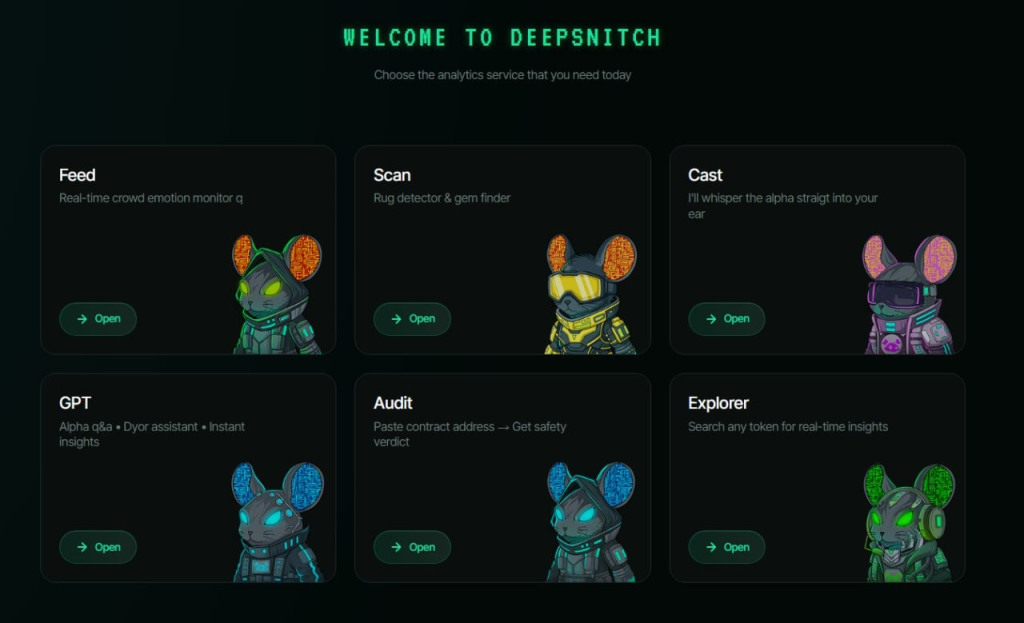
Token Explorer breaks down risk, holder distribution, and liquidity in seconds. SnitchCast keeps a constant flow of market insight so you are never trading without context.
Both Coinsult and SolidProof independently audited the contract and confirmed everything is clean, giving traders another layer of confidence going into the presale.
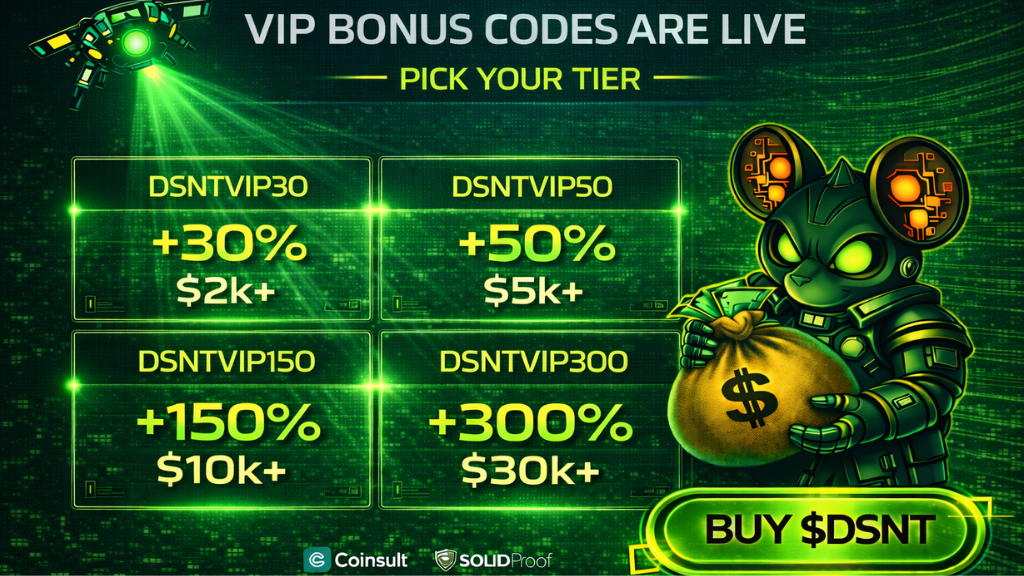
The presale has raised over $2 million and is handing early holders 197% gains before the token has touched a public exchange. At today’s price of $0.04487, putting in $15,000 gets you about 334,299 $DSNT at the base rate. But with the 150% bonus, that same $15K jumps to around 835,748 tokens before it even hits the market, which is where it starts to get interesting.
If this runs hard, the numbers get crazy fast. A 300x would put that stack at over $11.2 million, and a 500x scenario pushes it past $18.7 million.
Solana (SOL) price prediction: The Layer-1 that institutional money keeps coming back to
SOL is trading around $94 on March 18 after pulling back hard from its January 2025 all-time high of $293. That correction has set up what analysts are calling one of the cleaner accumulation structures on any major Layer-1 right now.
Fidelity, VanEck, and Invesco all have spot Solana ETF applications in front of the SEC, and the crypto industry news around the new regulatory framework makes approval significantly more likely than it was six months ago.
Analyst 2026 targets range from $250 on the conservative end to $500 in a full altcoin cycle. SOL at $94 with that setup ahead of it is one of the most credible safe-ROI plays in the current crypto news environment.
BNB price prediction: The burn machine that keeps getting cheaper to ignore
BNB is sitting around $674 on March 18 with the kind of tokenomics story that most projects spend years trying to build and never quite pull off.
The 34th quarterly burn executed on January 15, 2026, destroyed 1.37 million BNB worth approximately $1.27 billion in a single transaction, reducing the circulating supply under the Auto-Burn system that adjusts burn amounts based on price and network activity.
Binance user consensus puts the 2026 BNB forecast at $800, with the bull case pushing toward $1,000 if market structure improves through the second half of the year.
As blockchain news today continues to validate the regulated exchange ecosystem, BNB carries one of the most defensible floor cases in the digital asset market news right now.
Bottom line
The SEC clearing most crypto assets from securities classification is the crypto news moment the entire industry has been building toward, and the projects that move first after regulatory clarity are always the ones with working products and audited foundations.
SOL and BNB are strong cycle plays with analyst-backed upside and institutional conviction already on the board. But neither closes in 13 days. Neither has 197% presale gains already running for early holders. Neither has five live AI trading tools in traders’ hands right now.
The best crypto news you will act on this month is that DeepSnitch AI is still open at $0.04487 until March 31, and that entry closes permanently when the presale does.
Visit the official DeepSnitch AI website, use promo code DSNTVIP150 at checkout for 150% bonus, and join X and Telegram to connect with the team and fellow holders.
FAQs
Why is the SEC ruling the biggest crypto industry news for traders sizing into new positions right now?
When the SEC officially says most tokens are not securities, the regulatory overhang that kept institutional money on the sidelines disappears fast, and projects with real utility get repriced first, which is exactly why DeepSnitch AI at $0.04487 with five live tools and a March 31 close is the most time-sensitive crypto industry news trade on the board right now.
Is SOL actually worth stacking based on current blockchain news today, or is the ETF narrative just hype?
Fidelity, VanEck, and Invesco all have live spot SOL ETF applications, six straight weeks of institutional inflows are confirmed, and analyst 2026 targets hit $420 to $500, so the thesis is backed by real capital flow, not just social media sentiment. But if you want a moonshot before March 31, DeepSnitch AI at $0.04487 with a 300x to 500x position is here.
What makes BNB a solid pick in this digital asset market news cycle beyond just being a Binance token?
The January 2026 quarterly burn wiped 1.37 million BNB worth $1.27 billion in one shot, the Fermi upgrade cut block time to 0.45 seconds, and 17.6 million daily transactions in 2025 with zero downtime prove the network is genuinely being used at scale. But the digital asset market news story with the actual parabolic setup is still DeepSnitch AI with up to 300% bonuses.
DISCLAIMER: CAPTAINALTCOIN DOES NOT ENDORSE INVESTING IN ANY PROJECT MENTIONED IN SPONSORED ARTICLES. EXERCISE CAUTION AND DO THOROUGH RESEARCH BEFORE INVESTING YOUR MONEY. CaptainAltcoin takes no responsibility for its accuracy or quality. This content was not written by CaptainAltcoin’s team. We strongly advise readers to do their own thorough research before interacting with any featured companies. The information provided is not financial or legal advice. Neither CaptainAltcoin nor any third party recommends buying or selling any financial products. Investing in crypto assets is high-risk; consider the potential for loss. Any investment decisions made based on this content are at the sole risk of the readCaptainAltcoin is not liable for any damages or losses from using or relying on this content.
The post Crypto News March 2026: SEC Clears Most Tokens While DeepSnitch AI, SOL, and BNB Line Up for the Next Big Move appeared first on CaptainAltcoin.
Ayrıca Şunları da Beğenebilirsiniz

Franklin Templeton CEO Dismisses 50bps Rate Cut Ahead FOMC

Cashing In On University Patents Means Giving Up On Our Innovation Future