TLDR The Dow rose over 600 points Monday as oil prices pulled back from $100 a barrel WTI crude briefly crossed $100 for the first time since 2022 before fallingTLDR The Dow rose over 600 points Monday as oil prices pulled back from $100 a barrel WTI crude briefly crossed $100 for the first time since 2022 before falling

Stocks and Crypto Rise as Hormuz Tensions Keep Oil Markets on Edge

2026/03/16 22:45
Okuma süresi: 3 dk
Bu içerikle ilgili geri bildirim veya endişeleriniz için lütfen crypto.news@mexc.com üzerinden bizimle iletişime geçin.

TLDR

  • The Dow rose over 600 points Monday as oil prices pulled back from $100 a barrel
  • WTI crude briefly crossed $100 for the first time since 2022 before falling back to around $94
  • Trump is pressing allies to help reopen the Strait of Hormuz, where 20% of global oil supply flows
  • Bitcoin, Ethereum, and XRP all surged as crypto was treated as a hedge against Iran-related risk
  • The Federal Reserve meets Tuesday and Wednesday, with rates expected to stay unchanged

US stocks climbed Monday as oil prices pulled back from historic highs, giving investors some room to breathe after weeks of pressure tied to the conflict in Iran.

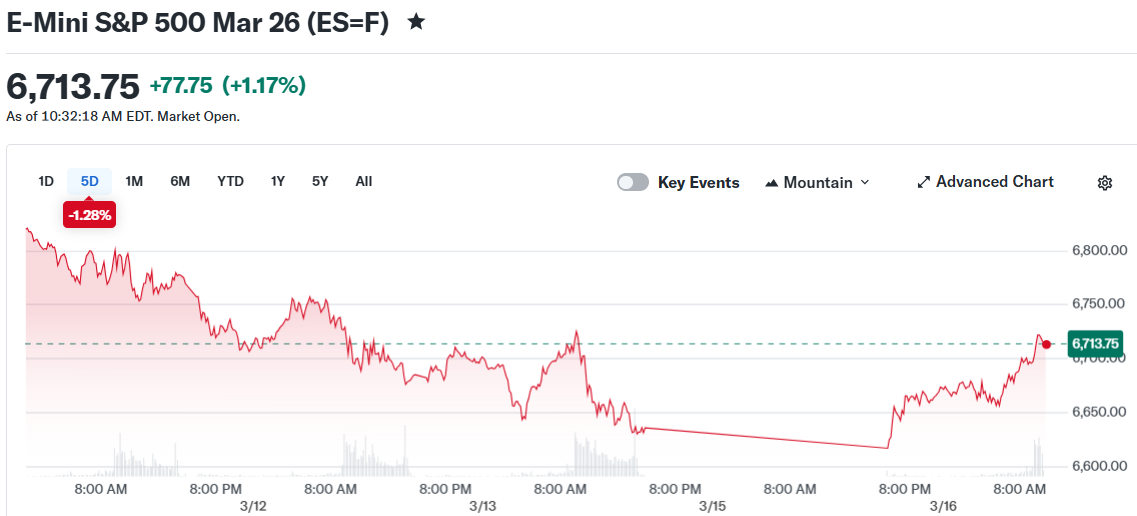
The Dow Jones Industrial Average rose around 600 points, or roughly 1.3%. The S&P 500 gained about 1.4% and the Nasdaq added around 1.5%.
E-Mini S&P 500 Mar 26 (ES=F)E-Mini S&P 500 Mar 26 (ES=F)

West Texas Intermediate crude briefly topped $100 a barrel overnight — its first time at that level since 2022 — before falling back to around $94. Brent crude held just above $100.

The drop in oil gave stocks an opening to rally. Paul Hickey of Bespoke Investment Group said the short-term direction of the market remains tied directly to where oil goes next.

The Strait of Hormuz, which handles around 20% of global oil supply, has been disrupted for three weeks now. President Trump called on NATO allies over the weekend to join the US in helping break Iran’s blockade of the waterway.

How Oil Prices Are Shaping Fed Expectations

The Federal Reserve begins its two-day policy meeting Tuesday. Officials are widely expected to keep interest rates unchanged Wednesday.

But the oil situation is adding uncertainty. Higher energy prices push up inflation, which could complicate the Fed’s decisions on rates in the months ahead.

Chris Larkin of E*TRADE from Morgan Stanley said any rebound in stocks could be short-lived without a clear path for oil prices to come down. The S&P 500 is still down about 5% from its January 27 high.

Forecasts from central bank officials released Wednesday will be watched closely for any signals about how policymakers see the Iran conflict affecting their outlook.

Crypto Markets Climb on Iran Hedge Demand

Bitcoin, Ethereum, and XRP all moved higher Monday. Analysts pointed to growing demand for crypto as a hedge against geopolitical risk tied to Iran.

This mirrors a pattern seen in past periods of Middle East tension, where some investors moved money into digital assets as a store of value outside traditional markets.

On the corporate side, Nvidia kicked off its annual GTC conference Monday with a keynote from CEO Jensen Huang. The event focuses on AI and chip technology and is being closely watched by investors tracking the AI sector.

The post Stocks and Crypto Rise as Hormuz Tensions Keep Oil Markets on Edge appeared first on CoinCentral.

Sorumluluk Reddi: Bu sitede yeniden yayınlanan makaleler, halka açık platformlardan alınmıştır ve yalnızca bilgilendirme amaçlıdır. MEXC'nin görüşlerini yansıtmayabilir. Tüm hakları telif sahiplerine aittir. Herhangi bir içeriğin üçüncü taraf haklarını ihlal ettiğini düşünüyorsanız, kaldırılması için lütfen crypto.news@mexc.com ile iletişime geçin. MEXC, içeriğin doğruluğu, eksiksizliği veya güncelliği konusunda hiçbir garanti vermez ve sağlanan bilgilere dayalı olarak alınan herhangi bir eylemden sorumlu değildir. İçerik, finansal, yasal veya diğer profesyonel tavsiye niteliğinde değildir ve MEXC tarafından bir tavsiye veya onay olarak değerlendirilmemelidir.

Ayrıca Şunları da Beğenebilirsiniz

And the Big Day Has Arrived: The Anticipated News for XRP and Dogecoin Tomorrow
And the Big Day Has Arrived: The Anticipated News for XRP and Dogecoin Tomorrow

The first-ever ETFs for XRP and Dogecoin are expected to launch in the US tomorrow. Here's what you need to know. Continue Reading: And the Big Day Has Arrived: The Anticipated News for XRP and Dogecoin Tomorrow
Paylaş
Coinstats2025/09/18 04:33
Swiss Franc Intervention: Critical Analysis of SNB’s 2025 Policy and Safe-Haven Resilience

Swiss Franc Intervention: Critical Analysis of SNB’s 2025 Policy and Safe-Haven Resilience

BitcoinWorld Swiss Franc Intervention: Critical Analysis of SNB’s 2025 Policy and Safe-Haven Resilience ZURICH, March 2025 – The Swiss National Bank faces mounting
Paylaş
bitcoinworld2026/03/16 23:10
Cashing In On University Patents Means Giving Up On Our Innovation Future

Cashing In On University Patents Means Giving Up On Our Innovation Future

The post Cashing In On University Patents Means Giving Up On Our Innovation Future appeared on BitcoinEthereumNews.com. “It’s a raid on American innovation that would deliver pennies to the Treasury while kneecapping the very engine of our economic and medical progress,” writes Pipes. Getty Images Washington is addicted to taxing success. Now, Commerce Secretary Howard Lutnick is floating a plan to skim half the patent earnings from inventions developed at universities with federal funding. It’s being sold as a way to shore up programs like Social Security. In reality, it’s a raid on American innovation that would deliver pennies to the Treasury while kneecapping the very engine of our economic and medical progress. Yes, taxpayer dollars support early-stage research. But the real payoff comes later—in the jobs created, cures discovered, and industries launched when universities and private industry turn those discoveries into real products. By comparison, the sums at stake in patent licensing are trivial. Universities collectively earn only about $3.6 billion annually in patent income—less than the federal government spends on Social Security in a single day. Even confiscating half would barely register against a $6 trillion federal budget. And yet the damage from such a policy would be anything but trivial. The true return on taxpayer investment isn’t in licensing checks sent to Washington, but in the downstream economic activity that federally supported research unleashes. Thanks to the bipartisan Bayh-Dole Act of 1980, universities and private industry have powerful incentives to translate early-stage discoveries into real-world products. Before Bayh-Dole, the government hoarded patents from federally funded research, and fewer than 5% were ever licensed. Once universities could own and license their own inventions, innovation exploded. The result has been one of the best returns on investment in government history. Since 1996, university research has added nearly $2 trillion to U.S. industrial output, supported 6.5 million jobs, and launched more than 19,000 startups. Those companies pay…
Paylaş
BitcoinEthereumNews2025/09/18 03:26