You’ve done the hard work. Your ecommerce brand has built momentum domestically, and international customers are already finding you. Orders trickle in from GermanyYou’ve done the hard work. Your ecommerce brand has built momentum domestically, and international customers are already finding you. Orders trickle in from Germany

Why Your Cross-Border Expansion Stalls at Payments: Fixing FX, Routing, and Declines Without Rebuilding the Store

2026/03/11 23:43
Okuma süresi: 6 dk
Bu içerikle ilgili geri bildirim veya endişeleriniz için lütfen crypto.news@mexc.com üzerinden bizimle iletişime geçin.

You’ve done the hard work. Your ecommerce brand has built momentum domestically, and international customers are already finding you. Orders trickle in from Germany, Australia, the UK. The opportunity feels tangible.

Then reality hits.

Why Your Cross-Border Expansion Stalls at Payments: Fixing FX, Routing, and Declines Without Rebuilding the Store

Your payment decline rates in new markets hover around 30%. Currency conversion fees eat into already-thin margins. Customers abandon checkout when they see prices in unfamiliar currencies. Your cross-border expansion—once a growth priority—quietly stalls.

Here’s what most ecommerce marketers don’t realize: the problem isn’t your product, your marketing, or even your shipping strategy. It’s your payments infrastructure. And the good news? You don’t need to rebuild your entire store to fix it.

The Hidden Friction Killing International Conversions

When domestic customers check out, everything works seamlessly. Your payment processor knows the card networks, the banks respond predictably, and transactions flow.

International payments operate differently. Every cross-border transaction involves multiple parties: issuing banks in the customer’s country, acquiring banks in yours, currency exchange providers, and fraud detection systems that may flag unfamiliar purchasing patterns.

Each handoff creates friction. Each friction point creates decline opportunities.

Consider this scenario: A customer in France attempts to purchase from your US-based Shopify store. Their bank sees an international transaction, potentially flags it for review, and the payment fails. The customer receives a vague error message. They don’t try again—they find a local alternative.

You never even knew you lost them.

Three core issues typically drive cross-border payment failures:

  1. Foreign exchange complexity– Customers see prices in USD, mentally calculate conversions, and hesitate. Or worse, they’re surprised by conversion fees at checkout., with 33% abandoning their carts when prices are presented in unfamiliar currencies.
  2. Suboptimal payment routing– Your processor sends transactions through networks that aren’t optimized for specific regions, increasing decline rates.
  3. Aggressive fraud filters– Systems designed to protect against fraud inadvertently block legitimate international customers whose purchasing patterns differ from domestic norms.

Strategic Fixes That Don’t Require Platform Migration

The instinct when facing payment problems is often to consider switching platforms entirely. That’s rarely necessary—and it’s certainly not where you should start.

Localize Currency Display and Processing

Customers convert at significantly higher rates when they see prices in their local currency—with 92% of online shoppers preferring to shop on sites that price in their local currency.

This isn’t just about convenience; it’s about trust. A price displayed in euros signals to a German customer that you understand their market.

Most major ecommerce platforms—Shopify, WooCommerce, BigCommerce—support multi-currency display either natively or through apps. The key is ensuring you’re not just displaying local currency but also processing in it where possible.

Processing in local currency reduces conversion fees and shifts exchange rate risk away from your customers. Some payment processors offer dynamic currency conversion, but be cautious—these often include hidden markups that erode customer trust.

Optimize Payment Routing by Region

Not all payment processors perform equally across all markets. A processor that delivers 95% authorization rates in the US might drop to 75% in Southeast Asia.

Work with your payment provider to understand regional performance data. Ask specifically about:

  • Authorization rates by country
  • Decline reason codes (soft declines vs. hard declines)
  • Local acquiring relationships in key markets

Some merchants benefit from using multiple payment processors, routing transactions based on customer location. This adds complexity but can dramatically improve conversion rates in underperforming regions.

Refine Fraud Detection for International Patterns

Fraud prevention tools trained primarily on domestic transactions often misidentify legitimate international orders as suspicious. Merchants reject around 5% of orders due to suspicions of fraud, according to the 2024 Global eCommerce Payments & Fraud Report.

Different countries have different purchasing behaviors—average order values, time-of-day patterns, and device usage all vary.

Review your fraud rules with international expansion in mind. Consider:

  • Adjusting velocity limits for markets with different shopping patterns
  • Whitelisting specific countries where you’re actively marketing
  • Using fraud tools that incorporate regional behavioral data

The goal isn’t to reduce fraud protection—it’s to make it smarter.

Connecting Payments to Your Marketing Strategy

Here’s where payments and marketing intersect in ways most ecommerce teams overlook.

When a payment declines, you lose more than a single transaction. You lose the customer’s email address, their browsing history, and the ability to re-engage them through your marketing automation. They become a ghost.

But when payments succeed, everything downstream works better. Your welcome series reaches actual customers. Your post-purchase flows build loyalty with people who completed transactions. Your win-back campaigns target customers who’ve actually bought from you before.

This is why payment optimization isn’t just a finance or operations concern—it’s a marketing concern.

Consider how you communicate with customers throughout the payment process. Your transactional emails, order confirmations, and even your email sign offs should reflect the same brand voice you use in campaigns. Consistency builds trust, and trust reduces the anxiety that often accompanies international purchases.

Measuring What Matters

Before implementing changes, establish baseline metrics:

  • Authorization rate by country– What percentage of attempted transactions succeed?
  • Decline reason distribution– Are declines coming from fraud filters, bank rejections, or technical errors?
  • Checkout abandonment by currency– Do customers drop off more frequently when seeing foreign currencies?
  • Customer lifetime value by market– Are international customers who do convert becoming repeat buyers?

These metrics help you prioritize fixes and measure impact. A 5% improvement in authorization rate in a high-volume market can translate to significant revenue—without any additional marketing spend.

Moving Forward Without Starting Over

Cross-border expansion doesn’t require rebuilding your store or switching platforms. It requires understanding where friction exists and systematically addressing it.

Start with the highest-volume international markets where you’re already seeing traffic. Implement currency localization, review your fraud rules, and have direct conversations with your payment processor about regional performance.

The brands that win internationally aren’t necessarily the ones with the most sophisticated infrastructure. They’re the ones that remove friction at every step—from first click to successful transaction to loyal customer.

Your international customers are already looking for you. Make sure your payments infrastructure lets them find you.

Comments
Piyasa Fırsatı
CROSS Logosu
CROSS Fiyatı(CROSS)
$0.07152
$0.07152$0.07152
+1.90%
USD
CROSS (CROSS) Canlı Fiyat Grafiği
Sorumluluk Reddi: Bu sitede yeniden yayınlanan makaleler, halka açık platformlardan alınmıştır ve yalnızca bilgilendirme amaçlıdır. MEXC'nin görüşlerini yansıtmayabilir. Tüm hakları telif sahiplerine aittir. Herhangi bir içeriğin üçüncü taraf haklarını ihlal ettiğini düşünüyorsanız, kaldırılması için lütfen crypto.news@mexc.com ile iletişime geçin. MEXC, içeriğin doğruluğu, eksiksizliği veya güncelliği konusunda hiçbir garanti vermez ve sağlanan bilgilere dayalı olarak alınan herhangi bir eylemden sorumlu değildir. İçerik, finansal, yasal veya diğer profesyonel tavsiye niteliğinde değildir ve MEXC tarafından bir tavsiye veya onay olarak değerlendirilmemelidir.

Ayrıca Şunları da Beğenebilirsiniz

Tether Backs Ark Labs’ $5.2 Million Bet on Bitcoin’s Stablecoin Revival

Tether Backs Ark Labs’ $5.2 Million Bet on Bitcoin’s Stablecoin Revival

The post Tether Backs Ark Labs’ $5.2 Million Bet on Bitcoin’s Stablecoin Revival appeared on BitcoinEthereumNews.com. In brief Ark Labs secured backing from Tether
Paylaş
BitcoinEthereumNews2026/03/12 21:44
MySQL Single Leader Replication with Node.js and Docker

MySQL Single Leader Replication with Node.js and Docker

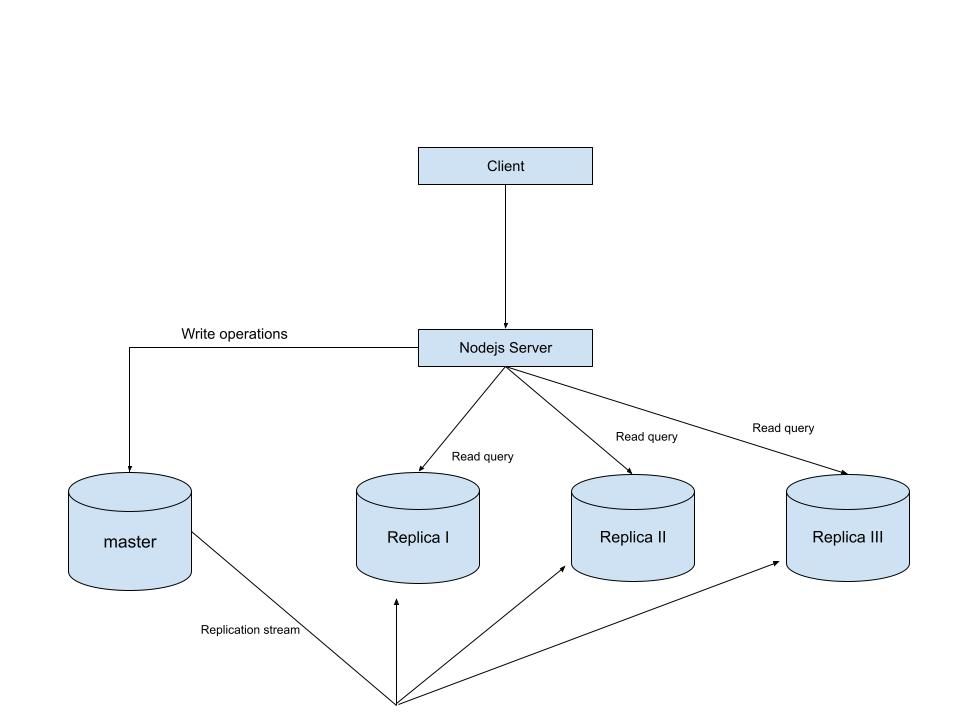
Modern applications demand high availability and the ability to scale reads without compromising performance. One of the most common strategies to achieve this is Replication. In this setup, we configured a single database to act as the leader (master) and handle all write operations, while three replicas handle read operations. In this article, we’ll walk through how to set up MySQL single-leader replication on your local machine using Docker. Once the replication is working, we’ll connect it to a Node.js application using Sequelize ORM, so that reads are routed to the replica and writes go to the master. By the end, you’ll have a working environment where you can see replication in real time Prerequisites knowledge of database replication Background knowledge of docker and docker compose Background knowledge of Nodejs and how to run a NodeJS server An Overview of what we are building Setup Setup our database servers on docker compose in the root of our project directory, create a file named docker-compose.yml with the following content to setup our mysql primary and replica databases. \ \ name: "learn-replica" volumes: mysqlMasterDatabase: mysqlSlaveDatabase: mysqlSlaveDatabaseII: mysqlSlaveDatabaseIII: networks: mysql-replication-network: services: mysql-master: image: mysql:latest container_name: mysql-master command: --server-id=1 --log-bin=ON environment: MYSQL_ROOT_PASSWORD: master MYSQL_DATABASE: replicaDb ports: - "3306:3306" volumes: - mysqlMasterDatabase:/var/lib/mysql networks: - mysql-replication-network mysql-slave: image: mysql:latest container_name: mysql-slave command: --server-id=2 --log-bin=ON environment: MYSQL_ROOT_PASSWORD: slave MYSQL_DATABASE: replicaDb MYSQL_ROOT_HOST: "%" ports: - "3307:3306" volumes: - mysqlSlaveDatabase:/var/lib/mysql depends_on: - mysql-master networks: - mysql-replication-network mysql-slaveII: image: mysql:latest container_name: mysql-slaveII command: --server-id=2 --log-bin=ON environment: MYSQL_ROOT_PASSWORD: slave MYSQL_DATABASE: replicaDb MYSQL_ROOT_HOST: "%" ports: - "3308:3306" volumes: - mysqlSlaveDatabaseII:/var/lib/mysql depends_on: - mysql-master networks: - mysql-replication-network mysql-slaveIII: image: mysql:latest container_name: mysql-slaveIII command: --server-id=3 --log-bin=ON environment: MYSQL_ROOT_PASSWORD: slave MYSQL_DATABASE: replicaDb MYSQL_ROOT_HOST: "%" ports: - "3309:3306" volumes: - mysqlSlaveDatabaseIII:/var/lib/mysql depends_on: - mysql-master networks: - mysql-replication-network In this setup, I’m creating a master database container called mysql-master and 3 replica containers called mysql-slave, mysql-slaveII and mysql-slaveIII. I won’t go too deep into the docker-compose.yml file since it’s just a basic setup, but I do want to walk you through the command line instructions used in all four services because that’s where things get interesting.
command: --server-id=1 --log-bin=ON The --server-id option gives each MySQL server in your replication setup its own name tag. Each one has to be unique and without it, replication won’t work at all. Another cool option not included here is binlog_format=ROW. This tells MySQL how to keep track of changes before passing them along to the replicas. By default, MySQL already uses row-based replication, but you can explicitly set it to ROW to be sure or switch it to STATEMENT if you’d rather log the actual SQL statements instead of row-by-row changes. \ Run our containers on docker Now, in the terminal, we can run the following command to spin up our database containers: docker-compose up -d \ Setting Up Our Master (Primary) Server To configure our master server, we would have to first access the running instance on docker using the following command docker exec -it mysql-master bash This command opens an interactive Bash shell inside the running Docker container named mysql-master, allowing us to run commands directly inside that container. \ Now that we’re inside the container, we can access the MySQL server and start running commands. type: mysql -uroot -p This will log you into MySQL as the root user. You’ll be prompted to enter the password you set in your docker-compose.yml file. \ Next, we need to create a special user that our replicas will use to connect to the master server and pull data. Inside the MySQL prompt, run the following commands: \ CREATE USER 'repl_user'@'%' IDENTIFIED BY 'replication_pass'; GRANT REPLICATION SLAVE ON . TO 'repl_user'@'%'; FLUSH PRIVILEGES; Here’s what’s happening: CREATE USER makes a new MySQL user called repl_user with the password replication_pass. GRANT REPLICATION SLAVE gives this user permission to act as a replication client. FLUSH PRIVILEGES tells MySQL to reload the user permissions so they take effect immediately. \ Time to Configure the Replica (Secondary) Servers a. First, let’s access the replica containers the same way we did with the master. Run this command in your terminal for each of the replica containers: \ docker exec -it <replica_container_name> bash mysql -uroot -p <replica_container_name> should be replace with the name of the replica container you are trying to setup b. Now it’s time to tell our replica where to get its data from. While inside the replica’s MySQL shell, run the following command to configure replication using the master’s details: CHANGE REPLICATION SOURCE TO SOURCE_HOST='mysql-master', SOURCE_USER='repl_user', SOURCE_PASSWORD='replication_pass', GET_SOURCE_PUBLIC_KEY=1; With the replication settings in place, let’s fire up the replica and get it syncing with the master. Still inside the MySQL shell on the replica, run: START REPLICA; This starts the replication process. To make sure everything is working, check the replica’s status with:
SHOW REPLICA STATUS\G; Look for Replica_IO_Running and Replica_SQL_Running — if both say Yes, congratulations! 🎉 Your replica is now successfully connected to the master and replicating data in real time.
Testing Our Replication Setup from the Node.js App Now that our replication is successfully set up, we can configure our Node.js server to observe the real-time effect of data being replicated from the master server to the replica server whenever we write to it. We start by installing the following dependencies:
npm i express mysql2 sequelize \ Now create a folder called src in the root directory and add the following files inside that folder connection.js, index.js and model.js. Our current directory should look like this We can now set up our connections to our master and replica server in the connection.js file as shown below
const Sequelize = require("sequelize"); const sequelize = new Sequelize({ dialect: "mysql", replication: { write: { host: "127.0.0.1", username: "root", password: "master", database: "replicaDb", }, read: [ { host: "127.0.0.1", username: "root", password: "slave", database: "replicaDb", port: 3307 }, { host: "127.0.0.1", username: "root", password: "slave", database: "replicaDb", port: 3308 }, { host: "127.0.0.1", username: "root", password: "slave", database: "replicaDb", port: 3309 }, ], }, }); async function connectdb() { try { await sequelize.authenticate(); } catch (error) { console.error("❌ unable to connect to the follower database", error); } } connectdb(); module.exports = { sequelize, }; \ We can now create a User table in the model.js file
const {DataTypes} = require("sequelize"); const { sequelize } = require("./connection"); const User = sequelize.define("User", { name: { type: DataTypes.STRING, allowNull: false, }, email: { type: DataTypes.STRING, unique: true, allowNull: false, }, }); module.exports = User \ and finally in our index.js file we can start our server and listen for connections on port 3000. from the code sample below, all inserts or updates will be routed by sequelize to the master server. while all read queries will be routed to the read replicas.
const express = require("express"); const { sequelize } = require("./connection"); const User = require("./model"); const app = express(); app.use(express.json()); async function main() { await sequelize.sync({ alter: true }); app.get("/", (req, res) => { res.status(200).json({ message: "first step to setting server up", }); }); app.post("/user", async (req, res) => { const { email, name } = req.body; let newUser = await User.build({ name, email, }); // This INSERT will go to the write (master) connection newUser = newUser.save({ returning: false }); res.status(201).json({ message: "User successfully created", }); }); app.get("/user", async (req, res) => { // This SELECT query will go to one of the read replicas const users = await User.findAll(); res.status(200).json(users); }); app.listen(3000, () => { console.log("server has connected"); }); } main(); When you make a POST request to the /users endpoint, take a moment to check both the master and replica servers to observe how data is replicated in real time. Right now, we are relying on Sequelize to automatically route requests, which works for development but isn’t robust enough for a production environment. In particular, if the master node goes down, Sequelize cannot automatically redirect requests to a newly elected leader. In the next part of this series, we’ll explore strategies to handle these challenges
Paylaş
Hackernoon2025/09/18 14:44
Nvidia shares fall 3%

Nvidia shares fall 3%

The post Nvidia shares fall 3% appeared on BitcoinEthereumNews.com. Home » AI » Nvidia shares fall 3% Chipmaker extends decline as investors continue to take profits from recent highs. Photo: Budrul Chukrut/SOPA Images/LightRocket via Getty Images Key Takeaways Nvidia’s stock decreased by 3% today. The decline extends Nvidia’s recent losing streak. Nvidia shares fell 3% today, extending the chipmaker’s recent decline. The stock dropped further during trading as the artificial intelligence chip leader continued its pullback from recent highs. Disclaimer Source: https://cryptobriefing.com/nvidia-shares-fall-2-8/
Paylaş
BitcoinEthereumNews2025/09/18 03:13