

Prediction Markets Face Scrutiny: Democrats Propose Sweeping Ban on War and Assassination Contracts

BitcoinWorld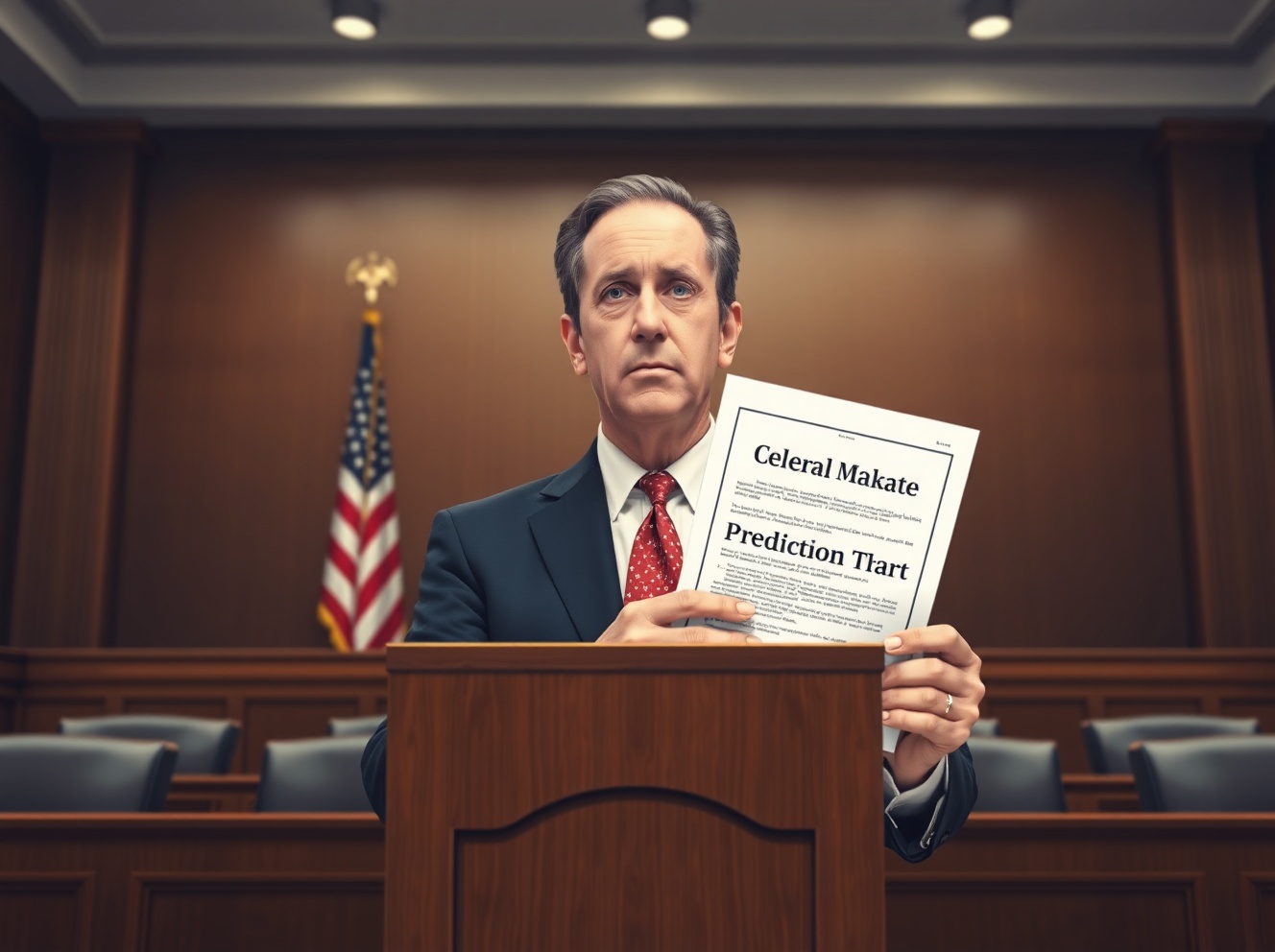
Prediction Markets Face Scrutiny: Democrats Propose Sweeping Ban on War and Assassination Contracts
WASHINGTON, D.C. — In a significant move to regulate speculative financial instruments, U.S. Democratic lawmakers have introduced legislation aiming to prohibit prediction market contracts related to warfare, terrorism, and assassinations. This proposed bill, targeting institutions under the Commodity Futures Trading Commission’s (CFTC) oversight, represents a major escalation in the political debate over the ethical boundaries of financial markets.
Prediction Markets Face New Legislative Hurdle
California Senator Adam Schiff and Representative Mike Levin formally presented the bill to Congress this week. Consequently, the legislation seeks to explicitly ban CFTC-registered institutions from listing or offering contracts based on events involving terrorism, armed conflict, or death. Previously, Democratic legislators had expressed concerns through a formal letter to the CFTC. They urged the regulatory body to sanction specific contracts directly linked to human casualties or national security threats.
Prediction markets, sometimes called information markets, allow participants to trade contracts based on the outcome of future events. These platforms have historically covered political elections, economic indicators, and entertainment awards. However, the expansion into darker subject matter has sparked intense ethical debates. Regulators and lawmakers now question whether all events should be permissible subjects for financial speculation.
The Scope and Rationale of the Proposed Ban
The legislation specifically identifies several prohibited contract types. Firstly, it targets agreements based on acts of terrorism, whether domestic or international. Secondly, it forbids contracts tied to the declaration, escalation, or specific outcomes of military conflicts. Finally, it explicitly bans markets predicting the death or assassination of any individual.
Proponents of the bill argue that such markets create perverse incentives. For instance, a contract betting on a terrorist attack could theoretically motivate bad actors. Furthermore, they contend that profiting from human suffering and geopolitical instability is morally reprehensible. Senator Schiff’s office released a statement emphasizing national security. “Allowing financial speculation on violence and tragedy commodifies human life and potentially endangers our security,” the statement read.
Regulatory History and Market Evolution
The CFTC has grappled with prediction market regulation for over two decades. Notably, the agency granted limited registration to platforms like PredictIt and Kalshi, allowing contracts on political events. However, the regulatory framework has remained ambiguous for non-economic events. The following timeline highlights key regulatory moments:
| Year | Event | Regulatory Impact |
|---|---|---|
| 2012 | CFTC approves North American Derivatives Exchange (Nadex) | Opened door for binary options on economic events |
| 2014 | Launch of PredictIt under CFTC no-action letter | Created a legal pathway for political event contracts |
| 2022 | CFTC moves to revoke PredictIt’s no-action letter | Signaled tighter scrutiny of prediction markets |
| 2024 | Democratic lawmakers send letter to CFTC | Urged action against “death pool” contracts |
| 2025 | Schiff-Levin bill introduced in Congress | Proposes explicit statutory ban on war/assassination contracts |
Market operators and some economists, however, present counterarguments. They assert that prediction markets provide valuable informational signals. Prices in these markets aggregate dispersed knowledge, potentially offering insights into event probabilities. Banning certain categories, they argue, eliminates these signals without addressing root causes of violence.
Potential Impacts on the Prediction Market Industry
The proposed legislation carries significant implications for the growing prediction market sector. Firstly, compliant platforms would need to implement rigorous content moderation. They would have to screen all new contract proposals against the prohibited categories. Secondly, the bill could create a regulatory chilling effect. Platforms might avoid even borderline topics to prevent CFTC scrutiny.
Industry analysts identify several key impacts:
- Contract Diversity Reduction: Platforms may shrink their offering catalogs significantly.
- Operational Cost Increase: Compliance and legal review processes would become more complex and expensive.
- Market Fragmentation: Unregulated offshore platforms could attract trading on banned topics.
- Innovation Slowdown: Developers may hesitate to create new market mechanisms fearing regulatory backlash.
Furthermore, the bill raises complex jurisdictional questions. Many prediction market platforms operate globally. A U.S. ban would not prevent international operators from offering similar contracts. This disparity could push activity toward less regulated jurisdictions, potentially increasing risks for U.S. participants.
Expert Perspectives on Ethics and Efficiency
Academic experts remain divided on the issue. Dr. Anya Petrova, a financial ethics professor at Georgetown University, supports the legislative intent. “Financializing violence crosses a fundamental ethical line,” she stated in an interview. “Markets require certain foundational norms, and treating human life as a tradeable commodity undermines those norms.”
Conversely, Dr. Marcus Thorne, an economist specializing in market design, cautions against overreach. “While bans on assassination markets are straightforward, defining ‘war contracts’ is incredibly complex,” he explained. “Does a contract on troop movements constitute war speculation? The legislation needs precise language to avoid unintended consequences.”
Legal and Constitutional Considerations
The bill’s journey through Congress will likely involve scrutiny of its legal foundations. Legal scholars point to the CFTC’s existing authority under the Commodity Exchange Act. This act grants the commission broad powers to prevent fraud and protect market integrity. However, using this authority to ban entire categories of contracts based on content represents a novel application.
First Amendment concerns may also surface. Some legal analysts argue that prediction markets constitute a form of speech—specifically, the aggregation and expression of beliefs about future events. A content-based restriction would therefore face strict constitutional scrutiny. Proponents of the bill counter that regulating financial contracts falls squarely within Congress’s commerce clause powers, distinguishing it from pure speech regulation.
The legislative process will involve multiple committees. The Senate Agriculture Committee and House Financial Services Committee will likely hold hearings. These sessions will feature testimony from CFTC officials, legal experts, market operators, and ethicists. The outcome remains uncertain, given the complex interplay of ethics, market efficiency, and regulatory authority.
Conclusion
The Democratic proposal to ban prediction market contracts on war and assassinations marks a pivotal moment in financial regulation. It reflects growing political unease with the expansion of speculative markets into domains of human conflict and mortality. The debate will center on balancing ethical boundaries against market efficiency and informational value. As the bill advances, its precise definitions, enforcement mechanisms, and potential unintended consequences will undergo intense examination. The final legislation, if passed, will reshape the landscape of prediction markets and establish new precedents for the limits of financial speculation.
FAQs
Q1: What exactly does the proposed bill ban?
The bill prohibits CFTC-registered institutions from offering prediction market contracts based on acts of terrorism, military conflicts (war), and the death or assassination of individuals.
Q2: Who introduced the legislation?
The bill was introduced by U.S. Senator Adam Schiff (D-CA) and Representative Mike Levin (D-CA).
Q3: Are all prediction markets illegal?
No. The bill targets a specific subset of contracts. Markets on elections, economic data, sports, and entertainment would generally remain unaffected, subject to existing CFTC rules.
Q4: What is the CFTC’s role in prediction markets?
The Commodity Futures Trading Commission regulates derivatives markets in the U.S., which includes certain types of prediction market contracts considered binary options or event contracts.
Q5: What happens if the bill becomes law?
CFTC-registered platforms would be required to de-list any existing contracts falling under the ban and implement systems to prevent new ones. Violations could lead to regulatory sanctions.
This post Prediction Markets Face Scrutiny: Democrats Propose Sweeping Ban on War and Assassination Contracts first appeared on BitcoinWorld.
Ayrıca Şunları da Beğenebilirsiniz

Saudi Awwal Bank Adopts Chainlink Tools, LINK Near $23

Will Bitcoin Retreat? Wall Street, Kalshi’s US CPI Inflation Estimate as Oil Prices Rebound
