ZX Squared Capital founder CK Zheng issued a warning in the first week of March 2026 that Bitcoin is firmly in deep bear market territory and could fall an additionalZX Squared Capital founder CK Zheng issued a warning in the first week of March 2026 that Bitcoin is firmly in deep bear market territory and could fall an additional

Top Altcoins to Buy Now 2026: Investment Firm Warns Bitcoin Could Drop Another 30 Percent and Analyst Says No Altcoin Season Until 2027 as Pepeto Builds in the Window Between Cycles

2026/03/08 05:06
Okuma süresi: 6 dk
Bu içerikle ilgili geri bildirim veya endişeleriniz için lütfen crypto.news@mexc.com üzerinden bizimle iletişime geçin.

ZX Squared Capital founder CK Zheng issued a warning in the first week of March 2026 that Bitcoin is firmly in deep bear market territory and could fall an additional 30 percent from current levels. Zheng cited the four-year cycle as the primary driver, noting that predictable investor psychology continues to keep Bitcoin trading as a speculative asset rather than a true safe haven, and that companies holding Bitcoin on their balance sheets are adding balance sheet risk at exactly the wrong point in the cycle. Simultaneously, analyst Matthew Hyland published an analysis on social platform X declaring that there would be no traditional altcoin season in 2026.

Hyland’s reasoning was grounded in historical dominance cycle the shift from the lowest point of altcoin dominance to a full altcoin season rally typically requires two to three years. Based on that framework, with the most recent altcoin dominance low occurring around October 2025, the next major altcoin season would not be expected until between 2027 and 2028. However, Hyland explicitly noted that the current period represents the maximum opportunity zone for long-term crypto accumulation, as crowd behavior shows that social discussions about altcoin season have cooled dramatically and prices of many altcoins are at yearly lows.
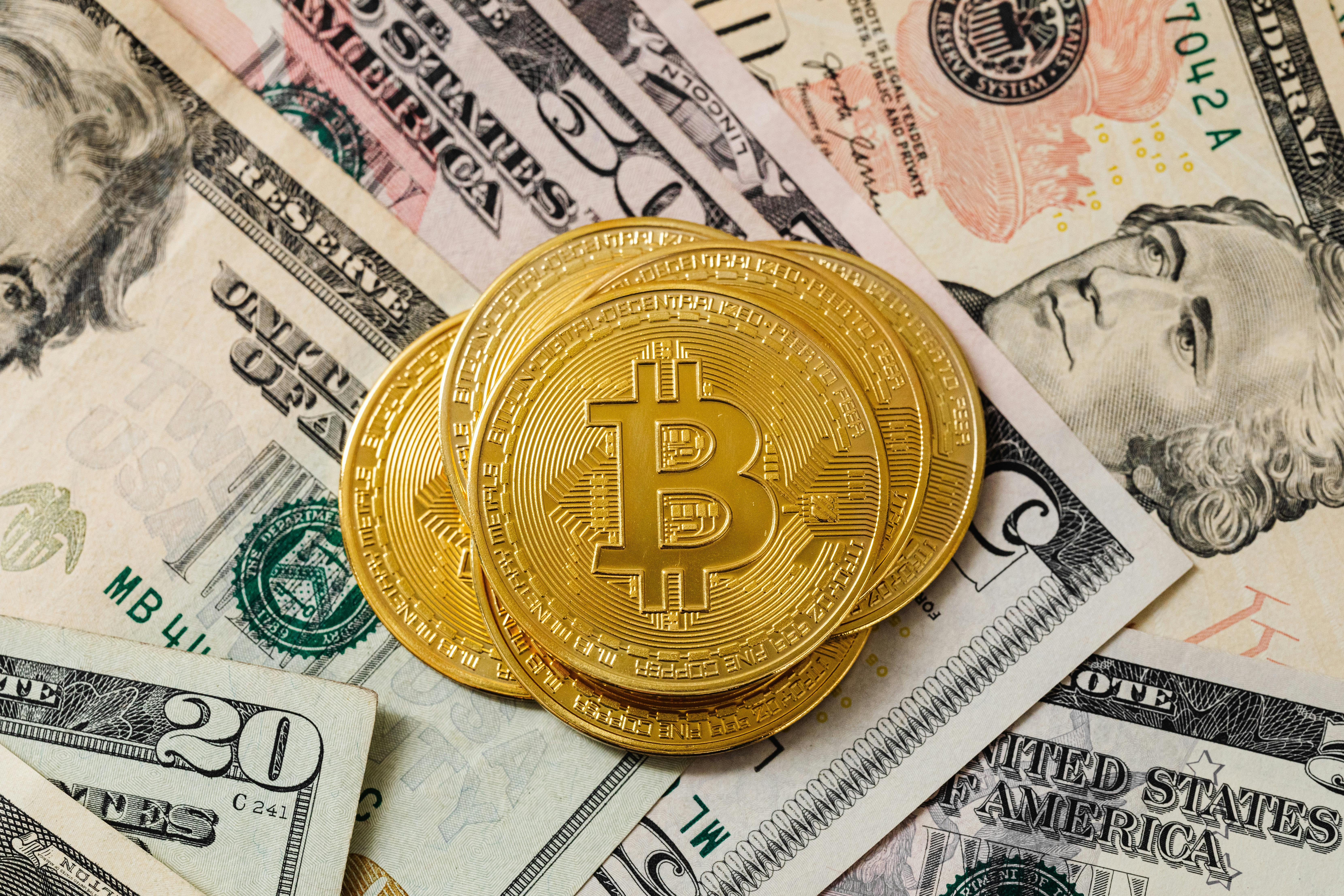
Top Altcoins to Buy Now 2026: Investment Firm Warns Bitcoin Could Drop Another 30 Percent and Analyst Says No Altcoin Season Until 2027 as Pepeto Builds in the Window Between Cycles

Based Eggman had raised over $310,000 in Stage 3 of its presale with a projected listing price of $0.0589 representing roughly a 5x from current entry. ApeMars was in Stage 9 with over $245,000 raised and a confirmed listing price of $0.0055. BlockDAG was approaching its exchange listing scheduled for early March on LBank, BitMart, and Coinstore.

ZX Squared Capital’s 30 Percent Bitcoin Warning and Hyland’s 2027-2028 Altcoin Season Call: The Two Data Points That Define the Opportunity

A CFA-grade investment firm identifying Bitcoin as deeply in bear territory and projecting an additional 30 percent decline, and an analyst with a significant following confirming that the traditional altcoin season mechanism requires another two years to engage, would appear at first reading to be a comprehensive argument against acting on crypto in 2026. In fact, the opposite is true if the investor identifies the correct category.

Hyland’s framework explicitly identifies the current period as the maximum opportunity zone: the moment when social discussion has collapsed, prices are near yearly lows, and the crowd has stopped participating is historically when the positioning that produces the returns two years later gets built. The question is not whether to act in 2026. It is what category of action produces returns when the season Hyland is describing eventually arrives.

Pepeto Presale 2026: The Position Built in the Maximum Opportunity Zone

The founding team behind Pepeto built PEPE to $7 billion market cap during a prior cycle that included exactly the kind of maximum opportunity zone that Hyland is describing now. The social discussion had collapsed, prices were near lows, and the crowd had stopped participating.

The team that identified that window and built within it created an outcome that became the defining meme coin story of that cycle. Pepeto is being built by the same team in the same type of window. More than $7.391 million has been raised while ZX Squared Capital is warning of additional Bitcoin downside and Hyland is confirming that altcoin season is not arriving until 2027 at the earliest.

The presale entry at $0.000000186 and the post-listing target of $0.0001 define the 537x return path. PepetoSwap, the cross-chain bridge, and the trading exchange are in active development. SolidProof and Coinsult confirmed zero critical vulnerabilities across both audits.

Staking at 200 percent APY is live for all presale participants. BlockDAG is transitioning to open market trading where the maximum opportunity zone pricing no longer exists. Based Eggman and ApeMars are building their first projects. Pepeto is being built by the team that has already been through one maximum opportunity zone and produced one $7 billion outcome from it.

Click To Visit Pepeto Website To Enter The Presale

Frequently Asked Questions

What did ZX Squared Capital say about Bitcoin’s four-year cycle in March 2026?

ZX Squared Capital founder CK Zheng declared in March 2026 that Bitcoin is firmly in deep bear market territory and could drop an additional 30 percent from current levels based on four-year cycle analysis.

Zheng identified predictable investor psychology as the primary force keeping Bitcoin trading as a speculative risk asset rather than a true monetary safe haven, noting that companies adding Bitcoin to their balance sheets during the current period are taking on elevated balance sheet risk at a structurally unfavorable point in the four-year cycle. His analysis was consistent with CryptoQuant data showing that 38 percent of altcoins were trading near all-time lows, confirming the broad-based nature of the current market weakness.

Why did analyst Matthew Hyland say there would be no traditional altcoin season in 2026?

Analyst Matthew Hyland published an analysis on X in early March 2026 explaining that traditional altcoin season would not arrive in 2026 because the recovery of altcoin dominance from its cycle low typically takes two to three years based on historical data. With the most recent altcoin dominance low occurring around October 2025, Hyland projected the next full altcoin season rally to arrive somewhere between 2027 and 2028.

However, Hyland simultaneously described the current period as the maximum opportunity zone for long-term accumulation, citing dramatically cooled social discussion about altcoin season and prices near yearly lows as the exact conditions that historically precede the returns that materialize when the season eventually arrives.

What is BlockDAG’s listing timeline and how does its post-presale structure differ from Pepeto?

BlockDAG scheduled its Token Generation Event and initial exchange listings on LBank, BitMart, and Coinstore for early March 2026, meaning it was completing the transition from presale pricing to open market price discovery at the time of the ZX Squared Capital and Hyland analyses.

Once BlockDAG listed on open exchanges, the presale pricing advantage ceased to exist and new participants were competing for entry at exchange-determined prices rather than presale-fixed prices. Pepeto remained in the presale stage with a fixed entry of $0.000000186, meaning investors were still accessing pre-discovery pricing rather than competing against open market participants for their position in the project.
Comments
Piyasa Fırsatı
DeepBook Logosu
DeepBook Fiyatı(DEEP)
$0.029997
$0.029997$0.029997
+4.01%
USD
DeepBook (DEEP) Canlı Fiyat Grafiği
Sorumluluk Reddi: Bu sitede yeniden yayınlanan makaleler, halka açık platformlardan alınmıştır ve yalnızca bilgilendirme amaçlıdır. MEXC'nin görüşlerini yansıtmayabilir. Tüm hakları telif sahiplerine aittir. Herhangi bir içeriğin üçüncü taraf haklarını ihlal ettiğini düşünüyorsanız, kaldırılması için lütfen crypto.news@mexc.com ile iletişime geçin. MEXC, içeriğin doğruluğu, eksiksizliği veya güncelliği konusunda hiçbir garanti vermez ve sağlanan bilgilere dayalı olarak alınan herhangi bir eylemden sorumlu değildir. İçerik, finansal, yasal veya diğer profesyonel tavsiye niteliğinde değildir ve MEXC tarafından bir tavsiye veya onay olarak değerlendirilmemelidir.

Ayrıca Şunları da Beğenebilirsiniz

Crucial ETH Unstaking Period: Vitalik Buterin’s Unwavering Defense for Network Security

Crucial ETH Unstaking Period: Vitalik Buterin’s Unwavering Defense for Network Security

BitcoinWorld Crucial ETH Unstaking Period: Vitalik Buterin’s Unwavering Defense for Network Security Ever wondered why withdrawing your staked Ethereum (ETH) isn’t an instant process? It’s a question that often sparks debate within the crypto community. Ethereum founder Vitalik Buterin recently stepped forward to defend the network’s approximately 45-day ETH unstaking period, asserting its crucial role in safeguarding the network’s integrity. This lengthy waiting time, while sometimes seen as an inconvenience, is a deliberate design choice with profound implications for security. Why is the ETH Unstaking Period a Vital Security Measure? Vitalik Buterin’s defense comes amidst comparisons to other networks, like Solana, which boast significantly shorter unstaking times. He drew a compelling parallel to military operations, explaining that an army cannot function effectively if its soldiers can simply abandon their posts at a moment’s notice. Similarly, a blockchain network requires a stable and committed validator set to maintain its security. The current ETH unstaking period isn’t merely an arbitrary delay. It acts as a critical buffer, providing the network with sufficient time to detect and respond to potential malicious activities. If validators could instantly exit, it would open doors for sophisticated attacks, jeopardizing the entire system. Currently, Ethereum boasts over one million active validators, collectively staking approximately 35.6 million ETH, representing about 30% of the total supply. This massive commitment underpins the network’s robust security model, and the unstaking period helps preserve this stability. Network Security: Ethereum’s Paramount Concern A shorter ETH unstaking period might seem appealing for liquidity, but it introduces significant risks. Imagine a scenario where a large number of validators, potentially colluding, could quickly withdraw their stake after committing a malicious act. Without a substantial delay, the network would have limited time to penalize them or mitigate the damage. This “exit queue” mechanism is designed to prevent sudden validator exodus, which could lead to: Reduced decentralization: A rapid drop in active validators could concentrate power among fewer participants. Increased vulnerability to attacks: A smaller, less stable validator set is easier to compromise. Network instability: Frequent and unpredictable changes in validator numbers can lead to performance issues and consensus failures. Therefore, the extended period is not a bug; it’s a feature. It’s a calculated trade-off between immediate liquidity for stakers and the foundational security of the entire Ethereum ecosystem. Ethereum vs. Solana: Different Approaches to Unstaking When discussing the ETH unstaking period, many point to networks like Solana, which offers a much quicker two-day unstaking process. While this might seem like an advantage for stakers seeking rapid access to their funds, it reflects fundamental differences in network architecture and security philosophies. Solana’s design prioritizes speed and immediate liquidity, often relying on different consensus mechanisms and validator economics to manage security risks. Ethereum, on the other hand, with its proof-of-stake evolution from proof-of-work, has adopted a more cautious approach to ensure its transition and long-term stability are uncompromised. Each network makes design choices based on its unique goals and threat models. Ethereum’s substantial value and its role as a foundational layer for countless dApps necessitate an extremely robust security posture, making the current unstaking duration a deliberate and necessary component. What Does the ETH Unstaking Period Mean for Stakers? For individuals and institutions staking ETH, understanding the ETH unstaking period is crucial for managing expectations and investment strategies. It means that while staking offers attractive rewards, it also comes with a commitment to the network’s long-term health. Here are key considerations for stakers: Liquidity Planning: Stakers should view their staked ETH as a longer-term commitment, not immediately liquid capital. Risk Management: The delay inherently reduces the ability to react quickly to market volatility with staked assets. Network Contribution: By participating, stakers contribute directly to the security and decentralization of Ethereum, reinforcing its value proposition. While the current waiting period may not be “optimal” in every sense, as Buterin acknowledged, simply shortening it without addressing the underlying security implications would be a dangerous gamble for the network’s reliability. In conclusion, Vitalik Buterin’s defense of the lengthy ETH unstaking period underscores a fundamental principle: network security cannot be compromised for the sake of convenience. It is a vital mechanism that protects Ethereum’s integrity, ensuring its stability and trustworthiness as a leading blockchain platform. This deliberate design choice, while requiring patience from stakers, ultimately fortifies the entire ecosystem against potential threats, paving the way for a more secure and reliable decentralized future. Frequently Asked Questions (FAQs) Q1: What is the main reason for Ethereum’s long unstaking period? A1: The primary reason is network security. A lengthy ETH unstaking period prevents malicious actors from quickly withdrawing their stake after an attack, giving the network time to detect and penalize them, thus maintaining stability and integrity. Q2: How long is the current ETH unstaking period? A2: The current ETH unstaking period is approximately 45 days. This duration can fluctuate based on network conditions and the number of validators in the exit queue. Q3: How does Ethereum’s unstaking period compare to other blockchains? A3: Ethereum’s unstaking period is notably longer than some other networks, such as Solana, which has a two-day period. This difference reflects varying network architectures and security priorities. Q4: Does the unstaking period affect ETH stakers? A4: Yes, it means stakers need to plan their liquidity carefully, as their staked ETH is not immediately accessible. It encourages a longer-term commitment to the network, aligning staker interests with Ethereum’s stability. Q5: Could the ETH unstaking period be shortened in the future? A5: While Vitalik Buterin acknowledged the current period might not be “optimal,” any significant shortening would likely require extensive research and network upgrades to ensure security isn’t compromised. For now, the focus remains on maintaining robust network defenses. Found this article insightful? Share it with your friends and fellow crypto enthusiasts on social media to spread awareness about the critical role of the ETH unstaking period in Ethereum’s security! To learn more about the latest Ethereum trends, explore our article on key developments shaping Ethereum’s institutional adoption. This post Crucial ETH Unstaking Period: Vitalik Buterin’s Unwavering Defense for Network Security first appeared on BitcoinWorld.
Paylaş
Coinstats2025/09/18 15:30
White House adviser: Cryptocurrency bill is "very close" to passage

White House adviser: Cryptocurrency bill is "very close" to passage

PANews reported on June 18 that according to Jinshi, a US White House adviser said that the cryptocurrency bill is "very close" to passage, which will create demand for the
Paylaş
PANews2025/06/18 23:52
SEC approves Grayscale’s multi-crypto fund with XRP, SOL and ADA

SEC approves Grayscale’s multi-crypto fund with XRP, SOL and ADA

GDLC's approval coincides with SEC adopting generic listing standards for crypto ETFs, which would expedite the launch process.
Paylaş
Coinstats2025/09/18 10:26