The post Netflix Backs Out Of WBD Deal, Cites Paramount’s Raised Offer appeared on BitcoinEthereumNews.com. TOPSHOT – The Netflix logo is displayed at the entranceThe post Netflix Backs Out Of WBD Deal, Cites Paramount’s Raised Offer appeared on BitcoinEthereumNews.com. TOPSHOT – The Netflix logo is displayed at the entrance

Netflix Backs Out Of WBD Deal, Cites Paramount’s Raised Offer

2026/02/27 10:26
Okuma süresi: 4 dk
Bu içerikle ilgili geri bildirim veya endişeleriniz için lütfen crypto.news@mexc.com üzerinden bizimle iletişime geçin.

TOPSHOT – The Netflix logo is displayed at the entrance to Netflix Albuquerque Studios film and television production studio lot in Albuquerque, New Mexico on October 13, 2023. (Photo by Patrick T. Fallon / AFP) (Photo by PATRICK T. FALLON/AFP via Getty Images)

AFP via Getty Images

The fight for Warner Bros. is over. Netflix has declined to raise their bid to acquire Warner Bros. Discovery’s storied TV, film, and streaming assets after Paramount increased their offer for the entire company.

Netflix had a deal with the legacy brand that would have seen the streamer branch into the theatrical film market and provide content to networks and rival services as a third party producer of original series and movies. However, Paramount has been bullish in its pursuit of WBD, launching a hostile bid in December just days after Netflix and the company announced their agreement.

Paramount’s persistence has paid off. WBD disclosed on February 26 that its new offer constitutes a “Company Superior Proposal” and had given Netflix four days to make a counter bid. However, Netflix has chosen to pull out of the merger agreement.

In a press release, co-CEOs Ted Sarandos and Greg Peters shared that “the deal is no longer financially attractive” at the price they’d have to match Paramount.

The competing proposal is “a purchase price of $31.00 per WBD share in cash, plus a daily ticking fee equal to $0.25 per share per quarter beginning after September 30, 2026, as well as a $7 billion regulatory termination fee payable by PSKY in the event the transaction does not close due to regulatory matters, payment by PSKY of the $2.8 billion termination fee that WBD would be required to pay to Netflix to terminate the existing Netflix merger agreement,” according to WBD.

In their statement, Sarandos and Peters explained that the transaction the companies entered into was “always a ‘nice to have’ at the right price, not a ‘must have’ at any price.”

WBD had indicated that the board continued to recommend in favor of the streamer acquiring Warner Bros. without withdrawing or modifying the recommendation. But Netflix took their bid off the table.

What Happens Next For Warner Bros. Discovery And Paramount?

WBD is ready to move full steam ahead with Paramount’s deal once its board votes on the merger agreement, per WBD CEO David Zaslav.

He said in a statement that “We are excited about the potential of a combined Paramount Skydance and Warner Bros. Discovery and can’t wait to get started working together telling the stories that move the world.”

However, like with Netflix, the Paramount-WBD deal would need to meet regulatory approval in the United States and abroad. Paramount has maintained it has a clear path to the transaction being permitted. The company’s bid has been under review by the Department of Justice and international regulators. That process is ongoing.

If accepted, the deal would effectively end WBD’s plan to split into two separate companies—Warner Bros. and Discovery Global—so that the legacy brand can merge with Paramount. The possibility of the entertainment giants consolidating has been a source of anxiety for the industry as creatives and consumers grapple with two major TV and film producers becoming one company.

The conversation around antitrust laws concerning WBD’s intent to sell its assets won’t die down in the face of Paramount’s victory. It’ll only increase. A Senate hearing about the Netflix-WBD deal was set for Wednesday, March 4. Though that transaction is now null and void, the hearing remains on the schedule and is presumed to be pivoting to Paramount’s.

Senator Cory Booker (D-NJ) has extended an invitation to CEO David Ellison to attend. The exec declined to participate in the previous Senate hearing about the competing bid. Now that Paramount has entered into an agreement for the company, Booker is looking to Ellison to make an appearance as the CEO reportedly said he would if his company acquired WBD.

The senator is seeking answers from Ellison about any and all involvement of the Trump administration and the Trump family with the deal including personal benefits and discussions of content changes to CNN. Paramount has been directed to preserve information, documentation and communications about the transaction and content decisions at CBS that “reflect real or influence by any member of the Trump administration or any lobbyists or other agents involved with the proposed transaction.”

Ellison’s ties to the Trump family have been closely scrutinized as CBS continues to face backlash over allegations of capitulation to the administration regarding the content of CBS News, 60 Minutes, and The Late Show with Stephen Colbert.

Source: https://www.forbes.com/sites/sabrinareed/2026/02/26/netflix-backs-out-of-wbd-deal-cites-paramounts-raised-offer/

Piyasa Fırsatı
CreatorBid Logosu
CreatorBid Fiyatı(BID)
$0.009014
$0.009014$0.009014
+6.28%
USD
CreatorBid (BID) Canlı Fiyat Grafiği
Sorumluluk Reddi: Bu sitede yeniden yayınlanan makaleler, halka açık platformlardan alınmıştır ve yalnızca bilgilendirme amaçlıdır. MEXC'nin görüşlerini yansıtmayabilir. Tüm hakları telif sahiplerine aittir. Herhangi bir içeriğin üçüncü taraf haklarını ihlal ettiğini düşünüyorsanız, kaldırılması için lütfen crypto.news@mexc.com ile iletişime geçin. MEXC, içeriğin doğruluğu, eksiksizliği veya güncelliği konusunda hiçbir garanti vermez ve sağlanan bilgilere dayalı olarak alınan herhangi bir eylemden sorumlu değildir. İçerik, finansal, yasal veya diğer profesyonel tavsiye niteliğinde değildir ve MEXC tarafından bir tavsiye veya onay olarak değerlendirilmemelidir.

Ayrıca Şunları da Beğenebilirsiniz

Navigating The Critical Sideways Bias With Safe-Haven Support

Navigating The Critical Sideways Bias With Safe-Haven Support

The post Navigating The Critical Sideways Bias With Safe-Haven Support appeared on BitcoinEthereumNews.com. USD/CAD Forecast: Navigating The Critical Sideways Bias
Paylaş
BitcoinEthereumNews2026/03/09 17:39
Support at 1.15 under pressure – ING

Support at 1.15 under pressure – ING

The post Support at 1.15 under pressure – ING appeared on BitcoinEthereumNews.com. ING’s Chris Turner highlights that strong support just below 1.1500 in EUR/USD
Paylaş
BitcoinEthereumNews2026/03/09 17:19
Crucial ETH Unstaking Period: Vitalik Buterin’s Unwavering Defense for Network Security

Crucial ETH Unstaking Period: Vitalik Buterin’s Unwavering Defense for Network Security

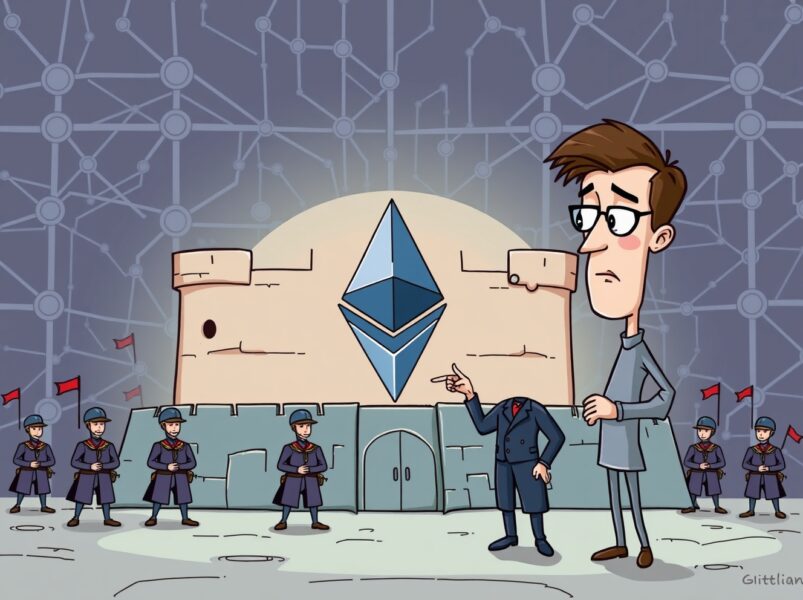
BitcoinWorld Crucial ETH Unstaking Period: Vitalik Buterin’s Unwavering Defense for Network Security Ever wondered why withdrawing your staked Ethereum (ETH) isn’t an instant process? It’s a question that often sparks debate within the crypto community. Ethereum founder Vitalik Buterin recently stepped forward to defend the network’s approximately 45-day ETH unstaking period, asserting its crucial role in safeguarding the network’s integrity. This lengthy waiting time, while sometimes seen as an inconvenience, is a deliberate design choice with profound implications for security. Why is the ETH Unstaking Period a Vital Security Measure? Vitalik Buterin’s defense comes amidst comparisons to other networks, like Solana, which boast significantly shorter unstaking times. He drew a compelling parallel to military operations, explaining that an army cannot function effectively if its soldiers can simply abandon their posts at a moment’s notice. Similarly, a blockchain network requires a stable and committed validator set to maintain its security. The current ETH unstaking period isn’t merely an arbitrary delay. It acts as a critical buffer, providing the network with sufficient time to detect and respond to potential malicious activities. If validators could instantly exit, it would open doors for sophisticated attacks, jeopardizing the entire system. Currently, Ethereum boasts over one million active validators, collectively staking approximately 35.6 million ETH, representing about 30% of the total supply. This massive commitment underpins the network’s robust security model, and the unstaking period helps preserve this stability. Network Security: Ethereum’s Paramount Concern A shorter ETH unstaking period might seem appealing for liquidity, but it introduces significant risks. Imagine a scenario where a large number of validators, potentially colluding, could quickly withdraw their stake after committing a malicious act. Without a substantial delay, the network would have limited time to penalize them or mitigate the damage. This “exit queue” mechanism is designed to prevent sudden validator exodus, which could lead to: Reduced decentralization: A rapid drop in active validators could concentrate power among fewer participants. Increased vulnerability to attacks: A smaller, less stable validator set is easier to compromise. Network instability: Frequent and unpredictable changes in validator numbers can lead to performance issues and consensus failures. Therefore, the extended period is not a bug; it’s a feature. It’s a calculated trade-off between immediate liquidity for stakers and the foundational security of the entire Ethereum ecosystem. Ethereum vs. Solana: Different Approaches to Unstaking When discussing the ETH unstaking period, many point to networks like Solana, which offers a much quicker two-day unstaking process. While this might seem like an advantage for stakers seeking rapid access to their funds, it reflects fundamental differences in network architecture and security philosophies. Solana’s design prioritizes speed and immediate liquidity, often relying on different consensus mechanisms and validator economics to manage security risks. Ethereum, on the other hand, with its proof-of-stake evolution from proof-of-work, has adopted a more cautious approach to ensure its transition and long-term stability are uncompromised. Each network makes design choices based on its unique goals and threat models. Ethereum’s substantial value and its role as a foundational layer for countless dApps necessitate an extremely robust security posture, making the current unstaking duration a deliberate and necessary component. What Does the ETH Unstaking Period Mean for Stakers? For individuals and institutions staking ETH, understanding the ETH unstaking period is crucial for managing expectations and investment strategies. It means that while staking offers attractive rewards, it also comes with a commitment to the network’s long-term health. Here are key considerations for stakers: Liquidity Planning: Stakers should view their staked ETH as a longer-term commitment, not immediately liquid capital. Risk Management: The delay inherently reduces the ability to react quickly to market volatility with staked assets. Network Contribution: By participating, stakers contribute directly to the security and decentralization of Ethereum, reinforcing its value proposition. While the current waiting period may not be “optimal” in every sense, as Buterin acknowledged, simply shortening it without addressing the underlying security implications would be a dangerous gamble for the network’s reliability. In conclusion, Vitalik Buterin’s defense of the lengthy ETH unstaking period underscores a fundamental principle: network security cannot be compromised for the sake of convenience. It is a vital mechanism that protects Ethereum’s integrity, ensuring its stability and trustworthiness as a leading blockchain platform. This deliberate design choice, while requiring patience from stakers, ultimately fortifies the entire ecosystem against potential threats, paving the way for a more secure and reliable decentralized future. Frequently Asked Questions (FAQs) Q1: What is the main reason for Ethereum’s long unstaking period? A1: The primary reason is network security. A lengthy ETH unstaking period prevents malicious actors from quickly withdrawing their stake after an attack, giving the network time to detect and penalize them, thus maintaining stability and integrity. Q2: How long is the current ETH unstaking period? A2: The current ETH unstaking period is approximately 45 days. This duration can fluctuate based on network conditions and the number of validators in the exit queue. Q3: How does Ethereum’s unstaking period compare to other blockchains? A3: Ethereum’s unstaking period is notably longer than some other networks, such as Solana, which has a two-day period. This difference reflects varying network architectures and security priorities. Q4: Does the unstaking period affect ETH stakers? A4: Yes, it means stakers need to plan their liquidity carefully, as their staked ETH is not immediately accessible. It encourages a longer-term commitment to the network, aligning staker interests with Ethereum’s stability. Q5: Could the ETH unstaking period be shortened in the future? A5: While Vitalik Buterin acknowledged the current period might not be “optimal,” any significant shortening would likely require extensive research and network upgrades to ensure security isn’t compromised. For now, the focus remains on maintaining robust network defenses. Found this article insightful? Share it with your friends and fellow crypto enthusiasts on social media to spread awareness about the critical role of the ETH unstaking period in Ethereum’s security! To learn more about the latest Ethereum trends, explore our article on key developments shaping Ethereum’s institutional adoption. This post Crucial ETH Unstaking Period: Vitalik Buterin’s Unwavering Defense for Network Security first appeared on BitcoinWorld.
Paylaş
Coinstats2025/09/18 15:30