

Trump's fervent obsession lifts the veil on a grim reality
Stephen Colbert joked that Donald Trump wants to silence anyone who says anything bad about him on television because “all Trump does is watch TV.” It was a punchline, but it also revealed something darker: when political power becomes obsessed with controlling the screen, the most effective way to silence dissent isn’t through raids or arrests. It’s through ownership.
In today’s America, the battle over free speech isn’t happening in courtrooms, it’s happening in quiet White House dinners with greedy billionaires. And it’s following an old script.
When Viktor Orbán — the Hungarian strongman who Marco Rubio visited this past weekend to tell him how much Trump loves him and supports him — wanted to crush opposition media in his country he didn’t need police, courts, regulatory agencies, or even threats. He didn’t even need the Hungarian mafia to break the knees of Budapest media owners or threaten reporters.
Orbán simply invited a few morbidly rich Hungarian oligarchs over for dinner and told them that if they’d buy out the big media outlets and spin the news in his favor, he’d make sure their government contracts and business opportunities in other non-media areas would more than compensate them for their hassle and expenses.
Orbán let Republicans in on the strategy in May 2022, when he spoke to the Conservative Political Action Conference (CPAC) in Budapest and told the American Republican crowd:
It’s a pretty straightforward business proposition that we see Trump embracing right now: “Give me good media coverage and I’ll make you additional billions; use your media to crap on me and I’ll have the FCC harass you and my billionaire friends buy you out.”
And, sure enough, check how it’s working out for the non-media companies (rockets, AI, data, web services, etc.) owned by media moguls Elon Musk (Twitter/X), Mark Zuckerberg (Meta/Facebook), Larry Ellison (Paramount/CBS/TikTok), and Jeff Bezos (Washington Post) that now get hundreds of billions of dollars every year in contracts from the federal government. No doubt it’s just a coincidence that their media outlets have all become cheerleaders for Trump.
Putin did the same thing in Russia, and the media in most other autocratic nations is similarly all or mostly owned by regime-friendly oligarchs on similar terms.
This model, pioneered in Germany in the 1930s, is now used to keep in power strongman regimes in the Czech Republic, Serbia, Slovenia, Turkey, India, Brazil, the Philippines, Colombia, Tunisia, Turkey, Peru, and Ghana, among dozens of others. It’s rapidly spreading across the world.
It’s produced headlines like these:
- “How oligarchs seized Central Europe’s media”
- “Serbia: State Influence on Media Ownership: Igor Žeželj and Telekom Srbija”
- “Media in the Balkans: the rise of oligarchs”
- “Media Oligarchs Go Shopping”
- “The Media in Indonesia: Journalism Between the State and Oligarchs”
- “Slovene Media Owned by Oligarchs, Corrupt Politicians”
And now, here in the United States:
- “When Billionaire Government Contractors Are Also Media Moguls”
- “Musk and Bezos Get Their Billion-Dollar Federal Contracts After Sucking Up to Trump”
- “Meta Gains Approval To Supply AI Services to US Government Departments”
- “Paramount Has a Secret Plan to Buy Hollywood Before the Cops Arrive”
To be fair, Republicans didn’t just suddenly adopt this strategy when Orbán suggested it to them. They’ve been doing it since the days of Ronald Reagan; it just went on steroids with Trump.
We used to have laws and rules to prevent this sort of thing. But in 1985, Reagan greased the skids for Rupert Murdoch to become a citizen so he could buy US media outlets. In 1987 Reagan repealed the Fairness Doctrine, and in 1988 Rush Limbaugh debuted on 56 major radio stations.
In 1996, Bill Clinton signed the Telecommunications Act, overturning laws dating back to the 1920s that prevented any one oligarch or company from owning multiple newspapers or radio or TV stations, leading to an explosive consolidation that today gives us 1,500 oligarch-owned rightwing radio stations and hundreds of rightwing oligarch-owned TV stations across the nation.
Republican screams of a “liberal media” dating back to the 1980s notwithstanding, there isn’t a place in America where you can’t get a large daily dose of pro-fascist, pro-Trump media. Drive from the East Coast to the West Coast, from the Canadian border to the edge of Mexico, and you’ll never be without a rightwing radio companion telling you how wonderful Trump, Vance, Putin, et al are.
As Colbert joked this week:
And now, Matt Stoller is reporting that the Ellisons — who now own CBS — have a “secret plan” to acquire CNN as well, a goal that Trump has explicitly and publicly gushed about. As the network itself reported, Trump said, “It’s imperative that CNN be sold” and David Ellison recently “offered assurances to Trump administration officials that if he bought Warner, he’d make sweeping changes to CNN.”
But the Putin/Orbán/Trump strategy to end all media independence in America may be facing headwinds if Democrats can take control of the House, Senate, or both this fall.
Axios and Raw Story report that:
Miller and Eskew added:
State attorneys general also have real power over media concentration. In 2015 a coalition of state AGs joined federal regulators in challenging Comcast’s proposed takeover of Time Warner Cable, and Comcast abandoned the merger rather than face trial.
In 2018 several state attorneys general urged regulators to block Sinclair Broadcast Group’s acquisition of Tribune Media, after which the FCC moved to reject the deal and it collapsed. And in 2019, Illinois, Pennsylvania, and Virginia attorneys general sued to limit Nexstar’s purchase of Tribune stations, forcing major divestitures before the merger could proceed. History shows that when states intervene, consolidation often fails or is dramatically reduced.
Citizen activism has also repeatedly changed the behavior of partisan media without any hint of government involvement or censorship. For example, after the 2012 Limbaugh Sandra Fluke controversy, dozens of national advertisers left his program and many never returned.
And following Trump’s January 6 attack on our Capitol, advertiser boycotts and viewer pressure led companies to suspend advertising on certain Fox News opinion programs, and several cable carriers reconsidered their carriage agreements. Organized brand-safety campaigns have also pushed social media platforms to demonetize rightwing and fascist extremist content.
In each case the speech itself remained “legal,” but because of public outrage the economic incentives changed, showing how average citizens in a market-based democracy can reshape media behavior by influencing the revenue that sustains it.
If ever there was a time ripe for revisiting the laws and rules that gave us the relatively unbiased media landscape — that vigorously supported American democracy — between the 1930s and the 1980s, it’s now. And the same is true of the immediate need for citizen activism, like we saw in awake of Trump’s attempt to use pressure on media owners to silence Jimmy Kimmel.
Hopefully, Democratic politicians and citizen activists are paying attention, because the crisis — and the opportunity — has never been more urgent.
- Thom Hartmann is a New York Times best-selling author and SiriusXM talk show host. His Substack can be found here.
Ayrıca Şunları da Beğenebilirsiniz

OpenClaw Creator Bans Bitcoin, Crypto Chatter After Joining OpenAI
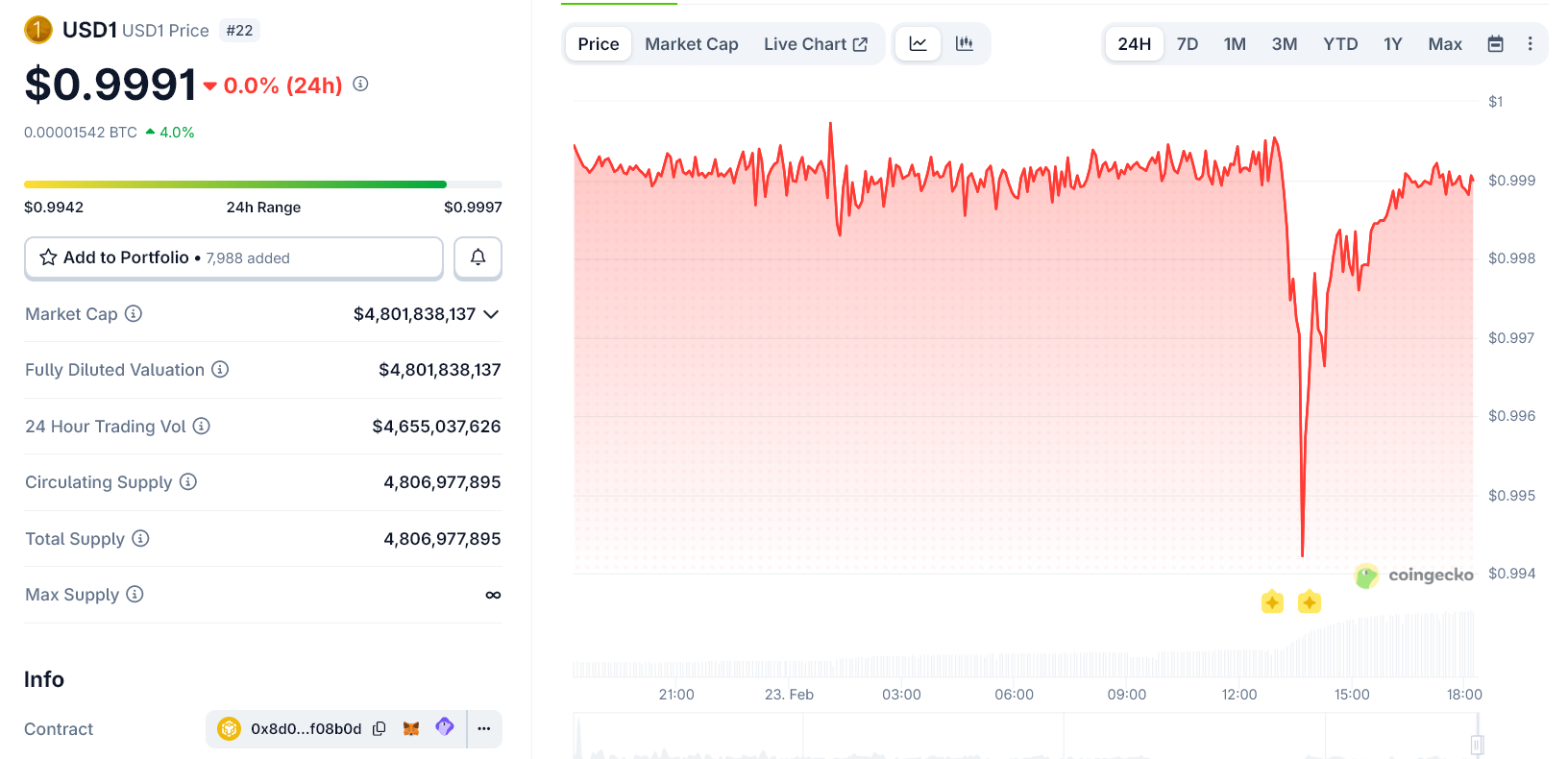
Trump Family-Linked Stablecoin Briefly Depegs, WLFI Blames ‘Coordinated Attack’
