NDTV Masterstroke Art Awards 2026: What CX Leaders Can Learn About Human-Centered Experience Design
What CX Leaders Can Learn from the NDTV Masterstroke Art Awards 2026 About Designing Human-Centered Experiences
Ever walked into an event expecting noise, hierarchy, and polished spectacle—only to find yourself quietly absorbed, seen, and invited in?
That was the unexpected experience many described at the inaugural NDTV Masterstroke Art Awards 2026. Instead of feeling like “another awards night,” the evening unfolded like a carefully curated journey—intimate, accessible, and emotionally coherent.
For CX and EX leaders, this matters more than it seems.
Because what NDTV designed that evening was not just an awards ceremony. It was a living case study in experience architecture—one that speaks directly to challenges modern CX teams face: silos, emotional disconnects, fragmented journeys, and performative engagement.
This article explores what the Masterstroke Art Awards reveal about experience-led strategy, ecosystem thinking, and inclusive design, and how CX leaders can translate those lessons into real-world action.
What Is the NDTV Masterstroke Art Awards—and Why Should CX Leaders Care?
Short answer: It is an experience-first cultural platform that prioritizes emotional accessibility, ecosystem recognition, and narrative coherence over spectacle.
Launched in February 2026, the NDTV Masterstroke Art Awards were designed to democratize art—not by diluting it, but by removing invisible barriers that keep people at a distance.
That intention mirrors a core CX challenge:
How do you make complex, high-value offerings feel human, approachable, and participatory?
Why Experience Design Matters More Than the “Main Act”
Short answer: People remember how an experience made them feel, not what it formally delivered.
Walking into the Masterstroke Awards did not feel transactional. There was no rigid hierarchy between artists, patrons, curators, or guests. Conversations flowed without status signaling. The environment encouraged curiosity, not intimidation.
This aligns with a growing CX insight:
NDTV’s approach avoided a common trap seen in enterprise CX programs—over-optimizing the “core moment” while neglecting context, transitions, and emotional cues.
What Did NDTV Get Right That Many CX Programs Miss?
Short answer: They designed for belonging, not just recognition.
Most CX initiatives focus on efficiency metrics—CSAT, NPS, containment rates. But the Masterstroke Awards focused on something deeper: psychological safety and shared purpose.
Key Experience Signals Observed
- No visible VIP segregation
- Shared physical and conversational spaces
- Equal narrative weight given to creators, enablers, and interpreters
This mirrors best-in-class CX journeys where customers feel part of a system, not targets of a funnel.
How Rahul Kanwal’s Vision Reflects Modern Experience Strategy
Short answer: Culture is not a side narrative—it is a strategic layer of experience.
Rahul Kanwal, CEO and Editor-in-Chief of NDTV, articulated the philosophy clearly:
For CX leaders, this reframes a familiar debate.
CX is often positioned as a function.
But mature organizations treat it as cultural infrastructure.
Just as NDTV integrates culture into public discourse, CX leaders must embed experience thinking into decision-making, governance, and storytelling.
Why Ecosystem Recognition Is a CX Power Move
Short answer: Experiences don’t exist in isolation, and neither do customers.
The awards recognized a broad spectrum of contributors:
- Artists
- Patrons
- Institutions
- Writers
- Curators
This is ecosystem thinking in action.
Winners as Experience Signals
- Arpita Singh, Artist of the Year, honored for work rooted in memory, politics, and lived realities
- Krishen Khanna, Lifetime Achievement Award, recognized for shaping cultural conversations
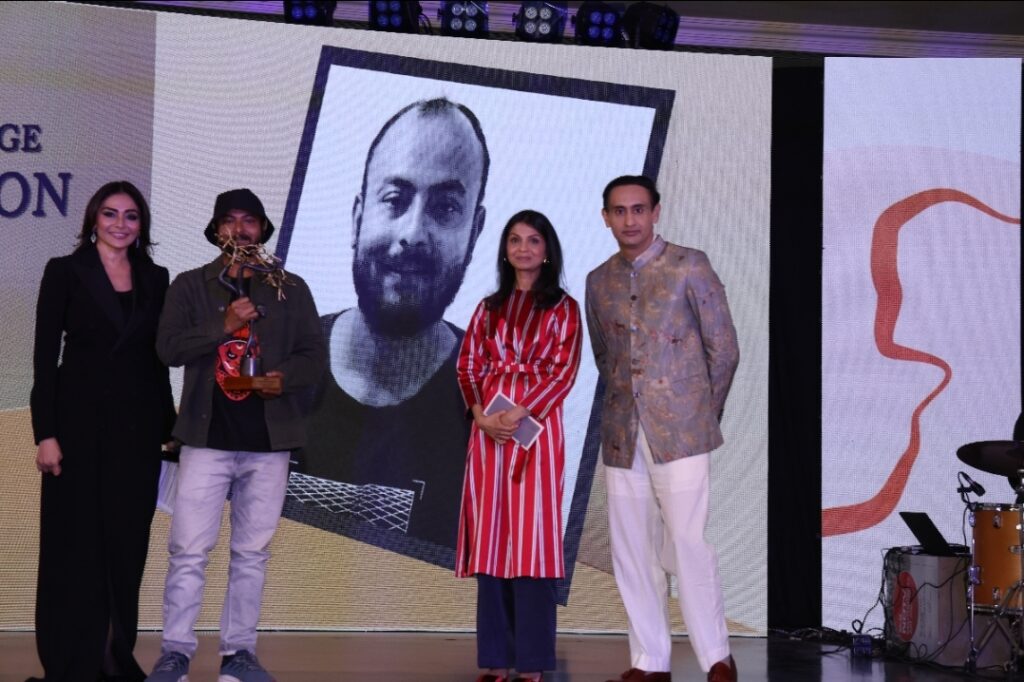
- Vikrant Bhise, Emerging Artist, representing evolving narratives
- Kiran Nadar, Art Patron of the Year, acknowledged for building cultural infrastructure
In CX terms, this is equivalent to recognizing:
- Frontline teams
- Platform partners
- Enablement functions
- Knowledge creators
Experience strength comes from alignment, not dominance.
What CX Leaders Can Learn from Traditional and Community Art Recognition
Short answer: Inclusion expands relevance without diluting excellence.
Awards like:
- Excellence in Traditional Arts (Mangla Bai)
- Art for Impact – Social Change (Panjeri Artists Union)
sent a powerful signal.
Art was not confined to urban galleries or elite spaces. It was acknowledged as living, communal, and contextual.
CX teams often struggle with this balance—scaling experiences while respecting local nuance. The lesson is clear:
How Institutions Shape Trust at Scale
Short answer: Platforms that enable dialogue build longer-term loyalty than those that only broadcast.
Institutions recognized included:
- Serendipity Arts Foundation for engagement-driven platforms
- DAG as Gallery of the Year for scholarship and documentation
- Museum of Art & Photography (MAP), Bengaluru for accessibility and interpretation
This parallels how CX platforms must evolve—from interaction engines to meaning-making systems.
Data alone doesn’t create trust.
Interpretation does.
Why Curators, Writers, and Interpreters Matter in Experience Design
Short answer: Meaning is mediated, not automatic.
Awards to:
- Vandana Kalra (Art Writer of the Year)
- Roobina Karode (Curator of the Year)
- Madhvi Parekh: Early Drawings (Art Book of the Year)
highlighted the invisible labor behind understanding.
CX programs often underinvest in:
- Journey storytelling
- Internal sensemaking
- Context translation
Yet these roles determine whether experiences feel clear or confusing.
What the Jury Composition Tells Us About Governance
Short answer: Diverse perspectives reduce blind spots in experience decisions.
The jury, chaired by Kiran Nadar, brought together artists, patrons, curators, designers, philanthropists, and global voices like Annie Leibovitz.
This is a governance lesson.
CX councils dominated by one function—marketing, IT, or operations—inevitably optimize for partial truths.
Experience governance needs plural intelligence.
Common CX Pitfalls This Event Quietly Avoided
- Treating recognition as hierarchy reinforcement
- Designing for insiders only
- Over-polishing at the cost of warmth
- Ignoring ecosystem contributors
- Confusing visibility with accessibility
Each of these pitfalls shows up repeatedly in enterprise CX transformations.
A Practical Framework: The “Masterstroke Experience Model”
1. Emotional Accessibility First
Design for comfort before complexity.
2. Ecosystem Visibility
Acknowledge every role sustaining the experience.
3. Narrative Coherence
Ensure every touchpoint reinforces the same story.
4. Cultural Grounding
Respect context without tokenism.
5. Governance Diversity
Invite multiple lenses into decision-making.
FAQ: Long-Tail Questions CX Leaders Are Asking
How can CX teams apply cultural experience principles in enterprise environments?
By focusing on emotional clarity, inclusive design, and ecosystem alignment—not just efficiency.
What does democratizing experience actually mean in CX?
Removing psychological, informational, and structural barriers that exclude users.
Why is ecosystem recognition important for customer loyalty?
Because customers sense alignment gaps between brands and their partners.
How do awards or recognition programs impact brand experience?
They signal values, priorities, and who truly matters in the journey.
What role does storytelling play in CX strategy today?
It translates complexity into meaning, building trust and recall.
Actionable Takeaways for CX and EX Leaders
- Audit your journeys for emotional intimidation, not just friction.
- Map your experience ecosystem, not only customer touchpoints.
- Elevate interpreters—writers, trainers, curators—inside your CX program.
- Design events and moments for belonging, not performance.
- Diversify your CX governance councils across roles and perspectives.
- Treat culture as experience infrastructure, not branding.
- Replace hierarchy signaling with shared spaces wherever possible.
- Measure success by felt clarity, not just operational metrics.
The NDTV Masterstroke Art Awards 2026 did more than honor artistic excellence. They demonstrated how thoughtful experience design can reshape public engagement, dissolve silos, and invite participation without compromise.
For CX leaders navigating AI adoption, fragmented journeys, and trust deficits, the lesson is timeless:
That is the real masterstroke.
The post NDTV Masterstroke Art Awards 2026: What CX Leaders Can Learn About Human-Centered Experience Design appeared first on CX Quest.
Ayrıca Şunları da Beğenebilirsiniz

Google's AP2 protocol has been released. Does encrypted AI still have a chance?