

US OFAC sanctions Iran’s Nobitex, tightening crypto compliance
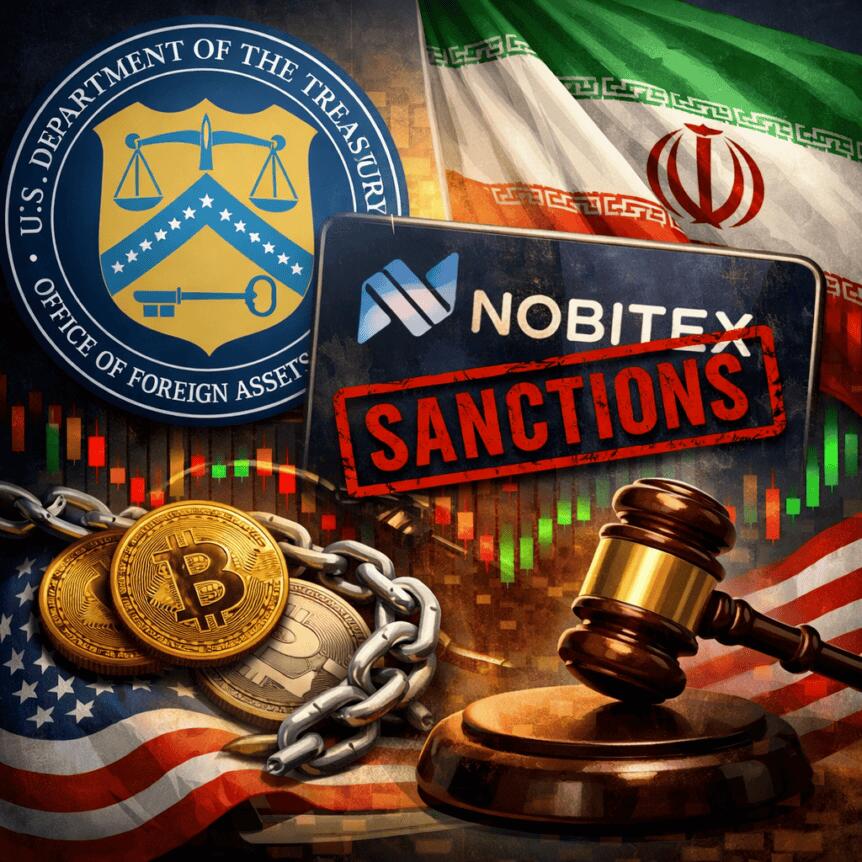
The U.S. Treasury Department has expanded its sanctions regime against Iran’s crypto ecosystem, adding four Iranian exchanges—including the country’s largest, Nobitex—to the Office of Foreign Assets Control (OFAC) sanctions list. The move is part of Washington’s ongoing Economic Fury campaign, which aims to sever Tehran’s access to the global financial system and curb sanctioned networks from using digital assets to evade controls.
OFAC designated Wallex, Bitpin and Ramzinex alongside Nobitex, prohibiting U.S. persons and entities from providing services to these platforms. Treasury Secretary Scott Bessent said the move reflects a broader effort “to cut off financial networks from Iran” and to counter the regime’s use of digital assets for sanctions evasion and wealth transfers. “While Iran’s economy is in free fall, the regime has chosen to co-opt digital asset technologies for its own corrupt agenda,” Bessent stated. The sanctions are positioned within the administration’s Economic Fury campaign, which began on April 14, during a period of heightened tension following attacks in the region that affected maritime routes and regional stability.
The Treasury’s latest action comes on the heels of earlier disclosures about asset seizures tied to Iranian crypto activity. Four days prior, Bessent disclosed that U.S. authorities had seized nearly $1 billion in crypto from Iranian exchanges and wallets since the onset of the current conflict. The enforcement push targets both traditional banking channels and the digital asset ecosystem as part of a comprehensive effort to disrupt Tehran’s access to capital and to deter sanctioned behavior.
Key takeaways
- OFAC adds four Iranian crypto exchanges—Nobitex, Wallex, Bitpin and Ramzinex—expanding sanctions to prohibit U.S. services to these platforms.
- Nobitex is identified as Iran’s central exchange in the sanctions framework and is described as a key node in Iran’s use of digital assets for sanction evasion, according to Treasury and industry observers.
- Chainalysis, cited by media reporting, indicates Nobitex handles a substantial portion of Iran’s crypto trading volume, underscoring its systemic importance to the domestic market.
- The designation is tied to allegations that Nobitex facilitates state-linked surveillance and supports entities connected with the Islamic Revolutionary Guard Corps and other sanctioned actors.
- The sanctions are part of the Economic Fury campaign, which seeks to isolate Iran from international financial networks and limit funding for its governance and military activities.
Regulatory enforcement and the Iran digital asset landscape
OFAC’s designation of Nobitex and the other exchanges underscores the U.S. government’s focus on the intersection of traditional financial controls and digital asset infrastructure. The Treasury’s language frames the exchanges as conduits for sanctioned activity and emphasizes the regime’s use of digital assets to move wealth and support repressive actions. The accompanying enforcement posture signals to banks, exchanges, and financial institutions the heightened due diligence and screening required when transacting with Iranian counterparties or platforms with ties to Tehran’s state apparatus.
In the Treasury’s view, the sanctions aim to “cut off tens of billions of dollars” in funding channels that could enable the Iranian regime and its proxies. The actions extend beyond direct exchanges to encompass related networks, including alleged shadow banking arrangements and foreign entities engaged in Iran’s oil trade and military activities. The broader regulatory message is clear: digital asset rails are not immune from sanctions enforcement, and compliance programs must account for cross-border digital flows as part of AML/KYC obligations.
Nobitex at the center of Iran’s digital dollar pipeline
The Treasury highlighted Nobitex as Iran’s largest crypto exchange and noted that it has continued to facilitate payments for sanctioned actors, including the Islamic Revolutionary Guard Corps. This characterization aligns with industry observations that Nobitex plays a pivotal role in the country’s crypto market. Chainalysis, cited by Cointelegraph, described Nobitex as the hub of Iran’s “digital dollar pipeline,” handling a large share of the nation’s on-chain activity—roughly half of the country’s trading volume in certain assessments. The designation also extends to Nobitex’s leadership, with CEO Seyed Ali Khoee and chairman Amir Hossein Rad added to the OFAC sanctions list.
In its public statements, the Treasury asserted that Nobitex’s operations have contributed to the repression of Iranian civilians by enabling state-linked surveillance capabilities. The agency’s stance suggests that the platform’s use by sanctioned entities and the governance connections of its leadership are central to the rationale for continued pressure on Iran’s crypto infrastructure.
Regulatory context and industry implications
The sanctions situate crypto exchanges within a broader regulatory and policy framework that regulators have been refining for years. As the international community debates licensing regimes, cross-border oversight, and the integration of digital assets with traditional financial rails, actions such as these illustrate how enforcement agencies pursue sanctions-compliant ecosystems even in markets where crypto use remains pervasive. For exchanges and financial institutions, this underscores the need for robust screening, sanctions screening, and end-to-end governance to prevent inadvertent exposure to prohibited actors or sanctioned services. The episode also intersects with debates on how digital asset technologies fit within MiCA-era European regulation, as well as cross-jurisdictional enforcement strategies among the SEC, CFTC, DOJ and OFAC in the United States.
Analysts and institutional compliance teams should monitor for evolving narratives around digital-dollar-like mechanisms and sanction evasion risk, including potential shifts to alternative platforms or obfuscation techniques. While the current action targets specific Iranian exchanges, the broader risk landscape may prompt firms to reassess onboarding criteria, customer risk scoring, and ongoing monitoring for entities linked to sanctioned regimes or non-cooperative jurisdictions.
Closing perspective
As enforcement efforts intensify, the interplay between traditional finance controls and crypto markets will continue to shape compliance protocols, risk assessment, and cross-border operations for crypto firms, banks, and other financial institutions. The Iranian case provides a concrete example of how policy objectives—sanctions enforcement, financial integrity, and national security—translate into practical regulatory mandates for digital-asset-related businesses. Authorities, market participants, and researchers should watch for further OFAC updates, the emergence of additional sanctioned actors, and potential legal clarifications around sanctions-compliant use of crypto technologies in constrained environments.
This article was originally published as US OFAC sanctions Iran’s Nobitex, tightening crypto compliance on Crypto Breaking News – your trusted source for crypto news, Bitcoin news, and blockchain updates.


Ayrıca Şunları da Beğenebilirsiniz

Cango Inc. Completes $65M Investment and Secures $10M Convertible Note Financing
A group of Trump billionaires just took a shocking loss

Dogecoin Price Prediction For 2025, As Analysts Call Pepeto The Next 100x


Popüler Haberler
Daha fazla
