Donald Trump’s transformation into a crypto advocate has left an indelible mark on the regulatory landscape. The Democratic framework positions itself as both a roadmap for market clarity and a rebuke of what they call unprecedented corruption linked to the…Donald Trump’s transformation into a crypto advocate has left an indelible mark on the regulatory landscape. The Democratic framework positions itself as both a roadmap for market clarity and a rebuke of what they call unprecedented corruption linked to the…

Trump’s crypto footprint shapes Democrats’ blueprint for new rules

2025/09/10 03:38
3 min read

Donald Trump’s transformation into a crypto advocate has left an indelible mark on the regulatory landscape. The Democratic framework positions itself as both a roadmap for market clarity and a rebuke of what they call unprecedented corruption linked to the President’s family ventures in digital assets.

Summary
  • Senate Democrats unveiled a seven-pillar crypto framework granting the CFTC oversight of digital commodity spot markets and mandating issuer transparency.
  • The plan introduces strict ethics rules aimed at preventing elected officials from profiting from crypto, citing Trump’s family ventures as a case study.
  • Positioned as a counterweight to the GOP’s Clarity Act, the proposal sets up high-stakes negotiations over the future of the $4T U.S. crypto market.

On September 9, a coalition of 12 Senate Democrats, including figures like Ruben Gallego and Kirsten Gillibrand, unveiled a comprehensive seven-pillar framework for digital asset market structure.

The document directly attributes the urgent need for its stringent ethics provisions to President Trump, alleging he has “turned to digital asset projects to enrich himself and his family, abusing his office for corruption with no modern precedent.”

Notably, the framework represents the most detailed Democratic counterweight to the Republican-led Clarity Act, formally entering the party into high-stakes negotiations that will determine the future of the $4 trillion crypto market in the U.S.

Principles that define the Democrats’ crypto framework

The Democratic crypto framework aims to dismantle the legal ambiguities that have left investors unprotected and innovators navigating a compliance minefield. At the forefront is a monumental shift in oversight, proposing to grant the Commodity Futures Trading Commission exclusive jurisdiction over the spot market for digital commodities, a power it has historically lacked.

This would finally bring assets like Bitcoin under a formal regulatory regime, applying anti-manipulation and financial integrity rules to a market currently operating with minimal federal oversight.

For issuers and platforms, the framework demands a new era of transparency. It calls for “appropriate, timely, and accurate disclosures by digital asset issuers in plain language,” moving beyond traditional SEC filings to include a token’s underlying technology, the developer’s use of proceeds, and the transactions of insiders.

Simultaneously, it mandates that all digital asset platforms serving U.S. users register with FinCEN as financial institutions, squarely bringing them under the umbrella of the Bank Secrecy Act and stringent anti-money laundering obligations.

The framework also takes direct aim at the DeFi sector, directing regulators to develop an “appropriate and effective oversight framework” for protocols often used to skirt illicit finance controls.

A framework forged in political fire

Notably, the framework proposes preventing corruption and abuse by explicitly limiting elected officials and their families from issuing, endorsing, or profiting from digital assets while in office.

The provision is inextricably linked to the political moment. According to a Bloomberg analysis, the Trump family’s collective wealth grew by an estimated $1.3 billion this week alone following the trading debut of mining company American Bitcoin (ABTC) and gains from a DeFi protocol linked to the family.

This windfall, which catapulted their estimated net worth to over $7.7 billion, provides concrete financial context to the Democrats’ allegations of unprecedented self-dealing.

The competing Clarity Act, favored by Republicans, focuses on regulatory clarity and pathways to compliance but lacks comparable stringent ethics provisions, setting the stage for a fierce negotiation over this very point.

Disclaimer: The articles reposted on this site are sourced from public platforms and are provided for informational purposes only. They do not necessarily reflect the views of MEXC. All rights remain with the original authors. If you believe any content infringes on third-party rights, please contact crypto.news@mexc.com for removal. MEXC makes no guarantees regarding the accuracy, completeness, or timeliness of the content and is not responsible for any actions taken based on the information provided. The content does not constitute financial, legal, or other professional advice, nor should it be considered a recommendation or endorsement by MEXC.

You May Also Like

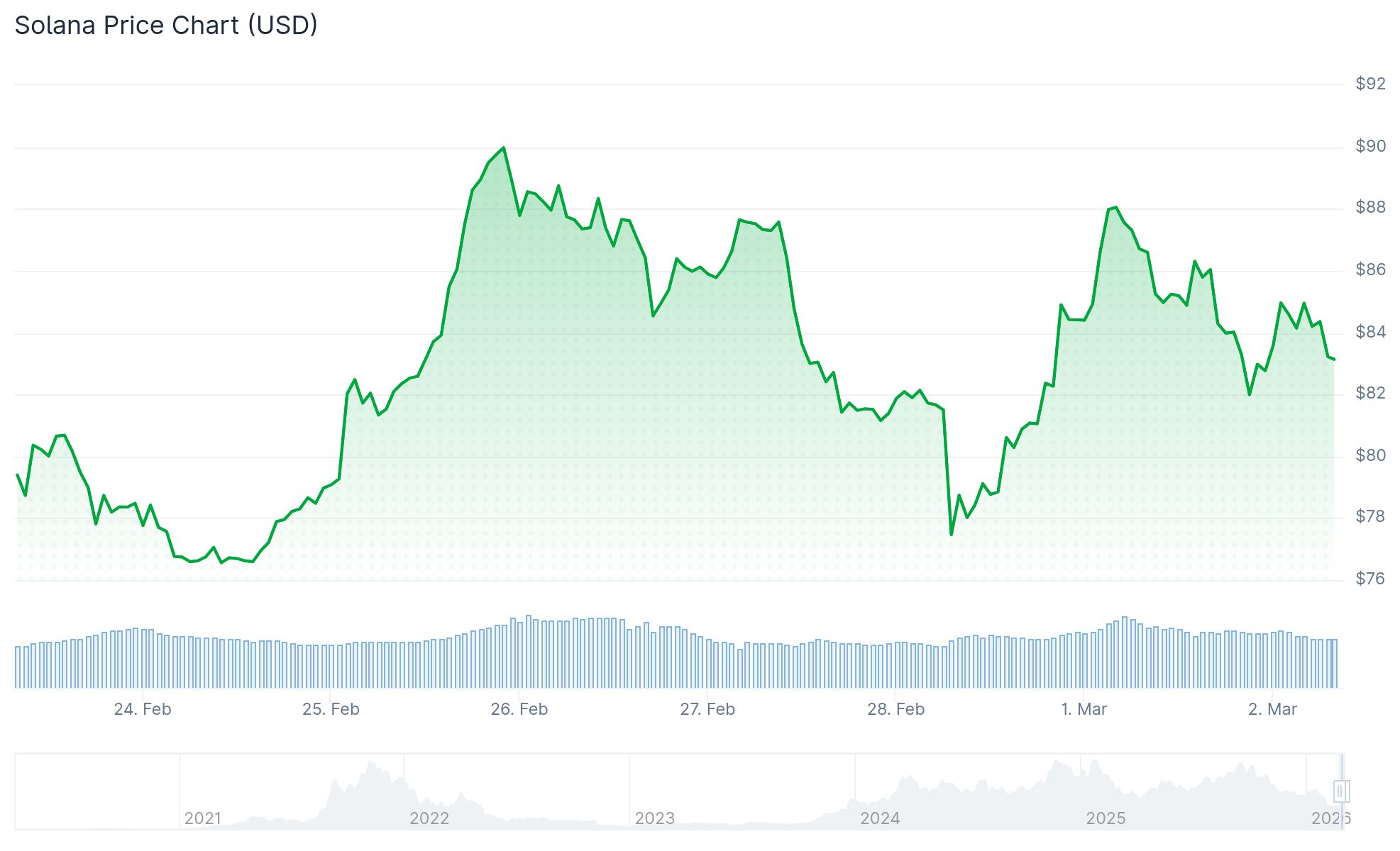
Solana (SOL) Price: Is a Breakout Coming After Four Weeks Stuck in the Same Range?

Solana (SOL) Price: Is a Breakout Coming After Four Weeks Stuck in the Same Range?

TLDR Solana (SOL) has traded in a tight $77–$88 range for nearly four weeks with no clear trend direction US spot Solana ETFs recorded over $44 million in weekly
Share
Coincentral2026/03/02 15:55
South Africa Tax Collector Deploys New Tech to Track Crypto and Offshore Assets

South Africa Tax Collector Deploys New Tech to Track Crypto and Offshore Assets

The post South Africa Tax Collector Deploys New Tech to Track Crypto and Offshore Assets appeared on BitcoinEthereumNews.com. South African crypto-asset service
Share
BitcoinEthereumNews2026/03/02 16:33
Crypto Futures Liquidation: Unpacking the Stunning $105 Million Market Shock

Crypto Futures Liquidation: Unpacking the Stunning $105 Million Market Shock

BitcoinWorld Crypto Futures Liquidation: Unpacking the Stunning $105 Million Market Shock The cryptocurrency market just experienced a sudden jolt, with a staggering $105 million worth of futures liquidated in a single hour. This dramatic event, part of a larger $311 million wipeout over the past 24 hours, has sent ripples across major exchanges. For many traders, this recent wave of crypto futures liquidation serves as a stark reminder of the inherent volatility and risks associated with leveraged trading in digital assets. What Exactly is Crypto Futures Liquidation? Understanding what happened requires a quick look at futures trading. A crypto futures contract is essentially an agreement to buy or sell a cryptocurrency at a predetermined price on a specified future date. Traders use these contracts to speculate on future price movements without owning the underlying asset. Leverage Amplifies Gains and Losses: Many traders utilize leverage, which means they borrow funds to increase their trading position beyond their initial capital. While leverage can magnify profits, it also significantly amplifies potential losses. Margin Calls and Forced Selling: When the market moves against a leveraged position, a trader’s margin (the collateral they put up) might fall below a required threshold. This triggers a “margin call,” where they need to add more funds. If they fail to do so, the exchange automatically closes their position to prevent further losses – this forced closure is known as crypto futures liquidation. The Recent $105 Million Crypto Futures Liquidation: What Triggered It? The recent surge in crypto futures liquidation, particularly the rapid $105 million in one hour, indicates a sharp and unexpected price movement. While the exact catalyst can be complex, such rapid liquidations often occur during: Sudden Price Swings: A rapid upward or downward movement in a major cryptocurrency’s price can quickly push many leveraged positions into unprofitable territory, leading to widespread liquidations. Market-Wide Sentiment Shifts: Unexpected news, regulatory announcements, or macroeconomic data can trigger a sudden shift in market sentiment, causing a cascade of selling or buying pressure. Over the past 24 hours, the total figure climbed to $311 million, highlighting a period of sustained volatility that caught many leveraged traders off guard. Why Does Leverage Play a Crucial Role in Futures Liquidation? Leverage is a double-edged sword. It allows traders to control large positions with relatively small amounts of capital. However, even a minor price fluctuation can have a significant impact on highly leveraged positions. When the market moves contrary to a trader’s bet, their equity can diminish rapidly. This is where the automatic liquidation mechanism kicks in. Exchanges implement this system to protect themselves and other traders from excessive losses. It ensures that a trader’s losses do not exceed their collateral, but it also means positions can be closed unexpectedly and quickly, contributing to the dramatic numbers seen in the recent crypto futures liquidation event. Navigating the Volatility: How Can Traders Prepare for Futures Liquidation Events? For those involved in or considering crypto futures trading, understanding and managing risk is paramount. The recent crypto futures liquidation serves as a powerful lesson. Here are some actionable insights: Use Lower Leverage: While tempting, high leverage dramatically increases risk. Opting for lower leverage significantly reduces the chance of premature liquidation. Implement Stop-Loss Orders: These orders automatically close a position if the price reaches a predetermined level, limiting potential losses before a full liquidation occurs. Manage Position Sizing: Never allocate too much of your portfolio to a single trade, especially a leveraged one. Diversification and responsible position sizing are key. Stay Informed: Keep abreast of market news, technical analysis, and global economic factors that could influence cryptocurrency prices. Beyond the Headlines: What Does This Mean for the Broader Crypto Market? While large-scale crypto futures liquidation events can be unsettling, they are a regular, albeit dramatic, feature of highly leveraged markets. Often, such events can “cleanse” the market of over-leveraged positions, potentially paving the way for more stable price action in the short term. However, they also underscore the need for caution and robust risk management practices, especially for new traders entering the volatile world of crypto futures. The recent $105 million liquidation is a stark reminder that while opportunities abound in crypto, so do significant risks. It emphasizes the importance of understanding the tools you’re using, especially leverage, and trading responsibly to protect your capital. Stay informed, manage your risks, and approach the market with a clear strategy. Frequently Asked Questions About Crypto Futures Liquidation Q1: What is the primary cause of crypto futures liquidation? A1: The primary cause is typically a sudden and significant price movement in the underlying cryptocurrency that goes against a trader’s leveraged position, causing their margin to fall below the exchange’s required maintenance level. Q2: How can traders avoid liquidation in futures trading? A2: Traders can reduce their risk of liquidation by using lower leverage, setting stop-loss orders to automatically close positions at a certain loss level, managing their position sizes responsibly, and continuously monitoring market conditions. Q3: Does liquidation only happen with leveraged positions? A3: Yes, liquidation specifically refers to the forced closure of a leveraged position when the trader’s collateral (margin) is insufficient to cover potential losses. Spot trading, where you own the asset outright, does not involve liquidation in the same manner. Q4: Is a crypto futures liquidation event bad for the entire market? A4: While immediate liquidations can cause further price volatility and negatively impact sentiment, some analysts view them as a “cleansing” event that removes excessive leverage from the market, potentially leading to a healthier, more stable environment in the long run. However, it certainly signifies a period of heightened risk. Q5: What is the difference between a margin call and liquidation? A5: A margin call is a notification from the exchange that your margin level is too low and you need to deposit more funds to maintain your position. Liquidation is what happens if you fail to meet that margin call; the exchange automatically closes your position to prevent further losses. Understanding market dynamics like crypto futures liquidation is crucial for navigating the cryptocurrency space. If you found this article insightful, please share it with your network on social media to help others better understand these significant market events and trade more responsibly. To learn more about the latest crypto market trends, explore our article on key developments shaping Bitcoin price action. This post Crypto Futures Liquidation: Unpacking the Stunning $105 Million Market Shock first appeared on BitcoinWorld.
Share
Coinstats2025/09/19 23:40