True is a Solana-based AI decentralized trading platform. Proceeds will fund the development of a next-generation trading platform that combines an off-chain high-speed execution engine with an on-chain settlement layer on Solana.True is a Solana-based AI decentralized trading platform. Proceeds will fund the development of a next-generation trading platform that combines an off-chain high-speed execution engine with an on-chain settlement layer on Solana.

True Announces $TRUE Token Sale to Build the First AI-Native Perpetuals DEX on Solana

2025/09/06 16:13
5 min read

True, a Solana-based AI decentralized trading platform, has announced the upcoming launch of its $TRUE token sale. Proceeds will fund the development of a next-generation trading platform that combines an off-chain high-speed execution engine with an on-chain settlement layer on Solana. Using ZK-rollup proofs and next-gen Verkle commitments, True compresses all trading activity into tiny, auditable records — delivering CEX-level performance with full blockchain transparency.

Old School Trading Is Nearing Its End

For years, traders have been stuck with outdated systems: centralized exchanges that restrict access and old brokerage models that prioritize fees over user outcomes. That era is closing fast. 

The next wave belongs to platforms that are

  • On-chain → self-custody, transparency, borderless access
  • AI-native → guidance, risk guardrails, and insights at scale
  • Community-first → rewarding both pro traders and everyday users

Traders are moving where freedom and transparency live — and True is built precisely for this shift: as intuitive as ChatGPT, as rewarding as social trading, and as radically transparent as DeFi should be.

The Team Behind TRUE

TRUE is developed by True Lab, a research and development group uniting experts in AI, trading, liquidity engineering, and blockchain infrastructure.

The team’s track record includes building enterprise-grade systems across 15+ ecosystems — from validator frameworks and DeFi protocols to NFT marketplaces and high-throughput transaction relays. 

They scaled a regulated CFD brokerage from zero to IPO (~$500M valuation), drove global marketing campaigns (with millions in Telegram reach, 600K funded wallets, and a Messi endorsement), and launched consumer AI products such as luvs.ai (multimodal companion) and brainer.gg (AI content agent). 

Beyond proprietary ventures, the team has contributed to core infrastructure for TON, Ethereum, NEAR, Polkadot, Filecoin, and more — demonstrating the ability to innovate, scale globally, and execute in compliance-sensitive environments.

Alongside the core team, TRUE is backed by prominent public supporters and advisors:

  • Ben Bilski — ex-NAGA CEO; took NAGA (FinTech Broker) public in an IPO, raising $150M, scaling to 500 employees across 7 offices.
  • Igor Stadnyk — AI Labs; built several AI projects, including Brainer and Luvs.ai, used by 100K+ active users.
  • Alex Momot — Liquidity & Risk; runs peanut.trade, one of the largest and most active DeFi market makers globally.

Together, this network of builders, operators, and advisors ensures that TRUE combines cutting-edge AI research with proven execution across fintech, blockchain, and global liquidity.

What True Will Deliver

  • Chat-Based AI Trading → A simple user request like “Long BTC with 1% max loss” becomes an executed, risk-checked trade.
  • Built-In Copy-Trading → With a fully transparent, real-time leaderboard that lets retail follow pro traders in one click. The True Creator Programme pays top traders more than TikTok, YouTube, or any crypto platform — up to $1 per copier per trade.
  • True Liquidity Vault (TLP) → A protocol-managed pool of capital that primarily performs market making and liquidations for trading. TLP holders collectively own a proportional share of all profits and losses.
  • Compounding Intelligence → Every action you take on True trains our self-learning AI, making it smarter for everyone.

TRUE is a long-term infrastructure project, backed by a three-year product roadmap and a team with deep experience in trading, AI, and exchange design — not a short-lived meme, but a platform built to scale. The $TRUE token is a core utility within the ecosystem, designed to power features and align incentives, rather than behave like a memecoin. 

To clarify the expectations: \n

  • TRUE AI and $TRUE are not meme tokens or meme projects. 

  • It’s a product: an AI-based decentralized exchange for trading and sustainable investments.

  • The $TRUE token is a core utility within the ecosystem, designed to power features and align incentives like $BNB or other CEX tokens.

To explore more details about product and token features, read the content of our detailed (30+ pages) Whitepaper by this link: https://true.foundation/whitepaper.pdf 

Driving Growth with $TRUE

$TRUE is designed as the core utility token of the True Ecosystem, delivering real value from day one. Traders benefit from fee reductions, AI credits, copy-trading boosts, and vault rewards — making the token integral to every interaction on the platform.

At the same time, True embeds full buyback alignment: up to 75% of platform fees flow back into the True Ecosystem Fund to support liquidity and sustained demand for $TRUE.

Token Sale Structure

The $TRUE token sale is staged to maximize fairness and community distribution:

  • Stage 1 Dutch Auction → 10% of supply, with early tranches up to 8× cheaper than the final stage.
  • Stages 2+ Fixed-Price Rounds → Weekly “mini” rounds and larger “big” rounds at pre-published prices, with referral rewards and optional “Boost” lockups for extra tokens.
  • Immutable Vesting → All allocations — including team and strategic partners — are locked in smart contracts with no admin override.

The sale is designed to run up to 365 days, ensuring new community members can join over time while preventing pump-and-dump dynamics.

Roadmap

True’s 3-year roadmap covers the launch of its perps DEX, the rollout of AI trading agents, copy-trading features, and the full build-out of True Liquidity Vaults. True AI Labs division has already published its phased milestones — from early PoC agents to RLHF-trained trading copilots and an AI agent marketplace.

About True

True is operated by True Trading Corp (Panama). The project’s mission is to democratize access to high-performance trading through AI-driven tools, decentralized architecture, and fair token economics.

The $TRUE token sale opens on September 10, 2025, at 17:30 UTC on true.foundation.

https://x.com/trueaitrading?s=21 

https://true.foundation/ 

Disclaimer: The articles reposted on this site are sourced from public platforms and are provided for informational purposes only. They do not necessarily reflect the views of MEXC. All rights remain with the original authors. If you believe any content infringes on third-party rights, please contact crypto.news@mexc.com for removal. MEXC makes no guarantees regarding the accuracy, completeness, or timeliness of the content and is not responsible for any actions taken based on the information provided. The content does not constitute financial, legal, or other professional advice, nor should it be considered a recommendation or endorsement by MEXC.

You May Also Like

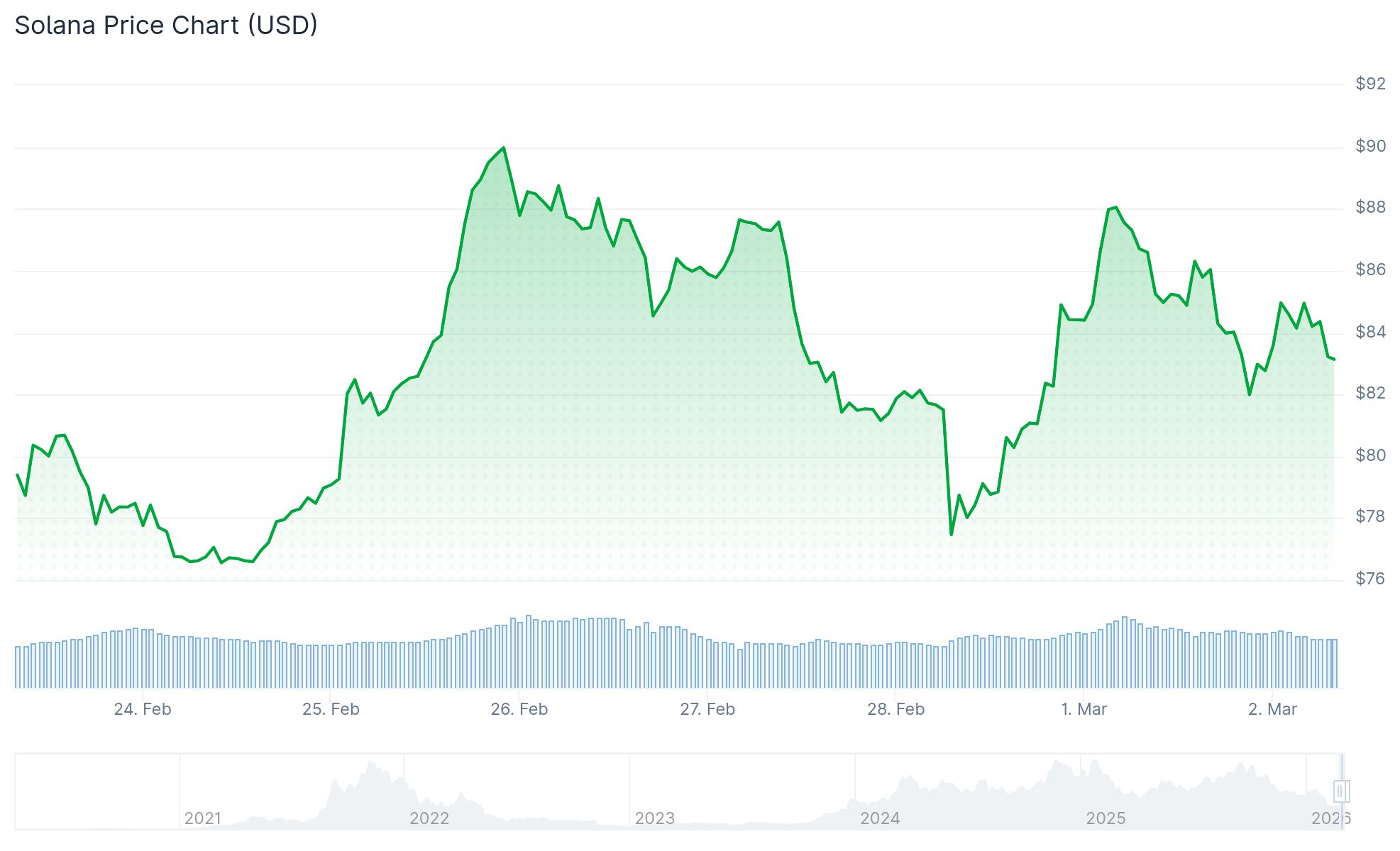
Solana (SOL) Price: Is a Breakout Coming After Four Weeks Stuck in the Same Range?

Solana (SOL) Price: Is a Breakout Coming After Four Weeks Stuck in the Same Range?

TLDR Solana (SOL) has traded in a tight $77–$88 range for nearly four weeks with no clear trend direction US spot Solana ETFs recorded over $44 million in weekly
Share
Coincentral2026/03/02 15:55
South Africa Tax Collector Deploys New Tech to Track Crypto and Offshore Assets

South Africa Tax Collector Deploys New Tech to Track Crypto and Offshore Assets

The post South Africa Tax Collector Deploys New Tech to Track Crypto and Offshore Assets appeared on BitcoinEthereumNews.com. South African crypto-asset service
Share
BitcoinEthereumNews2026/03/02 16:33
Crypto Futures Liquidation: Unpacking the Stunning $105 Million Market Shock

Crypto Futures Liquidation: Unpacking the Stunning $105 Million Market Shock

BitcoinWorld Crypto Futures Liquidation: Unpacking the Stunning $105 Million Market Shock The cryptocurrency market just experienced a sudden jolt, with a staggering $105 million worth of futures liquidated in a single hour. This dramatic event, part of a larger $311 million wipeout over the past 24 hours, has sent ripples across major exchanges. For many traders, this recent wave of crypto futures liquidation serves as a stark reminder of the inherent volatility and risks associated with leveraged trading in digital assets. What Exactly is Crypto Futures Liquidation? Understanding what happened requires a quick look at futures trading. A crypto futures contract is essentially an agreement to buy or sell a cryptocurrency at a predetermined price on a specified future date. Traders use these contracts to speculate on future price movements without owning the underlying asset. Leverage Amplifies Gains and Losses: Many traders utilize leverage, which means they borrow funds to increase their trading position beyond their initial capital. While leverage can magnify profits, it also significantly amplifies potential losses. Margin Calls and Forced Selling: When the market moves against a leveraged position, a trader’s margin (the collateral they put up) might fall below a required threshold. This triggers a “margin call,” where they need to add more funds. If they fail to do so, the exchange automatically closes their position to prevent further losses – this forced closure is known as crypto futures liquidation. The Recent $105 Million Crypto Futures Liquidation: What Triggered It? The recent surge in crypto futures liquidation, particularly the rapid $105 million in one hour, indicates a sharp and unexpected price movement. While the exact catalyst can be complex, such rapid liquidations often occur during: Sudden Price Swings: A rapid upward or downward movement in a major cryptocurrency’s price can quickly push many leveraged positions into unprofitable territory, leading to widespread liquidations. Market-Wide Sentiment Shifts: Unexpected news, regulatory announcements, or macroeconomic data can trigger a sudden shift in market sentiment, causing a cascade of selling or buying pressure. Over the past 24 hours, the total figure climbed to $311 million, highlighting a period of sustained volatility that caught many leveraged traders off guard. Why Does Leverage Play a Crucial Role in Futures Liquidation? Leverage is a double-edged sword. It allows traders to control large positions with relatively small amounts of capital. However, even a minor price fluctuation can have a significant impact on highly leveraged positions. When the market moves contrary to a trader’s bet, their equity can diminish rapidly. This is where the automatic liquidation mechanism kicks in. Exchanges implement this system to protect themselves and other traders from excessive losses. It ensures that a trader’s losses do not exceed their collateral, but it also means positions can be closed unexpectedly and quickly, contributing to the dramatic numbers seen in the recent crypto futures liquidation event. Navigating the Volatility: How Can Traders Prepare for Futures Liquidation Events? For those involved in or considering crypto futures trading, understanding and managing risk is paramount. The recent crypto futures liquidation serves as a powerful lesson. Here are some actionable insights: Use Lower Leverage: While tempting, high leverage dramatically increases risk. Opting for lower leverage significantly reduces the chance of premature liquidation. Implement Stop-Loss Orders: These orders automatically close a position if the price reaches a predetermined level, limiting potential losses before a full liquidation occurs. Manage Position Sizing: Never allocate too much of your portfolio to a single trade, especially a leveraged one. Diversification and responsible position sizing are key. Stay Informed: Keep abreast of market news, technical analysis, and global economic factors that could influence cryptocurrency prices. Beyond the Headlines: What Does This Mean for the Broader Crypto Market? While large-scale crypto futures liquidation events can be unsettling, they are a regular, albeit dramatic, feature of highly leveraged markets. Often, such events can “cleanse” the market of over-leveraged positions, potentially paving the way for more stable price action in the short term. However, they also underscore the need for caution and robust risk management practices, especially for new traders entering the volatile world of crypto futures. The recent $105 million liquidation is a stark reminder that while opportunities abound in crypto, so do significant risks. It emphasizes the importance of understanding the tools you’re using, especially leverage, and trading responsibly to protect your capital. Stay informed, manage your risks, and approach the market with a clear strategy. Frequently Asked Questions About Crypto Futures Liquidation Q1: What is the primary cause of crypto futures liquidation? A1: The primary cause is typically a sudden and significant price movement in the underlying cryptocurrency that goes against a trader’s leveraged position, causing their margin to fall below the exchange’s required maintenance level. Q2: How can traders avoid liquidation in futures trading? A2: Traders can reduce their risk of liquidation by using lower leverage, setting stop-loss orders to automatically close positions at a certain loss level, managing their position sizes responsibly, and continuously monitoring market conditions. Q3: Does liquidation only happen with leveraged positions? A3: Yes, liquidation specifically refers to the forced closure of a leveraged position when the trader’s collateral (margin) is insufficient to cover potential losses. Spot trading, where you own the asset outright, does not involve liquidation in the same manner. Q4: Is a crypto futures liquidation event bad for the entire market? A4: While immediate liquidations can cause further price volatility and negatively impact sentiment, some analysts view them as a “cleansing” event that removes excessive leverage from the market, potentially leading to a healthier, more stable environment in the long run. However, it certainly signifies a period of heightened risk. Q5: What is the difference between a margin call and liquidation? A5: A margin call is a notification from the exchange that your margin level is too low and you need to deposit more funds to maintain your position. Liquidation is what happens if you fail to meet that margin call; the exchange automatically closes your position to prevent further losses. Understanding market dynamics like crypto futures liquidation is crucial for navigating the cryptocurrency space. If you found this article insightful, please share it with your network on social media to help others better understand these significant market events and trade more responsibly. To learn more about the latest crypto market trends, explore our article on key developments shaping Bitcoin price action. This post Crypto Futures Liquidation: Unpacking the Stunning $105 Million Market Shock first appeared on BitcoinWorld.
Share
Coinstats2025/09/19 23:40