Morgan Stanley Appoints Digital Asset Strategy Lead
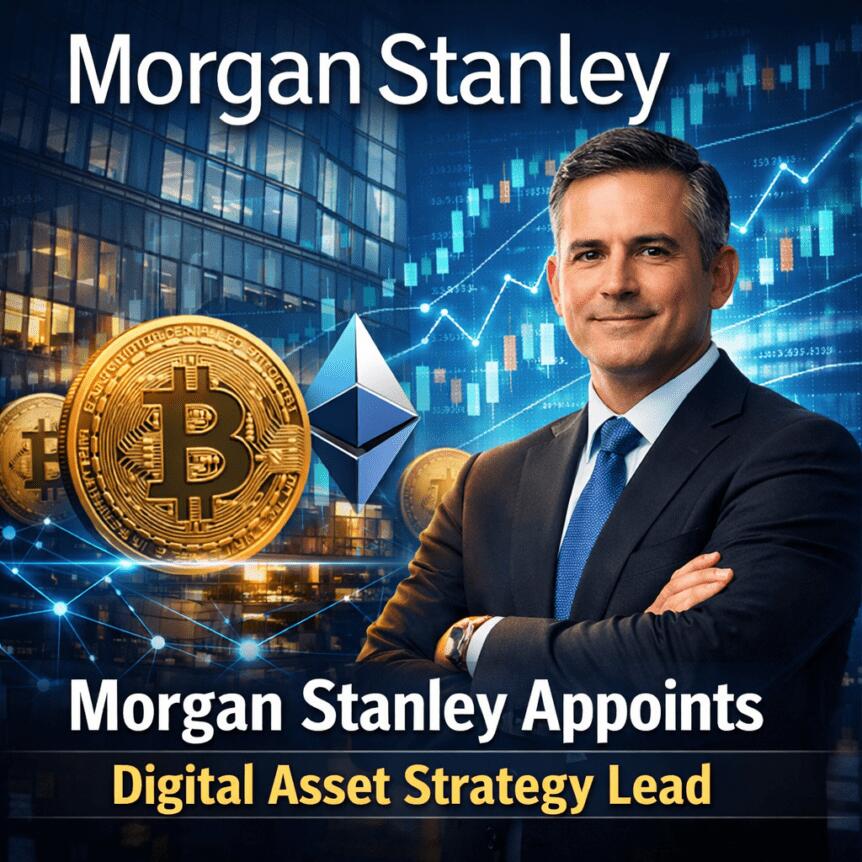
Morgan Stanley (EXCHANGE: MS) has appointed Amy Oldenburg to lead a newly formed crypto unit, signaling a deeper push into digital assets for a bank that has long observed the sector from the sidelines. Oldenburg, a veteran of the firm’s equity franchise with a tenure dating back to 2001, will transition to head of digital asset strategy after guiding the Emerging Markets Equity team since late 2021. The move comes as the bank accelerates its crypto ambitions, including plans to roll out three crypto exchange-traded funds and a dedicated crypto wallet. The decision underscores the institution’s intent to integrate digital assets more thoroughly into its advisory and wealth-management platforms and to structure products that can appeal to a broader set of clients. Bloomberg reported on Tuesday on Oldenburg’s appointment and the strategic shift, highlighting Morgan Stanley’s evolving stance on crypto.
Oldenburg has been instrumental in shaping the EM equities unit’s digital asset considerations, according to people familiar with the matter. Her transition positions her at the intersection of traditional capital markets and a rapidly expanding crypto product set. In tandem with her appointment, the bank has signaled ongoing expansion of its crypto team, listing roles on LinkedIn for a digital assets strategy director, a digital assets strategist, and a digital assets product lead, among others. The staffing push reflects a broader industry trend: financial institutions are building out internal capabilities to support clients who want access to crypto exposure through regulated channels rather than ad hoc, peripheral offerings.
Morgan Stanley’s broader crypto roadmap has been moving forward since late 2024, when the bank announced plans to launch a portfolio of crypto-focused exchange-traded funds. The objective—introducing regulated products that can provide diversified exposure to digital assets—aligns with a growing appetite among wealthy clients and wealth-management platforms seeking to offer crypto access within a familiar, audited framework. In addition to the ETF initiatives, the firm has explored a crypto wallet that would support both direct currencies and tokenized real-world assets such as stocks, bonds, and real estate. The wallet concept nods to a future where clients can manage a broader spectrum of digital assets in a single, integrated custody and settlement environment. This strategy has been discussed in industry circles as part of the ongoing evolution of how traditional banks interact with crypto liquidity and settlement rails.
Oldenburg has publicly advocated for critical fundamentals in crypto infrastructure. In her public appearances, she has emphasized the maxim “Not your keys, not your coins,” underscoring the importance of self-custody and robust custody solutions, especially for participants in emerging markets who may lack mature infrastructure. She has also suggested that the best adoption model for some clients requires a balance between custody resilience and the liquidity needs that come with 24/7 markets. In a 2025 forum, she noted the desire for liquidity that allows clients to move assets freely and to leverage the digital-asset space’s features for banking and treasury use cases. While she acknowledged the limitations of ETFs at the time—particularly around staking and yield-bearing products—she implied that regulatory environments are evolving toward a broader suite of crypto offerings.
Key takeaways
- Amy Oldenburg, a long-time Morgan Stanley executive, has been named head of digital asset strategy, signaling a formalized and amplified crypto leadership track at the firm.
- Oldenburg previously led the Emerging Markets Equity team since November 2021, a role that included guiding the division’s digital asset strategy while the bank built out its crypto capabilities.
- Morgan Stanley has publicly pursued a multi-product crypto push, including plans to launch three crypto exchange-traded funds and a crypto wallet as part of expanding access to digital assets for clients.
- In parallel with ETF ambitions, the bank filed for a staked Ether (ETH) ETF, aiming to combine exposure to ETH with staking income, subject to regulatory approvals.
- Staffing moves—explicit LinkedIn postings for roles like digital assets strategy director and digital assets product lead—signal a concerted capacity-build to support a broader crypto product line.
- The strategy aims to leverage Morgan Stanley’s wealth-management footprint, potentially routing inflows from its 19 million clients into crypto products via established advisory channels.
Tickers mentioned: $BTC, $ETH, $SOL
Sentiment: Neutral
Market context: The moves reflect a broader institutional shift as banks experiment with regulated crypto products, from ETFs to wallet services, amid evolving regulatory frameworks and increasing client demand for on-platform digital-asset access.
Why it matters
The appointment of Oldenburg to lead Morgan Stanley’s digital asset strategy marks a clear pivot from opportunistic pilots to a structured, scalable crypto program. By naming a senior, long-tenured executive to spearhead the unit, the bank signals it views digital assets as a core business line rather than a peripheral offering. The shift is likely to shape how Morgan Stanley designs, markets, and supervises crypto products, with potential implications for client onboarding, custody standards, and risk management across its wealth-management and investment-banking franchises.
These developments come as major banks seek to balance client demand for regulated exposure with the need for robust governance and compliance. The firm’s ETF filing strategy—particularly for spot asset ETFs tied to well-known digital assets—suggests an intent to provide broad access with regulated oversight. At the same time, the ETH staking ETF effort signals a willingness to explore yield-bearing structures, potentially expanding the banking sector’s toolkit for recommending crypto-related income streams within a regulated framework. The evolving stance from regulators, including a more open posture from the Securities and Exchange Commission toward a wider array of crypto products, adds a layer of potential momentum to Morgan Stanley’s plans.
On the client side, Oldenburg’s remarks about liquidity and usability highlight a practical orientation toward institutional needs. The bank’s ambition to offer a crypto wallet capable of handling tokenized real-world assets could streamline how clients move between fiat, digital currencies, and tokenized securities. If realized, such a wallet would enable parallel custody rails and settlement mechanisms, potentially reducing friction for high-net-worth clients seeking cross-asset liquidity and streamlined access to yield opportunities.
What to watch next
- Regulatory decisions on the proposed spot BTC and SOL ETFs and the ETH staking ETF, including timing and conditions for approvals.
- The progression of Morgan Stanley’s wallet project, including technical milestones and compliance safeguards for tokenized assets.
- Progress on expanding the crypto-team footprint, including the hiring outcomes for the digitally focused roles listed on LinkedIn.
- Any formal guidance from Morgan Stanley on how these products will be integrated into wealth and investment-management workflows for clients.
Sources & verification
- Morgan Stanley appoints Amy Oldenburg to lead digital asset strategy, Bloomberg report and related video
- Morgan Stanley files to launch spot Bitcoin and Solana ETFs (first week of 2025)
- Morgan Stanley files staking ETH ETF (third crypto fund)
- ETFs challenges Bitcoin self-custody roots discussion
Key figures and next steps
Market reaction and key details
Morgan Stanley’s leadership change arrives as the bank accelerates its crypto product roadmap, signaling a long-term commitment to integrating digital assets into its core offerings. The announcement dovetails with ongoing conversations about how traditional financial institutions can provide regulated, transparent access to crypto markets while maintaining rigorous risk controls. Oldenburg’s experience in emerging markets and her advocacy for self-custody infrastructure place custodial reliability and client liquidity at the center of the bank’s strategy, which could influence how other banks approach product development and fiduciary safeguards in this space.
What to watch next
- Regulatory decisions on BTC/SOL ETFs and ETH staking ETFs—watch for approvals or conditions in the coming months.
- Updates on Morgan Stanley’s crypto wallet rollout, including security architecture and cross-asset tokenization features.
- Results from the bank’s expanded crypto recruitment efforts and how new hires influence product development timelines.
Rewritten Article Body: Morgan Stanley’s deeper crypto push gains a new leader
Morgan Stanley has elevated Amy Oldenburg, a veteran of the firm’s equity divisions, to head its newly formed crypto unit, underscoring a more deliberate push into digital assets. Oldenburg, who has spent more than two decades at the bank and has led the Emerging Markets Equity team since 2021, will now be responsible for shaping the bank’s digital asset strategy. The appointment aligns with Morgan Stanley’s broader push into the crypto space, including plans to roll out a trio of crypto exchange-traded funds and a wallet capable of handling digital currencies and tokenized assets. The bank’s leadership transition and strategic roadmap were highlighted in a Bloomberg video report that noted the shift as part of a broader realignment of the firm’s crypto ambitions.
The bank’s crypto strategy, which has been percolating for years, is now moving toward a more formal, client-facing form. LinkedIn postings show Morgan Stanley actively recruiting for roles such as digital assets strategy director, digital assets strategist, and digital assets product lead, signaling an expanded operating model that will support a growing portfolio of crypto products. This expansion mirrors a wider industry trend: traditional financial institutions are developing dedicated teams to navigate the regulatory, liquidity, and custody challenges that come with digital-asset offerings. The emphasis on building out an internal capability suggests a commitment to integrating crypto products into the bank’s advisory and wealth-management platforms, rather than treating crypto as a standalone experiment.
The bank’s early-2025 disclosures reflect a deliberate strategy to move beyond pilot projects and into a regulated, multi-product framework. Morgan Stanley filed to launch spot Bitcoin (BTC) and Solana (SOL) exchange-traded funds in the first week of 2025, marking its first sustained foray into the institutional crypto space since largely sitting on the sidelines during the prior wave of institutional adoption. The filing signals the bank’s intent to provide clients with regulated exposure to leading digital assets through familiar product structures. In a separate filing, Morgan Stanley also pursued a staked Ether (ETH) ETF, aiming to hold ETH while staking an undisclosed amount to generate staking income—an approach that, if approved, could add a yield-oriented dimension to traditional crypto exposures.
The broader context for these moves includes a rapidly evolving regulatory landscape. The Securities and Exchange Commission has shown signs of openness toward a broader set of crypto products, a development Oldenburg referenced when discussing the potential for ETFs and other vehicles to fit client needs. She has also stressed the importance of liquidity and the ability for clients to move assets fluidly, a theme she touched on at industry events. While she acknowledged ETF structures as valuable entry points, she argued that the industry should continue exploring how staking and yield-bearing products can be integrated into regulated offerings, all while maintaining robust custody and risk controls. The bank’s strategy thus sits at the intersection of liquidity, accessibility, and prudent governance, aiming to deliver regulated pathways that align with client goals.
Beyond ETFs, Morgan Stanley has teased a crypto wallet capable of supporting tokenized real-world assets, including stocks, bonds, and real estate. If realized, the wallet would provide a more integrated view of digital assets within a single ecosystem, potentially harmonizing custody, settlement, and regulatory compliance across multiple asset classes. Such an offering could attract clients who want to manage a diverse mix of assets—from traditional securities to digital currencies—through one platform. The wallet concept also echoes broader market interest in tokenization, which could unlock new forms of liquidity and ownership for a wide range of assets.
Oldenburg’s emphasis on self-custody infrastructure—and her past stance that ETFs alone were not sufficient for a fully realized crypto strategy—reflects a pragmatic understanding of the sector’s current limitations. She highlighted the need for better custody, more reliable liquidity, and the ability for clients in emerging markets to participate in the digital-asset economy. The evolving regulatory climate and the bank’s internal preparations suggest that Morgan Stanley is charting a course toward more comprehensive digital-asset services, anchored by a leadership team with deep market experience and a track record of integrating new product lines into a traditional banking framework.
In sum, the leadership shift signals a firmer commitment to a multi-faceted crypto program. By combining a seasoned executive with a roadmap that includes regulated ETFs, staking opportunities, and tokenized real-world assets, Morgan Stanley is positioning itself to serve a broader spectrum of clients while navigating the risks inherent in digital-asset markets. The coming quarters will reveal how quickly the firm can translate these plans into tangible products and how regulators respond to a more expansive crypto offering from a major Wall Street bank. The next steps will hinge on regulatory approvals, technology development for custody and wallet features, and the firm’s ability to integrate these products into its wealth-management and corporate-banking channels.
https://platform.twitter.com/widgets.js
This article was originally published as Morgan Stanley Appoints Digital Asset Strategy Lead on Crypto Breaking News – your trusted source for crypto news, Bitcoin news, and blockchain updates.


You May Also Like
Euro Slips Below 1.1750 as Stronger US Inflation Data Lifts Dollar

Trump Says Trade, Not Iran, to Dominate Agenda at Upcoming Summit With Xi