Federal Reserve Under Pressure: Trump’s Urgent Call for Interest Rate Cuts Sparks Monetary Policy Debate

BitcoinWorld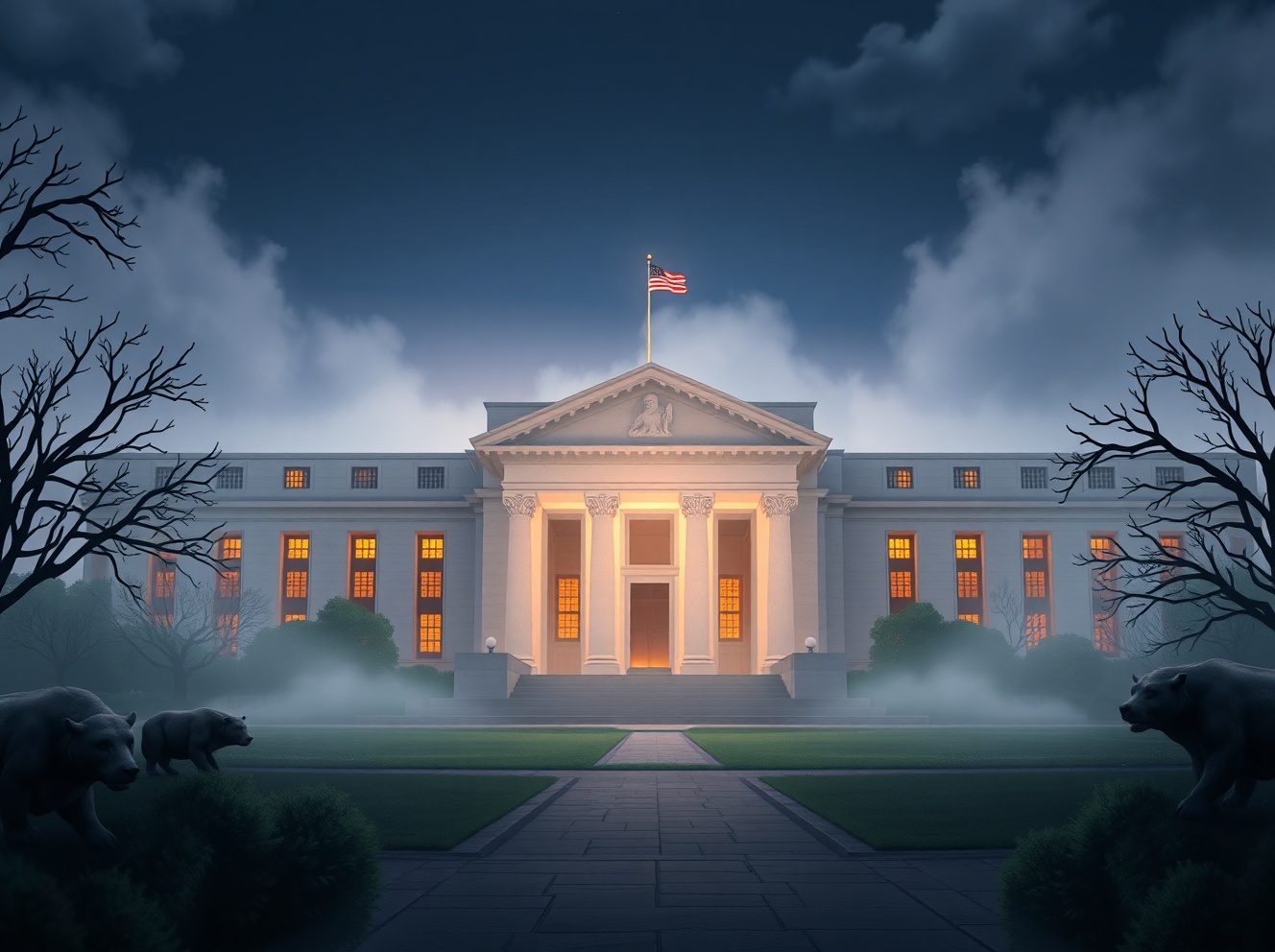
Federal Reserve Under Pressure: Trump’s Urgent Call for Interest Rate Cuts Sparks Monetary Policy Debate
WASHINGTON, D.C. — President Donald Trump has intensified pressure on the Federal Reserve to implement interest rate reductions, creating renewed tension between the White House and the nation’s central bank. This latest development, reported by Walter Bloomberg on Tuesday, marks another chapter in the ongoing debate about monetary policy independence during periods of economic expansion.
Federal Reserve Faces Presidential Pressure on Interest Rates
President Trump specifically criticized Federal Reserve Chairman Jerome Powell during recent remarks. Consequently, he suggested the chairman’s policies threaten economic growth. Furthermore, Trump expressed hope for rate cuts despite generally positive economic indicators. This situation represents a significant challenge to the traditional separation between presidential administration and central bank decision-making.
The Federal Reserve maintains operational independence by design. Therefore, presidential comments about monetary policy typically generate controversy among economists. Historically, most presidents have avoided direct pressure on the Fed. However, Trump has repeatedly broken with this tradition throughout his administration.
Monetary policy decisions directly influence borrowing costs across the economy. For instance, lower interest rates typically stimulate business investment and consumer spending. Conversely, higher rates generally control inflation but may slow economic growth. The Federal Reserve must balance these competing priorities carefully.
Historical Context of Presidential Fed Relations
Presidential criticism of Federal Reserve policy has precedent in American history. For example, President Lyndon Johnson confronted Fed Chairman William McChesney Martin in 1965. Similarly, President Richard Nixon pressured Chairman Arthur Burns during the 1970s. More recently, President George H.W. Bush expressed frustration with Alan Greenspan’s policies.
However, the frequency and public nature of Trump’s comments represent a departure from recent norms. Since 2018, President Trump has criticized Fed policy through various channels. These include tweets, interviews, and public statements. Consequently, this approach has sparked debate about central bank independence.
The Federal Reserve operates under a dual mandate from Congress. Specifically, it must pursue maximum employment and stable prices. Therefore, policymakers consider numerous economic indicators before making decisions. These include inflation data, employment figures, and global economic conditions.
Economic Analysis of Rate Cut Arguments
Economists present competing perspectives on current monetary policy. Some analysts argue that preventive rate cuts could extend the economic expansion. Meanwhile, others caution against reducing rates without clear economic weakness. Additionally, they warn that premature cuts might limit policy options during future downturns.
Recent economic data shows mixed signals about the appropriate policy path. For instance, unemployment remains near historic lows at 3.6%. Meanwhile, inflation has moderated below the Fed’s 2% target. Furthermore, global economic uncertainty persists due to trade tensions.
The Federal Open Market Committee (FOMC) meets regularly to set interest rate policy. During their most recent meeting, members voted to maintain the current rate range. However, they indicated openness to future adjustments based on economic developments.
| Meeting Date | Rate Decision | Key Considerations |
|---|---|---|
| March 2025 | Hold at 2.25-2.50% | Strong labor market, moderate inflation |
| January 2025 | Hold at 2.25-2.50% | Global growth concerns, trade uncertainty |
| December 2024 | Increase to 2.25-2.50% | Economic strength, inflation expectations |
Market Reactions and Economic Implications
Financial markets closely monitor Fed communications and presidential comments. Typically, stock markets respond positively to expectations of lower interest rates. However, bond markets may signal concerns about economic growth or inflation expectations. Recently, market volatility has increased amid policy uncertainty.
Several key factors influence Federal Reserve decision-making:
- Inflation metrics: Core PCE price index and consumer price data
- Employment indicators: Unemployment rate, wage growth, and job creation
- Global conditions: International trade, currency markets, and foreign growth
- Financial stability: Asset valuations, credit conditions, and market functioning
Business leaders express varying opinions about appropriate monetary policy. Some corporate executives advocate for rate cuts to support expansion plans. Meanwhile, others express concern about potential asset bubbles from excessively easy policy. Additionally, consumers face competing influences from interest rate changes.
Expert Perspectives on Central Bank Independence
Former Federal Reserve officials generally defend the institution’s independence. For example, former Chair Janet Yellen has emphasized the importance of data-driven decisions. Similarly, former Vice Chair Stanley Fischer has warned against political influence on monetary policy. These experts argue that independent central banks achieve better economic outcomes.
Academic research supports the value of central bank independence. Studies show that countries with independent central banks typically experience lower inflation. Furthermore, they often achieve more stable economic growth over time. However, some economists acknowledge that communication between policymakers and elected officials can be constructive.
International comparisons provide additional context for this debate. For instance, the European Central Bank maintains strict independence from political influence. Meanwhile, some emerging market central banks face more direct government pressure. These different approaches yield varying economic results across countries.
Potential Policy Paths and Economic Scenarios
The Federal Reserve faces several possible approaches to current economic conditions. First, it could maintain current rates while monitoring incoming data. Alternatively, it might implement preventive rate cuts to support growth. Finally, it could even consider rate increases if inflation accelerates unexpectedly.
Each policy path carries distinct risks and potential benefits. Maintaining current rates preserves policy flexibility for future challenges. However, it might allow economic weakness to develop. Preventive cuts could extend the expansion but might fuel financial imbalances. Rate increases would control inflation but could prematurely end economic growth.
Economic forecasting models suggest various possible outcomes. The Fed’s own projections indicate moderate growth with stable inflation. Private sector forecasts show similar expectations with some variation. However, all projections acknowledge significant uncertainty about future conditions.
Conclusion
President Trump’s renewed call for Federal Reserve interest rate cuts highlights ongoing tensions between political priorities and monetary policy independence. The central bank must navigate complex economic data while maintaining its institutional credibility. Ultimately, Federal Reserve decisions will significantly influence economic conditions for businesses and consumers nationwide. The coming months will reveal how policymakers balance these competing considerations amid presidential pressure and economic uncertainty.
FAQs
Q1: Why does President Trump want the Federal Reserve to cut interest rates?
President Trump believes lower interest rates would stimulate economic growth and support financial markets. He has expressed concern that current policy might unnecessarily restrain economic expansion.
Q2: How independent is the Federal Reserve from presidential influence?
The Federal Reserve operates with statutory independence in monetary policy decisions. While presidents appoint Fed chairs and board members, they cannot directly order interest rate changes. However, presidential comments can influence public expectations and market psychology.
Q3: What factors does the Federal Reserve consider when setting interest rates?
The Fed evaluates numerous economic indicators including inflation, employment, GDP growth, and global conditions. Policymakers also consider financial market stability and long-term economic projections when making decisions.
Q4: How do interest rate changes affect ordinary Americans?
Interest rate changes influence mortgage rates, car loans, credit card APRs, and savings account yields. Lower rates typically reduce borrowing costs but may decrease returns on savings. Higher rates have the opposite effects across the economy.
Q5: Has the Federal Reserve responded to presidential pressure in the past?
Historical evidence suggests the Fed generally maintains its policy independence despite presidential comments. However, some economists argue that subtle influence may occur through various channels including appointments and public communications.
This post Federal Reserve Under Pressure: Trump’s Urgent Call for Interest Rate Cuts Sparks Monetary Policy Debate first appeared on BitcoinWorld.
You May Also Like

US Jobs Miss Fails to Stop Bitcoin Erasing Its $74,000 Breakout Attempt

SushiSwap (SUSHI) Price Prediction 2026, 2027-2030: Future Outlook, Targets, and Long-Term Forecast