Looking ahead to 2025, Propy is accelerating its global strategic plan. Propy has launched a new on-chain real estate loan product that allows buyers to obtain instant on-chain loans by using BTC as collateral, unlocking scalability.Looking ahead to 2025, Propy is accelerating its global strategic plan. Propy has launched a new on-chain real estate loan product that allows buyers to obtain instant on-chain loans by using BTC as collateral, unlocking scalability.

A bumper year for RWA: the gains and prospects of a leading project in the track

2025/02/13 10:32

A bumper year for RWA: the gains and prospects of a leading project in the track

Author: Weilin, PANews

2024 is an important year for the real world asset (RWA) tokenization space in the real estate industry, especially as this space is increasingly integrated with Web3 technology. As one of the leading projects in this space, Propy has achieved many achievements. Since the launch of PropyKeys on Base in March, Propy has successfully minted more than 285,000 property addresses, driving the digital transformation of real world assets. PropyKeys integrates Chainlink automation on BuiltOnBase to provide secure staking rewards, and there will be more developments in the future.

In addition, Propy and Coinbase jointly launched a custody service, providing a safer and more efficient solution for real estate transactions.

Looking ahead to 2025, Propy is accelerating its global strategic plan. Propy has launched a new on-chain real estate loan product that allows buyers to obtain instant on-chain loans by using BTC as collateral, unlocking scalability. This move removes consumer barriers to real estate ownership and enables buyers to purchase real estate using USDC, ETH, or BTC, while also providing the option of 100% instant cryptocurrency-backed loans. This product makes real estate transactions more convenient and smooth, staying true to Propy's founding mission.

Building on this success, Propy is currently actively seeking lending partners to further expand its cryptocurrency-backed lending model. By partnering with innovative lenders, Propy aims to create more opportunities for buyers and make real estate ownership more accessible, all made possible by blockchain technology.

2024 report card: PropyKeys launched, multiple partnerships reached, and the leadership team added heavyweights

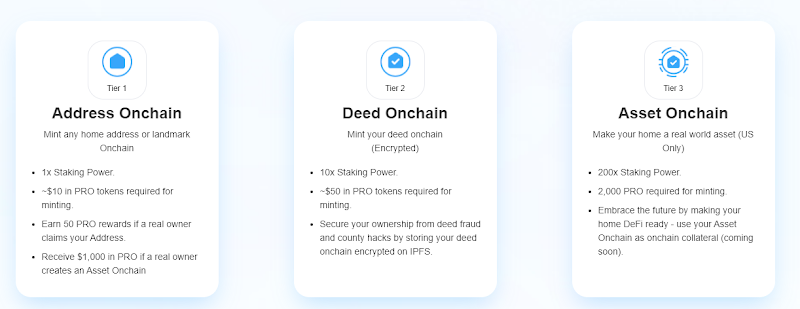
In 2024, Propy achieved breakthroughs in multiple areas. In March, Propy's innovative product PropyKeys was officially launched on Base, allowing users to mint digital addresses and deeds for real-world properties, with more than 285,000 mintings to date. Subsequently, PropyKeys AI-generated landmark NFT minting and a novel staking mechanism created a gamified experience that makes home ownership more accessible, secure, and interactive.

A bumper year for RWA: the gains and prospects of a leading project in the track

A bumper year for RWA: the gains and prospects of a leading project in the track

Subsequently, Propy successfully deployed Chainlink Automation technology to distribute staking rewards. After PropyKeys integrated Automation, Automation allows developers to automate key on-chain functions at timed intervals or in response to external events. Based on Chainlink Automation, Propy achieves highly reliable, high-performance and decentralized automation, and transactions can be quickly identified and confirmed even in periods of severe network congestion.

In addition, Propy also announced a strategic partnership with the decentralized real estate derivatives protocol Parcl to improve the quality of on-chain real estate analysis and valuation. Propy uses Parcl’s API to improve the valuation and analysis capabilities associated with PropyKeys.

In terms of user experience, Propy has partnered with Coinbase to launch a cryptocurrency escrow service. If homebuyers hold Bitcoin, they can safely put it into escrow through Propy's certified title escrow service, conduct real estate transactions, and only redeem it when the transaction is completed. This avoids unnecessary fees and taxes.

Propy also continues to strengthen its team building, and the board of directors has welcomed two heavyweights: former SEC commissioner and financial regulatory expert Dr. Michael Piwowar and Coindesk Chief Content Officer, blockchain pioneer and media veteran Michael Casey.

Over the past year, Propy has been widely recognized by the industry. Propy was cited in the Messari blockchain report and participated in many high-profile events, sparking Vitalik Buterin's discussion on blockchain property rights at the EthCC conference. Through technological innovation and leadership, Propy's CEO Natalia Karayaneva won the 2024 Inman Best Real Estate Technology Award "Entrepreneur" award.

Propy also hosted the Propy Summit 2024. This was more than just a summit, it was a microcosm of building the future together. The event brought together leading innovators and visionaries in blockchain and real estate, including Senator Cynthia Lummis, Mayor Francis Suarez, Tim Draper, Anthony Scaramucci, and many other industry leaders.

2025 Vision: Launch RWA on-chain assets, launch DeFi loans, and expand to the global market

In this new year, Propy will expand its blockchain real estate solutions, having already launched a DeFi lending program in the first quarter.

Propy will accelerate its presence in the U.S. market, planning to become a national blockchain title and escrow company by the end of the year. By acquiring additional licenses and advancing its blockchain-based settlement services, Propy is on track to become the first fully blockchain-licensed title and escrow provider in the U.S. According to a report by research firm IBISWorld, the U.S. title insurance market is worth $22.6 billion in 2023. Meanwhile, data from software company Debut Infotech predicts that blockchain adoption in real estate is expected to grow at a compound annual growth rate (CAGR) of 64.8% until 2028. Propy is ready to lead the industry in this new era, bringing greater efficiency, transparency, and innovation.

From the perspective of the Propy token, PRO will be an asset that benefits from both the U.S. real estate and crypto markets. With the upcoming new policies of the U.S. government, including the proposal to abolish capital gains tax on U.S. crypto transactions, the United States may become the next major crypto hub. Currently, crypto investors face a 20% long-term capital gains tax or up to 37% short-term capital gains tax, depending on holding period and income level. According to Investing in the Web, 13.22% of Americans (about 44.96 million people) currently own cryptocurrencies, and real estate is increasingly seen as a way to diversify crypto portfolios. The abolition of capital gains tax will greatly increase the number of crypto-real estate transactions.

As the first blockchain-based real estate token in the United States, PRO tokens will drive the adoption of cryptocurrency in RWA transactions and incentivize investors to invest in cryptocurrency, supporting the broader ecosystem of tokenized real estate.

At the same time, Propy will also begin a global expansion plan into non-U.S. markets, with announcements expected in the first quarter of 2025. This expansion is well-timed, especially in regions such as Asia and Latin America where real estate fraud is rampant. In India, for example, 66% of civil cases stem from real estate disputes, while in Indonesia, approximately 40% of real estate documents are affected by fraud. Similarly, Argentina faces a long-standing problem of property corruption and irregular documentation, with historically unreliable registration systems and bureaucratic transparency issues that have weakened property rights and hindered economic progress.

Through blockchain technology, Propy addresses the need for trust, efficiency, and integrity in real estate governance. For governments facing outdated systems and public distrust, Propy's technology provides a path to modernization and accountability, streamlining processes while protecting citizens' rights. As countries seek to attract foreign investment, increase transparency, and align with global best practices, they are increasingly willing to work with innovators like Propy.
A bumper year for RWA: the gains and prospects of a leading project in the track

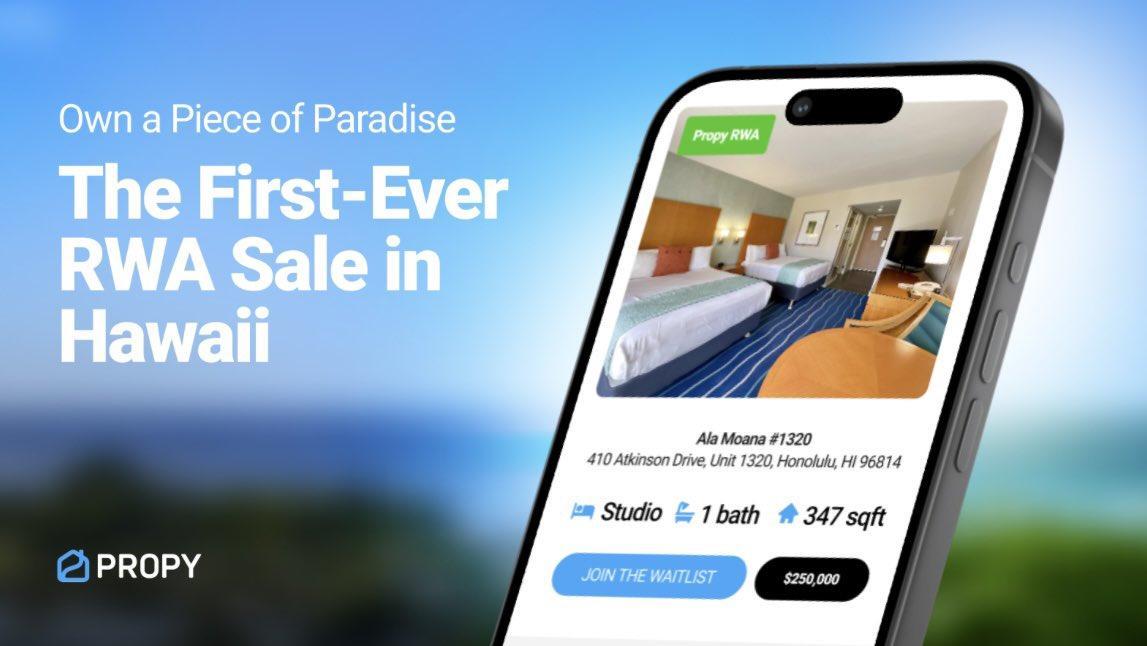
On January 29, Propy launched a new loan option that supports the purchase of Hawaiian condos with collateralized crypto assets. The starting price of the condo is 250,000 USDC. As an on-chain RWA asset, buyers can skip the traditional 30-day transaction process and achieve almost instant transactions by paying cryptocurrencies. If buyers are reluctant to sell mainstream crypto assets, they can also choose to use Bitcoin or Ethereum as collateral to complete the payment, and pay a 10% loan interest rate.

This is a two-year loan. If the value of the provided cryptocurrency drops by more than 50%, the buyer will be subject to a margin call; in the worst case, the crypto assets may be liquidated and the real estate auctioned off for resale. However, if the cryptocurrency price doubles, the buyer can easily pay off the loan with its proceeds. The interest payments and the loan itself can be repaid in Bitcoin, Ethereum, or USDC. This provides an attractive option for buyers who wish to keep their crypto assets.

On February 2, Propy announced the successful sale of Hawaii’s first on-chain real estate asset — a transaction completed through multiple on-chain bids and ultimately the first Bitcoin-backed loan.

In addition to this, Propy has expanded its service offering and is partnering with real estate developers to provide comprehensive title and escrow solutions specifically tailored for their residential projects.

In terms of community building, Propy will also launch the "Web3 Property Rights - Trailblazer Spotlight" series to showcase industry innovation leaders every week. A series of weekly shows will be launched to highlight pioneers who believe that the world can be changed by putting property rights on the blockchain. From blockchain innovators and investors to technical thinkers, this series will showcase individuals who are driving change.

Looking back to 2024, Propy has not only achieved many breakthroughs in the tokenization of the real estate sector, but is also helping the industry redefine the ownership and value of assets. In 2025, with the launch of RWA on-chain assets and the launch of DeFi loan programs, Propy may continue to drive innovation and change in the global real estate market in 2025.


Market Opportunity
RealLink Logo
RealLink Price(REAL)
$0.07448
$0.07448$0.07448
+0.47%
USD
RealLink (REAL) Live Price Chart
Disclaimer: The articles reposted on this site are sourced from public platforms and are provided for informational purposes only. They do not necessarily reflect the views of MEXC. All rights remain with the original authors. If you believe any content infringes on third-party rights, please contact service@support.mexc.com for removal. MEXC makes no guarantees regarding the accuracy, completeness, or timeliness of the content and is not responsible for any actions taken based on the information provided. The content does not constitute financial, legal, or other professional advice, nor should it be considered a recommendation or endorsement by MEXC.

You May Also Like

Summarize Any Stock’s Earnings Call in Seconds Using FMP API

Summarize Any Stock’s Earnings Call in Seconds Using FMP API

Turn lengthy earnings call transcripts into one-page insights using the Financial Modeling Prep APIPhoto by Bich Tran Earnings calls are packed with insights. They tell you how a company performed, what management expects in the future, and what analysts are worried about. The challenge is that these transcripts often stretch across dozens of pages, making it tough to separate the key takeaways from the noise. With the right tools, you don’t need to spend hours reading every line. By combining the Financial Modeling Prep (FMP) API with Groq’s lightning-fast LLMs, you can transform any earnings call into a concise summary in seconds. The FMP API provides reliable access to complete transcripts, while Groq handles the heavy lifting of distilling them into clear, actionable highlights. In this article, we’ll build a Python workflow that brings these two together. You’ll see how to fetch transcripts for any stock, prepare the text, and instantly generate a one-page summary. Whether you’re tracking Apple, NVIDIA, or your favorite growth stock, the process works the same — fast, accurate, and ready whenever you are. Fetching Earnings Transcripts with FMP API The first step is to pull the raw transcript data. FMP makes this simple with dedicated endpoints for earnings calls. If you want the latest transcripts across the market, you can use the stable endpoint /stable/earning-call-transcript-latest. For a specific stock, the v3 endpoint lets you request transcripts by symbol, quarter, and year using the pattern: https://financialmodelingprep.com/api/v3/earning_call_transcript/{symbol}?quarter={q}&year={y}&apikey=YOUR_API_KEY here’s how you can fetch NVIDIA’s transcript for a given quarter: import requestsAPI_KEY = "your_api_key"symbol = "NVDA"quarter = 2year = 2024url = f"https://financialmodelingprep.com/api/v3/earning_call_transcript/{symbol}?quarter={quarter}&year={year}&apikey={API_KEY}"response = requests.get(url)data = response.json()# Inspect the keysprint(data.keys())# Access transcript contentif "content" in data[0]: transcript_text = data[0]["content"] print(transcript_text[:500]) # preview first 500 characters The response typically includes details like the company symbol, quarter, year, and the full transcript text. If you aren’t sure which quarter to query, the “latest transcripts” endpoint is the quickest way to always stay up to date. Cleaning and Preparing Transcript Data Raw transcripts from the API often include long paragraphs, speaker tags, and formatting artifacts. Before sending them to an LLM, it helps to organize the text into a cleaner structure. Most transcripts follow a pattern: prepared remarks from executives first, followed by a Q&A session with analysts. Separating these sections gives better control when prompting the model. In Python, you can parse the transcript and strip out unnecessary characters. A simple way is to split by markers such as “Operator” or “Question-and-Answer.” Once separated, you can create two blocks — Prepared Remarks and Q&A — that will later be summarized independently. This ensures the model handles each section within context and avoids missing important details. Here’s a small example of how you might start preparing the data: import re# Example: using the transcript_text we fetched earliertext = transcript_text# Remove extra spaces and line breaksclean_text = re.sub(r'\s+', ' ', text).strip()# Split sections (this is a heuristic; real-world transcripts vary slightly)if "Question-and-Answer" in clean_text: prepared, qna = clean_text.split("Question-and-Answer", 1)else: prepared, qna = clean_text, ""print("Prepared Remarks Preview:\n", prepared[:500])print("\nQ&A Preview:\n", qna[:500]) With the transcript cleaned and divided, you’re ready to feed it into Groq’s LLM. Chunking may be necessary if the text is very long. A good approach is to break it into segments of a few thousand tokens, summarize each part, and then merge the summaries in a final pass. Summarizing with Groq LLM Now that the transcript is clean and split into Prepared Remarks and Q&A, we’ll use Groq to generate a crisp one-pager. The idea is simple: summarize each section separately (for focus and accuracy), then synthesize a final brief. Prompt design (concise and factual) Use a short, repeatable template that pushes for neutral, investor-ready language: You are an equity research analyst. Summarize the following earnings call sectionfor {symbol} ({quarter} {year}). Be factual and concise.Return:1) TL;DR (3–5 bullets)2) Results vs. guidance (what improved/worsened)3) Forward outlook (specific statements)4) Risks / watch-outs5) Q&A takeaways (if present)Text:<<<{section_text}>>> Python: calling Groq and getting a clean summary Groq provides an OpenAI-compatible API. Set your GROQ_API_KEY and pick a fast, high-quality model (e.g., a Llama-3.1 70B variant). We’ll write a helper to summarize any text block, then run it for both sections and merge. import osimport textwrapimport requestsGROQ_API_KEY = os.environ.get("GROQ_API_KEY") or "your_groq_api_key"GROQ_BASE_URL = "https://api.groq.com/openai/v1" # OpenAI-compatibleMODEL = "llama-3.1-70b" # choose your preferred Groq modeldef call_groq(prompt, temperature=0.2, max_tokens=1200): url = f"{GROQ_BASE_URL}/chat/completions" headers = { "Authorization": f"Bearer {GROQ_API_KEY}", "Content-Type": "application/json", } payload = { "model": MODEL, "messages": [ {"role": "system", "content": "You are a precise, neutral equity research analyst."}, {"role": "user", "content": prompt}, ], "temperature": temperature, "max_tokens": max_tokens, } r = requests.post(url, headers=headers, json=payload, timeout=60) r.raise_for_status() return r.json()["choices"][0]["message"]["content"].strip()def build_prompt(section_text, symbol, quarter, year): template = """ You are an equity research analyst. Summarize the following earnings call section for {symbol} ({quarter} {year}). Be factual and concise. Return: 1) TL;DR (3–5 bullets) 2) Results vs. guidance (what improved/worsened) 3) Forward outlook (specific statements) 4) Risks / watch-outs 5) Q&A takeaways (if present) Text: <<< {section_text} >>> """ return textwrap.dedent(template).format( symbol=symbol, quarter=quarter, year=year, section_text=section_text )def summarize_section(section_text, symbol="NVDA", quarter="Q2", year="2024"): if not section_text or section_text.strip() == "": return "(No content found for this section.)" prompt = build_prompt(section_text, symbol, quarter, year) return call_groq(prompt)# Example usage with the cleaned splits from Section 3prepared_summary = summarize_section(prepared, symbol="NVDA", quarter="Q2", year="2024")qna_summary = summarize_section(qna, symbol="NVDA", quarter="Q2", year="2024")final_one_pager = f"""# {symbol} Earnings One-Pager — {quarter} {year}## Prepared Remarks — Key Points{prepared_summary}## Q&A Highlights{qna_summary}""".strip()print(final_one_pager[:1200]) # preview Tips that keep quality high: Keep temperature low (≈0.2) for factual tone. If a section is extremely long, chunk at ~5–8k tokens, summarize each chunk with the same prompt, then ask the model to merge chunk summaries into one section summary before producing the final one-pager. If you also fetched headline numbers (EPS/revenue, guidance) earlier, prepend them to the prompt as brief context to help the model anchor on the right outcomes. Building the End-to-End Pipeline At this point, we have all the building blocks: the FMP API to fetch transcripts, a cleaning step to structure the data, and Groq LLM to generate concise summaries. The final step is to connect everything into a single workflow that can take any ticker and return a one-page earnings call summary. The flow looks like this: Input a stock ticker (for example, NVDA). Use FMP to fetch the latest transcript. Clean and split the text into Prepared Remarks and Q&A. Send each section to Groq for summarization. Merge the outputs into a neatly formatted earnings one-pager. Here’s how it comes together in Python: def summarize_earnings_call(symbol, quarter, year, api_key, groq_key): # Step 1: Fetch transcript from FMP url = f"https://financialmodelingprep.com/api/v3/earning_call_transcript/{symbol}?quarter={quarter}&year={year}&apikey={api_key}" resp = requests.get(url) resp.raise_for_status() data = resp.json() if not data or "content" not in data[0]: return f"No transcript found for {symbol} {quarter} {year}" text = data[0]["content"] # Step 2: Clean and split clean_text = re.sub(r'\s+', ' ', text).strip() if "Question-and-Answer" in clean_text: prepared, qna = clean_text.split("Question-and-Answer", 1) else: prepared, qna = clean_text, "" # Step 3: Summarize with Groq prepared_summary = summarize_section(prepared, symbol, quarter, year) qna_summary = summarize_section(qna, symbol, quarter, year) # Step 4: Merge into final one-pager return f"""# {symbol} Earnings One-Pager — {quarter} {year}## Prepared Remarks{prepared_summary}## Q&A Highlights{qna_summary}""".strip()# Example runprint(summarize_earnings_call("NVDA", 2, 2024, API_KEY, GROQ_API_KEY)) With this setup, generating a summary becomes as simple as calling one function with a ticker and date. You can run it inside a notebook, integrate it into a research workflow, or even schedule it to trigger after each new earnings release. Free Stock Market API and Financial Statements API... Conclusion Earnings calls no longer need to feel overwhelming. With the Financial Modeling Prep API, you can instantly access any company’s transcript, and with Groq LLM, you can turn that raw text into a sharp, actionable summary in seconds. This pipeline saves hours of reading and ensures you never miss the key results, guidance, or risks hidden in lengthy remarks. Whether you track tech giants like NVIDIA or smaller growth stocks, the process is the same — fast, reliable, and powered by the flexibility of FMP’s data. Summarize Any Stock’s Earnings Call in Seconds Using FMP API was originally published in Coinmonks on Medium, where people are continuing the conversation by highlighting and responding to this story
Share
Medium2025/09/18 14:40
Ripple IPO Back in Spotlight as Valuation Hits $50B

Ripple IPO Back in Spotlight as Valuation Hits $50B

The post Ripple IPO Back in Spotlight as Valuation Hits $50B appeared first on Coinpedia Fintech News Ripple, the blockchain payments company behind XRP, is once
Share
CoinPedia2025/12/27 14:24
Solana co-founder predicts that by 2026: the stablecoin market will exceed one trillion US dollars, and 100,000 humanoid robots will be shipped.

Solana co-founder predicts that by 2026: the stablecoin market will exceed one trillion US dollars, and 100,000 humanoid robots will be shipped.

PANews reported on December 27th that Anatoly Yakovenko, co-founder of Solana, released some predictions about 2026 on X, as follows: The total size of stablecoins
Share
PANews2025/12/27 15:04