Aave DAO Battles Aave Labs Over CoW Swap Fee Dispute
Dispute Erupts Within Aave Over Fee Routing and Governance
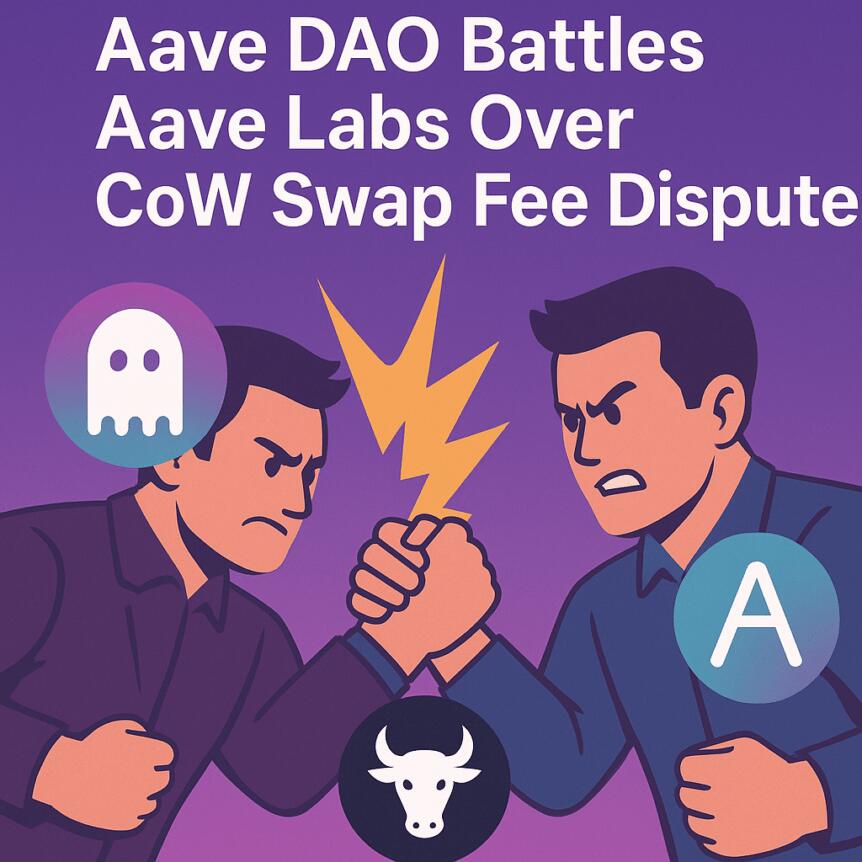
A contentious debate is unfolding within the Aave decentralized autonomous organization (DAO) concerning the distribution of fees generated from its recent integration with the decentralized exchange aggregator CoW Swap. The conflict underscores ongoing tensions between the DAO and Aave Labs, the core development entity behind the protocol’s initiatives.
Key Takeaways
- Fees from coin swaps via CoW Swap are allegedly routed to Aave Labs-controlled addresses, bypassing DAO oversight.
- DAO members express concern over lack of transparency and equitable revenue sharing from this integration.
- Aave Labs maintains that front-end components and development funding fall under its jurisdiction.
- The dispute highlights broader governance challenges faced by decentralized protocols.
Tickers mentioned: N/A
Sentiment: Uncertain / Tense
Price impact: Neutral — The controversy centers on governance and fee distribution, not immediate price moves.
Trading idea (Not Financial Advice): Hold — The situation needs further clarity before considering trading actions.
Market context: The controversy illustrates ongoing governance issues in decentralized finance protocols amid expanding integrations and revenue streams.
Details of the Dispute
The disagreement originated from a governance proposal discussed publicly on the Aave governance forum. A DAO member operating under the pseudonym EzR3aL questioned why the fees generated from swaps facilitated through CoW Swap were not allocated to the DAO’s treasury. Instead, they are reportedly directed to a private address controlled by Aave Labs, resulting in an estimated weekly income of at least $200,000 worth of Ether — totalling approximately $10 million annually.
The governance forum post that sparked the debate. Source: Aave GovernanceEzR3aL criticized the apparent lack of prior consultation, arguing that these fees are essentially revenue belonging to the DAO. In response, Aave Labs defended itself by claiming that development and interface components, including the “adapters” enabling swaps, are within its scope of responsibility and funding.
Aave Labs also emphasized that protocol-level features such as interest rate policies and smart contract changes remain under DAO governance. Despite this, tensions persist, with several members asserting that the initial development funding for adapters was provided by the DAO and that the fees should revert to its treasury.
Marc Zeller, founder of the Aave-Chan Initiative, expressed significant concern over the routing decision, deeming it “extremely concerning” and suggesting that Aave Labs’ monetization efforts have possibly diverted user activity away from the protocol. As of now, Aave Labs has yet to respond publicly to these allegations.
This dispute exemplifies the complexities inherent in DAO governance models, particularly as protocols expand their integrations and revenue sources. The debate raises fundamental questions around transparency, control, and equitable revenue sharing within decentralized ecosystems.
This article was originally published as Aave DAO Battles Aave Labs Over CoW Swap Fee Dispute on Crypto Breaking News – your trusted source for crypto news, Bitcoin news, and blockchain updates.


You May Also Like

Arbitrum Announces Ten Innovative Teams — And Why It’s Not Just Hype
Cathie Wood’s ARK Invest Buys $13.7M in Circle Shares While Selling Robinhood Stock

Metaplanet buys 5,075 Bitcoin in Q1 to become 3rd-largest treasury