Global banks race against 13-day clock to adopt ISO 20022
ISO 20022 messaging standard was developed over two decades ago by the Geneva-based International Organization for Standardization (ISO) as a universal language for financial messaging.
The Society for Worldwide Interbank Financial Telecommunication (SWIFT) set the deadline for banks to implement the new standard for electronic data interchange between financial institutions on November 22.
ISO 20022 will replace systems that relied on limited, text-based formats with richer, structured data to flow between banks, payment processors, and digital asset platforms. It supports cross-border wire transfers and securities settlements, also adopted by blockchain-based financial networks.
ISO 20022 deadline closes in after several delays
The global transition to ISO 20022 has been delayed about three times since it was first proposed about five years ago. In 2020, SWIFT postponed the initial migration for cross-border payments from November 2021 to the end of 2022 because banks were struggling to update their legacy systems.
Now, with just 13 days remaining, SWIFT has reaffirmed that the current deadline will not move again. All institutions processing cross-border payments are required to migrate to the ISO 20022 CBPR+ (Cross-Border Payments and Reporting Plus) standard this month.
MiCA-regulated Europe has so far been the most proactive region in adopting the new standard, completing migration for TARGET2 and EBA Clearing in March 2023. Around the same time, SWIFT launched the CBPR+ program, a 15 usage guideline on message types payment initiation (pain), clearing and settlement (pacs), and cash management (camt).
SWIFT also revealed “in-flow translation” and its Transaction Manager tool to link ISO-enabled institutions and those still using the older formats, which meant all payments could continue to move globally while banks were still making upgrades to their internal infrastructures.
The Payments Market Practice Group and the CBPR+ working group has been pushing for more firms to use the new standard’s data fields in hopes that in November, all banks were to be ISO 20022 friendly.
Despite the visible progress, a June report by Banking Vision revealed that around half of the world’s central banks have not yet integrated ISO 20022 into their real-time gross settlement (RTGS) systems. 49 central banks provided data for BV, but only 44.9% of the total had reportedly fully implemented the standard, while 6.1% had done so only in select systems.
US Federal Reserve taps ISO 20022 for Fedwire service
According to a Cryptopolitan report, the United States central bank’s Fedwire Funds Service, which processes about $4.7 trillion in payments daily, officially implemented ISO 20022 on July 14. The US central bank had delayed the transition several times to collect more data from industry testing and to make sure Fedwire services were ready enough to integrate it.
“We’ve touched every single customer to ensure that the right software is in place, that they’ve done their testing, that they have everything they need to process,” said Finastra Director Mihail Duta, whose London-based company operates a US headquarters in Lake Mary, Florida.
Alongside the US Fed, more than 70 other countries including those in the Eurozone, Canada, and Japan, already operate on ISO 20022-compliant systems.
Several digital assets promoting cross-border settlement services like XRP, Stellar’s XLM, Hedera’s HBAR, IOTA, Algorand (ALGO), Quant (QNT), and XDC Network (XDC) have also aligned their networks with the new standard.
ISO 20022 introduces new standards to improve investigations, compliance, and transaction reporting, all pain points that international regulators fear when it comes to matters of crypto.
SWIFT’s Case Management module standardizes how institutions handle exceptions, claims, and follow-ups through ISO-based Exceptions and Investigations (E&I) messages. Although this feature is currently optional, it will become a requirement in 2026, when banks must be able to receive the new camt.110 messages to replace MT199 formats.
In Europe, the Single Euro Payments Area (SEPA) will decommission its 3.6 version on the November deadline day and require all members to upgrade to SEPA 3.7. SEPA 3.7 will add pain.001.001.09 for credit transfers, pain.008.001.08 for direct debits, and pain.002.001.10 for payment status reports.
Germany’s DTAZV format for cross-border payments will be retired in favor of the ISO 20022-based pain.001 AXZ standard, where both sender and beneficiary addresses must be fully structured.
Claim your free seat in an exclusive crypto trading community - limited to 1,000 members.


You May Also Like
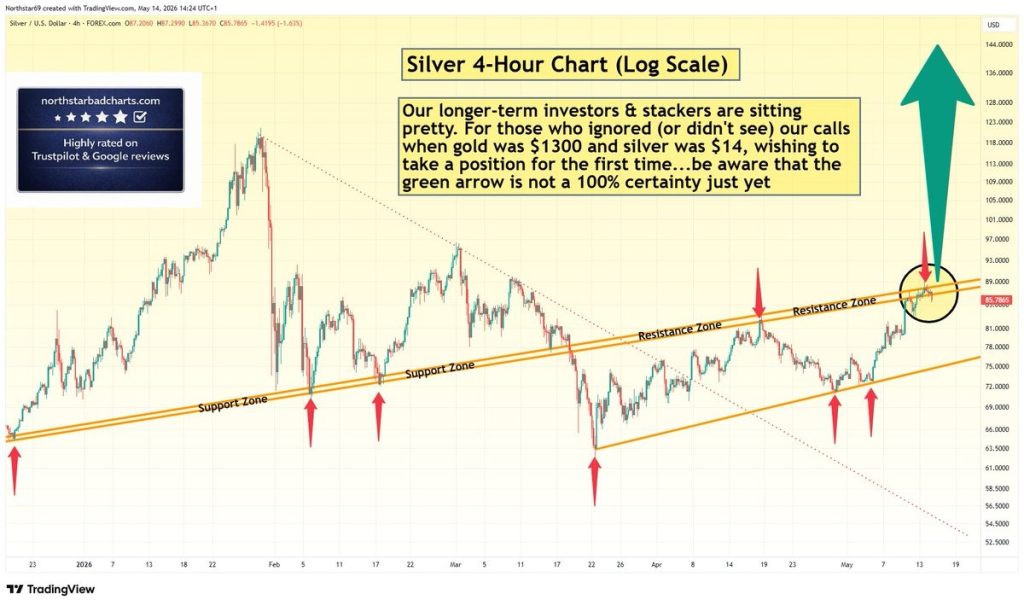
Silver Price Warning: Green Arrow Setup Is Not Confirmed – Wait for Clear Signal

Facebook spotlights African cinema in 6th ‘Made by Africa, loved by the world’ campaign