Digital dollars and artificial intelligence - terms that a few years ago were vague concepts are becoming a critical part of everyday finance, with a race for companies to find new ways to integrate the two.Digital dollars and artificial intelligence - terms that a few years ago were vague concepts are becoming a critical part of everyday finance, with a race for companies to find new ways to integrate the two.

Stripe’s Stablecoin Issuance Tool Might Be the Future of Finance: Here’s Why

Stripe's Stablecoin Issuance Tool Might Be the Future of Finance: Here's Why

At its latest showcase in New York, Stripe sought to cement its role on that front, unveiling tools that allow companies to issue bespoke stablecoins and transact them via AI agents.

The showcase underscored growing crypto/finance integration and made a powerful case for versatile non-custodial wallets like Best Wallet that are aiming to build DeFi ecosystems inside a mobile app.

Open Issuance: Customized Stablecoins, Made Easy

One of Stripe’s newest offerings is Open Issuance, a streamlined stablecoin issuance tool that lets companies spin up their own digital dollars with just a few lines of code.

Built on Bridge, which Stripe acquired earlier for roughly $1.1B, the platform promises customized stablecoins.
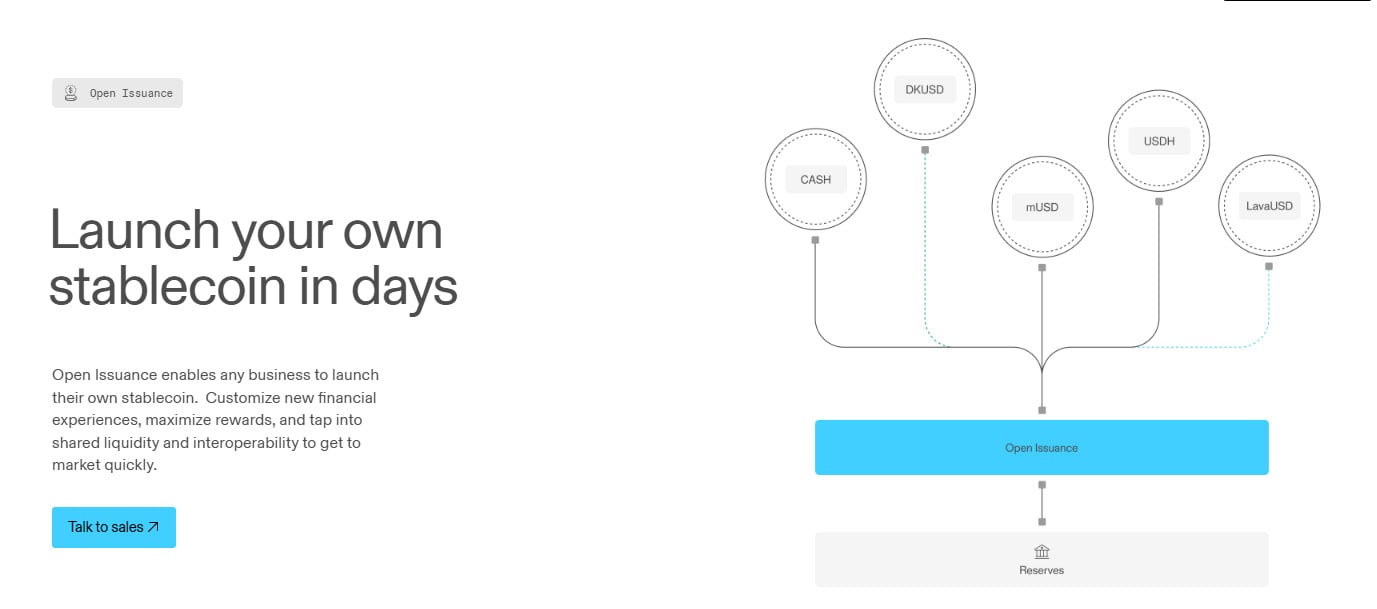
Stripe's Open Issuance proposal.

Stripe has already signed its first cohort of tokens: Phantom’s $CASH will be the inaugural issuance, and other stablecoins – notably Hyperliquid’s $USDH and MetaMask’s $mUSD — are slated to follow.

Issuers on the platform can balance their reserves between Treasuries and cash, with management handled through trusted third parties like BlackRock, Fidelity, Superstate, and Lead Bank.

Stablecoins like $CASH make for appealing utility tokens, to boot. Their value is pegged 1-to-1, making calculating exchange users fees and swapping funds between traders easy and predictable.

meet phantom cash

And Stripe’s architecture aims to make these tokens interoperable, reducing friction across different digital dollar systems.

Agentic Commerce: Transacting via AI Agents

Parallel to the stablecoin push is Stripe’s AI commerce ambition. In collaboration with OpenAI, Stripe introduced the Agentic Commerce Protocol, a standard designed to enable transactions mediated by AI agents.

The key feature: merchants retain full control of fulfillment, customer relations, and the back end, even while front-end interactions may be handled autonomously by digital agents.

Like stablecoins, the ACP allows businesses to adopt new strategies and standards quickly, without long development cycles, and without in-depth knowledge of coding and development.
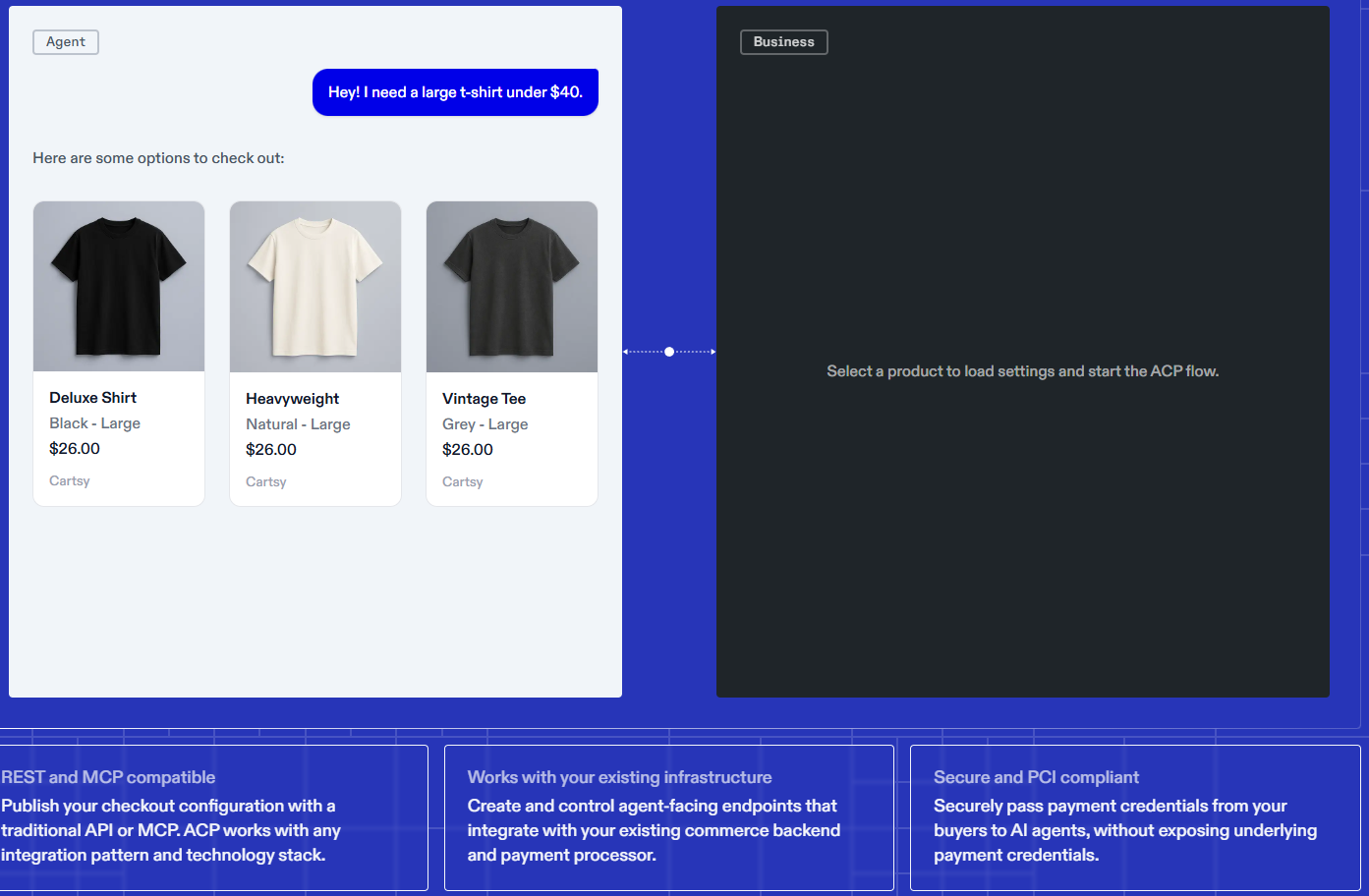
Agentic Commerce Protocol demo

Stripe’s new moves aren’t out of thin air. The company has been methodically bolstering its crypto infrastructure:

  • It previously acquired Privy, a wallet infrastructure provider;
  • Stripe collaborated with the venture firm Paradigm to build Tempo, a payments-oriented blockchain.

Stripe’s vision appears to be one in which stablecoins and AI behaviors are layered squarely into the payments stack. No more niche experiments or nebulous concepts; Stripe sees stablecoins and AI as foundational rails.

A Programmable Money Future

Both stablecoins and the AGP highlight the vast potential of programmable money; digital currency (like stablecoins) that can carry rules, conditions, or automated behaviors embedded within itself.

It’s the difference between writing a contract on a piece of paper and placing it next to a stack of cash – and writing the contract directly on the cash, binding the money to the terms of the contract.

Stripe is not the only actor in this space. Competitors like Circle’s $USDC, Paxos, and even central banks – via CBDCs – are racing to fully explore the programmable money domain. And adding AI to the mix only deepens the potential.

For retail users, there’s another wrinkle; a future dominated by stablecoins, where financial institutions have the ability to launch their own programmable money, is going to require a crypto wallet powerful enough to handle them all and easy enough for anyone to use.

That’s precisely where Best Wallet comes in.

Best Wallet Token ($BEST) – Non-Custodial Web3 Wallet with Native Token, Card

Best Wallet Token ($BEST) delivers a clean, user-friendly crypto wallet that’s ready for the programmable money future.

The Best Wallet app is non-custodial; you control your own keys; you control your own crypto.The native token – $BEST – provides added utility with cheaper transactions and higher staking rewards.

The upcoming Best Card provides an integrated way to spend your crypto, without worrying about moving funds around.

Together, the wallet, token, and card form a complete ecosystem that gives ordinary investors everything they need to stablecoins, meme coins, and any other aspect of the crypto economy.
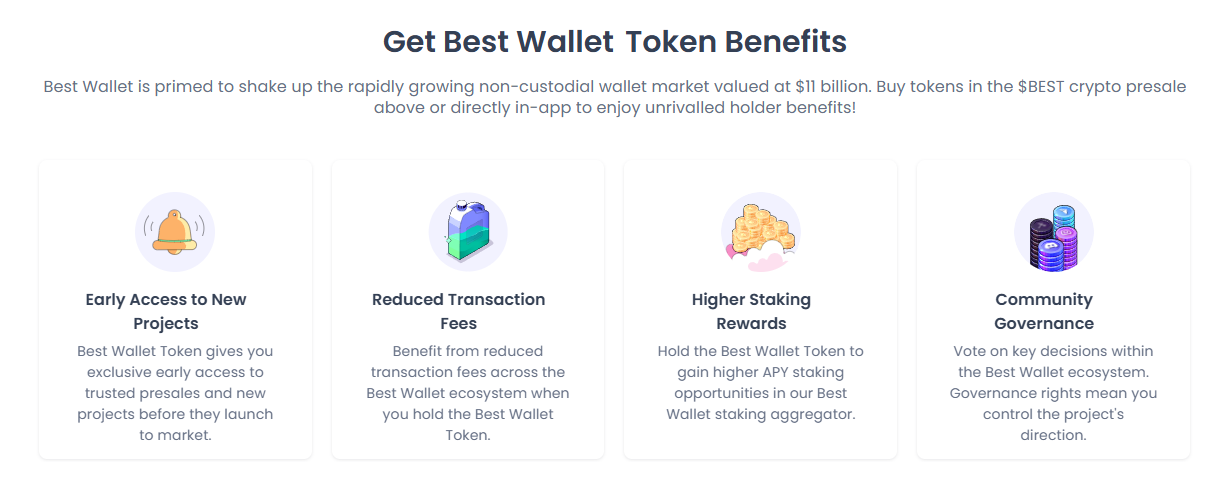
Best Wallet benefits on the official presale page.

The $BEST presale continues to draw investor attention as more people learn what Best Wallet is, and the potential for the $BEST token to appreciate rapidly after launch. The project has raised over $16.2M so far, and major whale buys in the past day continue to boost the totals:

  • $12,387.10
  • $10,906.02

There’s another benefit to Best Wallet: access to upcoming tokens in the form of the best crypto presales, conveniently gathered in one place on the Best Wallet app.

Directly from within the wallet, you can research and purchase presale token, scouting the best tokens well before they launch.

Learn how to buy Best Wallet token, and see why we think the token could climb from its current $0.025725 to $0.051903 by the end of the year, a 101% increase.

Be future-ready with Best Wallet – check out the $BEST presale page today.

Market Opportunity
FUTURECOIN Logo
FUTURECOIN Price(FUTURE)
$0,08437
$0,08437$0,08437
-0,13%
USD
FUTURECOIN (FUTURE) Live Price Chart
Disclaimer: The articles reposted on this site are sourced from public platforms and are provided for informational purposes only. They do not necessarily reflect the views of MEXC. All rights remain with the original authors. If you believe any content infringes on third-party rights, please contact service@support.mexc.com for removal. MEXC makes no guarantees regarding the accuracy, completeness, or timeliness of the content and is not responsible for any actions taken based on the information provided. The content does not constitute financial, legal, or other professional advice, nor should it be considered a recommendation or endorsement by MEXC.

You May Also Like

Treasury opens comment period to shape GENIUS Act into stablecoin regulation

Treasury opens comment period to shape GENIUS Act into stablecoin regulation

The post Treasury opens comment period to shape GENIUS Act into stablecoin regulation appeared on BitcoinEthereumNews.com. The U.S. Treasury Department launched a formal process to transform the newly enacted GENIUS Act into a framework of regulations for stablecoins, inviting the public and crypto industry to weigh in on key compliance issues. The department opened an advance notice of proposed rulemaking on Sept. 18, the first step in gathering feedback before drafting detailed rules. The move gives businesses, policymakers, and the public until Oct. 20 to respond to dozens of questions, including how issuers should custody reserves and how U.S. oversight compares to emerging foreign regimes. Illicit finance and oversight The Guiding and Establishing National Innovation for U.S. Stablecoins (GENIUS) Act, signed into law earlier this year, was the first major U.S. crypto legislation. The law directs Treasury and other agencies to establish standards for issuers, clarify tax treatment, and enforce anti-money laundering and sanctions compliance. Treasury officials highlighted that the rules must balance state and federal oversight while building mechanisms to detect illicit finance. The notice follows a separate request for input last month focused on anti-money laundering risks in digital assets. The public comment period also covers whether additional clarity is needed for reserve asset custody, how prohibitions on issuers should be structured, and how international frameworks should interact with U.S. regulations. Political and market context Republicans in Congress and federal regulators aligned with President Donald Trump have pressed for rapid rulemaking to position the United States as a global hub for digital finance. Lawmakers are also advancing a broader market structure bill, the Digital Asset Market Clarity Act, which has cleared the House and is under Senate discussion. Meanwhile, the industry is monitoring the economic backdrop, and some have raised concerns over whether it will continue to grow at its current pace. JPMorgan analysts recently cautioned that growth in stablecoins may plateau unless the overall…
Share
BitcoinEthereumNews2025/09/20 02:42
MAGACOIN FINANCE Surpasses $14M With Whale Inflows

MAGACOIN FINANCE Surpasses $14M With Whale Inflows

The post MAGACOIN FINANCE Surpasses $14M With Whale Inflows appeared on BitcoinEthereumNews.com. MAGACOIN FINANCE Crosses $14M With Whale Support The momentum around MAGACOIN FINANCE has been building all year, but the presale just delivered its biggest headline yet: more than $14 million raised, with large-scale investors from the DOGE and XRP ecosystems among those joining in. The figure establishes MAGACOIN FINANCE as a major player in the crypto market through its position as one of the most notable presales of 2025. The market environment of investors currently seeks projects that demonstrate both market performance and public interest, and MAGACOIN FINANCE has achieved this goal. The scale of inflows has already exceeded many expectations, and the names now joining are adding fuel to the fire. Whale Inflows Push Presale Higher The most surprising aspect of the presale campaign is the diverse group of people who have joined the effort. Reports show multiple whale wallets associated with DOGE and XRP holders are participating in the MAGACOIN FINANCE presale. The market draws retail investors who boost demand because professional capital starts investing at the beginning of the market. Whales tend to stay away from random trading activity before a sale occurs. The investors choose to support projects which have strong tokenomics and established structures and already exhibit growth potential following the presale phase. MAGACOIN FINANCE enters the presale because investors believe it will achieve success after its market listing. Structured Presale, Rapid Demand MAGACOIN FINANCE achieves its main progress through the implementation of its structured presale model. The system runs allocation rounds which define particular limits to generate an urgent feeling of requirement. The first sales batches sold out rapidly because each successive funding round increased prices which drove investors to invest before prices rose further. The $14 million threshold indicates that MAGACOIN FINANCE has surpassed the typical presale completion point which most projects stop…
Share
BitcoinEthereumNews2025/09/22 13:04
Why Smart Talent Acquisition Leaders are Choosing Nearshore Over Offshore: The 2026 Talent Geography Playbook

Why Smart Talent Acquisition Leaders are Choosing Nearshore Over Offshore: The 2026 Talent Geography Playbook

Last quarter, I watched a director of engineering at a Series B startup spend three weeks trying to fill a temporary Senior Backend Engineer role. The rate? $89
Share
Techbullion2026/01/21 06:13