Meta’s Natural Gas Gamble: AI Data Center Power Demand Rivals South Dakota’s Entire Grid
BitcoinWorld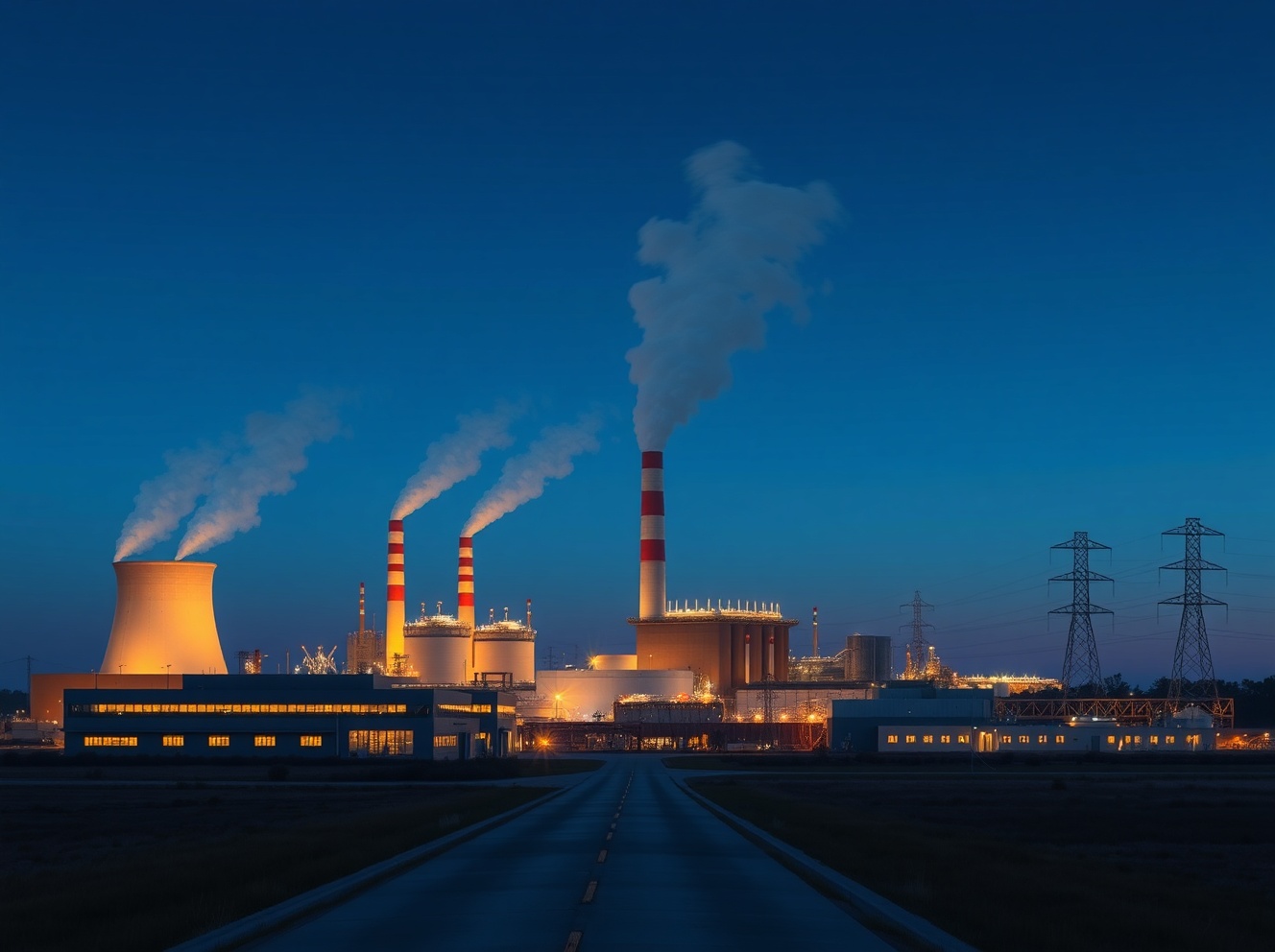
Meta’s Natural Gas Gamble: AI Data Center Power Demand Rivals South Dakota’s Entire Grid
In a move highlighting the staggering energy demands of artificial intelligence, Meta has committed to building ten natural gas power plants in Louisiana to fuel its massive Hyperion AI data center, a project whose electricity appetite will rival the entire state of South Dakota. This substantial fossil fuel investment, announced last week, tests the company’s longstanding climate commitments and underscores a critical tension between technological advancement and environmental sustainability. The decision arrives as data centers globally expand rapidly to support AI computation, placing unprecedented strain on power grids and forcing difficult choices about energy sources.
Meta’s Natural Gas Power Plants for AI Data Center
Meta’s Hyperion data center represents a $27 billion investment in artificial intelligence infrastructure. Consequently, the company recently confirmed plans to fund seven new natural gas-fired power plants in Louisiana. This commitment adds to three plants previously announced. Together, these ten facilities will generate approximately 7.5 gigawatts of electricity. For context, this output slightly exceeds the total generating capacity of South Dakota. The scale is unprecedented for a single corporate project. Data centers have historically consumed significant power. However, AI training and inference require exponentially more computational resources. This demand translates directly into higher energy consumption. Meta’s project exemplifies this industry-wide trend.
Tech companies frequently promote renewable energy investments. Meta, for instance, has secured long-term agreements for solar, wind, and nuclear power. The company even effectively purchased output from a nuclear plant for two decades. Therefore, the pivot toward natural gas raises immediate questions. Industry analysts often describe natural gas as a “bridge fuel.” This concept suggests using gas temporarily while renewable technology and storage solutions mature. Meta likely employs this reasoning internally. Yet, critics argue this bridge has extended for decades. Meanwhile, renewable energy and battery storage costs have plummeted. Simultaneously, natural gas turbine prices have increased significantly.
The Climate Impact of Data Center Energy Consumption
The environmental consequences of Meta’s decision are substantial. Based on Department of Energy data and standard emission factors, the ten Louisiana plants could release an estimated 12.4 million metric tons of carbon dioxide annually. This figure represents a 50% increase over Meta’s entire corporate carbon footprint for 2024. Importantly, this calculation only accounts for direct combustion emissions. It excludes methane leaks from the natural gas supply chain. Methane is the primary component of natural gas. It possesses a global warming potential approximately 84 times greater than carbon dioxide over a 20-year period.
Even minimal leakage rates can negate natural gas’s climate advantages over coal. The U.S. Environmental Protection Agency estimates leakage rates from production and pipelines near 3%. At this level, the climate impact of gas power can surpass that of coal-fired generation. Meta’s latest sustainability report does not mention methane or natural gas. The report also omits discussion of supply chain emissions. This omission is notable given the fuel’s impending role in the company’s energy portfolio. The following table compares key energy sources for data centers:
| Energy Source | Typical CO2e (g/kWh) | Pros for Data Centers | Cons for Data Centers |
|---|---|---|---|
| Natural Gas | ~490 | Dispatchable, high capacity | High emissions, price volatility |
| Solar PV | ~40 | Low cost, scalable | Intermittent, requires land |
| Wind | ~11 | Very low emissions, cost-effective | Intermittent, location-dependent |
| Nuclear | ~12 | Zero-carbon, baseload power | High capital cost, long lead time |
Meta may pursue carbon removal credits to offset these new emissions. The company maintains a public goal of reaching net-zero emissions across its value chain. However, offsetting millions of tons annually presents a significant challenge. It also requires rigorous accounting for methane leaks. Independent verification will be crucial for credibility.
Expert Analysis on the Bridge Fuel Debate
Energy economists note that the “bridge fuel” argument faces mounting skepticism. Renewable energy costs have fallen dramatically in the past decade. Solar and wind are now the cheapest sources of new electricity in most markets. Battery storage costs have also decreased by over 80% since 2010. These trends enable higher grid penetration of renewables. Conversely, natural gas prices exhibit volatility due to geopolitical factors and production constraints. This volatility introduces financial risk for long-term infrastructure projects.
Grid reliability remains a primary concern for data center operators. AI workloads require constant, uninterrupted power. Natural gas plants provide dispatchable generation that can ramp up quickly. This reliability is currently difficult to match with renewables alone at this scale without massive storage investments. However, experts point to advancements in grid management and storage technology. They suggest hybrid systems combining renewables, storage, and smaller, flexible gas units could offer a lower-emission path. Meta’s all-in commitment to large-scale gas plants appears to favor immediate capacity over emerging solutions.
Industry Context and Future Implications
Meta’s situation is not unique. The entire tech sector faces similar dilemmas. AI development is accelerating globally. Training large language models requires thousands of specialized processors running for weeks. This process consumes gigawatt-hours of electricity. Consequently, companies like Google, Microsoft, and Amazon are also expanding their data center footprints rapidly. Many have also announced new gas power investments or extended reliance on existing fossil fuel grids. The collective impact on global emissions could be substantial.
Regulatory pressure is increasing simultaneously. The European Union has implemented strict reporting requirements for data center energy use. Several U.S. states are considering similar legislation. Investors are also scrutinizing environmental, social, and governance (ESG) factors more closely. Meta’s decision could influence its ESG ratings. This influence might affect capital costs and investor relations. The company must balance these pressures against the competitive need for AI capability.
Potential solutions exist on the horizon. Advanced nuclear technologies, such as small modular reactors (SMRs), promise carbon-free baseload power. However, commercial deployment remains years away. Enhanced geothermal systems offer another promising avenue. These technologies could eventually provide the reliable, clean power that AI data centers require. In the interim, companies must make pragmatic choices. Meta’s Louisiana project highlights the current lack of perfect solutions.
Conclusion
Meta’s commitment to ten natural gas power plants for its Hyperion AI data center underscores a pivotal moment. The energy demands of advanced artificial intelligence now rival the consumption of entire U.S. states. While natural gas offers immediate, reliable capacity, its climate impact is significant and compounded by methane leakage. This move tests Meta’s climate pledges and reflects a broader industry struggle. Technology companies must navigate the tension between rapid innovation and environmental responsibility. The path forward will likely require a combination of cleaner baseload power, breakthrough storage, and greater energy efficiency in computing itself. How Meta and its peers manage this balance will significantly influence both the future of AI and global climate progress.
FAQs
Q1: How much power will Meta’s new natural gas plants generate?
The ten planned plants in Louisiana will have a combined capacity of roughly 7.5 gigawatts. This output is slightly more than the entire electricity generating capacity of the state of South Dakota.
Q2: Why is Meta using natural gas instead of renewables for this data center?
Natural gas plants provide dispatchable, reliable power that can run continuously, which is critical for AI data centers requiring uninterrupted operation. While Meta uses renewables elsewhere, the scale and reliability needs of the Hyperion facility currently favor gas for baseload power, though this decision is controversial given climate goals.
Q3: What is the climate impact of these power plants?
Based on standard calculations, the plants could emit approximately 12.4 million metric tons of CO2 annually from combustion. This figure does not include potent methane leaks from the gas supply chain, which could significantly increase the total climate impact.
Q4: Does this conflict with Meta’s sustainability goals?
Yes, it presents a clear challenge. The projected emissions from these plants alone would increase Meta’s corporate carbon footprint by about 50% compared to 2024 levels. The company will likely need to rely heavily on carbon offsets or removal credits to reconcile this with its net-zero pledge.
Q5: Is this trend unique to Meta, or are other tech companies doing the same?
This is an industry-wide challenge. The massive energy demands of AI are pushing many technology firms, including Google, Microsoft, and Amazon, to secure large-scale, reliable power, often leading to increased investments in fossil-fuel-based generation or prolonged reliance on carbon-intensive grids.
This post Meta’s Natural Gas Gamble: AI Data Center Power Demand Rivals South Dakota’s Entire Grid first appeared on BitcoinWorld.


Potrebbe anche piacerti

XRP Price Completes Q1 In The Red Again, But Prior Performance Says A Surge Is Coming
Lovable AI’s Astonishing Rise: Anton Osika Reveals Startup Secrets at Bitcoin World Disrupt 2025