Autonomous Runway Monitoring Signals Shift in Aviation CX Strategy Skylark Labs has deployed a fixed Foreign Object Debris (FOD) detection system at major commercialAutonomous Runway Monitoring Signals Shift in Aviation CX Strategy Skylark Labs has deployed a fixed Foreign Object Debris (FOD) detection system at major commercial

Runway Monitoring: Rethinking Airport Operations

2026/03/24 00:59
5 min di lettura
Per feedback o dubbi su questo contenuto, contattateci all'indirizzo crypto.news@mexc.com.

Autonomous Runway Monitoring Signals Shift in Aviation CX Strategy

Skylark Labs has deployed a fixed Foreign Object Debris (FOD) detection system at major commercial airports, marking a shift toward continuous, AI-driven runway monitoring. The system replaces traditional vehicle-based inspection models with stationary infrastructure capable of operating autonomously around the clock.

The announcement reflects a broader transformation underway in aviation, where operational resilience is increasingly tied to customer experience outcomes. As passenger volumes rise and airline schedules tighten, even minor inefficiencies in ground operations can ripple across the travel journey.

This operational reality underscores why airports are re-evaluating legacy processes that introduce variability into runway availability and safety management.


The Evolving Role of Operations in Customer Experience

Customer expectations in aviation have shifted toward predictability and seamlessness. Passengers expect on-time departures, minimal waiting, and consistent service delivery. Airlines, in turn, rely on tightly coordinated ground operations to maintain schedules and optimize fleet utilization.

Historically, runway safety checks have depended on scheduled vehicle patrols. While necessary, these processes introduce constraints—ranging from manpower dependency to temporary runway disruptions during inspections.

As digital transformation accelerates, airports are adopting AI-driven systems that provide continuous visibility into operations. These systems reduce reliance on manual interventions and enable real-time decision-making.

In this context, technologies that enhance uptime and reduce uncertainty are becoming central to CX strategy, not just operational improvement.


Strategic Positioning Through Networked Intelligence

The deployment of fixed FOD detection systems aligns with Skylark Labs’ broader strategy of building adaptive, edge-based AI platforms for critical infrastructure. By extending its existing Runway Monitoring Intelligence Layer from mobile vehicles to fixed installations, the company is moving toward a more comprehensive, networked intelligence model.

This approach reflects a shift from standalone solutions to interconnected ecosystems. Each deployment contributes to a shared pool of intelligence, enabling systems to learn collectively across geographies.

Such a model offers two strategic advantages. First, it improves detection accuracy over time by incorporating diverse operational data. Second, it creates a cumulative knowledge base that strengthens the company’s competitive positioning in the aviation technology space.

For airport operators, this translates into access to continuously improving systems that benefit from global insights without requiring localized reinvention.


How the Technology Works

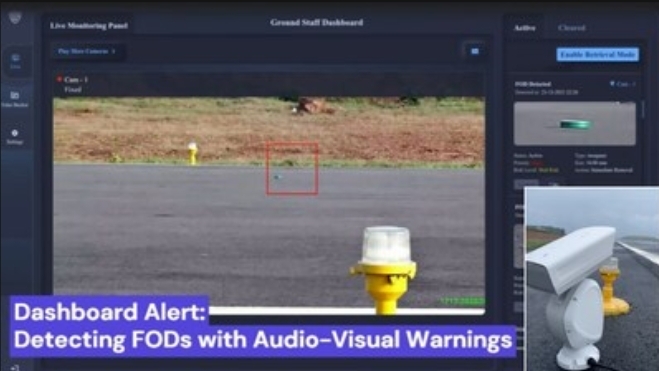
At its core, the fixed FOD detection system uses adaptive optical AI to monitor runway surfaces continuously. Unlike periodic inspections, it provides real-time detection and classification of debris, ensuring that potential hazards are identified as soon as they appear.

When debris is detected, the system transmits precise coordinates to ground operations and air traffic control. This enables rapid response without the need to deploy inspection vehicles or disrupt ongoing operations.

A key differentiator is the system’s ability to learn from its environment. By analyzing patterns such as false positives, surface anomalies, and recurring debris types, it refines its detection models over time.

In addition, the system builds longitudinal safety profiles of runway conditions. These profiles help identify high-risk zones and support predictive maintenance strategies, allowing operators to address issues proactively.

The integration with a broader intelligence network further amplifies its value, as insights from one airport can be applied across others in near real time.


Implications for Customer Experience

Although runway monitoring operates behind the scenes, its impact on customer experience is direct and measurable. Delays caused by debris detection, inspections, or runway closures can disrupt tightly scheduled operations, leading to missed connections and passenger dissatisfaction.

By enabling continuous monitoring without interrupting runway usage, the system reduces the likelihood of such disruptions. Faster detection and response times further mitigate the impact when issues do arise.

From a CX standpoint, the benefits are clear: improved on-time performance, reduced uncertainty, and greater consistency in service delivery. These factors contribute to higher levels of passenger trust and satisfaction.

Moreover, predictive maintenance capabilities help prevent unexpected failures, ensuring a more stable operational environment. This stability is critical in an industry where even small disruptions can have outsized effects on customer perception.


Broader Industry Implications

The adoption of fixed, AI-driven monitoring systems signals a broader transition toward autonomous infrastructure in aviation. As airports modernize, the focus is shifting from reactive processes to predictive, always-on systems that enhance both safety and efficiency.

This shift has competitive implications. Airports that invest in such technologies are likely to achieve higher levels of operational reliability, positioning themselves as preferred hubs for airlines and passengers alike.

At the same time, the emergence of shared intelligence ecosystems may accelerate industry-wide learning, raising the baseline for safety and performance standards.

Over time, these technologies could become integral to airport operations, much like radar and air traffic control systems today.

Runway Monitoring: Rethinking Airport Operations

The Future of CX in Aviation

Looking ahead, the convergence of AI, automation, and infrastructure management will play a defining role in shaping aviation customer experience. As systems become more autonomous and interconnected, the distinction between operational efficiency and CX will continue to blur.

For CX leaders, this evolution presents both an opportunity and a challenge. Delivering superior experiences will increasingly depend on the ability to influence and integrate with backend systems that are not traditionally within the CX domain.

The deployment of fixed FOD detection systems illustrates how targeted technological innovation can address both operational and experiential priorities. By reducing friction, enhancing reliability, and enabling predictive decision-making, such solutions contribute to a more seamless travel ecosystem.

Ultimately, the future of aviation CX will be defined not only by what passengers see, but by the intelligence embedded in the systems that keep operations running smoothly.


KEY TAKEAWAYS

  • Operational reliability is central to CX: Backend efficiency directly shapes passenger experience outcomes.
  • Autonomous monitoring reduces disruption: Always-on systems minimize delays and improve response times.
  • AI-driven insights enable predictive operations: Data-led maintenance reduces unexpected failures.
  • Shared intelligence creates compounding value: Networked systems improve continuously across deployments.
  • CX leaders must look beyond touchpoints: Infrastructure and operations are now critical components of experience strategy.

The post Runway Monitoring: Rethinking Airport Operations appeared first on CX Quest.

Opportunità di mercato
Logo Major
Valore Major (MAJOR)
$0.06298
$0.06298$0.06298
-1.85%
USD
Grafico dei prezzi in tempo reale di Major (MAJOR)
Disclaimer: gli articoli ripubblicati su questo sito provengono da piattaforme pubbliche e sono forniti esclusivamente a scopo informativo. Non riflettono necessariamente le opinioni di MEXC. Tutti i diritti rimangono agli autori originali. Se ritieni che un contenuto violi i diritti di terze parti, contatta crypto.news@mexc.com per la rimozione. MEXC non fornisce alcuna garanzia in merito all'accuratezza, completezza o tempestività del contenuto e non è responsabile per eventuali azioni intraprese sulla base delle informazioni fornite. Il contenuto non costituisce consulenza finanziaria, legale o professionale di altro tipo, né deve essere considerato una raccomandazione o un'approvazione da parte di MEXC.

Potrebbe anche piacerti

Crypto Real Estate Hedge: Eric Trump Unlocks a Revolutionary Strategy

Crypto Real Estate Hedge: Eric Trump Unlocks a Revolutionary Strategy

BitcoinWorld Crypto Real Estate Hedge: Eric Trump Unlocks a Revolutionary Strategy In the dynamic world of finance, investors constantly seek innovative ways to safeguard and grow their wealth. Recently, Eric Trump, a prominent figure in real estate and business, made a notable statement that has captured significant attention: he believes a crypto real estate hedge is the perfect solution for protecting property assets. This perspective opens up a fascinating discussion about the evolving relationship between traditional investments and the burgeoning digital asset space. What Exactly is a Crypto Real Estate Hedge? When we talk about a crypto real estate hedge, we are referring to the strategy of using cryptocurrency investments to offset potential risks or volatility in a real estate portfolio. Think of it as diversifying your financial safety net. Historically, investors have used various assets like gold, bonds, or different market sectors to hedge against downturns in other areas. Cryptocurrency, with its unique characteristics, presents a fresh option for this strategy. Its often uncorrelated price movements relative to traditional markets can provide a valuable counterweight during economic shifts. This approach isn’t about replacing real estate, but rather enhancing its resilience through strategic digital asset allocation. Why Consider Crypto for Your Property Portfolio? The idea of integrating cryptocurrency into a real estate strategy might seem unconventional at first, but several compelling reasons support it: Diversification: Cryptocurrencies often operate independently of traditional financial markets. This lack of correlation can reduce overall portfolio risk, making it a strong diversification tool. Inflation Protection: Some cryptocurrencies, particularly Bitcoin, are seen by many as a hedge against inflation due to their finite supply. As fiat currencies lose purchasing power, a strong digital asset might retain or even increase in value. Liquidity: While real estate is a long-term, illiquid asset, cryptocurrencies offer high liquidity. You can convert them to cash relatively quickly, providing access to funds when needed. Accessibility: Digital assets are globally accessible, allowing investors to participate in a market that transcends geographical boundaries and traditional banking hours. Eric Trump’s endorsement underscores a growing recognition of these benefits among seasoned investors. He sees it as a forward-thinking move to secure wealth in an unpredictable economic climate. Navigating the Challenges of a Crypto Real Estate Hedge While the potential benefits are clear, adopting a crypto real estate hedge strategy is not without its challenges. The cryptocurrency market is known for its volatility, with prices often experiencing dramatic swings. This inherent risk requires a cautious and informed approach. Moreover, the regulatory landscape for cryptocurrencies is still evolving. Different countries and jurisdictions have varying rules, which can impact how digital assets are taxed and managed. Investors must also contend with the technical aspects of securely storing and managing their crypto holdings. Understanding wallet security, exchange reliability, and potential cyber threats is paramount. Therefore, thorough research and a clear understanding of your risk tolerance are essential before integrating crypto into your investment strategy. Actionable Insights for Property Investors For real estate investors considering a crypto real estate hedge, here are some actionable steps: Start Small: Begin with a modest allocation to cryptocurrencies that aligns with your overall investment goals and risk profile. You do not need to commit a large portion of your assets initially. Educate Yourself: Learn about different cryptocurrencies, blockchain technology, and market dynamics. Understanding the fundamentals is key to making informed decisions. Choose Wisely: Focus on established cryptocurrencies with strong fundamentals and a proven track record, such as Bitcoin or Ethereum, rather than highly speculative altcoins. Prioritize Security: Use reputable exchanges and secure storage solutions (like hardware wallets) for your digital assets. Two-factor authentication is a must. Consult Experts: Speak with financial advisors who understand both real estate and cryptocurrency markets. They can help tailor a strategy that suits your individual needs. This strategic integration can provide a robust layer of protection, especially during periods of economic uncertainty. It represents a modern approach to asset management, blending traditional stability with digital innovation. The Future of Asset Protection: A Compelling Summary Eric Trump’s statement about cryptocurrency being a perfect hedge for real estate assets highlights a significant shift in investment thinking. The concept of a crypto real estate hedge is gaining traction as investors seek resilient strategies in an increasingly interconnected and volatile global economy. While challenges exist, the potential for diversification, inflation protection, and enhanced liquidity makes cryptocurrency a compelling consideration for safeguarding and growing wealth. As the digital asset landscape matures, its role in traditional investment portfolios is likely to expand, offering innovative solutions for asset protection and growth. Embracing this forward-thinking approach could be a key differentiator for investors looking to future-proof their wealth. Frequently Asked Questions (FAQs) 1. What does ‘hedge’ mean in the context of a crypto real estate hedge? A hedge is an investment made to reduce the risk of adverse price movements in an asset. In this case, a crypto real estate hedge uses cryptocurrency to protect against potential declines or volatility in real estate values. 2. Is cryptocurrency a stable investment for hedging? Cryptocurrency is known for its volatility. However, its often uncorrelated price movements with traditional assets like real estate can make it an effective hedge, providing diversification even with its inherent risks. The key is strategic allocation and understanding. 3. Which cryptocurrencies are best for a real estate hedge? While any cryptocurrency could theoretically be used, investors typically consider larger, more established assets like Bitcoin (BTC) or Ethereum (ETH) due to their higher liquidity and broader adoption. These are generally considered less volatile than newer, smaller altcoins. 4. How much crypto should I allocate for a real estate hedge? The ideal allocation depends on your individual risk tolerance, overall portfolio size, and financial goals. Many financial advisors suggest starting with a small percentage, perhaps 1-5% of your total portfolio, and adjusting as you gain more understanding and comfort with the asset class. 5. What are the tax implications of using crypto as a hedge? Tax implications for cryptocurrency vary significantly by jurisdiction. Generally, capital gains from selling crypto are taxable, and some countries also tax crypto income or even certain transactions. It is crucial to consult with a tax professional familiar with cryptocurrency regulations in your region. Did you find this article insightful? Share it with your network and spark a conversation about the future of investment strategies! To learn more about the latest crypto market trends, explore our article on key developments shaping Bitcoin institutional adoption. This post Crypto Real Estate Hedge: Eric Trump Unlocks a Revolutionary Strategy first appeared on BitcoinWorld.
Condividi
Coinstats2025/09/18 01:30
Stablecoin Sector Smashes Past the $290 Billion Milestone

Stablecoin Sector Smashes Past the $290 Billion Milestone

On Wednesday, the stablecoin market cracked into uncharted territory, vaulting past the $290 billion mark for the first time ever after padding its coffers with more than $4 billion in fresh capital over the past week. From USDT to RLUSD, Every Fiat-Pegged Token Joins the $290B Stablecoin Party Stablecoins are stealing the spotlight, complete with […]
Condividi
Coinstats2025/09/18 01:30
Coinbase Joins Ethereum Foundation to Back Open Intents Framework

Coinbase Joins Ethereum Foundation to Back Open Intents Framework

Coinbase Payments has joined the Open Intents Framework as a core contributor, working alongside Ethereum Foundation and other major players. The initiative aims to simplify complex multi-chain interactions through automated solver technology. The post Coinbase Joins Ethereum Foundation to Back Open Intents Framework appeared first on Coinspeaker.
Condividi
Coinspeaker2025/09/18 02:43