

Federal Reserve’s Crucial Signal: Governor Waller Outlines Path for 2025 Rate Cuts
BitcoinWorld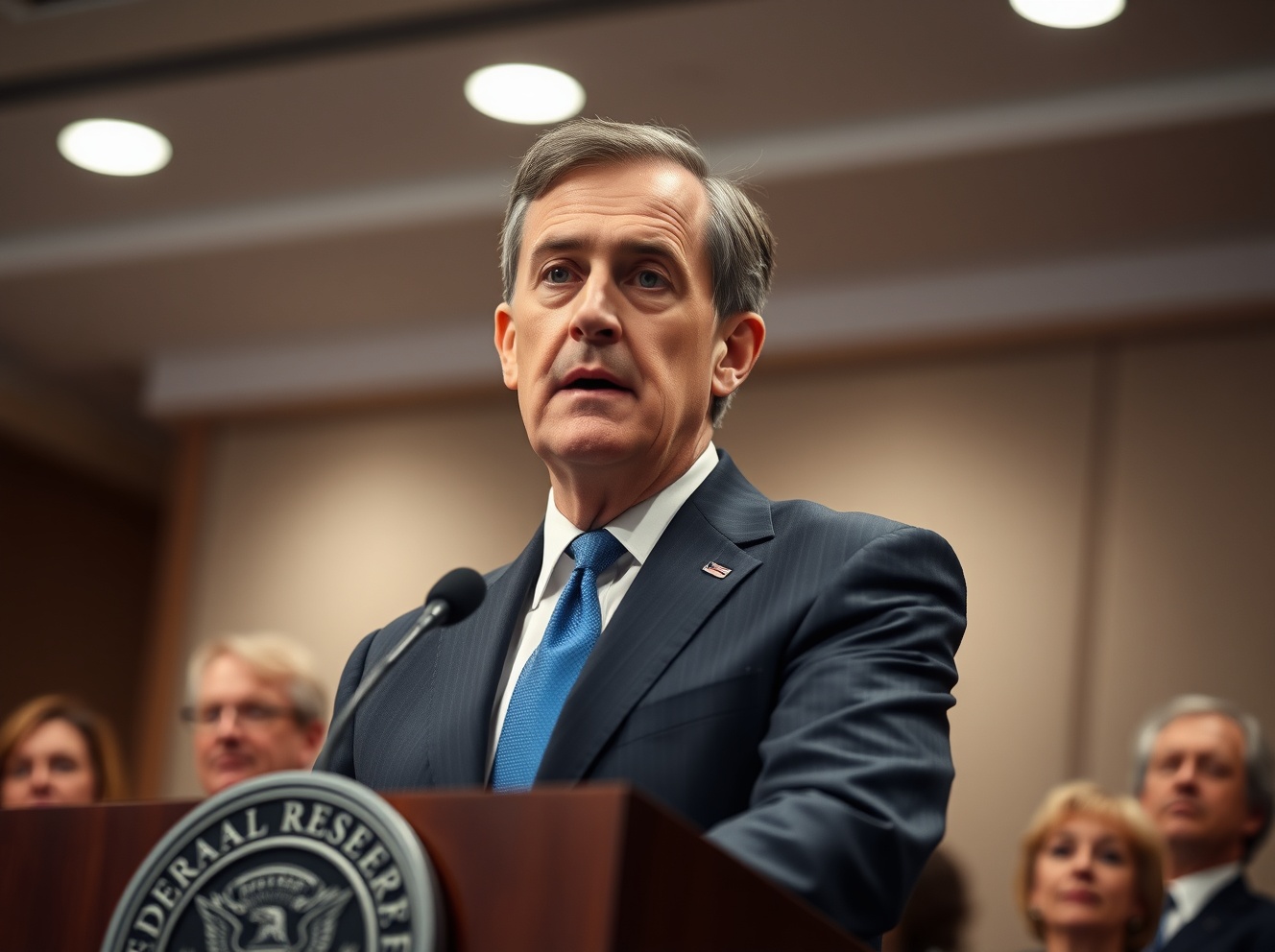
Federal Reserve’s Crucial Signal: Governor Waller Outlines Path for 2025 Rate Cuts
WASHINGTON, D.C. — March 15, 2025 — Federal Reserve Governor Christopher Waller delivered a significant policy address today, reinforcing the central bank’s outlook for potential interest rate reductions in the coming months. His remarks provided crucial insights into the Federal Open Market Committee’s evolving approach to monetary policy amid shifting economic indicators. Market participants globally analyzed his statements for signals about the timing and magnitude of future rate adjustments.
Federal Reserve’s Policy Framework for 2025
Governor Waller’s speech outlined the Federal Reserve’s current assessment framework. He emphasized data-dependent decision-making as the cornerstone of their approach. Consequently, the central bank continues monitoring inflation metrics, employment figures, and economic growth patterns. The Federal Reserve maintains its dual mandate of price stability and maximum employment as guiding principles.
Recent economic data shows encouraging trends in inflation moderation. Specifically, the Personal Consumption Expenditures price index has demonstrated consistent downward movement. Meanwhile, labor market conditions remain robust but show signs of gradual cooling. These developments create conditions conducive to policy normalization.
Waller highlighted several key indicators the Federal Reserve tracks:
- Core inflation measures excluding volatile food and energy components
- Wage growth trends and their relationship to service sector inflation
- Productivity gains that could support non-inflationary growth
- Financial conditions and their transmission to the real economy
Economic Context for Monetary Policy Adjustments
The current economic landscape differs substantially from previous years. Global supply chains have largely normalized following pandemic disruptions. Energy price volatility has diminished significantly. Furthermore, housing market adjustments have progressed considerably. These factors collectively reduce inflationary pressures.
Historical context provides important perspective. The Federal Reserve implemented aggressive rate hikes between 2022 and 2024 to combat surging inflation. Those measures achieved substantial success in restoring price stability. Now, the policy focus shifts toward sustaining economic expansion while preventing unnecessary contraction.
International monetary policy developments also influence domestic decisions. Major central banks worldwide have begun similar policy normalization processes. The European Central Bank and Bank of England have signaled their own easing cycles. This global synchronization reduces potential currency volatility concerns.
Expert Analysis of Policy Transmission Mechanisms
Monetary policy operates through multiple transmission channels. Interest rate changes affect borrowing costs for consumers and businesses. They influence asset valuations across financial markets. Additionally, they impact exchange rates and international capital flows. Waller’s remarks addressed how these mechanisms currently function.
The banking sector’s health remains crucial for effective policy transmission. Recent stress tests show strong capital positions among major institutions. Credit availability continues supporting economic activity. Financial stability concerns have diminished substantially since earlier periods of market turbulence.
Forward guidance represents another critical policy tool. The Federal Reserve communicates its likely future actions to shape market expectations. Clear communication reduces uncertainty and market volatility. Waller’s speech served precisely this forward guidance function.
Market Implications and Financial Sector Response
Financial markets reacted positively to Waller’s comments. Equity indices showed moderate gains following his remarks. Bond yields declined across various maturities. The dollar exhibited mixed performance against major currencies. These movements reflect adjusted expectations for future rate paths.
The following table illustrates market expectations before and after Waller’s speech:
| Indicator | Pre-Speech Expectation | Post-Speech Expectation |
|---|---|---|
| First Rate Cut Probability | June 2025: 65% | May 2025: 75% |
| Total 2025 Cuts Expected | 2-3 reductions | 3-4 reductions |
| Terminal Rate Forecast | 3.25-3.50% | 3.00-3.25% |
Banking sector analysts noted several important implications. Net interest margins may face pressure from declining rates. However, credit demand could increase with lower borrowing costs. Investment portfolios might experience valuation gains. Overall, the financial system appears well-positioned for this transition.
Comparative Analysis with Previous Policy Cycles
Historical comparisons provide valuable context for current developments. The 2015-2018 tightening cycle offers particularly relevant parallels. That period followed extended zero-interest-rate policy after the Global Financial Crisis. Similarly, the current situation follows unprecedented pandemic-era stimulus.
Several key differences distinguish the current environment. Inflation started from much higher levels this cycle. The labor market shows greater initial strength. Fiscal policy remains more expansionary than during previous normalization periods. These factors necessitate careful policy calibration.
International coordination appears stronger currently. Central banks communicate more transparently about policy intentions. This coordination reduces potential spillover effects. It also minimizes competitive devaluation concerns that sometimes emerge during divergent policy paths.
Risk Assessment and Contingency Planning
Waller addressed potential risks to the policy outlook. Geopolitical developments could disrupt commodity markets. Productivity growth might disappoint expectations. Financial stability risks could reemerge unexpectedly. The Federal Reserve maintains contingency plans for various scenarios.
Data dependence remains the primary risk management approach. The Federal Reserve can adjust its policy trajectory as new information emerges. This flexibility represents a key strength of the current framework. It allows responsive adjustments without compromising credibility.
Communication strategy forms another risk management component. Clear, consistent messaging prevents market misinterpretation. It also maintains public confidence in policy decisions. Waller’s measured tone exemplified this careful communication approach.
Conclusion
Federal Reserve Governor Christopher Waller’s remarks provide important clarity about monetary policy direction. The central bank’s outlook continues favoring eventual rate cuts as economic conditions evolve. Data-dependent decision-making will guide the precise timing and magnitude of adjustments. Financial markets now better understand the Federal Reserve’s policy framework for 2025. This transparency supports economic stability and informed market functioning.
FAQs
Q1: What specific conditions would trigger Federal Reserve rate cuts?
Rate cuts would require continued progress on inflation toward the 2% target alongside evidence that labor market conditions are cooling sufficiently to prevent renewed price pressures. The Federal Reserve looks for sustained improvement across multiple inflation metrics and balanced employment growth.
Q2: How many rate cuts does the Federal Reserve currently anticipate for 2025?
While the Federal Reserve doesn’t provide precise forecasts, market expectations following Waller’s speech suggest three to four quarter-point reductions throughout 2025. The exact number will depend on incoming economic data and evolving conditions.
Q3: How do Federal Reserve rate decisions affect ordinary consumers?
Rate changes influence borrowing costs for mortgages, auto loans, and credit cards. They also affect savings account yields and investment returns. Lower rates typically reduce borrowing costs while decreasing returns on conservative savings vehicles.
Q4: What distinguishes Waller’s comments from other Federal Reserve officials’ statements?
Waller’s remarks carry particular weight as a voting member of the Federal Open Market Committee with historically hawkish leanings. His openness to rate cuts signals broader consensus within the committee about policy direction.
Q5: How do global economic conditions influence Federal Reserve decisions?
International developments affect U.S. exports, import prices, and financial market stability. While domestic conditions dominate Federal Reserve decisions, global growth patterns and foreign central bank policies create important context for U.S. monetary policy.
This post Federal Reserve’s Crucial Signal: Governor Waller Outlines Path for 2025 Rate Cuts first appeared on BitcoinWorld.
Potrebbe anche piacerti

VGTEL in Strategic Talks to Acquire Consciousness-Focused Health-Tech Platform

Top 10 free crypto cloud mining platforms in 2026

