

PayPal Takes PYUSD Global, Expanding Dollar Stablecoin to 70 Markets

PayPal has extended its dollar-backed stablecoin PYUSD to users across 70 markets, the company announced Tuesday, in the most significant geographic expansion since the token's launch in August 2023. The rollout covers Asia-Pacific, Europe, Latin America, and North America, with remaining markets on PayPal's roughly 200-country network to follow in the coming weeks.
Users in newly supported countries can buy, hold, send, and receive PYUSD directly from their PayPal accounts, transfer it to third-party wallets, and convert it to local currency on withdrawal. Eligible users can also earn rewards on their holdings — a feature previously available only in the US, where PayPal offers 4% annually. For merchants, the core pitch is settlement speed: businesses accepting PYUSD can access proceeds within minutes rather than the days or weeks typical of traditional cross-border payment cycles.
The timing reflects a stablecoin market that has matured considerably since PYUSD's domestic debut. The sector's total supply has climbed into the hundreds of billions of dollars, led by Tether's USDT at roughly $143 billion and Circle's USDC at approximately $78 billion. PYUSD's own market cap has more than quintupled over the past year to $4.1 billion, fueled in part by integrations outside PayPal's core platform — including a December 2025 partnership with YouTube that allowed US creators to receive payouts in PYUSD. Visa has also partnered with BVNK to enable PYUSD payouts via Visa Direct for cross-border remittances, targeting corridors such as India and Nigeria where fees can exceed 6%.
PYUSD is issued by Paxos Trust Company, regulated by the Office of the Comptroller of the Currency, and its reserves are fully backed by US dollar deposits, Treasuries, and equivalent cash instruments. That federal regulatory footing has become a selling point as stablecoin oversight tightens globally — and as US lawmakers continue debating the CLARITY Act, which would formalize the regulatory framework for payment stablecoins.
The global rollout is not uniform. In Singapore, for example, PYUSD is currently limited to business accounts, with consumer access remaining restricted. PayPal's network spans approximately 200 countries, meaning the 70-market figure still leaves significant territory uncovered, though the company has signalled that additional access is coming.
The expansion has attracted growing interest from traditional finance players including Visa and Mastercard, both of which are exploring stablecoin integrations to modernize their payment infrastructure. For PayPal, PYUSD is also a revenue play: by parking the dollar reserves backing each token in short-term Treasuries, the company earns yield on the float — a business model that becomes increasingly lucrative as the stablecoin's circulating supply grows.


Potrebbe anche piacerti
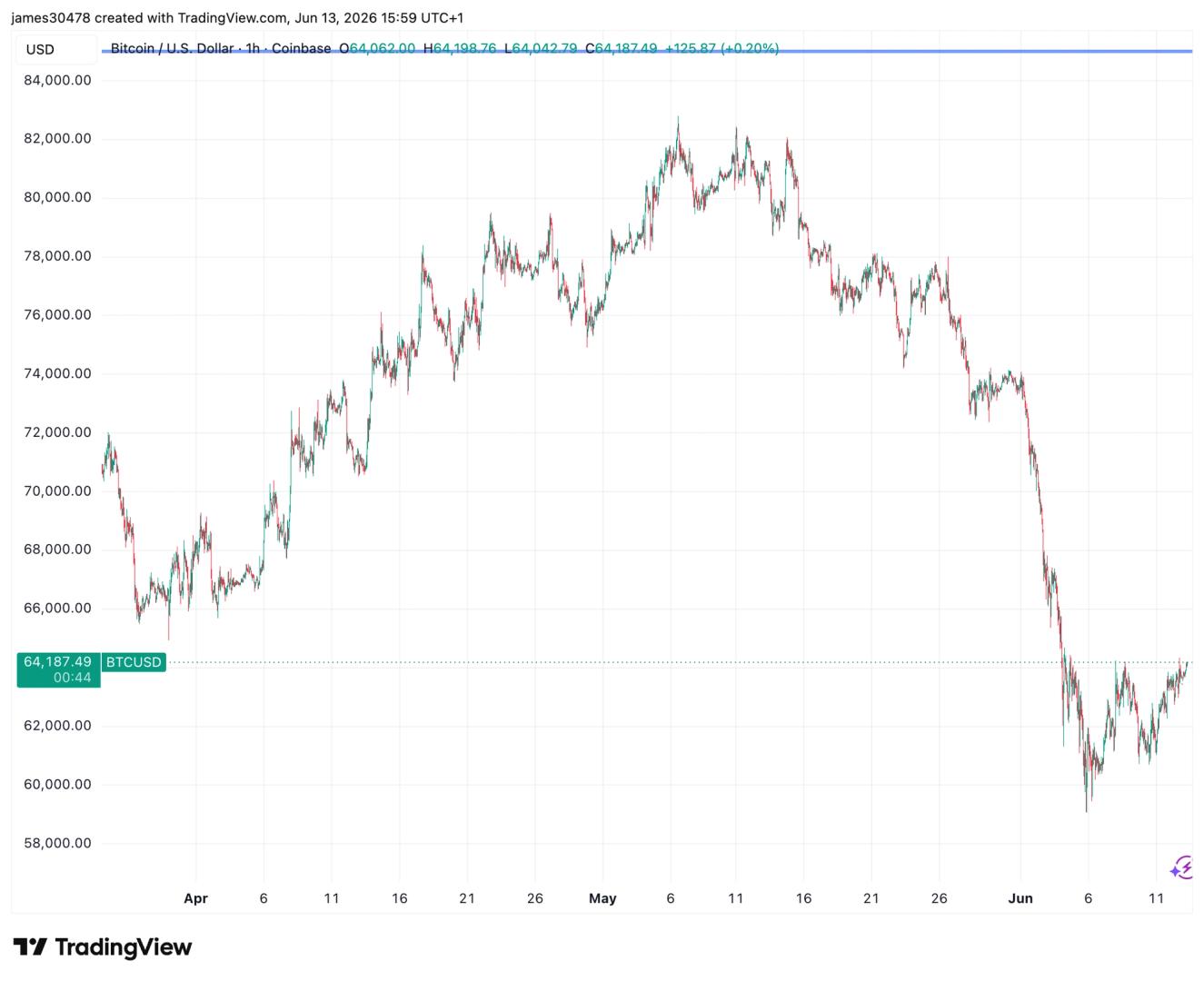
Bitcoin rises above $64,000 after Pakistan prime minister says Iran peace deal is near

Coinbase And Ethena Launch High Yield USDC Vault Powered By Morpho

Best Stablecoins Compared by Safety, Yield, Liquidity and Risk


Notizie di tendenza
Altro
