A recent slashing of Ethereum from different validators has reignited the debate around staking models, with many pointing to Cardano’s more resilient structure as a key differentiator. While Ethereum’s system penalizes validators for downtime or misbehavior, Cardano’s staking approach avoids such risks, offering delegators security without the fear of losing funds.  Why Simplicity And Resilience Are Cardano’s Key Advantages On September 10, a slashing of 11.7 ETH from 39 Ethereum validators highlights the advantages of Cardano’s staking structure. Crypto analyst Dori has highlighted on X the fundamental differences in staking requirements and risks between the two networks. On Ethereum, it is structurally impossible to stake 0.1 ETH directly on ETH, but an individual must stake a minimum of 32 ETH and operate a validator node themselves.  Related Reading: Ethereum Investors Double Down As Staking Activity Spikes Sharply – Here’s How Much However, platforms have been built on Ethereum to allow staking with as little as 0.1 ETH, and liquid tokens are issued. The critical difference is that, due to the slashing mechanism, Ethereum’s structure carries the risk of a cascading collapse. This has given rise to platforms like Ankr and Lido Finance, which pool ETH from many users, run validators, and issue liquid staking tokens such as ankrETH and stETH to solve the problem of locked-up funds. In this incident, an operational mistake by the operators of 39 validators led to a slashing penalty of 11.7 ETH, which is worth approximately $52,000. If a larger slashing event were to occur, it could lead to the de-pegging of the liquid staking tokens, potentially triggering a cascading collapse as DeFi ecosystem protocols built upon them. On Ethereum, iquid staking platforms were developed to remove obstacles to staking, and liquid tokens were distributed to address the issue of lock-ups. In contrast, Cardana’s staking model allows anyone to stake as little as 10 ADA in a stake pool without worrying about slashing. There are no lock-up periods, and a user’s staked funds are never at risk of being lost, even if their chosen stake pool misbehaves. Fundamentally Different Approaches To Staking Cardanians (CRDN) also stated that a critical flaw in Ethereum’s staking model has been exposed, highlighting the fundamental advantages of Cardano’s design. The data shows that the Ethereum staking exit queue has hit an all-time high, forcing users who unstake their ETH to wait an estimated 46 days to get their funds back. Related Reading: Cardano Secures The Crown: Now The Most Decentralized Blockchain On Earth – Here’s How However, Cardano’s ADA staking model offers a fundamentally different experience, with liquid staking and no entry or exit queues. When a user stakes their ADA, the funds remain in their wallet and are always available for use or transfer, and earn rewards without being locked up. “The design is fundamentally better,” the expert noted. Featured image from Adobe Stock, chart from Tradingview.comA recent slashing of Ethereum from different validators has reignited the debate around staking models, with many pointing to Cardano’s more resilient structure as a key differentiator. While Ethereum’s system penalizes validators for downtime or misbehavior, Cardano’s staking approach avoids such risks, offering delegators security without the fear of losing funds.  Why Simplicity And Resilience Are Cardano’s Key Advantages On September 10, a slashing of 11.7 ETH from 39 Ethereum validators highlights the advantages of Cardano’s staking structure. Crypto analyst Dori has highlighted on X the fundamental differences in staking requirements and risks between the two networks. On Ethereum, it is structurally impossible to stake 0.1 ETH directly on ETH, but an individual must stake a minimum of 32 ETH and operate a validator node themselves.  Related Reading: Ethereum Investors Double Down As Staking Activity Spikes Sharply – Here’s How Much However, platforms have been built on Ethereum to allow staking with as little as 0.1 ETH, and liquid tokens are issued. The critical difference is that, due to the slashing mechanism, Ethereum’s structure carries the risk of a cascading collapse. This has given rise to platforms like Ankr and Lido Finance, which pool ETH from many users, run validators, and issue liquid staking tokens such as ankrETH and stETH to solve the problem of locked-up funds. In this incident, an operational mistake by the operators of 39 validators led to a slashing penalty of 11.7 ETH, which is worth approximately $52,000. If a larger slashing event were to occur, it could lead to the de-pegging of the liquid staking tokens, potentially triggering a cascading collapse as DeFi ecosystem protocols built upon them. On Ethereum, iquid staking platforms were developed to remove obstacles to staking, and liquid tokens were distributed to address the issue of lock-ups. In contrast, Cardana’s staking model allows anyone to stake as little as 10 ADA in a stake pool without worrying about slashing. There are no lock-up periods, and a user’s staked funds are never at risk of being lost, even if their chosen stake pool misbehaves. Fundamentally Different Approaches To Staking Cardanians (CRDN) also stated that a critical flaw in Ethereum’s staking model has been exposed, highlighting the fundamental advantages of Cardano’s design. The data shows that the Ethereum staking exit queue has hit an all-time high, forcing users who unstake their ETH to wait an estimated 46 days to get their funds back. Related Reading: Cardano Secures The Crown: Now The Most Decentralized Blockchain On Earth – Here’s How However, Cardano’s ADA staking model offers a fundamentally different experience, with liquid staking and no entry or exit queues. When a user stakes their ADA, the funds remain in their wallet and are always available for use or transfer, and earn rewards without being locked up. “The design is fundamentally better,” the expert noted. Featured image from Adobe Stock, chart from Tradingview.com

Ethereum Validator Slashing Puts Cardano’s Resilience In Focus – Here’s Why

2025/09/13 09:00
3 min di lettura
Per feedback o dubbi su questo contenuto, contattateci all'indirizzo crypto.news@mexc.com.

A recent slashing of Ethereum from different validators has reignited the debate around staking models, with many pointing to Cardano’s more resilient structure as a key differentiator. While Ethereum’s system penalizes validators for downtime or misbehavior, Cardano’s staking approach avoids such risks, offering delegators security without the fear of losing funds. 

Why Simplicity And Resilience Are Cardano’s Key Advantages

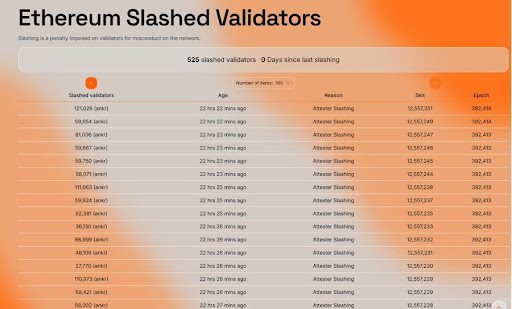
On September 10, a slashing of 11.7 ETH from 39 Ethereum validators highlights the advantages of Cardano’s staking structure. Crypto analyst Dori has highlighted on X the fundamental differences in staking requirements and risks between the two networks. On Ethereum, it is structurally impossible to stake 0.1 ETH directly on ETH, but an individual must stake a minimum of 32 ETH and operate a validator node themselves. 

However, platforms have been built on Ethereum to allow staking with as little as 0.1 ETH, and liquid tokens are issued. The critical difference is that, due to the slashing mechanism, Ethereum’s structure carries the risk of a cascading collapse. This has given rise to platforms like Ankr and Lido Finance, which pool ETH from many users, run validators, and issue liquid staking tokens such as ankrETH and stETH to solve the problem of locked-up funds.
Ethereum

In this incident, an operational mistake by the operators of 39 validators led to a slashing penalty of 11.7 ETH, which is worth approximately $52,000. If a larger slashing event were to occur, it could lead to the de-pegging of the liquid staking tokens, potentially triggering a cascading collapse as DeFi ecosystem protocols built upon them.

On Ethereum, iquid staking platforms were developed to remove obstacles to staking, and liquid tokens were distributed to address the issue of lock-ups. In contrast, Cardana’s staking model allows anyone to stake as little as 10 ADA in a stake pool without worrying about slashing. There are no lock-up periods, and a user’s staked funds are never at risk of being lost, even if their chosen stake pool misbehaves.

Fundamentally Different Approaches To Staking

Cardanians (CRDN) also stated that a critical flaw in Ethereum’s staking model has been exposed, highlighting the fundamental advantages of Cardano’s design. The data shows that the Ethereum staking exit queue has hit an all-time high, forcing users who unstake their ETH to wait an estimated 46 days to get their funds back.

However, Cardano’s ADA staking model offers a fundamentally different experience, with liquid staking and no entry or exit queues. When a user stakes their ADA, the funds remain in their wallet and are always available for use or transfer, and earn rewards without being locked up. “The design is fundamentally better,” the expert noted.

Ethereum
Opportunità di mercato
Logo RISE
Valore RISE (RISE)
$0.00302
$0.00302$0.00302
-8.48%
USD
Grafico dei prezzi in tempo reale di RISE (RISE)
Disclaimer: gli articoli ripubblicati su questo sito provengono da piattaforme pubbliche e sono forniti esclusivamente a scopo informativo. Non riflettono necessariamente le opinioni di MEXC. Tutti i diritti rimangono agli autori originali. Se ritieni che un contenuto violi i diritti di terze parti, contatta crypto.news@mexc.com per la rimozione. MEXC non fornisce alcuna garanzia in merito all'accuratezza, completezza o tempestività del contenuto e non è responsabile per eventuali azioni intraprese sulla base delle informazioni fornite. Il contenuto non costituisce consulenza finanziaria, legale o professionale di altro tipo, né deve essere considerato una raccomandazione o un'approvazione da parte di MEXC.

Potrebbe anche piacerti

OpenClaw API Integration Is Live in the Crypto.com App: Here’s What Traders Need to Know

OpenClaw API Integration Is Live in the Crypto.com App: Here’s What Traders Need to Know

TLDR: OpenClaw API integration is now live in the Crypto.com App via the new Agent Key feature for traders. Users can set weekly trading budgets to cap how much
Condividi
Blockonomi2026/03/03 19:30
The Best Crypto Presale in 2025? Solana and ADA Struggle, but Lyno AI Surges With Growing Momentum

The Best Crypto Presale in 2025? Solana and ADA Struggle, but Lyno AI Surges With Growing Momentum

The post The Best Crypto Presale in 2025? Solana and ADA Struggle, but Lyno AI Surges With Growing Momentum appeared on BitcoinEthereumNews.com. With the development of 2025, certain large cryptocurrencies encounter continuous issues and a new player secures an impressive advantage. Solana is struggling with congestion, and the ADA of Cardano is still at a significantly lower level than its highest price. In the meantime, Lyno AI presale is gaining momentum, attracting a large number of investors. Solana Faces Setbacks Amid Market Pressure However, despite the hype surrounding ETFs, Solana fell by 7% to $ 203, due to the constant congestion problems that hamper its network functionality. This makes adoption slow and aggravates traders who want to get things done quickly. Recent upgrades should combat those issues but the competition is rising, and Solana continues to lag in terms of user adoption and ecosystem development. Cardano Struggles to Regain Momentum ADA, the token of a Cardano, costs 72% less than the 2021 high and is developing more slowly than Ethereum Layer 2 solutions. The adoption of the coin is not making any progress despite the good forecasts. Analysts believe that the road to regain the past heights is long before Cardano can go back, with more technological advancements getting more and more attention. Lyno AI’s Explosive Presale Growth In stark contrast, Lyno AI is currently in its Early Bird presale, in which tokens are sold at 0.05 per unit and have already sold 632,398 tokens and raised 31,462 dollars. The next stage price will be established at $0.055 and the final target will be at $0.10. Audited by Cyberscope , Lyno AI provides a cross-chain AI arbitrage platform that enables retail traders to compete with institutions. Its AI algorithms perform trades in 15+ blockchains in real time, opening profitable arbitrage opportunities to everyone. Those who make purchases above 100 dollars are also offered the possibility of winning in the 100K Lyno AI…
Condividi
BitcoinEthereumNews2025/09/18 18:22
What to Expect From The Fed This Year After First Rate Cut in 2025

What to Expect From The Fed This Year After First Rate Cut in 2025

The United States central bank has just cut rates for the first time this year, and investors are now watching for its next move.
Condividi
CryptoPotato2025/09/18 13:02