

Zcash Price Rallies 10% on Major VC Funding, but Bulls Must Break $250

Key Insights
- Zcash price rallied 10% in 24 hours after ZODL raised $25 million from Paradigm and a16z.
- Whales increased Zcash holdings by 182%, while mega whales added 19% as exchanges emptied 43%.
- Zcash price needs a daily close above $250 to confirm the rally, with CMF breaking trendline as a critical move.
Zcash price rallied 10% in the past 24 hours. The move came after major funding news.
ZODL, the Zcash Open Development Lab, raised $25 million from major venture capital firms. Paradigm led the round, with Andreessen Horowitz also joining. Coinbase Ventures and Winklevoss Capital also invested.
But the rally has conditions. Zcash price sits around $225 right now. To confirm this move is real and not just a bounce, it needs to break above $250 with a daily close. Until then, the bullish case remains unproven.
$25M ZODL Funding Sparks 10% Zcash Price Jump
The funding announcement came on March 9, 2026. ZODL raised over $25 million in seed funding.
The investor list shows serious institutional interest. Paradigm participated. So did a16z crypto, which is the crypto arm of Andreessen Horowitz. Coinbase Ventures joined the round. And Winklevoss Capital also invested.
This is the largest funding round for any Zcash team ever. The news resolved uncertainty from earlier this year.
In January, the entire Electric Coin Company team allegedly resigned after a governance fight. That caused fear, and the price dropped hard. Now the same team restructured under ZODL and got major backing. The market seems to be seeing this as validation.
 ZODL Funding | Source: X
Now, back to the funding news, Cypherpunk Technologies put in $5 million. This is notable because it’s their first investment in anything other than Zcash technology itself.
Zcash Whales Accumulate as Exchange Outflows Rise
Big holders have been accumulating aggressively over the past week. This happened before the funding announcement became public.
Standard whale wallets, which are large holders but not the absolute biggest, now hold 12,141 Zcash tokens, per Nansen data. They increased their holdings by 182% over the past seven days.
Mega whales are the top 100 Zcash addresses. These are the really big players. They now hold 48,914 Zcash tokens. Their holdings increased by almost 19% during the same seven-day period.
 Zcash Whales | Source: Nansen
At the same time, exchanges saw major outflows. The amount of Zcash sitting on exchanges dropped 43%.
This combination paints a clear picture. Large holders accumulated heavily. They pulled coins off exchanges. This reduces the available supply for selling. It happened quietly while the ZEC price was still recovering from the $184 low hit on Feb. 6.
Bullish Divergence Forms, but $250 Is the Key Level
Technical indicators flashed signals before the news hit.
Between Jan. 10 and March 3, Zcash price made a lower low. But the Relative Strength Index made a higher low during the same period. When the price falls, but the RSI rises, that creates bullish divergence.
This pattern signals that selling pressure is weakening. It often comes before trend reversals.
The divergence triggered a bounce from $184. But then it fizzled out. Selling pressure returned, and the rally lost steam. Price dropped back to $191 on March 7.
This time it looks different. The funding news provided a fundamental catalyst. The Chaikin Money Flow indicator also started rising again. CMF measures the cash inflows and outflows of an asset. Traders use it as a proxy for institutional activity.
When the first bounce happened, CMF rose. Then it dropped as whales took profits. Now CMF is rising again. It is approaching a descending trendline that has acted as resistance. If CMF breaks above that trendline and crosses above zero, it will confirm that big money is flowing back in.
The critical price level is $251. A daily close above $251 would confirm the rally is real. Below that level, this could just be another failed bounce.
 Zcash Price Levels | Source: TradingView
If $250 breaks, the next target becomes $283. A price above $340 would validate the bullish case. Price could even push toward $430 if everything aligns. Until $250 breaks with conviction, the 10% Zcash price jump remains unconfirmed.
The post Zcash Price Rallies 10% on Major VC Funding, but Bulls Must Break $250 appeared first on The Coin Republic.
Potrebbe anche piacerti

Tether Backs Ark Labs’ $5.2 Million Bet on Bitcoin’s Stablecoin Revival
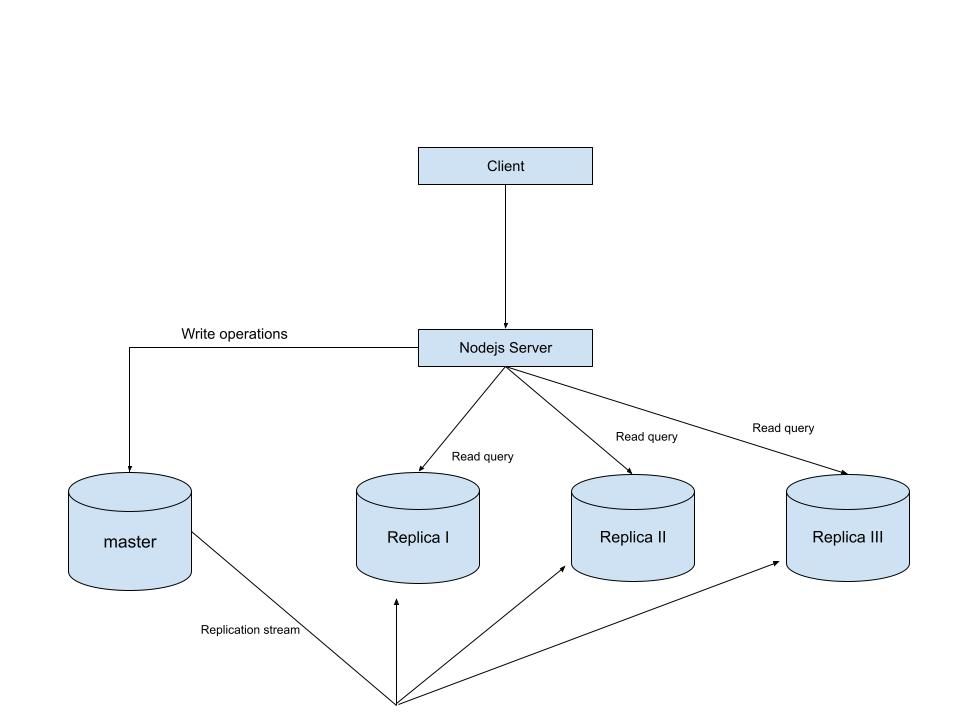
MySQL Single Leader Replication with Node.js and Docker
command: --server-id=1 --log-bin=ON The --server-id option gives each MySQL server in your replication setup its own name tag. Each one has to be unique and without it, replication won’t work at all. Another cool option not included here is binlog_format=ROW. This tells MySQL how to keep track of changes before passing them along to the replicas. By default, MySQL already uses row-based replication, but you can explicitly set it to ROW to be sure or switch it to STATEMENT if you’d rather log the actual SQL statements instead of row-by-row changes. \ Run our containers on docker Now, in the terminal, we can run the following command to spin up our database containers: docker-compose up -d \ Setting Up Our Master (Primary) Server To configure our master server, we would have to first access the running instance on docker using the following command docker exec -it mysql-master bash This command opens an interactive Bash shell inside the running Docker container named mysql-master, allowing us to run commands directly inside that container. \ Now that we’re inside the container, we can access the MySQL server and start running commands. type: mysql -uroot -p This will log you into MySQL as the root user. You’ll be prompted to enter the password you set in your docker-compose.yml file. \ Next, we need to create a special user that our replicas will use to connect to the master server and pull data. Inside the MySQL prompt, run the following commands: \ CREATE USER 'repl_user'@'%' IDENTIFIED BY 'replication_pass'; GRANT REPLICATION SLAVE ON . TO 'repl_user'@'%'; FLUSH PRIVILEGES; Here’s what’s happening: CREATE USER makes a new MySQL user called repl_user with the password replication_pass. GRANT REPLICATION SLAVE gives this user permission to act as a replication client. FLUSH PRIVILEGES tells MySQL to reload the user permissions so they take effect immediately. \ Time to Configure the Replica (Secondary) Servers a. First, let’s access the replica containers the same way we did with the master. Run this command in your terminal for each of the replica containers: \ docker exec -it <replica_container_name> bash mysql -uroot -p <replica_container_name> should be replace with the name of the replica container you are trying to setup b. Now it’s time to tell our replica where to get its data from. While inside the replica’s MySQL shell, run the following command to configure replication using the master’s details: CHANGE REPLICATION SOURCE TO SOURCE_HOST='mysql-master', SOURCE_USER='repl_user', SOURCE_PASSWORD='replication_pass', GET_SOURCE_PUBLIC_KEY=1; With the replication settings in place, let’s fire up the replica and get it syncing with the master. Still inside the MySQL shell on the replica, run: START REPLICA; This starts the replication process. To make sure everything is working, check the replica’s status with:
SHOW REPLICA STATUS\G; Look for Replica_IO_Running and Replica_SQL_Running — if both say Yes, congratulations! 🎉 Your replica is now successfully connected to the master and replicating data in real time.
Testing Our Replication Setup from the Node.js App Now that our replication is successfully set up, we can configure our Node.js server to observe the real-time effect of data being replicated from the master server to the replica server whenever we write to it. We start by installing the following dependencies:
npm i express mysql2 sequelize \ Now create a folder called src in the root directory and add the following files inside that folder connection.js, index.js and model.js. Our current directory should look like this We can now set up our connections to our master and replica server in the connection.js file as shown below
const Sequelize = require("sequelize"); const sequelize = new Sequelize({ dialect: "mysql", replication: { write: { host: "127.0.0.1", username: "root", password: "master", database: "replicaDb", }, read: [ { host: "127.0.0.1", username: "root", password: "slave", database: "replicaDb", port: 3307 }, { host: "127.0.0.1", username: "root", password: "slave", database: "replicaDb", port: 3308 }, { host: "127.0.0.1", username: "root", password: "slave", database: "replicaDb", port: 3309 }, ], }, }); async function connectdb() { try { await sequelize.authenticate(); } catch (error) { console.error("❌ unable to connect to the follower database", error); } } connectdb(); module.exports = { sequelize, }; \ We can now create a User table in the model.js file
const {DataTypes} = require("sequelize"); const { sequelize } = require("./connection"); const User = sequelize.define("User", { name: { type: DataTypes.STRING, allowNull: false, }, email: { type: DataTypes.STRING, unique: true, allowNull: false, }, }); module.exports = User \ and finally in our index.js file we can start our server and listen for connections on port 3000. from the code sample below, all inserts or updates will be routed by sequelize to the master server. while all read queries will be routed to the read replicas.
const express = require("express"); const { sequelize } = require("./connection"); const User = require("./model"); const app = express(); app.use(express.json()); async function main() { await sequelize.sync({ alter: true }); app.get("/", (req, res) => { res.status(200).json({ message: "first step to setting server up", }); }); app.post("/user", async (req, res) => { const { email, name } = req.body; let newUser = await User.build({ name, email, }); // This INSERT will go to the write (master) connection newUser = newUser.save({ returning: false }); res.status(201).json({ message: "User successfully created", }); }); app.get("/user", async (req, res) => { // This SELECT query will go to one of the read replicas const users = await User.findAll(); res.status(200).json(users); }); app.listen(3000, () => { console.log("server has connected"); }); } main(); When you make a POST request to the /users endpoint, take a moment to check both the master and replica servers to observe how data is replicated in real time. Right now, we are relying on Sequelize to automatically route requests, which works for development but isn’t robust enough for a production environment. In particular, if the master node goes down, Sequelize cannot automatically redirect requests to a newly elected leader. In the next part of this series, we’ll explore strategies to handle these challenges
