Frustrated by messy paper-based valet systems? Digital valet parking software by PUR Valet makes check-ins, check-outs, and communication simple and fast. This Frustrated by messy paper-based valet systems? Digital valet parking software by PUR Valet makes check-ins, check-outs, and communication simple and fast. This

How Digital Valet Parking Software by PUR Valet Is Revolutionizing Hospitality

2026/03/12 08:44
5 min di lettura
Per feedback o dubbi su questo contenuto, contattateci all'indirizzo crypto.news@mexc.com.

Frustrated by messy paper-based valet systems? Digital valet parking software by PUR Valet makes check-ins, check-outs, and communication simple and fast. This guide explains how it can improve operations.

The Limitations of Traditional Valet Systems

Many hospitality properties still use handwritten tickets to manage vehicles. While simple, this system presents several challenges:

How Digital Valet Parking Software by PUR Valet Is Revolutionizing Hospitality
  • Lost or damaged tickets can create delays
  • Vehicles take longer to retrieve during peak periods
  • Staff must manually track records and activity
  • Managers have limited visibility into valet performance
  • Manual processes increase the risk of human error

For busy hotels and casinos, these challenges affect both the guest experience and operational efficiency.

What Is Valet Parking Software

A valet parking app is a digital system that replaces pen-and-paper ticketing with mobile and cloud-based management. It helps valet teams see all vehicle information instantly and work more efficiently.

Important features include:

  • Digital check-in and check-out for vehicles
  • Storing license plate and vehicle details
  • SMS notifications to let guests know about their car
  • Real-time tracking of valet activity
  • Easy-to-read reports and dashboards

With this software, properties can speed up service, avoid errors, and make parking simpler and more organized.

How Digital Valet Software Works

With PUR Valet software, the valet process is quick and digital:

  • Attendants check in cars using a tablet or phone.
  • Digital tickets replace paper slips.
  • Guests can text to request their vehicle.
  • The system shows where each car is for fast retrieval.
  • Once picked up, attendants confirm check-out and guests get a notification.
  • Managers can monitor traffic, speed, and staff activity in real time.

The result is smoother operations and happier guests.

Key Features of PUR Valet’s Digital Valet Software

PUR Valet offers a comprehensive platform that streamlines valet operations while improving guest experience. Each feature is designed to reduce errors, save time, and simplify management.

1. Digital Ticketing

Digital ticketing replaces traditional paper tickets with an electronic system that is fast, accurate, and easy to manage.

  • Eliminates paper-based mistakes
  • Reduces guest wait times
  • Provides instant access to vehicle information
  • Simplifies record keeping and audits

2. SMS Valet Notifications

SMS valet allows guests to request their vehicle via text, making the process smoother and more convenient.

  • Guests request vehicles via text message
  • Attendants prepare vehicles in advance
  • Reduces congestion at valet stands
  • Enhances communication and guest convenience

3. Real-Time Vehicle Tracking

With real-time tracking, valet staff can instantly locate vehicles and optimize parking operations.

  • Tracks each vehicle’s location instantly
  • Speeds up retrieval, especially in large parking areas
  • Helps attendants organize parking efficiently
  • Reduces staff search time

4. Automated Operations

Automation in valet operations reduces manual work, improves accuracy, and provides actionable insights for management.

  • Digital ticket creation and vehicle status updates
  • Automated reporting for management
  • Activity logs for staff monitoring
  • Minimizes human error and administrative work

Operational Benefits for Hotels and Casinos

Digital valet software improves both guest satisfaction and operational efficiency.

Improved Guest Experience

Providing guests with fast, seamless service is key.

  • Faster check-ins during peak hours
  • SMS vehicle requests eliminate unnecessary waiting
  • Reliable service increases guest satisfaction

Enhanced Staff Efficiency

Digital tools simplify attendants’ daily tasks.

  • Attendants process more vehicles with less effort
  • Fewer errors compared to manual systems
  • Better coordination among valet teams

Better Management Oversight

Managers gain clear visibility into valet operations.

  • Real-time dashboards display vehicle volumes and retrieval times
  • Managers can optimize staffing during high-traffic periods
  • Automated reports provide insights for operational improvements

Reduced Administrative Burden

Digital systems remove repetitive paperwork and simplify operations.

  • Eliminates paper-based tracking and manual reporting
  • Simplifies auditing and performance analysis
  • Frees staff time to focus on guest service

Real-World Scenarios

Digital valet software is ideal for busy operations:

  • Hotels: Fast vehicle check-in and SMS retrieval
  • Casinos: Handles large crowds efficiently
  • Resorts: Easily tracks cars in multiple parking areas

Replacing paper tickets with digital tools speeds up service and improves guest experience.

Adapting to Modern Hospitality Needs

Hotels and casinos using digital valet run smoother during busy times and keep guests happy.

By moving to a fully digital system, hospitality teams gain:

  • Faster check-in and check-out workflows
  • Better parking lot organization
  • Instant visibility of all vehicles
  • Reduced dependency on manual processes

Digital valet parking software by PUR Valet fixes current issues and makes valet operations easier to grow.

Choosing the Right Digital Valet Solution

Properties considering a valet app should focus on:

  • Ease of Use: Staff should quickly learn the interface
  • SMS Communication: Guests should easily request vehicles remotely
  • Operational Reporting: Monitor staff efficiency and vehicle locations easily.
  • Scalability: Supports high-traffic periods and multiple parking areas.

The right software keeps valet operations efficient and guests satisfied.

Transform Your Valet Operations with PUR Valet Software

Stop losing tickets and keep your valet running smoothly with digital valet parking software by PUR Valet. Track vehicles, handle SMS guest requests, and manage your team in real time—book a demo today.

Comments
Opportunità di mercato
Logo Checkmate
Valore Checkmate (CHECK)
$0.056285
$0.056285$0.056285
-4.00%
USD
Grafico dei prezzi in tempo reale di Checkmate (CHECK)
Disclaimer: gli articoli ripubblicati su questo sito provengono da piattaforme pubbliche e sono forniti esclusivamente a scopo informativo. Non riflettono necessariamente le opinioni di MEXC. Tutti i diritti rimangono agli autori originali. Se ritieni che un contenuto violi i diritti di terze parti, contatta crypto.news@mexc.com per la rimozione. MEXC non fornisce alcuna garanzia in merito all'accuratezza, completezza o tempestività del contenuto e non è responsabile per eventuali azioni intraprese sulla base delle informazioni fornite. Il contenuto non costituisce consulenza finanziaria, legale o professionale di altro tipo, né deve essere considerato una raccomandazione o un'approvazione da parte di MEXC.

Potrebbe anche piacerti

Tether Backs Ark Labs’ $5.2 Million Bet on Bitcoin’s Stablecoin Revival

Tether Backs Ark Labs’ $5.2 Million Bet on Bitcoin’s Stablecoin Revival

The post Tether Backs Ark Labs’ $5.2 Million Bet on Bitcoin’s Stablecoin Revival appeared on BitcoinEthereumNews.com. In brief Ark Labs secured backing from Tether
Condividi
BitcoinEthereumNews2026/03/12 21:44
MySQL Single Leader Replication with Node.js and Docker

MySQL Single Leader Replication with Node.js and Docker

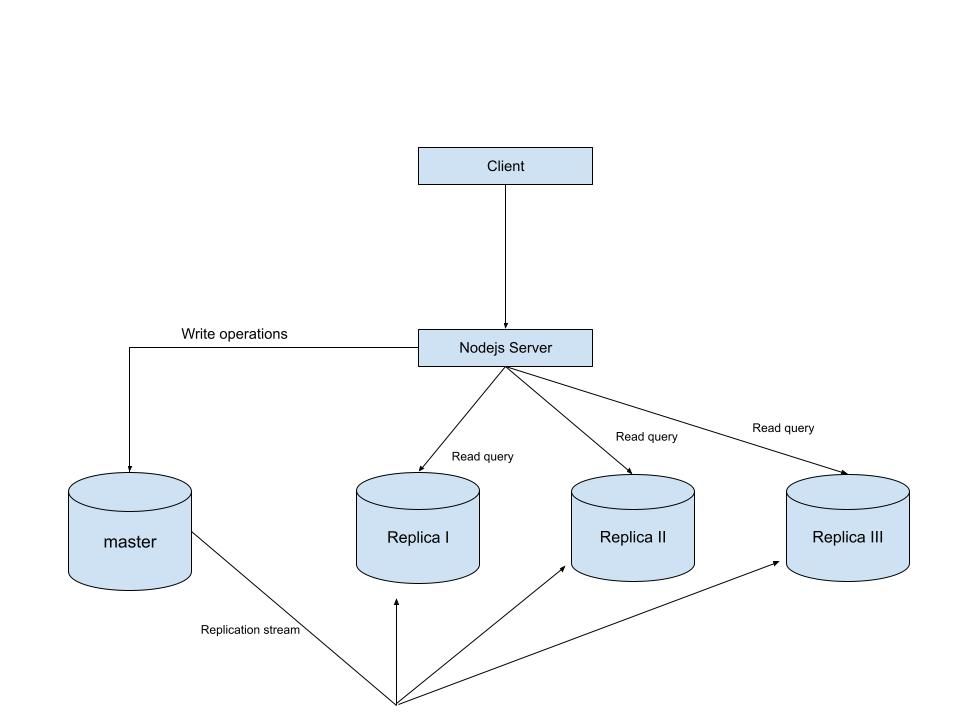
Modern applications demand high availability and the ability to scale reads without compromising performance. One of the most common strategies to achieve this is Replication. In this setup, we configured a single database to act as the leader (master) and handle all write operations, while three replicas handle read operations. In this article, we’ll walk through how to set up MySQL single-leader replication on your local machine using Docker. Once the replication is working, we’ll connect it to a Node.js application using Sequelize ORM, so that reads are routed to the replica and writes go to the master. By the end, you’ll have a working environment where you can see replication in real time Prerequisites knowledge of database replication Background knowledge of docker and docker compose Background knowledge of Nodejs and how to run a NodeJS server An Overview of what we are building Setup Setup our database servers on docker compose in the root of our project directory, create a file named docker-compose.yml with the following content to setup our mysql primary and replica databases. \ \ name: "learn-replica" volumes: mysqlMasterDatabase: mysqlSlaveDatabase: mysqlSlaveDatabaseII: mysqlSlaveDatabaseIII: networks: mysql-replication-network: services: mysql-master: image: mysql:latest container_name: mysql-master command: --server-id=1 --log-bin=ON environment: MYSQL_ROOT_PASSWORD: master MYSQL_DATABASE: replicaDb ports: - "3306:3306" volumes: - mysqlMasterDatabase:/var/lib/mysql networks: - mysql-replication-network mysql-slave: image: mysql:latest container_name: mysql-slave command: --server-id=2 --log-bin=ON environment: MYSQL_ROOT_PASSWORD: slave MYSQL_DATABASE: replicaDb MYSQL_ROOT_HOST: "%" ports: - "3307:3306" volumes: - mysqlSlaveDatabase:/var/lib/mysql depends_on: - mysql-master networks: - mysql-replication-network mysql-slaveII: image: mysql:latest container_name: mysql-slaveII command: --server-id=2 --log-bin=ON environment: MYSQL_ROOT_PASSWORD: slave MYSQL_DATABASE: replicaDb MYSQL_ROOT_HOST: "%" ports: - "3308:3306" volumes: - mysqlSlaveDatabaseII:/var/lib/mysql depends_on: - mysql-master networks: - mysql-replication-network mysql-slaveIII: image: mysql:latest container_name: mysql-slaveIII command: --server-id=3 --log-bin=ON environment: MYSQL_ROOT_PASSWORD: slave MYSQL_DATABASE: replicaDb MYSQL_ROOT_HOST: "%" ports: - "3309:3306" volumes: - mysqlSlaveDatabaseIII:/var/lib/mysql depends_on: - mysql-master networks: - mysql-replication-network In this setup, I’m creating a master database container called mysql-master and 3 replica containers called mysql-slave, mysql-slaveII and mysql-slaveIII. I won’t go too deep into the docker-compose.yml file since it’s just a basic setup, but I do want to walk you through the command line instructions used in all four services because that’s where things get interesting.
command: --server-id=1 --log-bin=ON The --server-id option gives each MySQL server in your replication setup its own name tag. Each one has to be unique and without it, replication won’t work at all. Another cool option not included here is binlog_format=ROW. This tells MySQL how to keep track of changes before passing them along to the replicas. By default, MySQL already uses row-based replication, but you can explicitly set it to ROW to be sure or switch it to STATEMENT if you’d rather log the actual SQL statements instead of row-by-row changes. \ Run our containers on docker Now, in the terminal, we can run the following command to spin up our database containers: docker-compose up -d \ Setting Up Our Master (Primary) Server To configure our master server, we would have to first access the running instance on docker using the following command docker exec -it mysql-master bash This command opens an interactive Bash shell inside the running Docker container named mysql-master, allowing us to run commands directly inside that container. \ Now that we’re inside the container, we can access the MySQL server and start running commands. type: mysql -uroot -p This will log you into MySQL as the root user. You’ll be prompted to enter the password you set in your docker-compose.yml file. \ Next, we need to create a special user that our replicas will use to connect to the master server and pull data. Inside the MySQL prompt, run the following commands: \ CREATE USER 'repl_user'@'%' IDENTIFIED BY 'replication_pass'; GRANT REPLICATION SLAVE ON . TO 'repl_user'@'%'; FLUSH PRIVILEGES; Here’s what’s happening: CREATE USER makes a new MySQL user called repl_user with the password replication_pass. GRANT REPLICATION SLAVE gives this user permission to act as a replication client. FLUSH PRIVILEGES tells MySQL to reload the user permissions so they take effect immediately. \ Time to Configure the Replica (Secondary) Servers a. First, let’s access the replica containers the same way we did with the master. Run this command in your terminal for each of the replica containers: \ docker exec -it <replica_container_name> bash mysql -uroot -p <replica_container_name> should be replace with the name of the replica container you are trying to setup b. Now it’s time to tell our replica where to get its data from. While inside the replica’s MySQL shell, run the following command to configure replication using the master’s details: CHANGE REPLICATION SOURCE TO SOURCE_HOST='mysql-master', SOURCE_USER='repl_user', SOURCE_PASSWORD='replication_pass', GET_SOURCE_PUBLIC_KEY=1; With the replication settings in place, let’s fire up the replica and get it syncing with the master. Still inside the MySQL shell on the replica, run: START REPLICA; This starts the replication process. To make sure everything is working, check the replica’s status with:
SHOW REPLICA STATUS\G; Look for Replica_IO_Running and Replica_SQL_Running — if both say Yes, congratulations! 🎉 Your replica is now successfully connected to the master and replicating data in real time.
Testing Our Replication Setup from the Node.js App Now that our replication is successfully set up, we can configure our Node.js server to observe the real-time effect of data being replicated from the master server to the replica server whenever we write to it. We start by installing the following dependencies:
npm i express mysql2 sequelize \ Now create a folder called src in the root directory and add the following files inside that folder connection.js, index.js and model.js. Our current directory should look like this We can now set up our connections to our master and replica server in the connection.js file as shown below
const Sequelize = require("sequelize"); const sequelize = new Sequelize({ dialect: "mysql", replication: { write: { host: "127.0.0.1", username: "root", password: "master", database: "replicaDb", }, read: [ { host: "127.0.0.1", username: "root", password: "slave", database: "replicaDb", port: 3307 }, { host: "127.0.0.1", username: "root", password: "slave", database: "replicaDb", port: 3308 }, { host: "127.0.0.1", username: "root", password: "slave", database: "replicaDb", port: 3309 }, ], }, }); async function connectdb() { try { await sequelize.authenticate(); } catch (error) { console.error("❌ unable to connect to the follower database", error); } } connectdb(); module.exports = { sequelize, }; \ We can now create a User table in the model.js file
const {DataTypes} = require("sequelize"); const { sequelize } = require("./connection"); const User = sequelize.define("User", { name: { type: DataTypes.STRING, allowNull: false, }, email: { type: DataTypes.STRING, unique: true, allowNull: false, }, }); module.exports = User \ and finally in our index.js file we can start our server and listen for connections on port 3000. from the code sample below, all inserts or updates will be routed by sequelize to the master server. while all read queries will be routed to the read replicas.
const express = require("express"); const { sequelize } = require("./connection"); const User = require("./model"); const app = express(); app.use(express.json()); async function main() { await sequelize.sync({ alter: true }); app.get("/", (req, res) => { res.status(200).json({ message: "first step to setting server up", }); }); app.post("/user", async (req, res) => { const { email, name } = req.body; let newUser = await User.build({ name, email, }); // This INSERT will go to the write (master) connection newUser = newUser.save({ returning: false }); res.status(201).json({ message: "User successfully created", }); }); app.get("/user", async (req, res) => { // This SELECT query will go to one of the read replicas const users = await User.findAll(); res.status(200).json(users); }); app.listen(3000, () => { console.log("server has connected"); }); } main(); When you make a POST request to the /users endpoint, take a moment to check both the master and replica servers to observe how data is replicated in real time. Right now, we are relying on Sequelize to automatically route requests, which works for development but isn’t robust enough for a production environment. In particular, if the master node goes down, Sequelize cannot automatically redirect requests to a newly elected leader. In the next part of this series, we’ll explore strategies to handle these challenges
Condividi
Hackernoon2025/09/18 14:44
Nvidia shares fall 3%

Nvidia shares fall 3%

The post Nvidia shares fall 3% appeared on BitcoinEthereumNews.com. Home » AI » Nvidia shares fall 3% Chipmaker extends decline as investors continue to take profits from recent highs. Photo: Budrul Chukrut/SOPA Images/LightRocket via Getty Images Key Takeaways Nvidia’s stock decreased by 3% today. The decline extends Nvidia’s recent losing streak. Nvidia shares fell 3% today, extending the chipmaker’s recent decline. The stock dropped further during trading as the artificial intelligence chip leader continued its pullback from recent highs. Disclaimer Source: https://cryptobriefing.com/nvidia-shares-fall-2-8/
Condividi
BitcoinEthereumNews2025/09/18 03:13