When markets are closed and Bitcoin is moving, the custody agreement decides who can act. A spot Bitcoin ETF fixed an awkward problem for finance. Bitcoin used When markets are closed and Bitcoin is moving, the custody agreement decides who can act. A spot Bitcoin ETF fixed an awkward problem for finance. Bitcoin used

Bitcoin ETF custody concentrates power in one place, and now a single operational failure causes dangerous ripples

2026/03/02 22:05
8 min di lettura
Per feedback o dubbi su questo contenuto, contattateci all'indirizzo crypto.news@mexc.com.

When markets are closed and Bitcoin is moving, the custody agreement decides who can act.

A spot Bitcoin ETF fixed an awkward problem for finance. Bitcoin used to arrive as software, keys, and operational responsibility. The ETF repackaged it as a ticker that sits next to every other ticker.

That convenience came with a structural trade. Most ETF buyers get exposure while someone else holds authority. Gannett Trust frames that as a deliberate choice between convenience and control, rooted in something Bitcoin makes explicit.

Ownership sits in keys and authorization, not in a statement that says you have economic exposure. Traditional markets blur those layers. Bitcoin doesn’t, which is why the paperwork can look familiar while authority sits elsewhere.

That separation used to feel philosophical. It turned operational once Bitcoin moved from trading into treasuries and long-horizon portfolios, where the risks include governance, key-person dependency, operational breakdowns, and continuity planning. So when something breaks, who holds authority?

The ETF creates exposure, while custody creates power

When you buy a spot Bitcoin ETF, you buy shares in a trust, and the trust holds Bitcoin through a custodian.

With stocks and bonds, the operational layer feels abstract because the legal and technical systems evolved together. With Bitcoin, the technical system is the ownership system, with keys authorizing movement and authorization creating control.

SEC filings spell the structure out. One spot Bitcoin trust prospectus states “each Share represents a fractional undivided beneficial interest in the net assets of the Trust,” while “the assets of the Trust consist primarily of bitcoin held by the Bitcoin Custodian on behalf of the Trust.” That sentence carries the whole trap. Shareholders own shares, the trust owns bitcoin, and the custodian holds it.

A newer SEC filing for another bitcoin trust uses the same basic architecture, again describing bitcoin held by the custodian on behalf of the trust and shares as beneficial interests in the trust’s net assets. The wording varies by issuer, but the structure stays consistent.

That’s where power concentrates. “On behalf of the trust” is a custody relationship, and custody concentrates operational authority. It also concentrates points of failure, because access control, signing policy, operational resilience, business continuity, and legal process sit inside that relationship. Retail shareholders can’t redeem shares for bitcoin the way a native holder can move bitcoin at will.

Bitcoin’s balance-sheet era turns keys into governance

Gannett Trust’s report helps explain why this is a hot issue right now. Bitcoin is moving from speculative positioning toward strategic ownership, with durability, control, and administrative rigor joining liquidity as core considerations.

In that framing, due diligence changes shape. Instead of focusing on execution alone, the questions move toward governance. Who has authority, how’s it exercised, and how does it persist over time? The report calls out the risk categories that grow in importance when assets move from trading accounts onto balance sheets: governance failures, unclear decision rights, operational breakdowns, and continuity planning.

That list will feel familiar to anyone with tradfi experience. Bitcoin adds a twist because the authority layer is technical. If an organization loses the ability to authorize movement, it loses control in a literal sense.

ETFs look like a way around that. For many investors, the ETF outsources the custody problem into a regulated wrapper. The custody contract becomes the governance contract. The sponsor, trustee, custodian, prime execution agent, and authorized participants become part of the control surface even though the buyer thinks they purchased a simple Bitcoin position.

Gannett Trust describes the trade as a choice between convenience and control. Derivative exposure offers simplicity and operational familiarity. Native ownership offers control and sovereignty, and it requires purpose-built governance and administration.

As Bitcoin becomes embedded within long-term structures, the enduring question becomes who holds authority, how it’s exercised, and how it endures over time.

That’s a custody question disguised as a portfolio question.

The scale tells you where the default is headed

The structural argument wouldn’t matter much if ETFs stayed small. With over $54 billion sitting in spot Bitcoin ETFs as of Feb. 25, it’s become core market plumbing. There’s about 1.47 million BTC in spot Bitcoin ETFs and another 3.27 million BTC sitting on exchanges.

Those numbers do two things at once. They show a new holder class becoming large enough to shape liquidity and market microstructure, and they show paper rails becoming the dominant on-ramp. When millions of coins sit inside institutional wrappers, new entrants first see Bitcoin as an instrument rather than an asset in a wallet.

That matters because learning shapes behavior. A buyer who learns Bitcoin through ETFs learns it as a market-hours asset, a brokerage asset, a compliance asset, and a statement asset. A buyer who learns Bitcoin through native custody learns it as a bearer asset with continuous settlement. Both groups can be long Bitcoin, but they occupy different power geometries.

The ETF share class can grow while the number of people who control keys stays flat. Over time, it starts to resemble a class system: exposure holders and owners.

Gannett’s report treats the divide as structural rather than semantic, rooted in Bitcoin’s design. Once you accept that, the next question becomes practical. What can go wrong inside the intermediary stack, and what happens to the buyer in each case?

The plumbing risk: concentration and the trading window

Start with custody concentration. The spot Bitcoin ETF market quickly converged on a pattern: a handful of major products, a handful of custodial arrangements, and one crypto-native custodian showing up again and again. Coinbase was the custodian in eight of the 11 spot Bitcoin ETF listings at launch.

Concentration can bring efficiencies through standard processes, scale economics, consistent controls, and simpler interfaces for asset managers. It also creates a single cluster where operational resilience and governance become system-level concerns.

Then there’s the trading window. Spot bitcoin ETF investors are bound by market hours for trading, while bitcoin trades continuously across venues and jurisdictions. If Bitcoin gaps on a Saturday, the ETF position can’t follow until the bell. The people who can move the underlying asset sit inside the custody stack, and everyone else sits in the share market waiting for it to reopen.

That difference forces an uncomfortable but clarifying question. Which market do you actually own exposure to if you own ETFs, the continuous Bitcoin market, or the listed share market that references Bitcoin?

When something breaks, authority looks different depending on the lane

A useful way to think about the two lanes is to focus on authority paths, meaning the routes through which decisions and actions occur when conditions change fast.

In native ownership, the authority path runs through the keys. Who can sign, under what conditions, with what approvals, who can rotate keys, where backups are kept, and how continuity works across life events and organizational transitions. Those details are the governance layer.

In the ETF lane, the authority path runs through institutional roles: sponsor, trustee, custodian, authorized participants, listing venue, and broker. The investor’s decisions are mostly financial: buy, sell, size, rebalance. They gain simplicity, and they accept that authority lives in a stack of contracts and counterparties.

People assume ETF convenience is a user interface upgrade. In reality, it’s a reallocation of operational agency. It can feel like a neat feature, and it can become a fragility layer once ETF holdings grow large enough that custody and operational practices become system-relevant.

A spot Bitcoin trade can tolerate some messiness. A balance-sheet asset needs durable governance. The ETF buyer delegates governance to institutions. The native holder builds it into key policy and procedures. Neither lane is inherently better. The risk lies in misunderstanding the lane you chose.

The new Bitcoin class system: exposure holders and owners

Spot Bitcoin ETFs succeeded because they made Bitcoin legible to the largest capital pools in the world. They turned keys into a fee line item and custody into a service relationship, offering a version of Bitcoin that fits inside the ordinary wealth stack.

The resulting divide is one of the most consequential structural features of Bitcoin’s institutional era. Exposure and ownership separate cleanly, and allocators face a choice between convenience and control. Bitcoin is one of the few assets where ownership is a technical reality, which forces the authority question into the open.

The scale makes the direction clear. Around $54 billion worth of BTC sits in ETFs, showing a market that prefers paper rails even when the underlying asset was built around bearer control. The market can live with that, and the buyer can live with that. The failure mode comes from calling it ownership when it’s delegated authority.

The post Bitcoin ETF custody concentrates power in one place, and now a single operational failure causes dangerous ripples appeared first on CryptoSlate.


Opportunità di mercato
Logo The AI Prophecy
Valore The AI Prophecy (ACT)
$0,0123
$0,0123$0,0123
+8,08%
USD
Grafico dei prezzi in tempo reale di The AI Prophecy (ACT)
Disclaimer: gli articoli ripubblicati su questo sito provengono da piattaforme pubbliche e sono forniti esclusivamente a scopo informativo. Non riflettono necessariamente le opinioni di MEXC. Tutti i diritti rimangono agli autori originali. Se ritieni che un contenuto violi i diritti di terze parti, contatta crypto.news@mexc.com per la rimozione. MEXC non fornisce alcuna garanzia in merito all'accuratezza, completezza o tempestività del contenuto e non è responsabile per eventuali azioni intraprese sulla base delle informazioni fornite. Il contenuto non costituisce consulenza finanziaria, legale o professionale di altro tipo, né deve essere considerato una raccomandazione o un'approvazione da parte di MEXC.

Potrebbe anche piacerti

BCH Technical Analysis Apr 8
BCH Technical Analysis Apr 8

The post BCH Technical Analysis Apr 8 appeared on BitcoinEthereumNews.com. BCH’s 24-hour trading volume is running below recent averages at 110.17 million dollars
Condividi
BitcoinEthereumNews2026/04/08 13:44
Lovable AI’s Astonishing Rise: Anton Osika Reveals Startup Secrets at Bitcoin World Disrupt 2025

Lovable AI’s Astonishing Rise: Anton Osika Reveals Startup Secrets at Bitcoin World Disrupt 2025


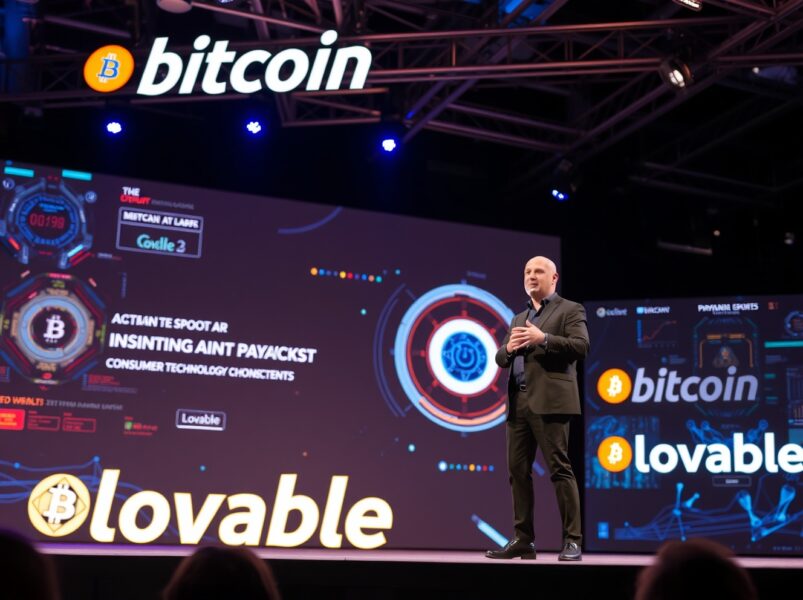
BitcoinWorld Lovable AI’s Astonishing Rise: Anton Osika Reveals Startup Secrets at Bitcoin World Disrupt 2025 Are you ready to witness a phenomenon? The world of technology is abuzz with the incredible rise of Lovable AI, a startup that’s not just breaking records but rewriting the rulebook for rapid growth. Imagine creating powerful apps and websites just by speaking to an AI – that’s the magic Lovable brings to the masses. This groundbreaking approach has propelled the company into the spotlight, making it one of the fastest-growing software firms in history. And now, the visionary behind this sensation, co-founder and CEO Anton Osika, is set to share his invaluable insights on the Disrupt Stage at the highly anticipated Bitcoin World Disrupt 2025. If you’re a founder, investor, or tech enthusiast eager to understand the future of innovation, this is an event you cannot afford to miss. Lovable AI’s Meteoric Ascent: Redefining Software Creation In an era where digital transformation is paramount, Lovable AI has emerged as a true game-changer. Its core premise is deceptively simple yet profoundly impactful: democratize software creation. By enabling anyone to build applications and websites through intuitive AI conversations, Lovable is empowering the vast majority of individuals who lack coding skills to transform their ideas into tangible digital products. This mission has resonated globally, leading to unprecedented momentum. The numbers speak for themselves: Achieved an astonishing $100 million Annual Recurring Revenue (ARR) in less than a year. Successfully raised a $200 million Series A funding round, valuing the company at $1.8 billion, led by industry giant Accel. Is currently fielding unsolicited investor offers, pushing its valuation towards an incredible $4 billion. As industry reports suggest, investors are unequivocally “loving Lovable,” and it’s clear why. This isn’t just about impressive financial metrics; it’s about a company that has tapped into a fundamental need, offering a solution that is both innovative and accessible. The rapid scaling of Lovable AI provides a compelling case study for any entrepreneur aiming for similar exponential growth. The Visionary Behind the Hype: Anton Osika’s Journey to Innovation Every groundbreaking company has a driving force, and for Lovable, that force is co-founder and CEO Anton Osika. His journey is as fascinating as his company’s success. A physicist by training, Osika previously contributed to the cutting-edge research at CERN, the European Organization for Nuclear Research. This deep technical background, combined with his entrepreneurial spirit, has been instrumental in Lovable’s rapid ascent. Before Lovable, he honed his skills as a co-founder of Depict.ai and a Founding Engineer at Sana. Based in Stockholm, Osika has masterfully steered Lovable from a nascent idea to a global phenomenon in record time. His leadership embodies a unique blend of profound technical understanding and a keen, consumer-first vision. At Bitcoin World Disrupt 2025, attendees will have the rare opportunity to hear directly from Osika about what it truly takes to build a brand that not only scales at an incredible pace in a fiercely competitive market but also adeptly manages the intense cultural conversations that inevitably accompany such swift and significant success. His insights will be crucial for anyone looking to understand the dynamics of high-growth tech leadership. Unpacking Consumer Tech Innovation at Bitcoin World Disrupt 2025 The 20th anniversary of Bitcoin World is set to be marked by a truly special event: Bitcoin World Disrupt 2025. From October 27–29, Moscone West in San Francisco will transform into the epicenter of innovation, gathering over 10,000 founders, investors, and tech leaders. It’s the ideal platform to explore the future of consumer tech innovation, and Anton Osika’s presence on the Disrupt Stage is a highlight. His session will delve into how Lovable is not just participating in but actively shaping the next wave of consumer-facing technologies. Why is this session particularly relevant for those interested in the future of consumer experiences? Osika’s discussion will go beyond the superficial, offering a deep dive into the strategies that have allowed Lovable to carve out a unique category in a market long thought to be saturated. Attendees will gain a front-row seat to understanding how to identify unmet consumer needs, leverage advanced AI to meet those needs, and build a product that captivates users globally. The event itself promises a rich tapestry of ideas and networking opportunities: For Founders: Sharpen your pitch and connect with potential investors. For Investors: Discover the next breakout startup poised for massive growth. For Innovators: Claim your spot at the forefront of technological advancements. The insights shared regarding consumer tech innovation at this event will be invaluable for anyone looking to navigate the complexities and capitalize on the opportunities within this dynamic sector. Mastering Startup Growth Strategies: A Blueprint for the Future Lovable’s journey isn’t just another startup success story; it’s a meticulously crafted blueprint for effective startup growth strategies in the modern era. Anton Osika’s experience offers a rare glimpse into the practicalities of scaling a business at breakneck speed while maintaining product integrity and managing external pressures. For entrepreneurs and aspiring tech leaders, his talk will serve as a masterclass in several critical areas: Strategy Focus Key Takeaways from Lovable’s Journey Rapid Scaling How to build infrastructure and teams that support exponential user and revenue growth without compromising quality. Product-Market Fit Identifying a significant, underserved market (the 99% who can’t code) and developing a truly innovative solution (AI-powered app creation). Investor Relations Balancing intense investor interest and pressure with a steadfast focus on product development and long-term vision. Category Creation Carving out an entirely new niche by democratizing complex technologies, rather than competing in existing crowded markets. Understanding these startup growth strategies is essential for anyone aiming to build a resilient and impactful consumer experience. Osika’s session will provide actionable insights into how to replicate elements of Lovable’s success, offering guidance on navigating challenges from product development to market penetration and investor management. Conclusion: Seize the Future of Tech The story of Lovable, under the astute leadership of Anton Osika, is a testament to the power of innovative ideas meeting flawless execution. Their remarkable journey from concept to a multi-billion-dollar valuation in record time is a compelling narrative for anyone interested in the future of technology. By democratizing software creation through Lovable AI, they are not just building a company; they are fostering a new generation of creators. His appearance at Bitcoin World Disrupt 2025 is an unmissable opportunity to gain direct insights from a leader who is truly shaping the landscape of consumer tech innovation. Don’t miss this chance to learn about cutting-edge startup growth strategies and secure your front-row seat to the future. Register now and save up to $668 before Regular Bird rates end on September 26. To learn more about the latest AI market trends, explore our article on key developments shaping AI features. This post Lovable AI’s Astonishing Rise: Anton Osika Reveals Startup Secrets at Bitcoin World Disrupt 2025 first appeared on BitcoinWorld.


Condividi
Coinstats2025/09/17 23:40
How to Check Your SASSA SRD Grant Status in 2025 (Complete Guide for Applicants)

How to Check Your SASSA SRD Grant Status in 2025 (Complete Guide for Applicants)

The Social Relief of Distress (SRD) grant has become a vital financial support system for millions of South Africans. Managed by the South African Social Security
Condividi
Techbullion2026/04/08 13:08

$30,000 in PRL + 15,000 USDT

$30,000 in PRL + 15,000 USDT$30,000 in PRL + 15,000 USDT

Deposit & trade PRL to boost your rewards!
