BitcoinWorld US CBDC Blocked: Crucial House Vote Halts Federal Digital Dollar Development The digital currency landscape in the United States just took a significant turn. Lawmakers in the U.S. House of Representatives have made a decisive move regarding the potential for a US CBDC, signaling a strong legislative stance that could redefine America’s financial future. This development is crucial for anyone interested in the intersection of technology, finance, and government policy. What’s Happening with the US CBDC in Congress? The U.S. House recently added a crucial provision to the National Defense Authorization Act (NDAA), a bill that historically passes without much debate. This amendment directly aims to prevent the Federal Reserve from developing or launching a US CBDC. According to reports from Cointelegraph, this strategic placement within a “must-pass” bill significantly boosts the measure’s chances of becoming law. It’s a clear signal from a segment of Congress about their reservations regarding a government-backed digital dollar. This isn’t just about slowing down; it’s about outright preventing the Federal Reserve from engaging in any activities related to a central bank digital currency. Why the Pushback Against a US CBDC? This latest legislative action reflects growing concerns among some lawmakers about the implications of a central bank digital currency. The amendment goes further than just preventing a launch; it blocks the Fed from even testing, studying, developing, creating, or implementing a US CBDC. Key concerns driving this legislative push include: Privacy Concerns: Many fear a CBDC could lead to increased government surveillance over citizens’ financial transactions, eroding personal financial privacy. Government Control: There are worries that a CBDC could give the government unprecedented control over individual spending, potentially allowing for programmatic restrictions. Economic Impact: Critics also question the potential impact on commercial banks, the broader financial system, and the role of private innovation. These points highlight the ideological battle shaping the future of digital finance in the U.S. An Important Exception: Stablecoins and the Future of Digital Dollars Interestingly, while blocking a government-issued US CBDC, the amendment includes a vital exception. It specifically permits U.S. dollar-pegged stablecoins, provided they are “open, permissionless, and private.” This distinction is crucial for understanding the nuanced approach Congress is taking. Stablecoins are privately issued digital assets designed to maintain a stable value relative to a fiat currency, like the U.S. dollar. This exception suggests that while Congress is wary of a Fed-issued digital currency, they may be open to private sector innovation in digital assets, particularly those that uphold principles of openness and privacy. This stance aligns with a desire to foster innovation without perceived government overreach into individual financial lives. What’s Next for the Anti-CBDC Movement? This isn’t the first time the House has acted on this issue. Earlier in July, the Republican-led Anti-CBDC Surveillance State Act narrowly passed the House. However, its path in the Senate remains uncertain. The inclusion of this new provision in the NDAA offers a different, potentially more direct, route to legislate against a US CBDC. The “must-pass” nature of the defense bill means the Senate will have to contend with this amendment. The debate over digital currency’s role in the U.S. financial system is clearly far from over, with significant implications for consumers, businesses, and the future of money itself. The legislative process is often complex, but this move undeniably elevates the discussion and brings the issue to the forefront of national policy. Conclusion: A Landmark Stance on US CBDC Development The U.S. House’s recent move to embed an anti-US CBDC measure within the National Defense Authorization Act marks a pivotal moment in the ongoing debate surrounding central bank digital currencies. By preventing the Federal Reserve from developing a digital dollar, while simultaneously making an allowance for private, permissionless, and private stablecoins, Congress is drawing a clear line. This action underscores deep-seated concerns about privacy, government oversight, and the fundamental structure of the nation’s financial future. As this critical legislation moves forward, the eyes of the digital currency world will be watching closely to see how this crucial decision shapes the landscape of money in America. Frequently Asked Questions (FAQs) 1. What is a Central Bank Digital Currency (CBDC)? A CBDC is a digital form of a country’s fiat currency, issued and backed by its central bank. Unlike cryptocurrencies, it would be centralized and controlled by the government. 2. Why is the U.S. House against a US CBDC? Many lawmakers express concerns over privacy, potential government surveillance, and the expansion of government control over individual financial transactions that a US CBDC might enable. 3. What is the National Defense Authorization Act (NDAA)? The NDAA is a series of U.S. federal laws specifying the annual budget and expenditures of the U.S. Department of Defense. It’s considered a “must-pass” bill, making it a common vehicle for unrelated legislative amendments. 4. How do stablecoins differ from a US CBDC in this context? While a US CBDC would be issued by the Federal Reserve, stablecoins are privately issued digital assets pegged to the U.S. dollar. The House’s amendment permits “open, permissionless, and private” stablecoins, distinguishing them from a government-controlled digital currency. 5. What happens next with this anti-CBDC measure? Since the provision is part of the NDAA, it will move to the Senate for consideration. If the NDAA passes with this amendment intact, it will become law, effectively blocking the Federal Reserve’s ability to develop a US CBDC. If you found this article insightful, consider sharing it with your network! Stay informed about critical developments shaping the future of digital finance by spreading the word. To learn more about the latest crypto market trends, explore our article on key developments shaping digital currencies institutional adoption. This post US CBDC Blocked: Crucial House Vote Halts Federal Digital Dollar Development first appeared on BitcoinWorld and is written by Editorial TeamBitcoinWorld US CBDC Blocked: Crucial House Vote Halts Federal Digital Dollar Development The digital currency landscape in the United States just took a significant turn. Lawmakers in the U.S. House of Representatives have made a decisive move regarding the potential for a US CBDC, signaling a strong legislative stance that could redefine America’s financial future. This development is crucial for anyone interested in the intersection of technology, finance, and government policy. What’s Happening with the US CBDC in Congress? The U.S. House recently added a crucial provision to the National Defense Authorization Act (NDAA), a bill that historically passes without much debate. This amendment directly aims to prevent the Federal Reserve from developing or launching a US CBDC. According to reports from Cointelegraph, this strategic placement within a “must-pass” bill significantly boosts the measure’s chances of becoming law. It’s a clear signal from a segment of Congress about their reservations regarding a government-backed digital dollar. This isn’t just about slowing down; it’s about outright preventing the Federal Reserve from engaging in any activities related to a central bank digital currency. Why the Pushback Against a US CBDC? This latest legislative action reflects growing concerns among some lawmakers about the implications of a central bank digital currency. The amendment goes further than just preventing a launch; it blocks the Fed from even testing, studying, developing, creating, or implementing a US CBDC. Key concerns driving this legislative push include: Privacy Concerns: Many fear a CBDC could lead to increased government surveillance over citizens’ financial transactions, eroding personal financial privacy. Government Control: There are worries that a CBDC could give the government unprecedented control over individual spending, potentially allowing for programmatic restrictions. Economic Impact: Critics also question the potential impact on commercial banks, the broader financial system, and the role of private innovation. These points highlight the ideological battle shaping the future of digital finance in the U.S. An Important Exception: Stablecoins and the Future of Digital Dollars Interestingly, while blocking a government-issued US CBDC, the amendment includes a vital exception. It specifically permits U.S. dollar-pegged stablecoins, provided they are “open, permissionless, and private.” This distinction is crucial for understanding the nuanced approach Congress is taking. Stablecoins are privately issued digital assets designed to maintain a stable value relative to a fiat currency, like the U.S. dollar. This exception suggests that while Congress is wary of a Fed-issued digital currency, they may be open to private sector innovation in digital assets, particularly those that uphold principles of openness and privacy. This stance aligns with a desire to foster innovation without perceived government overreach into individual financial lives. What’s Next for the Anti-CBDC Movement? This isn’t the first time the House has acted on this issue. Earlier in July, the Republican-led Anti-CBDC Surveillance State Act narrowly passed the House. However, its path in the Senate remains uncertain. The inclusion of this new provision in the NDAA offers a different, potentially more direct, route to legislate against a US CBDC. The “must-pass” nature of the defense bill means the Senate will have to contend with this amendment. The debate over digital currency’s role in the U.S. financial system is clearly far from over, with significant implications for consumers, businesses, and the future of money itself. The legislative process is often complex, but this move undeniably elevates the discussion and brings the issue to the forefront of national policy. Conclusion: A Landmark Stance on US CBDC Development The U.S. House’s recent move to embed an anti-US CBDC measure within the National Defense Authorization Act marks a pivotal moment in the ongoing debate surrounding central bank digital currencies. By preventing the Federal Reserve from developing a digital dollar, while simultaneously making an allowance for private, permissionless, and private stablecoins, Congress is drawing a clear line. This action underscores deep-seated concerns about privacy, government oversight, and the fundamental structure of the nation’s financial future. As this critical legislation moves forward, the eyes of the digital currency world will be watching closely to see how this crucial decision shapes the landscape of money in America. Frequently Asked Questions (FAQs) 1. What is a Central Bank Digital Currency (CBDC)? A CBDC is a digital form of a country’s fiat currency, issued and backed by its central bank. Unlike cryptocurrencies, it would be centralized and controlled by the government. 2. Why is the U.S. House against a US CBDC? Many lawmakers express concerns over privacy, potential government surveillance, and the expansion of government control over individual financial transactions that a US CBDC might enable. 3. What is the National Defense Authorization Act (NDAA)? The NDAA is a series of U.S. federal laws specifying the annual budget and expenditures of the U.S. Department of Defense. It’s considered a “must-pass” bill, making it a common vehicle for unrelated legislative amendments. 4. How do stablecoins differ from a US CBDC in this context? While a US CBDC would be issued by the Federal Reserve, stablecoins are privately issued digital assets pegged to the U.S. dollar. The House’s amendment permits “open, permissionless, and private” stablecoins, distinguishing them from a government-controlled digital currency. 5. What happens next with this anti-CBDC measure? Since the provision is part of the NDAA, it will move to the Senate for consideration. If the NDAA passes with this amendment intact, it will become law, effectively blocking the Federal Reserve’s ability to develop a US CBDC. If you found this article insightful, consider sharing it with your network! Stay informed about critical developments shaping the future of digital finance by spreading the word. To learn more about the latest crypto market trends, explore our article on key developments shaping digital currencies institutional adoption. This post US CBDC Blocked: Crucial House Vote Halts Federal Digital Dollar Development first appeared on BitcoinWorld and is written by Editorial Team

US CBDC Blocked: Crucial House Vote Halts Federal Digital Dollar Development

2025/08/22 12:25
5 min di lettura
Per feedback o dubbi su questo contenuto, contattateci all'indirizzo crypto.news@mexc.com.

BitcoinWorld

US CBDC Blocked: Crucial House Vote Halts Federal Digital Dollar Development

The digital currency landscape in the United States just took a significant turn. Lawmakers in the U.S. House of Representatives have made a decisive move regarding the potential for a US CBDC, signaling a strong legislative stance that could redefine America’s financial future. This development is crucial for anyone interested in the intersection of technology, finance, and government policy.

What’s Happening with the US CBDC in Congress?

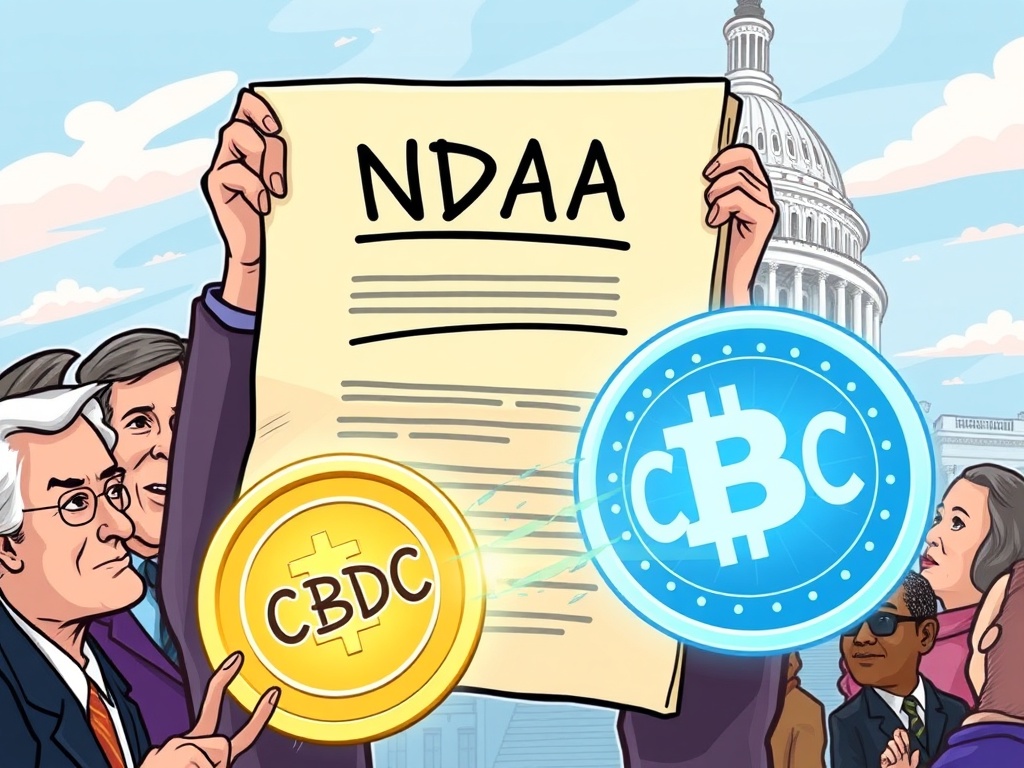
The U.S. House recently added a crucial provision to the National Defense Authorization Act (NDAA), a bill that historically passes without much debate. This amendment directly aims to prevent the Federal Reserve from developing or launching a US CBDC. According to reports from Cointelegraph, this strategic placement within a “must-pass” bill significantly boosts the measure’s chances of becoming law.

It’s a clear signal from a segment of Congress about their reservations regarding a government-backed digital dollar. This isn’t just about slowing down; it’s about outright preventing the Federal Reserve from engaging in any activities related to a central bank digital currency.

Why the Pushback Against a US CBDC?

This latest legislative action reflects growing concerns among some lawmakers about the implications of a central bank digital currency. The amendment goes further than just preventing a launch; it blocks the Fed from even testing, studying, developing, creating, or implementing a US CBDC.

Key concerns driving this legislative push include:

  • Privacy Concerns: Many fear a CBDC could lead to increased government surveillance over citizens’ financial transactions, eroding personal financial privacy.
  • Government Control: There are worries that a CBDC could give the government unprecedented control over individual spending, potentially allowing for programmatic restrictions.
  • Economic Impact: Critics also question the potential impact on commercial banks, the broader financial system, and the role of private innovation.

These points highlight the ideological battle shaping the future of digital finance in the U.S.

An Important Exception: Stablecoins and the Future of Digital Dollars

Interestingly, while blocking a government-issued US CBDC, the amendment includes a vital exception. It specifically permits U.S. dollar-pegged stablecoins, provided they are “open, permissionless, and private.” This distinction is crucial for understanding the nuanced approach Congress is taking.

Stablecoins are privately issued digital assets designed to maintain a stable value relative to a fiat currency, like the U.S. dollar. This exception suggests that while Congress is wary of a Fed-issued digital currency, they may be open to private sector innovation in digital assets, particularly those that uphold principles of openness and privacy. This stance aligns with a desire to foster innovation without perceived government overreach into individual financial lives.

What’s Next for the Anti-CBDC Movement?

This isn’t the first time the House has acted on this issue. Earlier in July, the Republican-led Anti-CBDC Surveillance State Act narrowly passed the House. However, its path in the Senate remains uncertain. The inclusion of this new provision in the NDAA offers a different, potentially more direct, route to legislate against a US CBDC.

The “must-pass” nature of the defense bill means the Senate will have to contend with this amendment. The debate over digital currency’s role in the U.S. financial system is clearly far from over, with significant implications for consumers, businesses, and the future of money itself. The legislative process is often complex, but this move undeniably elevates the discussion and brings the issue to the forefront of national policy.

Conclusion: A Landmark Stance on US CBDC Development

The U.S. House’s recent move to embed an anti-US CBDC measure within the National Defense Authorization Act marks a pivotal moment in the ongoing debate surrounding central bank digital currencies. By preventing the Federal Reserve from developing a digital dollar, while simultaneously making an allowance for private, permissionless, and private stablecoins, Congress is drawing a clear line.

This action underscores deep-seated concerns about privacy, government oversight, and the fundamental structure of the nation’s financial future. As this critical legislation moves forward, the eyes of the digital currency world will be watching closely to see how this crucial decision shapes the landscape of money in America.

Frequently Asked Questions (FAQs)

1. What is a Central Bank Digital Currency (CBDC)?

A CBDC is a digital form of a country’s fiat currency, issued and backed by its central bank. Unlike cryptocurrencies, it would be centralized and controlled by the government.

2. Why is the U.S. House against a US CBDC?

Many lawmakers express concerns over privacy, potential government surveillance, and the expansion of government control over individual financial transactions that a US CBDC might enable.

3. What is the National Defense Authorization Act (NDAA)?

The NDAA is a series of U.S. federal laws specifying the annual budget and expenditures of the U.S. Department of Defense. It’s considered a “must-pass” bill, making it a common vehicle for unrelated legislative amendments.

4. How do stablecoins differ from a US CBDC in this context?

While a US CBDC would be issued by the Federal Reserve, stablecoins are privately issued digital assets pegged to the U.S. dollar. The House’s amendment permits “open, permissionless, and private” stablecoins, distinguishing them from a government-controlled digital currency.

5. What happens next with this anti-CBDC measure?

Since the provision is part of the NDAA, it will move to the Senate for consideration. If the NDAA passes with this amendment intact, it will become law, effectively blocking the Federal Reserve’s ability to develop a US CBDC.

If you found this article insightful, consider sharing it with your network! Stay informed about critical developments shaping the future of digital finance by spreading the word.

To learn more about the latest crypto market trends, explore our article on key developments shaping digital currencies institutional adoption.

This post US CBDC Blocked: Crucial House Vote Halts Federal Digital Dollar Development first appeared on BitcoinWorld and is written by Editorial Team

Opportunità di mercato
Logo Threshold
Valore Threshold (T)
$0.006711
$0.006711$0.006711
+3.11%
USD
Grafico dei prezzi in tempo reale di Threshold (T)
Disclaimer: gli articoli ripubblicati su questo sito provengono da piattaforme pubbliche e sono forniti esclusivamente a scopo informativo. Non riflettono necessariamente le opinioni di MEXC. Tutti i diritti rimangono agli autori originali. Se ritieni che un contenuto violi i diritti di terze parti, contatta crypto.news@mexc.com per la rimozione. MEXC non fornisce alcuna garanzia in merito all'accuratezza, completezza o tempestività del contenuto e non è responsabile per eventuali azioni intraprese sulla base delle informazioni fornite. Il contenuto non costituisce consulenza finanziaria, legale o professionale di altro tipo, né deve essere considerato una raccomandazione o un'approvazione da parte di MEXC.

Potrebbe anche piacerti

XRP Price Holds $1.44 as Crypto Fund Outflows Hit $1.9B and Pepeto Draws Capital

XRP Price Holds $1.44 as Crypto Fund Outflows Hit $1.9B and Pepeto Draws Capital

Crypto investment funds recorded $1.9 billion in weekly outflows as institutional investors took profits and reduced risk exposure following the FOMC decision.
Condividi
Techbullion2026/03/20 08:13
CME Group to Launch Solana and XRP Futures Options

CME Group to Launch Solana and XRP Futures Options

The post CME Group to Launch Solana and XRP Futures Options appeared on BitcoinEthereumNews.com. An announcement was made by CME Group, the largest derivatives exchanger worldwide, revealed that it would introduce options for Solana and XRP futures. It is the latest addition to CME crypto derivatives as institutions and retail investors increase their demand for Solana and XRP. CME Expands Crypto Offerings With Solana and XRP Options Launch According to a press release, the launch is scheduled for October 13, 2025, pending regulatory approval. The new products will allow traders to access options on Solana, Micro Solana, XRP, and Micro XRP futures. Expiries will be offered on business days on a monthly, and quarterly basis to provide more flexibility to market players. CME Group said the contracts are designed to meet demand from institutions, hedge funds, and active retail traders. According to Giovanni Vicioso, the launch reflects high liquidity in Solana and XRP futures. Vicioso is the Global Head of Cryptocurrency Products for the CME Group. He noted that the new contracts will provide additional tools for risk management and exposure strategies. Recently, CME XRP futures registered record open interest amid ETF approval optimism, reinforcing confidence in contract demand. Cumberland, one of the leading liquidity providers, welcomed the development and said it highlights the shift beyond Bitcoin and Ethereum. FalconX, another trading firm, added that rising digital asset treasuries are increasing the need for hedging tools on alternative tokens like Solana and XRP. High Record Trading Volumes Demand Solana and XRP Futures Solana futures and XRP continue to gain popularity since their launch earlier this year. According to CME official records, many have bought and sold more than 540,000 Solana futures contracts since March. A value that amounts to over $22 billion dollars. Solana contracts hit a record 9,000 contracts in August, worth $437 million. Open interest also set a record at 12,500 contracts.…
Condividi
BitcoinEthereumNews2025/09/18 01:39
Next Dogecoin: PEPE Cofounder Builds Real Value With Exchange Fee Revenue

Next Dogecoin: PEPE Cofounder Builds Real Value With Exchange Fee Revenue

Shiba Inu declined over 60% in 2025 despite launching Shibarium Layer 2 with DeFi capabilities, proving that even meme tokens with real utility tools cannot sustain
Condividi
Techbullion2026/03/20 08:43