

Powering energy prosperity: Balancing ambition with affordability for Filipinos
Editor’s note: This article was authored by Ruth Yu-Owen, Energy Committee chair of the European Chamber of Commerce of the Philippines (ECCP), in partnership with AboitizPower and the ECCP. It was handled by BrandRap, Rappler’s sales and marketing arm. No member of the news and editorial team participated in the publishing of this piece.
I am honored to have received the inaugural Women in Renewable Energy award at the Department of Energy (DOE) Sustainability Awards 2025. While this accolade recognizes leadership and technical innovation, I view it primarily as a testament to the “Solar Nanays” – the brave women climbing roofs to master new technologies and build a more secure future for their families and our country.
This recognition reinforces a core conviction central to our recent three-part roundtable series, “Powering Up: Future-proofing the Philippine energy mix” – our energy transition must be inclusive, technically robust, and, above all, affordable.
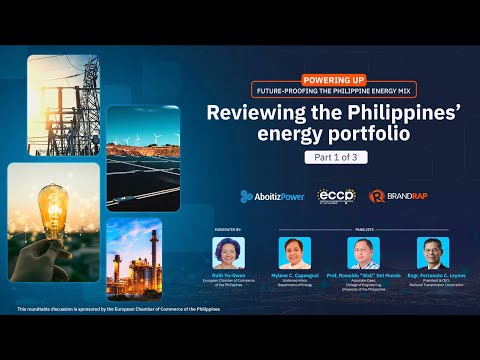
As we navigate the Philippine Energy Plan targets – 35% renewable energy share by 2030 and over 50% by 2040 – we must acknowledge that a diverse portfolio of technologies is our strongest asset. My experience has shown that a diverse set of technologies can create dependable systems with transformative effects on communities.
For instance, the Balesin Island Solar and Battery Storage project, featuring a 4.1 MW Solar Farm and a 5.5 MW Battery Energy Storage System, serves as a living proof-of-concept for achieving large-scale, sustainable off-grid power that replaces expensive diesel generators.
Choosing our energy future is like planting a national orchard. We should lean heavily on the “trees” we know how to grow and harvest affordably, like solar and onshore wind, which are already bearing fruit. These technologies have undergone a decades-long “ripening” process to reach the affordability we enjoy today.
As Professor Rowaldo “Wali” del Mundo recalled, when they were pioneering solar in the 1990s, the cost was a staggering $20 per 1 square centimeter, equivalent to 1 watt; today, that same quantity has commercialized to roughly $0.10 per watt, a price drop that was once unimaginable for grid integration.
Undersecretary Mylene Capongcol further illustrated this trajectory, noting that solar once cost P16 per kilowatt-hour under earlier Feed-In Tariff schemes but has since plummeted to competitive rates of P4 or P5 per kilowatt-hour. Overall, the cost of solar PV modules has declined by up to 90% since 2010.
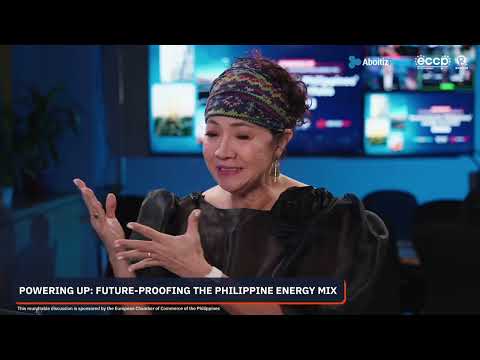
While we nurture these mature “trees,” we must be cautious of rare, exotic varieties like offshore wind. While it promises a massive harvest – theoretically enough to power the entire country – it currently requires a prohibitively expensive irrigation system. As the panel discussed, offshore wind is laden with uncertainties and high price tags.
The primary hurdle is the infrastructure: submarine cables are the most expensive network infrastructure in the world, and we must also invest heavily in ports to handle massive turbine blades. Some analysts suggest we should observe the global trajectory for another 5 to 10 years before full-scale adoption to avoid the “early adopter” tax, allowing the technology to reach the same economies of scale that made solar affordable.
Ultimately, government signals and policy directions are vital to how the country’s energy system will develop. However, these directions should not veer away from the imperative of delivering reliable, affordable, and resilient power systems that will fuel the prosperity of Filipinos.
There is no single solution for all cases. Because our nation is an archipelago of over 7,000 islands, we must embrace a basket of solutions to suit different situations, ranging from massive grid-connected projects to independent, stand-alone systems that ensure even the most remote communities are not left in the dark.
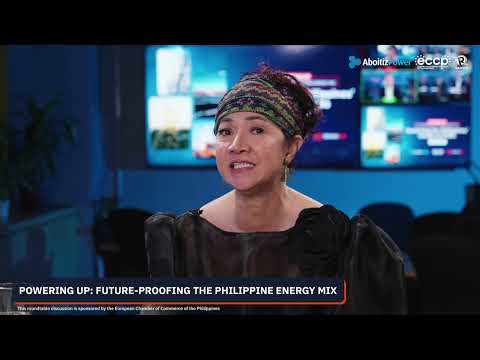
The Philippines needs more energy to fuel its growth, but we must pursue this course pragmatically and practically. By keeping energy security and affordability front and center, we can build an energy system that delivers reliable power now and in the years to come. Only through critical, data-driven, and well-thought-out technology choices can we enable the true prosperity of all Filipinos, ensuring that our green transition is as equitable as it is ambitious. – Rappler.com
.
Potrebbe anche piacerti

Is Hyperliquid the new frontier for innovation?

Why More Startups Are Automating Their HR Processes in 2025
