

Dolce & Gabbana USA cleared in $25m DGFamily NFT lawsuit
Italian luxury brand Dolce & Gabbana has secured a crucial win in a class-action lawsuit that alleges the brand failed to deliver promised benefits tied to its $25 million DGFamily NFT project.
Court documents published on July 11 reveal that a New York federal judge has dismissed the case against Dolce & Gabbana USA Inc., the only US-based defendant in the suit, effectively weakening the broader action brought by plaintiff Luke Brown.
The court found insufficient grounds to hold the American subsidiary liable for the alleged actions of its Italian parent company.
The lawsuit, originally filed in May 2024 and amended in September, accuses Dolce & Gabbana and its Dubai-based partner UNXD of selling high-value NFTs under the “DGFamily” brand without fulfilling the associated perks.
These included exclusive digital fashion items, physical merchandise, and access to events, which were supposed to be delivered quarterly over two years.
According to the complaint, the NFTs were delayed, partially delivered, or never fulfilled, causing customers to lose significant value, up to 97% in some cases.
Brown, who claims to have lost $5,800 on the purchase of a DGFamily NFT, filed the suit on behalf of a putative class, arguing that both Dolce & Gabbana USA and Dolce & Gabbana SRL operated as a joint entity.
The complaint also named UNXD and Bluebear Italia SRL, the creator of a separate NFT collection called “inBetweeners,” allegedly linked to the broader promotional scheme, but neither of these foreign defendants has been served to date.
In its ruling, the court concluded that Dolce & Gabbana USA could not be treated as the “alter ego” of its Italian parent.
Despite allegations of shared executives, overlapping personnel, and common branding, Judge Naomi Reice Buchwald held that the complaint lacked specific facts showing that the US entity had direct involvement in the NFT project or was dominated to such an extent that it should be held liable for the parent’s actions.
The court rejected the plaintiff’s argument that general overlap in staffing or office use was enough to establish complete domination or fraud.
“Overlapping ownership and personnel alone cannot establish an alter ego relationship,” the judge wrote, citing precedent.
Dolce & Gabbana USA moved to dismiss the case in January 2025, maintaining that it was a separate legal entity uninvolved in the marketing, sale, or development of the DGFamily NFTs.
The company denied forming any joint venture with UNXD or participating in the project’s execution, and has argued that the NFT initiative originated and was managed entirely by Dolce & Gabbana SRL and its international collaborators.
With the dismissal of Dolce & Gabbana USA, the future of the class-action suit remains uncertain.
A number of high-profile NFT cases have wrapped up in the U.S. since the start of 2025.
In January, DraftKings reached a settlement with the NFL Players Association over NFTs featuring player likenesses, ending claims of unfulfilled obligations under their 2021 fantasy‑sports agreement.
Later, in April, Shaquille O’Neal agreed to an $11 million settlement in a class action concerning his promotion of the Solana‑based “Astrals” NFT project.
Potrebbe anche piacerti

Tether Backs Ark Labs’ $5.2 Million Bet on Bitcoin’s Stablecoin Revival
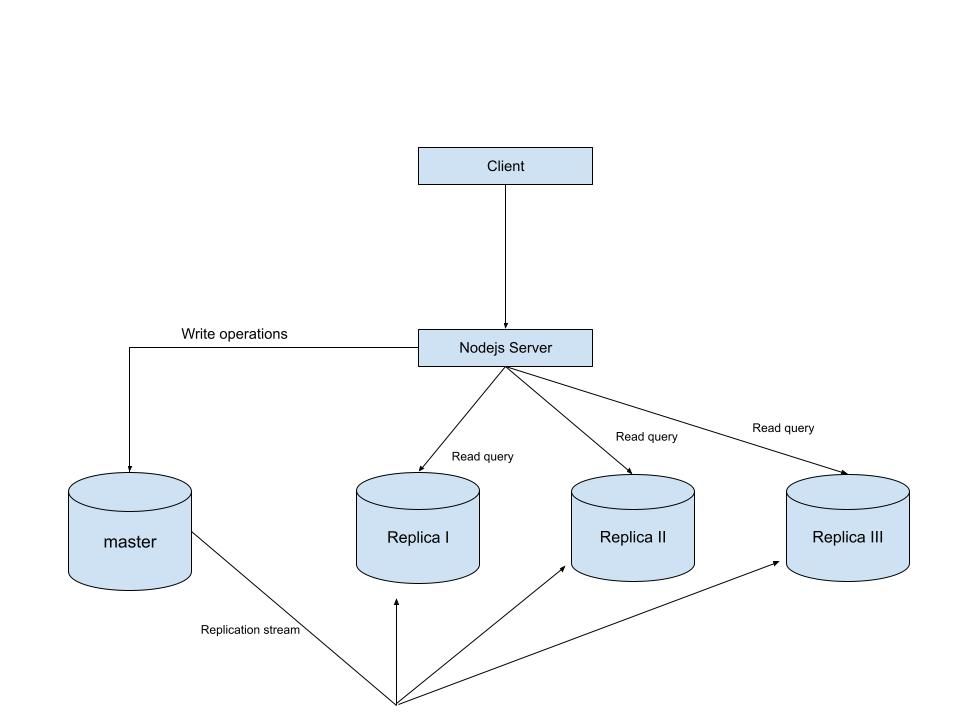
MySQL Single Leader Replication with Node.js and Docker
command: --server-id=1 --log-bin=ON The --server-id option gives each MySQL server in your replication setup its own name tag. Each one has to be unique and without it, replication won’t work at all. Another cool option not included here is binlog_format=ROW. This tells MySQL how to keep track of changes before passing them along to the replicas. By default, MySQL already uses row-based replication, but you can explicitly set it to ROW to be sure or switch it to STATEMENT if you’d rather log the actual SQL statements instead of row-by-row changes. \ Run our containers on docker Now, in the terminal, we can run the following command to spin up our database containers: docker-compose up -d \ Setting Up Our Master (Primary) Server To configure our master server, we would have to first access the running instance on docker using the following command docker exec -it mysql-master bash This command opens an interactive Bash shell inside the running Docker container named mysql-master, allowing us to run commands directly inside that container. \ Now that we’re inside the container, we can access the MySQL server and start running commands. type: mysql -uroot -p This will log you into MySQL as the root user. You’ll be prompted to enter the password you set in your docker-compose.yml file. \ Next, we need to create a special user that our replicas will use to connect to the master server and pull data. Inside the MySQL prompt, run the following commands: \ CREATE USER 'repl_user'@'%' IDENTIFIED BY 'replication_pass'; GRANT REPLICATION SLAVE ON . TO 'repl_user'@'%'; FLUSH PRIVILEGES; Here’s what’s happening: CREATE USER makes a new MySQL user called repl_user with the password replication_pass. GRANT REPLICATION SLAVE gives this user permission to act as a replication client. FLUSH PRIVILEGES tells MySQL to reload the user permissions so they take effect immediately. \ Time to Configure the Replica (Secondary) Servers a. First, let’s access the replica containers the same way we did with the master. Run this command in your terminal for each of the replica containers: \ docker exec -it <replica_container_name> bash mysql -uroot -p <replica_container_name> should be replace with the name of the replica container you are trying to setup b. Now it’s time to tell our replica where to get its data from. While inside the replica’s MySQL shell, run the following command to configure replication using the master’s details: CHANGE REPLICATION SOURCE TO SOURCE_HOST='mysql-master', SOURCE_USER='repl_user', SOURCE_PASSWORD='replication_pass', GET_SOURCE_PUBLIC_KEY=1; With the replication settings in place, let’s fire up the replica and get it syncing with the master. Still inside the MySQL shell on the replica, run: START REPLICA; This starts the replication process. To make sure everything is working, check the replica’s status with:
SHOW REPLICA STATUS\G; Look for Replica_IO_Running and Replica_SQL_Running — if both say Yes, congratulations! 🎉 Your replica is now successfully connected to the master and replicating data in real time.
Testing Our Replication Setup from the Node.js App Now that our replication is successfully set up, we can configure our Node.js server to observe the real-time effect of data being replicated from the master server to the replica server whenever we write to it. We start by installing the following dependencies:
npm i express mysql2 sequelize \ Now create a folder called src in the root directory and add the following files inside that folder connection.js, index.js and model.js. Our current directory should look like this We can now set up our connections to our master and replica server in the connection.js file as shown below
const Sequelize = require("sequelize"); const sequelize = new Sequelize({ dialect: "mysql", replication: { write: { host: "127.0.0.1", username: "root", password: "master", database: "replicaDb", }, read: [ { host: "127.0.0.1", username: "root", password: "slave", database: "replicaDb", port: 3307 }, { host: "127.0.0.1", username: "root", password: "slave", database: "replicaDb", port: 3308 }, { host: "127.0.0.1", username: "root", password: "slave", database: "replicaDb", port: 3309 }, ], }, }); async function connectdb() { try { await sequelize.authenticate(); } catch (error) { console.error("❌ unable to connect to the follower database", error); } } connectdb(); module.exports = { sequelize, }; \ We can now create a User table in the model.js file
const {DataTypes} = require("sequelize"); const { sequelize } = require("./connection"); const User = sequelize.define("User", { name: { type: DataTypes.STRING, allowNull: false, }, email: { type: DataTypes.STRING, unique: true, allowNull: false, }, }); module.exports = User \ and finally in our index.js file we can start our server and listen for connections on port 3000. from the code sample below, all inserts or updates will be routed by sequelize to the master server. while all read queries will be routed to the read replicas.
const express = require("express"); const { sequelize } = require("./connection"); const User = require("./model"); const app = express(); app.use(express.json()); async function main() { await sequelize.sync({ alter: true }); app.get("/", (req, res) => { res.status(200).json({ message: "first step to setting server up", }); }); app.post("/user", async (req, res) => { const { email, name } = req.body; let newUser = await User.build({ name, email, }); // This INSERT will go to the write (master) connection newUser = newUser.save({ returning: false }); res.status(201).json({ message: "User successfully created", }); }); app.get("/user", async (req, res) => { // This SELECT query will go to one of the read replicas const users = await User.findAll(); res.status(200).json(users); }); app.listen(3000, () => { console.log("server has connected"); }); } main(); When you make a POST request to the /users endpoint, take a moment to check both the master and replica servers to observe how data is replicated in real time. Right now, we are relying on Sequelize to automatically route requests, which works for development but isn’t robust enough for a production environment. In particular, if the master node goes down, Sequelize cannot automatically redirect requests to a newly elected leader. In the next part of this series, we’ll explore strategies to handle these challenges
