Artificial intelligence (AI) has crossed a meaningful threshold in learning and organizational development. In 2025, AI progressed from producing content to participatingArtificial intelligence (AI) has crossed a meaningful threshold in learning and organizational development. In 2025, AI progressed from producing content to participating

Why Human Readiness Will Define the Next Wave of AI Innovation

2026/01/10 06:14
4 min di lettura
Per feedback o dubbi su questo contenuto, contattateci all'indirizzo crypto.news@mexc.com.

Artificial intelligence (AI) has crossed a meaningful threshold in learning and organizational development. In 2025, AI progressed from producing content to participating in learning as an active contributor by tutoring, coaching, and supporting individuals in real time. This evolution reshaped expectations for personalized learning, but it also revealed a deeper truth: technology is advancing faster than human systems, processes, and cultures can keep up. 

As we approach 2026, the most important breakthroughs in learning will not be technical. They will be human. The organizations that thrive will be those that invest in readiness, trust, culture, and the capacity for continuous adaptation. 

The Shift From Individual Coaching to Team-Level Intelligence 

In 2025, AI proved capable of providing individualized guidance at scale. Tools that once generated content transitioned into interactive tutors and adaptive coaches. But in 2026, AI’s role will broaden from serving individuals to augmenting teams. 

Emerging AI systems are beginning to interpret group dynamics, identify conversational patterns, and surface insights to improve collaboration. These capabilities suggest a future where AI acts as a facilitator in meetings, mediating discussions, highlighting blind spots, and helping teams reach alignment more efficiently. 

The implications are significant. Instead of simply optimizing personal learning pathways, organizations will explore how AI can strengthen collective intelligence; how groups think, create, and solve problems together. 

The value proposition shifts from productivity alone toward healthier, more equitable collaboration. AI may soon help ensure inclusive conversations, balanced participation, and psychologically safe environments. 

Modality Conversion Becomes a Commodity, Redirecting Innovation Toward Outcomes 

One of the milestones of 2025 was AI’s near-instant ability to convert content between formats: text to video, video to coaching prompts, coaching transcripts to curriculum. Generative models trained on multimodal data have accelerated this trend. 

In 2026, modality conversion will become ubiquitous and expected. Every piece of learning content will be fluid, transformable into any form without specialized production skills. 

This shift will have two major implications: 

  1. Content creation will no longer be the primary differentiator: If every organization can instantly produce videos, simulations, or scripts, the competitive advantage moves elsewhere. 
  2. Innovation will focus on meaning, behavior change, and experience design: The question becomes: Does the learning drive the desired outcome? Not: “How fast can we make it?” or “How pretty is the format?”. 

With the mechanics of content creation largely automated, the opportunity is to design learning that sparks reflection, motivation, and sustainable change. All areas where humans still offer irreplaceable insight. 

The Human Bottleneck: Why Readiness Will Determine AI Adoption 

The pace of AI innovation has outstripped organizations’ ability to absorb it. Many companies now have access to advanced models but lack the governance, skills, or cultural capacity to deploy them responsibly.  

In 2026, the bottleneck will become even more personal. Attention, cognitive load, and change fatigue will shape whether employees can effectively engage with AI in their work. 

Organizations must recognize that human capacity, such as energy, motivation, and clarity, will determine the outcomes of AI adoption more than any model or feature. 

Culture and Trust Will Outweigh Models and Tools 

As AI becomes more embedded in workflows, trust emerges as the linchpin of adoption. A growing body of research in human-computer interaction shows that people engage more effectively with AI when they understand its purpose, limits, and decision-making processes. 

In 2026, the maturity of an organization’s culture will be a greater predictor of success than its tech stack. Environments that encourage curiosity, experimentation, and continuous learning will be better positioned to integrate AI with minimal resistance. 

Investments in culture will become just as important as investments in platforms. Without trust, even the most advanced AI capabilities will remain underutilized. 

Motivation and Meaning Return to the Center of Learning Innovation 

As generative AI lowers the friction for creating and delivering learning experiences, the human drivers of development, such as purpose, relevance, and intrinsic motivation, will become the core differentiators. 

Behavioral science continues to demonstrate that people learn most effectively when they understand the why behind their growth and feel connected to the outcomes. In 2026, the organizations that succeed will integrate these insights into AI-powered learning journeys. 

The future of learning is not simply automated. It is adaptive, emotionally intelligent, and centered on human growth. 

What These Trends Mean for 2026 and Beyond 

The coming year will not be defined by breakthroughs in model performance or new enterprise tools. Instead, it will be defined by organizations’ ability to cultivate human readiness – mindsets, cultures, and capacities capable of integrating continuous waves of AI-driven change. 

AI will continue to accelerate. The question is not how fast the technology will go, but how ready humans will be to go with it. 

Opportunità di mercato
Logo null
Valore null (null)
--
----
USD
Grafico dei prezzi in tempo reale di null (null)
Disclaimer: gli articoli ripubblicati su questo sito provengono da piattaforme pubbliche e sono forniti esclusivamente a scopo informativo. Non riflettono necessariamente le opinioni di MEXC. Tutti i diritti rimangono agli autori originali. Se ritieni che un contenuto violi i diritti di terze parti, contatta crypto.news@mexc.com per la rimozione. MEXC non fornisce alcuna garanzia in merito all'accuratezza, completezza o tempestività del contenuto e non è responsabile per eventuali azioni intraprese sulla base delle informazioni fornite. Il contenuto non costituisce consulenza finanziaria, legale o professionale di altro tipo, né deve essere considerato una raccomandazione o un'approvazione da parte di MEXC.

Potrebbe anche piacerti

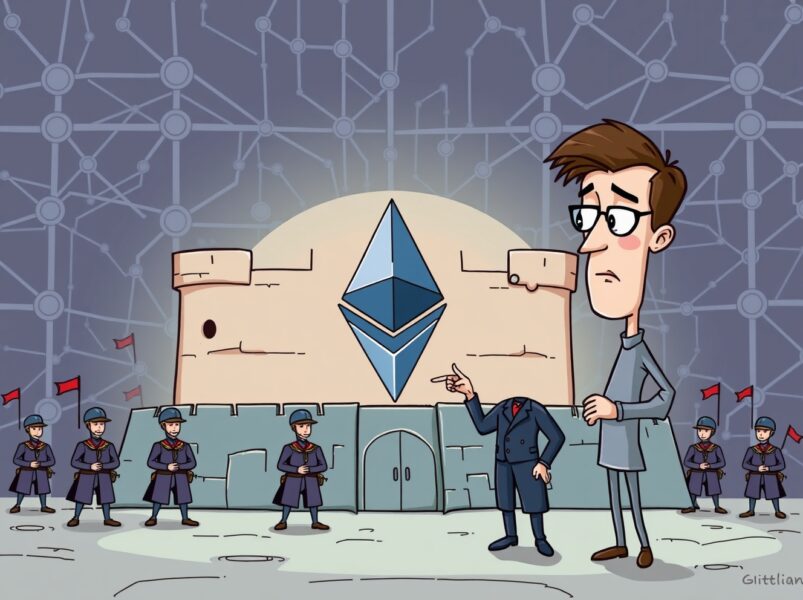
Crucial ETH Unstaking Period: Vitalik Buterin’s Unwavering Defense for Network Security

Crucial ETH Unstaking Period: Vitalik Buterin’s Unwavering Defense for Network Security

BitcoinWorld Crucial ETH Unstaking Period: Vitalik Buterin’s Unwavering Defense for Network Security Ever wondered why withdrawing your staked Ethereum (ETH) isn’t an instant process? It’s a question that often sparks debate within the crypto community. Ethereum founder Vitalik Buterin recently stepped forward to defend the network’s approximately 45-day ETH unstaking period, asserting its crucial role in safeguarding the network’s integrity. This lengthy waiting time, while sometimes seen as an inconvenience, is a deliberate design choice with profound implications for security. Why is the ETH Unstaking Period a Vital Security Measure? Vitalik Buterin’s defense comes amidst comparisons to other networks, like Solana, which boast significantly shorter unstaking times. He drew a compelling parallel to military operations, explaining that an army cannot function effectively if its soldiers can simply abandon their posts at a moment’s notice. Similarly, a blockchain network requires a stable and committed validator set to maintain its security. The current ETH unstaking period isn’t merely an arbitrary delay. It acts as a critical buffer, providing the network with sufficient time to detect and respond to potential malicious activities. If validators could instantly exit, it would open doors for sophisticated attacks, jeopardizing the entire system. Currently, Ethereum boasts over one million active validators, collectively staking approximately 35.6 million ETH, representing about 30% of the total supply. This massive commitment underpins the network’s robust security model, and the unstaking period helps preserve this stability. Network Security: Ethereum’s Paramount Concern A shorter ETH unstaking period might seem appealing for liquidity, but it introduces significant risks. Imagine a scenario where a large number of validators, potentially colluding, could quickly withdraw their stake after committing a malicious act. Without a substantial delay, the network would have limited time to penalize them or mitigate the damage. This “exit queue” mechanism is designed to prevent sudden validator exodus, which could lead to: Reduced decentralization: A rapid drop in active validators could concentrate power among fewer participants. Increased vulnerability to attacks: A smaller, less stable validator set is easier to compromise. Network instability: Frequent and unpredictable changes in validator numbers can lead to performance issues and consensus failures. Therefore, the extended period is not a bug; it’s a feature. It’s a calculated trade-off between immediate liquidity for stakers and the foundational security of the entire Ethereum ecosystem. Ethereum vs. Solana: Different Approaches to Unstaking When discussing the ETH unstaking period, many point to networks like Solana, which offers a much quicker two-day unstaking process. While this might seem like an advantage for stakers seeking rapid access to their funds, it reflects fundamental differences in network architecture and security philosophies. Solana’s design prioritizes speed and immediate liquidity, often relying on different consensus mechanisms and validator economics to manage security risks. Ethereum, on the other hand, with its proof-of-stake evolution from proof-of-work, has adopted a more cautious approach to ensure its transition and long-term stability are uncompromised. Each network makes design choices based on its unique goals and threat models. Ethereum’s substantial value and its role as a foundational layer for countless dApps necessitate an extremely robust security posture, making the current unstaking duration a deliberate and necessary component. What Does the ETH Unstaking Period Mean for Stakers? For individuals and institutions staking ETH, understanding the ETH unstaking period is crucial for managing expectations and investment strategies. It means that while staking offers attractive rewards, it also comes with a commitment to the network’s long-term health. Here are key considerations for stakers: Liquidity Planning: Stakers should view their staked ETH as a longer-term commitment, not immediately liquid capital. Risk Management: The delay inherently reduces the ability to react quickly to market volatility with staked assets. Network Contribution: By participating, stakers contribute directly to the security and decentralization of Ethereum, reinforcing its value proposition. While the current waiting period may not be “optimal” in every sense, as Buterin acknowledged, simply shortening it without addressing the underlying security implications would be a dangerous gamble for the network’s reliability. In conclusion, Vitalik Buterin’s defense of the lengthy ETH unstaking period underscores a fundamental principle: network security cannot be compromised for the sake of convenience. It is a vital mechanism that protects Ethereum’s integrity, ensuring its stability and trustworthiness as a leading blockchain platform. This deliberate design choice, while requiring patience from stakers, ultimately fortifies the entire ecosystem against potential threats, paving the way for a more secure and reliable decentralized future. Frequently Asked Questions (FAQs) Q1: What is the main reason for Ethereum’s long unstaking period? A1: The primary reason is network security. A lengthy ETH unstaking period prevents malicious actors from quickly withdrawing their stake after an attack, giving the network time to detect and penalize them, thus maintaining stability and integrity. Q2: How long is the current ETH unstaking period? A2: The current ETH unstaking period is approximately 45 days. This duration can fluctuate based on network conditions and the number of validators in the exit queue. Q3: How does Ethereum’s unstaking period compare to other blockchains? A3: Ethereum’s unstaking period is notably longer than some other networks, such as Solana, which has a two-day period. This difference reflects varying network architectures and security priorities. Q4: Does the unstaking period affect ETH stakers? A4: Yes, it means stakers need to plan their liquidity carefully, as their staked ETH is not immediately accessible. It encourages a longer-term commitment to the network, aligning staker interests with Ethereum’s stability. Q5: Could the ETH unstaking period be shortened in the future? A5: While Vitalik Buterin acknowledged the current period might not be “optimal,” any significant shortening would likely require extensive research and network upgrades to ensure security isn’t compromised. For now, the focus remains on maintaining robust network defenses. Found this article insightful? Share it with your friends and fellow crypto enthusiasts on social media to spread awareness about the critical role of the ETH unstaking period in Ethereum’s security! To learn more about the latest Ethereum trends, explore our article on key developments shaping Ethereum’s institutional adoption. This post Crucial ETH Unstaking Period: Vitalik Buterin’s Unwavering Defense for Network Security first appeared on BitcoinWorld.
Condividi
Coinstats2025/09/18 15:30
White House adviser: Cryptocurrency bill is "very close" to passage

White House adviser: Cryptocurrency bill is "very close" to passage

PANews reported on June 18 that according to Jinshi, a US White House adviser said that the cryptocurrency bill is "very close" to passage, which will create demand for the
Condividi
PANews2025/06/18 23:52
SEC approves Grayscale’s multi-crypto fund with XRP, SOL and ADA

SEC approves Grayscale’s multi-crypto fund with XRP, SOL and ADA

GDLC's approval coincides with SEC adopting generic listing standards for crypto ETFs, which would expedite the launch process.
Condividi
Coinstats2025/09/18 10:26