TikTok’s uncertain future reveals web2’s weaknesses | Opinion
Disclosure: The views and opinions expressed here belong solely to the author and do not represent the views and opinions of crypto.news’ editorial.
The ongoing debate around TikTok’s legal status in the United States isn’t just about national security—it’s about control. With millions of creators relying on TikTok for visibility and income, the ongoing uncertainty surrounding the platform’s future highlights the significant impact centralized platforms can have on creators’ livelihoods. In these environments, key aspects of a creator’s presence—from monetization to content accessibility—are shaped by decisions that may not always align with their interests.
TikTok’s situation highlights a broader issue. In recent years, creators on web2 platforms have faced abrupt policy shifts that have significantly impacted their earnings and reach. The YouTube ‘Adpocalypse’ of 2016-2017, for example, saw a wave of videos demonetized due to revised advertising policies. Likewise, Patreon’s fee structure changes in 2017 raised concerns among smaller creators. In 2018, platform-wide content policy updates on Tumblr disrupted longstanding communities. Even changes to Instagram’s algorithm have altered how and whether creators’ content reaches their audiences, often without transparency or recourse.
These examples reflect a recurring pattern: creators on centralized platforms often have limited control over the environments in which they operate. In such systems, policies, algorithms, and monetization options are subject to frequent change, and creators rarely have a say in the process.
While decentralized platforms have yet to become mainstream alternatives, they offer a promising path forward. Historically, challenges such as cost, performance limitations, and clunky interfaces have hindered adoption. But many of these issues are being actively addressed, especially in how data is stored and accessed.
Decentralized platforms can offer creators greater control over their content and its management. Permanent storage is ideal for preserving essential content such as posts and profiles, while temporary storage enables fast, flexible delivery of dynamic or short-lived data. By combining both models, creators can optimize their digital presence for speed, accessibility, and resilience.
The next generation of platforms must prioritize user experience, offering seamless integration with familiar tools, intuitive interfaces, and the reliability that users have come to expect. Web3 won’t displace web2 overnight, but it can offer creators an empowering alternative built on transparency, autonomy, and sustainability.
Decentralized storage solutions, such as Arweave, enable creators to maintain long-term access to their content while reducing their dependence on centralized gatekeepers. This model not only increases resilience against censorship or algorithmic suppression but also opens up new opportunities for monetization that are not tied to the priorities of large tech corporations.
To succeed, web3 solutions must go beyond ideology. They need to deliver concrete improvements, such as more efficient uploads, scalable storage, and interfaces that fit into creators’ existing workflows without forcing them to start from scratch.
As someone working directly in the digital media industry, I’ve seen how vital it is for creators to have true ownership over their work. Decentralization and free speech are not just ideals—they are practical foundations for building more sustainable and creator-centric ecosystems.
What sets decentralized platforms apart is their transparency and openness. Features like open-source software, decentralized provider networks, user-driven storage options, and transparent pricing models reduce the risk of sudden, opaque policy shifts. These design choices offer a degree of protection and predictability that centralized systems often lack.
The ongoing legal uncertainty around TikTok is just the latest chapter in an ongoing story: centralized platforms can be unstable ground for creators. It’s time for a shift. The promise of decentralization—when paired with well-designed systems for both permanent and temporary storage—offers creators a real opportunity to regain control over their content, distribution, and earnings.
The time to build that future is now. At Odysee, we’re committed to giving creators genuine ownership over their work and a platform that respects their autonomy. With the integration of permanent storage networks like Arweave, we are taking decisive steps toward a more open, resilient, and creator-first digital economy.



Potrebbe anche piacerti
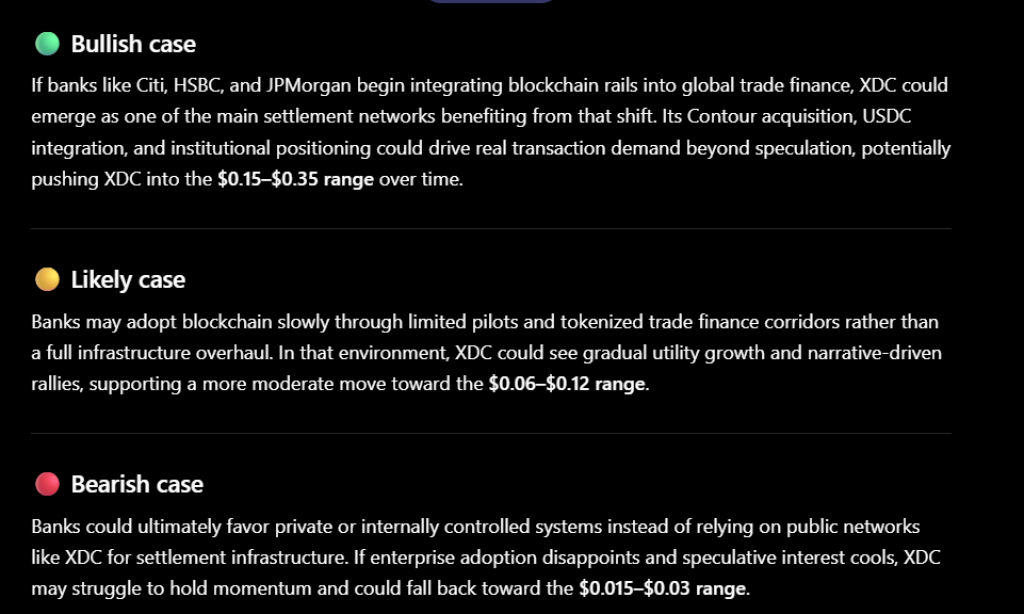
ChatGPT Predicts XDC Network Price if Banks Finally Upgrade the “Plumbing” Behind Global Trade Finance

Kraken Migrates kBTC to Chainlink CCIP as LayerZero Exodus Grows