This article was first published on The Bit Journal. Hyperliquid valuation has quietly become one of the most serious debates in crypto finance. What started asThis article was first published on The Bit Journal. Hyperliquid valuation has quietly become one of the most serious debates in crypto finance. What started as

Hyperliquid Valuation Is Drawing Comparisons to Solana: Here is Why

2025/12/17 19:00
4 min di lettura
Per feedback o dubbi su questo contenuto, contattateci all'indirizzo crypto.news@mexc.com.

This article was first published on The Bit Journal.

Hyperliquid valuation has quietly become one of the most serious debates in crypto finance. What started as a decentralized trading protocol is now being discussed in the same breath as large financial infrastructure platforms. That shift alone says something important about where the market may be heading next.

The discussion gained momentum after a major institutional research report framed Hyperliquid as infrastructure rather than speculative DeFi. According to the source, the protocol’s fee design, validator economics, and capital flows resemble those of a platform business more than those of a typical token project. That framing has caught the attention of analysts who usually avoid DeFi narratives.

A DeFi Platform Built Around Real Usage

The Hyperliquid DeFi ecosystem stands out because it earns revenue the old-fashioned way. It charges fees on real trades. CoinMarketCap data shows that crypto perpetual futures reached $60 trillion in total volume in 2025. Most of that activity still flows through centralized exchanges.

Hyperliquid targets the existing market instead of chasing new demand. That matters. History shows platforms grow faster when they pull users from established venues. One well-cited market study notes that “liquidity follows execution quality, not incentives.” That idea sits at the heart of Hyperliquid’s strategy.
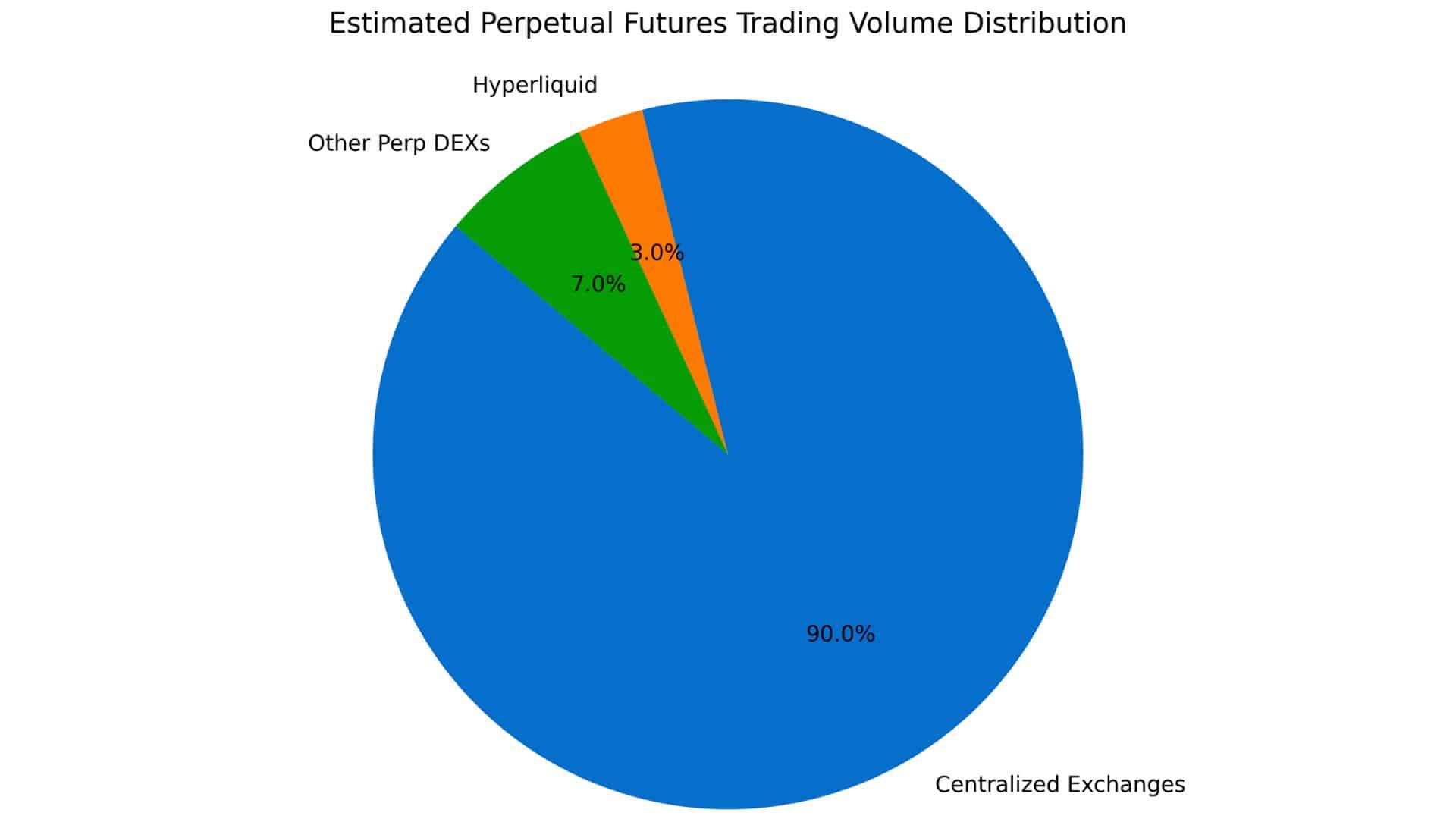
Hyperliquid DeFiCEXs Still Dominate Perp Trading as Hyperliquid Emerges

Why Hyperliquid Valuation Keeps Getting Compared to Solana

The Hyperliquid valuation debate often circles back to Solana’s last major cycle. Early Solana investors focused on speed and throughput. Over time, the conversation shifted toward cash flow, developer stickiness, and settlement value.

A similar change is now happening with Hyperliquid DeFi. Instead of emissions, nearly all protocol revenue is allocated to token buybacks. That means growth reduces supply. Analysts view this structure as closer to traditional equity logic than typical DeFi reward models.

Fees That Change the Long-Term Equation

The fee model sits at the center of the Hyperliquid valuation thesis. When trading volume rises, buybacks increase. This creates a clear link between usage and value. Financial studies on market design suggest buyback-driven systems tend to attract longer-term capital because they reduce dilution risk.

CoinMarketCap figures show that even modest gains in market share from centralized exchanges could generate hundreds of millions in annual fees. That scale explains why institutional desks now take the model seriously.

Competition Exists, but Liquidity Has Memory

Rival platforms have challenged Hyperliquid, including incentive-heavy derivatives exchanges. Some briefly posted higher monthly volume. Analysts noticed unusually high volume-to-open-interest ratios. That often signals reward-driven activity rather than conviction trading.

As incentives fade, traders usually return to platforms with deeper liquidity and tighter spreads. Research on exchange competition shows this pattern repeating across markets. That behavior continues to support the Hyperliquid DeFi growth outlook.

A Valuation Model Still Under Debate

A 50x multiple remains controversial. Critics question whether a leverage-driven trading network deserves infrastructure-style pricing. Supporters argue that decentralized trading systems with sustainable fees should be analyzed using the same analytical framework as payment rails.

This tension now defines the Hyperliquid valuation conversation. It is no longer about hype cycles. It is about whether decentralized finance can produce durable, predictable revenue.

Conclusion: A Signal Bigger Than One Protocol

The real story behind Hyperliquid valuation goes beyond price targets. It signals how markets may value DeFi platforms in the future. If fee-based models continue to outperform incentive-driven systems, Hyperliquid DeFi could become a reference point for future projects. That shift would reshape how crypto infrastructure is built and priced.

Glossary of Key Terms

Perpetual Futures: Derivatives with no expiration date.

Token Buyback: Using revenue to reduce circulating supply.

Open Interest: Total active derivative positions.

DeFi Infrastructure: Blockchain systems supporting financial activity.

FAQs About Hyperliquid Valuation

1. What is Hyperliquid?

A decentralized perpetual futures trading platform.

2. Why is Hyperliquid valuation important?

It reflects a shift toward infrastructure-style pricing in DeFi.

3. Is Hyperliquid DeFi profitable?

It generates real trading fees linked to usage.

4. How can readers track Hyperliquid’s market performance?

Price data, volume trends, and market rankings can be followed through regularly updated listings on CoinMarketCap.

Sources & References

Coinmarketcap

Bisorg

Cfainstitute

Read More: Hyperliquid Valuation Is Drawing Comparisons to Solana: Here is Why">Hyperliquid Valuation Is Drawing Comparisons to Solana: Here is Why

Disclaimer: gli articoli ripubblicati su questo sito provengono da piattaforme pubbliche e sono forniti esclusivamente a scopo informativo. Non riflettono necessariamente le opinioni di MEXC. Tutti i diritti rimangono agli autori originali. Se ritieni che un contenuto violi i diritti di terze parti, contatta crypto.news@mexc.com per la rimozione. MEXC non fornisce alcuna garanzia in merito all'accuratezza, completezza o tempestività del contenuto e non è responsabile per eventuali azioni intraprese sulla base delle informazioni fornite. Il contenuto non costituisce consulenza finanziaria, legale o professionale di altro tipo, né deve essere considerato una raccomandazione o un'approvazione da parte di MEXC.

Potrebbe anche piacerti

Revolutionary: CME SOL XRP Futures Options Set to Transform Crypto Trading

Revolutionary: CME SOL XRP Futures Options Set to Transform Crypto Trading

BitcoinWorld Revolutionary: CME SOL XRP Futures Options Set to Transform Crypto Trading Exciting news is rippling through the cryptocurrency world! The U.S. Chicago Mercantile Exchange (CME), a titan in traditional finance, is reportedly planning to launch CME SOL XRP futures options. This significant development, initially reported by Walter Bloomberg, marks a pivotal moment for institutional involvement in the altcoin market. It signals a new era for how Solana (SOL) and Ripple (XRP) might be traded, potentially opening doors to broader adoption and increased market maturity. What Does the Launch of CME SOL XRP Futures Mean for Crypto? When an institution like CME, known for its rigorous standards and vast trading volume, enters a new market, it brings a wave of legitimacy. The introduction of CME SOL XRP futures options indicates a growing acceptance of these digital assets within mainstream finance. This move could fundamentally change how investors perceive and interact with SOL and XRP. Futures options are financial derivatives that give traders the right, but not the obligation, to buy or sell an underlying asset at a specific price on or before a certain date. For SOL and XRP, this means: Enhanced Price Discovery: More participants and trading volume can lead to more efficient and accurate pricing. Institutional Access: It provides regulated avenues for large institutional investors to gain exposure to SOL and XRP without directly owning the underlying assets. Risk Management: Traders can use these options to hedge against potential price fluctuations in their existing SOL and XRP holdings. Why Are SOL and XRP Chosen for CME SOL XRP Futures? The selection of Solana (SOL) and Ripple (XRP) for these new futures options is not arbitrary. Both cryptocurrencies hold significant positions in the market and offer distinct value propositions: Solana (SOL): Known for its high-performance blockchain, offering fast transaction speeds and low costs. Its robust ecosystem supports numerous decentralized applications (dApps), NFTs, and DeFi projects, attracting considerable developer and user interest. Ripple (XRP): Primarily focused on facilitating fast, low-cost international payments for financial institutions. Despite ongoing regulatory discussions, XRP maintains a strong market presence and a dedicated community, highlighting its potential for cross-border transactions. Their substantial market capitalization and existing liquidity make them attractive candidates for institutional-grade derivative products. This choice reflects a strategic assessment by CME of assets that can sustain significant trading interest and volume. Navigating the Landscape: Opportunities and Considerations for CME SOL XRP Futures The introduction of CME SOL XRP futures options presents a wealth of opportunities, yet it also comes with important considerations. On the opportunity front, we can expect increased liquidity, which benefits all market participants by making it easier to buy and sell without significant price impact. Moreover, it could attract new capital from traditional financial players who prefer regulated products. However, traders and investors should also consider the implications: Market Volatility: While derivatives can offer hedging, they can also amplify market movements. Regulatory Clarity: The regulatory landscape for cryptocurrencies, particularly for XRP, continues to evolve. CME’s move might encourage further clarity but also means ongoing scrutiny. Learning Curve: Understanding futures options requires a certain level of financial literacy, which new entrants to the crypto market may need to develop. These products offer sophisticated tools for managing exposure and speculating on price movements, but they demand a careful approach. What’s Next for the Crypto Market with CME SOL XRP Futures? The reported launch of CME SOL XRP futures options is more than just a new product offering; it represents a significant milestone in the ongoing convergence of traditional finance and the digital asset space. It underscores the growing maturity of the cryptocurrency market and its increasing integration into global financial systems. As institutional interest continues to surge, we can anticipate further innovation and a broader range of regulated products for other altcoins. This development is poised to offer sophisticated tools for investors and traders, potentially stabilizing market dynamics while simultaneously introducing new avenues for growth and investment. The crypto market is evolving rapidly, and CME’s latest initiative is a clear indicator of this exciting trajectory. To learn more about the latest crypto market trends, explore our article on key developments shaping the cryptocurrency market institutional adoption. Frequently Asked Questions (FAQs) What is the Chicago Mercantile Exchange (CME)? The CME is one of the world’s largest and most diverse derivatives marketplaces, offering a wide range of futures and options products across various asset classes, including equities, commodities, and now, expanding into specific cryptocurrencies. What are futures options in the context of SOL and XRP? Futures options for SOL and XRP are financial contracts that give the holder the right, but not the obligation, to buy or sell SOL or XRP futures contracts at a predetermined price on or before a specific date. They allow for hedging and speculation on price movements. Why are Solana (SOL) and Ripple (XRP) chosen for these new options? SOL and XRP were likely chosen due to their significant market capitalization, established liquidity, and distinct use cases within the crypto ecosystem, making them attractive for institutional-grade derivative products. How might CME SOL XRP futures options affect the prices of SOL and XRP? The introduction of these options could lead to increased liquidity and institutional participation, potentially influencing price discovery and stability. However, like all derivatives, they can also contribute to market volatility. When are these CME SOL XRP futures options expected to launch? While Walter Bloomberg reported CME’s plans, an official launch date has not yet been publicly announced by CME. Market participants should monitor official CME channels for updates. If you found this article insightful, please consider sharing it with your network! Help us spread the word about the exciting developments in the crypto space by sharing this article on your social media platforms. This post Revolutionary: CME SOL XRP Futures Options Set to Transform Crypto Trading first appeared on BitcoinWorld.
Condividi
Coinstats2025/09/18 00:45
Gold Hits $3,700 as Sprott’s Wong Says Dollar’s Store-of-Value Crown May Slip

Gold Hits $3,700 as Sprott’s Wong Says Dollar’s Store-of-Value Crown May Slip

The post Gold Hits $3,700 as Sprott’s Wong Says Dollar’s Store-of-Value Crown May Slip appeared on BitcoinEthereumNews.com. Gold is strutting its way into record territory, smashing through $3,700 an ounce Wednesday morning, as Sprott Asset Management strategist Paul Wong says the yellow metal may finally snatch the dollar’s most coveted role: store of value. Wong Warns: Fiscal Dominance Puts U.S. Dollar on Notice, Gold on Top Gold prices eased slightly to $3,678.9 […] Source: https://news.bitcoin.com/gold-hits-3700-as-sprotts-wong-says-dollars-store-of-value-crown-may-slip/

Condividi
BitcoinEthereumNews2025/09/18 00:33
Will XRP Price Increase In September 2025?

Will XRP Price Increase In September 2025?

Ripple XRP is a cryptocurrency that primarily focuses on building a decentralised payments network to facilitate low-cost and cross-border transactions. It’s a native digital currency of the Ripple network, which works as a blockchain called the XRP Ledger (XRPL). It utilised a shared, distributed ledger to track account balances and transactions. What Do XRP Charts Reveal? […]
Condividi
Tronweekly2025/09/18 00:00