A few years ago, this non-permissionless architecture design would often have faced severe scrutiny from the entire industry regarding its "legitimacy." But the market landscape has changed, and Paradigm has still mobilized massive amounts of capital and resources to push Tempo onto the testnet. But this is not just another L1 pipeline narrative. When you dissect Tempo's underlying logic, you'll find that while it retains the shell of Ethereum, its core is a dimensional reduction and reconstruction of the existing Crypto paradigm. It represents Silicon Valley elites' attempt to revise the utopian concept of the "world computer" and shift towards extreme engineering pragmatism. What exactly changed with Tempo? Rather than a technological iteration, it's more accurate to say that it represents a fundamental divergence in business model and protocol philosophy. Execution layer: EVM is merely its "interface standard". Tempo's strategy is highly strategic. It is essentially a heavily customized version of the (newly launched Fusaka) EVM + Reth SDK. For developers, it is fully compatible with toolchains such as Solidity, Foundry, and Hardhat, and looks like a standard Ethereum-compatible chain; but for protocol designers, it is a completely new species that uses the Reth SDK to reconstruct consensus, block structure, and system contracts. This means that Tempo reused Ethereum's vast developer ecosystem (EVM) at a low cost, but completely abandoned Ethereum's historical baggage at the underlying level. It borrowed Ethereum's "universal language" to tell its own completely different "story". Asset Model: From "Monetary Protocols" to "Cloud Service Architecture" This is Tempo's most radical and disruptive aspect: it "abstracts" the concept of the native token (ETH) at the protocol level. In the Ethereum universe, ETH is not only currency but also the cornerstone of the protocol's security. However, in Tempo, eth_getBalance is hardcoded as a constant, rendering the related opcode invalid. There are no native volatile assets used as gas; only TIP-20 stablecoins are available. Ethereum model: Blockspace is a scarce resource, and users need to hold native tokens to participate in the auction (Gas War). Tempo mode: Blockspace is a standardized service, and Gas is the dollar cost settled through the Fee AMM. Tempo essentially transforms L1 from a "digital oil economy" into a cloud service model similar to AWS. Users do not need to hold volatile assets to pay for computing costs, but only stablecoins. This is a modification of the "Fat Protocol" theory, but it is a hurdle that must be overcome to achieve large-scale payments. Transaction Structure: Shifting "Middleware" to "Infrastructure" Ethereum's current account abstraction (AA) scheme is more about stacking complex middleware on top of the protocol using standards such as ERC-4337 and 7702. After reviewing these architectures, Tempo chose to incorporate them directly into the genesis consensus. Tempo Transactions are no longer limited to the traditional EOA model; they natively support it at the protocol level. Native multisignature and device key: Directly supports P-256 (such as FaceID) signatures without the need for smart contract wallets. Atomic Sponsor: The payer, signer, and executor can be separated at the underlying data structure level. Concurrency and Scheduling: Supports multiple sets of Nonces to be submitted in parallel, and even includes time window logic. The Web2-level experience that requires coordination among multiple parties, including contracts, Bundler, and Paymaster, on Ethereum has become the factory default setting for the protocol layer in Tempo. Block Space: From "General-Purpose Computing" to "Dedicated Settlement" Ethereum's design philosophy leans towards "universality," with DeFi arbitrage trading and NFT Mint sharing the same Gas Limit pool. Tempo clearly sees this as a compromise on efficiency for payment networks. It introduces Simplex BFT and implements strict resource isolation in the block structure: Blockspace layering: general_gas and shared_gas are logically isolated and do not interfere with each other. System-level priority: Key system transactions such as stablecoin DEX, reward distribution, and Fee Manager have reserved space and absolute priority in the block. Tempo is not trying to build another "general-purpose world computer," but rather a high-performance, dedicated settlement network. It sacrifices some generality in exchange for the determinism and high throughput necessary for a "payment network." Summarize Understanding Tempo will help you grasp Paradigm's vision for future infrastructure. If you're still debating whether it's "decentralized" enough, you may have strayed from its core narrative. Tempo has no intention of becoming the next Ethereum. It disassembles Ethereum, retains the core EVM engine, replaces it with a Web2-level underlying architecture, and sends a clear signal to the market: We need to end ideological debates and build a truly efficient settlement layer capable of supporting 1 billion users.A few years ago, this non-permissionless architecture design would often have faced severe scrutiny from the entire industry regarding its "legitimacy." But the market landscape has changed, and Paradigm has still mobilized massive amounts of capital and resources to push Tempo onto the testnet. But this is not just another L1 pipeline narrative. When you dissect Tempo's underlying logic, you'll find that while it retains the shell of Ethereum, its core is a dimensional reduction and reconstruction of the existing Crypto paradigm. It represents Silicon Valley elites' attempt to revise the utopian concept of the "world computer" and shift towards extreme engineering pragmatism. What exactly changed with Tempo? Rather than a technological iteration, it's more accurate to say that it represents a fundamental divergence in business model and protocol philosophy. Execution layer: EVM is merely its "interface standard". Tempo's strategy is highly strategic. It is essentially a heavily customized version of the (newly launched Fusaka) EVM + Reth SDK. For developers, it is fully compatible with toolchains such as Solidity, Foundry, and Hardhat, and looks like a standard Ethereum-compatible chain; but for protocol designers, it is a completely new species that uses the Reth SDK to reconstruct consensus, block structure, and system contracts. This means that Tempo reused Ethereum's vast developer ecosystem (EVM) at a low cost, but completely abandoned Ethereum's historical baggage at the underlying level. It borrowed Ethereum's "universal language" to tell its own completely different "story". Asset Model: From "Monetary Protocols" to "Cloud Service Architecture" This is Tempo's most radical and disruptive aspect: it "abstracts" the concept of the native token (ETH) at the protocol level. In the Ethereum universe, ETH is not only currency but also the cornerstone of the protocol's security. However, in Tempo, eth_getBalance is hardcoded as a constant, rendering the related opcode invalid. There are no native volatile assets used as gas; only TIP-20 stablecoins are available. Ethereum model: Blockspace is a scarce resource, and users need to hold native tokens to participate in the auction (Gas War). Tempo mode: Blockspace is a standardized service, and Gas is the dollar cost settled through the Fee AMM. Tempo essentially transforms L1 from a "digital oil economy" into a cloud service model similar to AWS. Users do not need to hold volatile assets to pay for computing costs, but only stablecoins. This is a modification of the "Fat Protocol" theory, but it is a hurdle that must be overcome to achieve large-scale payments. Transaction Structure: Shifting "Middleware" to "Infrastructure" Ethereum's current account abstraction (AA) scheme is more about stacking complex middleware on top of the protocol using standards such as ERC-4337 and 7702. After reviewing these architectures, Tempo chose to incorporate them directly into the genesis consensus. Tempo Transactions are no longer limited to the traditional EOA model; they natively support it at the protocol level. Native multisignature and device key: Directly supports P-256 (such as FaceID) signatures without the need for smart contract wallets. Atomic Sponsor: The payer, signer, and executor can be separated at the underlying data structure level. Concurrency and Scheduling: Supports multiple sets of Nonces to be submitted in parallel, and even includes time window logic. The Web2-level experience that requires coordination among multiple parties, including contracts, Bundler, and Paymaster, on Ethereum has become the factory default setting for the protocol layer in Tempo. Block Space: From "General-Purpose Computing" to "Dedicated Settlement" Ethereum's design philosophy leans towards "universality," with DeFi arbitrage trading and NFT Mint sharing the same Gas Limit pool. Tempo clearly sees this as a compromise on efficiency for payment networks. It introduces Simplex BFT and implements strict resource isolation in the block structure: Blockspace layering: general_gas and shared_gas are logically isolated and do not interfere with each other. System-level priority: Key system transactions such as stablecoin DEX, reward distribution, and Fee Manager have reserved space and absolute priority in the block. Tempo is not trying to build another "general-purpose world computer," but rather a high-performance, dedicated settlement network. It sacrifices some generality in exchange for the determinism and high throughput necessary for a "payment network." Summarize Understanding Tempo will help you grasp Paradigm's vision for future infrastructure. If you're still debating whether it's "decentralized" enough, you may have strayed from its core narrative. Tempo has no intention of becoming the next Ethereum. It disassembles Ethereum, retains the core EVM engine, replaces it with a Web2-level underlying architecture, and sends a clear signal to the market: We need to end ideological debates and build a truly efficient settlement layer capable of supporting 1 billion users.


Tempo: A Fundamental Reconstruction of "Demonetization"

2025/12/11 07:01
4 min di lettura
Per feedback o dubbi su questo contenuto, contattateci all'indirizzo crypto.news@mexc.com.

A few years ago, this non-permissionless architecture design would often have faced severe scrutiny from the entire industry regarding its "legitimacy." But the market landscape has changed, and Paradigm has still mobilized massive amounts of capital and resources to push Tempo onto the testnet.

But this is not just another L1 pipeline narrative. When you dissect Tempo's underlying logic, you'll find that while it retains the shell of Ethereum, its core is a dimensional reduction and reconstruction of the existing Crypto paradigm. It represents Silicon Valley elites' attempt to revise the utopian concept of the "world computer" and shift towards extreme engineering pragmatism.

What exactly changed with Tempo? Rather than a technological iteration, it's more accurate to say that it represents a fundamental divergence in business model and protocol philosophy.

Execution layer: EVM is merely its "interface standard".

Tempo's strategy is highly strategic. It is essentially a heavily customized version of the (newly launched Fusaka) EVM + Reth SDK.

For developers, it is fully compatible with toolchains such as Solidity, Foundry, and Hardhat, and looks like a standard Ethereum-compatible chain; but for protocol designers, it is a completely new species that uses the Reth SDK to reconstruct consensus, block structure, and system contracts.

This means that Tempo reused Ethereum's vast developer ecosystem (EVM) at a low cost, but completely abandoned Ethereum's historical baggage at the underlying level. It borrowed Ethereum's "universal language" to tell its own completely different "story".

Asset Model: From "Monetary Protocols" to "Cloud Service Architecture"

This is Tempo's most radical and disruptive aspect: it "abstracts" the concept of the native token (ETH) at the protocol level.

In the Ethereum universe, ETH is not only currency but also the cornerstone of the protocol's security. However, in Tempo, eth_getBalance is hardcoded as a constant, rendering the related opcode invalid. There are no native volatile assets used as gas; only TIP-20 stablecoins are available.

Ethereum model: Blockspace is a scarce resource, and users need to hold native tokens to participate in the auction (Gas War).

Tempo mode: Blockspace is a standardized service, and Gas is the dollar cost settled through the Fee AMM.

Tempo essentially transforms L1 from a "digital oil economy" into a cloud service model similar to AWS. Users do not need to hold volatile assets to pay for computing costs, but only stablecoins. This is a modification of the "Fat Protocol" theory, but it is a hurdle that must be overcome to achieve large-scale payments.

Transaction Structure: Shifting "Middleware" to "Infrastructure"

Ethereum's current account abstraction (AA) scheme is more about stacking complex middleware on top of the protocol using standards such as ERC-4337 and 7702.

After reviewing these architectures, Tempo chose to incorporate them directly into the genesis consensus. Tempo Transactions are no longer limited to the traditional EOA model; they natively support it at the protocol level.

Native multisignature and device key: Directly supports P-256 (such as FaceID) signatures without the need for smart contract wallets.

Atomic Sponsor: The payer, signer, and executor can be separated at the underlying data structure level.

Concurrency and Scheduling: Supports multiple sets of Nonces to be submitted in parallel, and even includes time window logic.

The Web2-level experience that requires coordination among multiple parties, including contracts, Bundler, and Paymaster, on Ethereum has become the factory default setting for the protocol layer in Tempo.

Block Space: From "General-Purpose Computing" to "Dedicated Settlement"

Ethereum's design philosophy leans towards "universality," with DeFi arbitrage trading and NFT Mint sharing the same Gas Limit pool.

Tempo clearly sees this as a compromise on efficiency for payment networks. It introduces Simplex BFT and implements strict resource isolation in the block structure:

Blockspace layering: general_gas and shared_gas are logically isolated and do not interfere with each other.

System-level priority: Key system transactions such as stablecoin DEX, reward distribution, and Fee Manager have reserved space and absolute priority in the block.

Tempo is not trying to build another "general-purpose world computer," but rather a high-performance, dedicated settlement network. It sacrifices some generality in exchange for the determinism and high throughput necessary for a "payment network."

Summarize

Understanding Tempo will help you grasp Paradigm's vision for future infrastructure. If you're still debating whether it's "decentralized" enough, you may have strayed from its core narrative.

Tempo has no intention of becoming the next Ethereum. It disassembles Ethereum, retains the core EVM engine, replaces it with a Web2-level underlying architecture, and sends a clear signal to the market:

We need to end ideological debates and build a truly efficient settlement layer capable of supporting 1 billion users.

Opportunità di mercato
Logo EPNS
Valore EPNS (PUSH)
$0.011523
$0.011523$0.011523
-1.18%
USD
Grafico dei prezzi in tempo reale di EPNS (PUSH)
Disclaimer: gli articoli ripubblicati su questo sito provengono da piattaforme pubbliche e sono forniti esclusivamente a scopo informativo. Non riflettono necessariamente le opinioni di MEXC. Tutti i diritti rimangono agli autori originali. Se ritieni che un contenuto violi i diritti di terze parti, contatta crypto.news@mexc.com per la rimozione. MEXC non fornisce alcuna garanzia in merito all'accuratezza, completezza o tempestività del contenuto e non è responsabile per eventuali azioni intraprese sulla base delle informazioni fornite. Il contenuto non costituisce consulenza finanziaria, legale o professionale di altro tipo, né deve essere considerato una raccomandazione o un'approvazione da parte di MEXC.

Potrebbe anche piacerti

XRP Price Completes Q1 In The Red Again, But Prior Performance Says A Surge Is Coming
XRP Price Completes Q1 In The Red Again, But Prior Performance Says A Surge Is Coming

The post XRP Price Completes Q1 In The Red Again, But Prior Performance Says A Surge Is Coming appeared on BitcoinEthereumNews.com. XRP’s close of the month of
Condividi
BitcoinEthereumNews2026/04/03 19:36
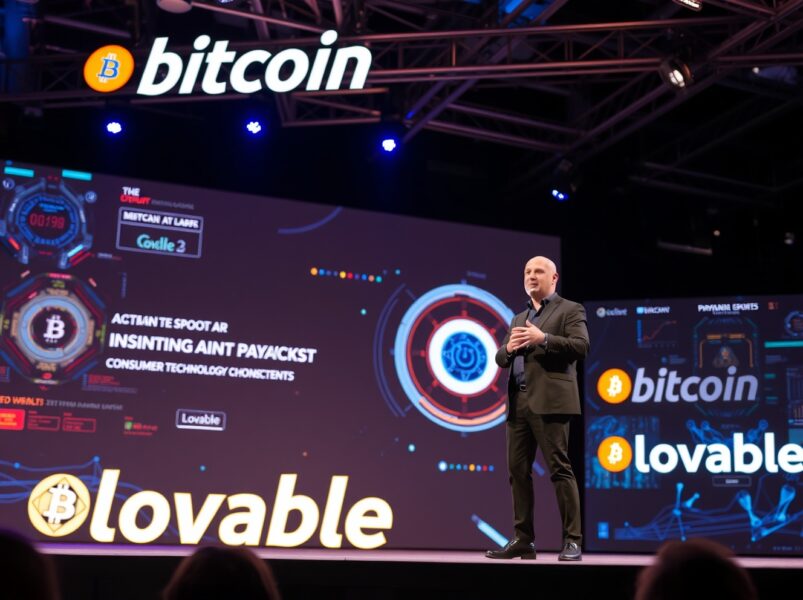
Lovable AI’s Astonishing Rise: Anton Osika Reveals Startup Secrets at Bitcoin World Disrupt 2025

Lovable AI’s Astonishing Rise: Anton Osika Reveals Startup Secrets at Bitcoin World Disrupt 2025


BitcoinWorld Lovable AI’s Astonishing Rise: Anton Osika Reveals Startup Secrets at Bitcoin World Disrupt 2025 Are you ready to witness a phenomenon? The world of technology is abuzz with the incredible rise of Lovable AI, a startup that’s not just breaking records but rewriting the rulebook for rapid growth. Imagine creating powerful apps and websites just by speaking to an AI – that’s the magic Lovable brings to the masses. This groundbreaking approach has propelled the company into the spotlight, making it one of the fastest-growing software firms in history. And now, the visionary behind this sensation, co-founder and CEO Anton Osika, is set to share his invaluable insights on the Disrupt Stage at the highly anticipated Bitcoin World Disrupt 2025. If you’re a founder, investor, or tech enthusiast eager to understand the future of innovation, this is an event you cannot afford to miss. Lovable AI’s Meteoric Ascent: Redefining Software Creation In an era where digital transformation is paramount, Lovable AI has emerged as a true game-changer. Its core premise is deceptively simple yet profoundly impactful: democratize software creation. By enabling anyone to build applications and websites through intuitive AI conversations, Lovable is empowering the vast majority of individuals who lack coding skills to transform their ideas into tangible digital products. This mission has resonated globally, leading to unprecedented momentum. The numbers speak for themselves: Achieved an astonishing $100 million Annual Recurring Revenue (ARR) in less than a year. Successfully raised a $200 million Series A funding round, valuing the company at $1.8 billion, led by industry giant Accel. Is currently fielding unsolicited investor offers, pushing its valuation towards an incredible $4 billion. As industry reports suggest, investors are unequivocally “loving Lovable,” and it’s clear why. This isn’t just about impressive financial metrics; it’s about a company that has tapped into a fundamental need, offering a solution that is both innovative and accessible. The rapid scaling of Lovable AI provides a compelling case study for any entrepreneur aiming for similar exponential growth. The Visionary Behind the Hype: Anton Osika’s Journey to Innovation Every groundbreaking company has a driving force, and for Lovable, that force is co-founder and CEO Anton Osika. His journey is as fascinating as his company’s success. A physicist by training, Osika previously contributed to the cutting-edge research at CERN, the European Organization for Nuclear Research. This deep technical background, combined with his entrepreneurial spirit, has been instrumental in Lovable’s rapid ascent. Before Lovable, he honed his skills as a co-founder of Depict.ai and a Founding Engineer at Sana. Based in Stockholm, Osika has masterfully steered Lovable from a nascent idea to a global phenomenon in record time. His leadership embodies a unique blend of profound technical understanding and a keen, consumer-first vision. At Bitcoin World Disrupt 2025, attendees will have the rare opportunity to hear directly from Osika about what it truly takes to build a brand that not only scales at an incredible pace in a fiercely competitive market but also adeptly manages the intense cultural conversations that inevitably accompany such swift and significant success. His insights will be crucial for anyone looking to understand the dynamics of high-growth tech leadership. Unpacking Consumer Tech Innovation at Bitcoin World Disrupt 2025 The 20th anniversary of Bitcoin World is set to be marked by a truly special event: Bitcoin World Disrupt 2025. From October 27–29, Moscone West in San Francisco will transform into the epicenter of innovation, gathering over 10,000 founders, investors, and tech leaders. It’s the ideal platform to explore the future of consumer tech innovation, and Anton Osika’s presence on the Disrupt Stage is a highlight. His session will delve into how Lovable is not just participating in but actively shaping the next wave of consumer-facing technologies. Why is this session particularly relevant for those interested in the future of consumer experiences? Osika’s discussion will go beyond the superficial, offering a deep dive into the strategies that have allowed Lovable to carve out a unique category in a market long thought to be saturated. Attendees will gain a front-row seat to understanding how to identify unmet consumer needs, leverage advanced AI to meet those needs, and build a product that captivates users globally. The event itself promises a rich tapestry of ideas and networking opportunities: For Founders: Sharpen your pitch and connect with potential investors. For Investors: Discover the next breakout startup poised for massive growth. For Innovators: Claim your spot at the forefront of technological advancements. The insights shared regarding consumer tech innovation at this event will be invaluable for anyone looking to navigate the complexities and capitalize on the opportunities within this dynamic sector. Mastering Startup Growth Strategies: A Blueprint for the Future Lovable’s journey isn’t just another startup success story; it’s a meticulously crafted blueprint for effective startup growth strategies in the modern era. Anton Osika’s experience offers a rare glimpse into the practicalities of scaling a business at breakneck speed while maintaining product integrity and managing external pressures. For entrepreneurs and aspiring tech leaders, his talk will serve as a masterclass in several critical areas: Strategy Focus Key Takeaways from Lovable’s Journey Rapid Scaling How to build infrastructure and teams that support exponential user and revenue growth without compromising quality. Product-Market Fit Identifying a significant, underserved market (the 99% who can’t code) and developing a truly innovative solution (AI-powered app creation). Investor Relations Balancing intense investor interest and pressure with a steadfast focus on product development and long-term vision. Category Creation Carving out an entirely new niche by democratizing complex technologies, rather than competing in existing crowded markets. Understanding these startup growth strategies is essential for anyone aiming to build a resilient and impactful consumer experience. Osika’s session will provide actionable insights into how to replicate elements of Lovable’s success, offering guidance on navigating challenges from product development to market penetration and investor management. Conclusion: Seize the Future of Tech The story of Lovable, under the astute leadership of Anton Osika, is a testament to the power of innovative ideas meeting flawless execution. Their remarkable journey from concept to a multi-billion-dollar valuation in record time is a compelling narrative for anyone interested in the future of technology. By democratizing software creation through Lovable AI, they are not just building a company; they are fostering a new generation of creators. His appearance at Bitcoin World Disrupt 2025 is an unmissable opportunity to gain direct insights from a leader who is truly shaping the landscape of consumer tech innovation. Don’t miss this chance to learn about cutting-edge startup growth strategies and secure your front-row seat to the future. Register now and save up to $668 before Regular Bird rates end on September 26. To learn more about the latest AI market trends, explore our article on key developments shaping AI features. This post Lovable AI’s Astonishing Rise: Anton Osika Reveals Startup Secrets at Bitcoin World Disrupt 2025 first appeared on BitcoinWorld.


Condividi
Coinstats2025/09/17 23:40
Why Banks Restrict Accounts (And What Happens Next)

Why Banks Restrict Accounts (And What Happens Next)

In a world where most financial activity happens digitally, losing access to your bank account can feel sudden and stressful. One day everything works fine, and
Condividi
Techbullion2026/04/03 19:40

$30,000 in PRL + 15,000 USDT

$30,000 in PRL + 15,000 USDT$30,000 in PRL + 15,000 USDT

Deposit & trade PRL to boost your rewards!
