Meanwhile, Groww, in its efforts to diversify beyond a derivatives-heavy brokerage model, has infused an additional Rs 104.4 crore into Fisdom, its recently acquired wealthtech subsidiary. The company bought 87,384 shares at Rs 11,954.94 apiece.Meanwhile, Groww, in its efforts to diversify beyond a derivatives-heavy brokerage model, has infused an additional Rs 104.4 crore into Fisdom, its recently acquired wealthtech subsidiary. The company bought 87,384 shares at Rs 11,954.94 apiece.

Inside Lenskart's growth plans post-listing; VCs backing early-stage startups in 2025
2025/11/30 10:00
5 min di lettura
Per feedback o dubbi su questo contenuto, contattateci all'indirizzo crypto.news@mexc.com.

Hello,

Lenskart has bigger plans post its market debut.

The omnichannel eyewear retailer is now sharpening its push into wearables, with plans to launch its AI-enabled smart glasses—B by Lenskart Smart Glasses—in Q4 FY26. 

According to its shareholder letter, the company is positioning smart glasses as a natural extension of its vertically integrated model by building the hardware, software, and mobile app entirely in-house on the Gemini AI platform.

In its first earnings post its tepid IPO, the Peyush Bansal-led company reported 21% growth in operating revenue at Rs 2,096 crore, driven by volume, with the number of eyewear units growing 21.7% in the second quarter.

Here’s what Lenskart said in its post-earnings letter.

Meanwhile, Groww, in its efforts to diversify beyond a derivatives-heavy brokerage model, has infused an additional Rs 104.4 crore into Fisdom, its recently acquired wealthtech subsidiary. The company bought 87,384 shares at Rs 11,954.94 apiece. 

Amidst the numerous volcanic and seismic events around the world, India has released a major update to its national seismic zonation map under the revised Earthquake Design Code, placing the entire Himalayan arc in a newly created highest-risk Zone VI for the first time.

According to scientists, it is one of India’s most significant seismic assessment revisions in decades.

In today’s newsletter, we will talk about 

  • Building an inclusive MSME economy
  • VCs backing early-stage startups in 2025

Here’s your trivia for today: Which California peak known for its 1915 eruption is the world's largest lava dome?


SMB

Building an inclusive MSME economy

UGRO Capital

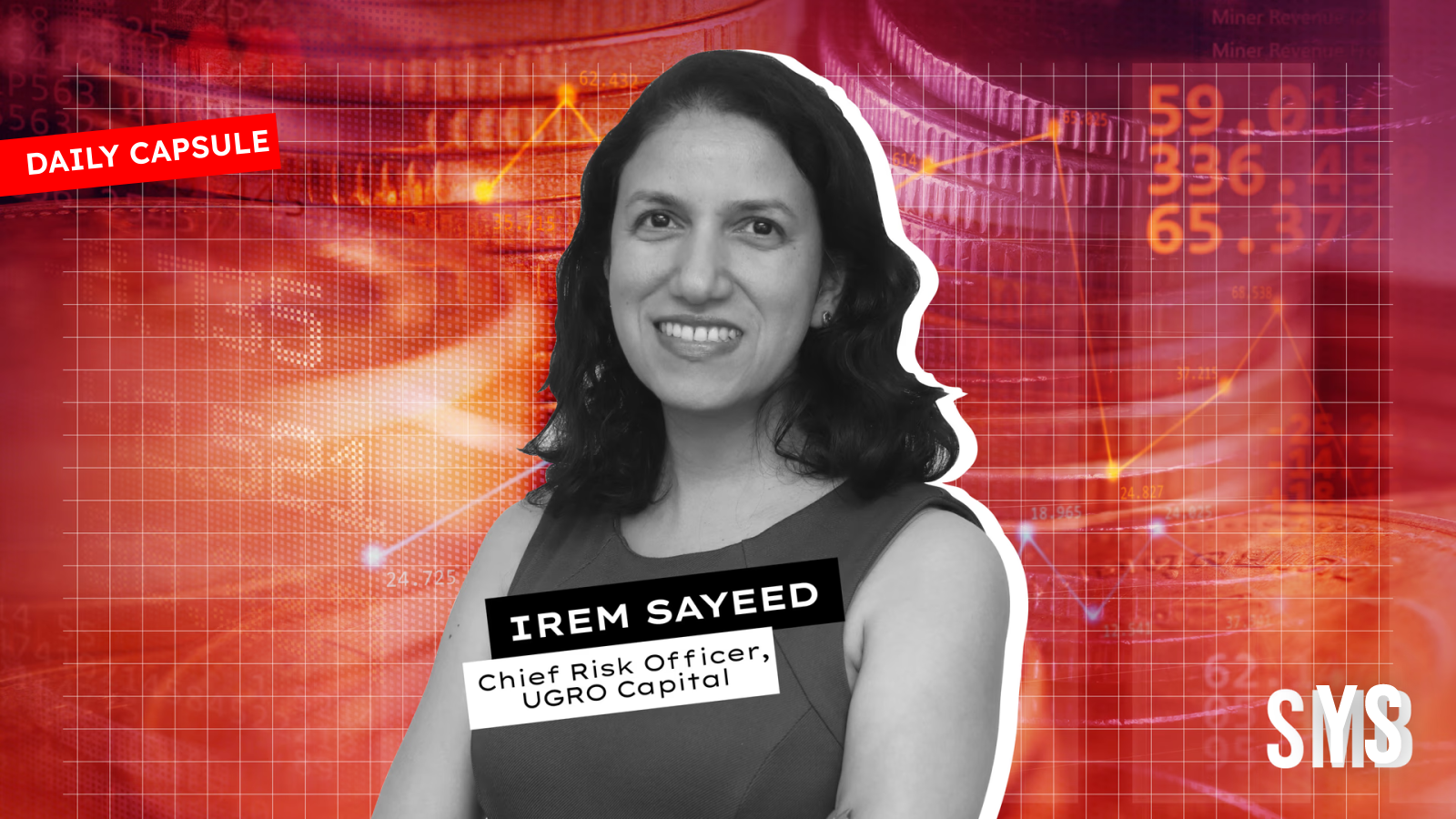
India’s MSMEs power the economy, yet many—especially those led by women—remain excluded from formal credit and sustainable solutions. In a conversation with SMBStory, Irem Sayeed, Chief Risk Officer at UGRO Capital, explains how the company is working to close this gap.

“MSMEs are central to India’s climate-resilient future, but outdated processes, limited awareness, and restricted access to sustainable finance often hold them back,” says Sayeed. “The challenge is even greater for women-led enterprises that operate in informal clusters with limited technical exposure.”

Pathways:

  • Many of the sectors where women-led MSMEs are most active—food processing, healthcare, garments, rural micro-manufacturing, and WASH—are also the ones ripe for green transformation.
  • UGRO sees strong demand for solutions both commercially valuable and environmentally efficient, ranging from energy-efficient machinery and rooftop solar systems to electric mobility solutions, water conservation, sanitation, and hygiene-focused enterprises, and modern waste-management technologies.
  • Another crucial shift is how UGRO structures repayments. Instead of rigid EMIs, loans are tailored to payback cycles from energy savings or efficiency gains.

In depth

VCs backing early-stage startups in 2025 
Year-ender 2025

If 2025 revealed one unmistakable trend in India’s startup ecosystem, it was the comeback of early-stage investing. As marquee public listings delivered strong returns this year, the country’s top venture capitalists showed renewed willingness to open their chequebooks to young founders.

Amidst a critical investment year, a period during which a string of VCs also refreshed their capital pools with new funds, here is a look at the top 10 VCs who kept capital flowing and stood out as 2025’s most active backers. 

Key takeaways:

  • According to Tracxn, 2,130 startups raised funding in 2025, and more than 1,300 of them were at the early-stage. Together, these Seed and Series A stage companies bagged a total of $3.85 billion in investments.
  • The top ten most active VCs accounted for 15% of overall investments in the startup landscape, with a majority of players hopping onto company cap tables during the early stage. Of these investments, almost half were in the seed and Series A stages.
  • Only 10% of the total deals this year went to Series B and Series C (growth-stage) companies, and about 5% reached late-stage startups (Series D and beyond). Despite the dip, investors have put on a brave front, dismissing any concerns.

News & updates

  • Glitch: Thousands of Airbus planes are being returned to normal service after being grounded for hours due to a warning that solar radiation could interfere with onboard flight control computers. Airbus said around 6,000 of its A320 planes were affected, with most requiring a quick software update. Some 900 older planes need a replacement computer.
  • Stay put: Meesho is set to launch a roughly $606 million IPO marked by token sell-downs from early backers and no sales from big names such as SoftBank and Prosus, signalling investor conviction in India’s booming online retail market at a time when tech shareholders globally have been cashing out at listings.
  • Loans: Amazon is preparing to offer loans to small businesses in India, while Walmart-owned Flipkart is looking at buy-now, pay-later (BNPL) products as the ecommerce giants take on the country's banks with a push into financial products.

Which California peak, known for its 1915 eruption, is the world's largest lava dome?

Answer: Lassen Peak.


We would love to hear from you! To let us know what you liked and disliked about our newsletter, please mail nslfeedback@yourstory.com

If you don’t already get this newsletter in your inbox, sign up here. For past editions of the YourStory Buzz, you can check our Daily Capsule page here.

Opportunità di mercato
Logo 4
Valore 4 (4)
$0.007643
$0.007643$0.007643
+8.25%
USD
Grafico dei prezzi in tempo reale di 4 (4)
Disclaimer: gli articoli ripubblicati su questo sito provengono da piattaforme pubbliche e sono forniti esclusivamente a scopo informativo. Non riflettono necessariamente le opinioni di MEXC. Tutti i diritti rimangono agli autori originali. Se ritieni che un contenuto violi i diritti di terze parti, contatta crypto.news@mexc.com per la rimozione. MEXC non fornisce alcuna garanzia in merito all'accuratezza, completezza o tempestività del contenuto e non è responsabile per eventuali azioni intraprese sulla base delle informazioni fornite. Il contenuto non costituisce consulenza finanziaria, legale o professionale di altro tipo, né deve essere considerato una raccomandazione o un'approvazione da parte di MEXC.

Potrebbe anche piacerti

Trump-backed WLFI  launches AgentPay SDK open-source payment toolkit for AI agents

Trump-backed WLFI  launches AgentPay SDK open-source payment toolkit for AI agents

The Trump family has expanded its presence in the crypto community with a major development for artificial intelligence (AI) agents. According to reports, World
Condividi
Cryptopolitan2026/03/20 19:03
Summarize Any Stock’s Earnings Call in Seconds Using FMP API
Summarize Any Stock’s Earnings Call in Seconds Using FMP API

Turn lengthy earnings call transcripts into one-page insights using the Financial Modeling Prep APIPhoto by Bich Tran Earnings calls are packed with insights. They tell you how a company performed, what management expects in the future, and what analysts are worried about. The challenge is that these transcripts often stretch across dozens of pages, making it tough to separate the key takeaways from the noise. With the right tools, you don’t need to spend hours reading every line. By combining the Financial Modeling Prep (FMP) API with Groq’s lightning-fast LLMs, you can transform any earnings call into a concise summary in seconds. The FMP API provides reliable access to complete transcripts, while Groq handles the heavy lifting of distilling them into clear, actionable highlights. In this article, we’ll build a Python workflow that brings these two together. You’ll see how to fetch transcripts for any stock, prepare the text, and instantly generate a one-page summary. Whether you’re tracking Apple, NVIDIA, or your favorite growth stock, the process works the same — fast, accurate, and ready whenever you are. Fetching Earnings Transcripts with FMP API The first step is to pull the raw transcript data. FMP makes this simple with dedicated endpoints for earnings calls. If you want the latest transcripts across the market, you can use the stable endpoint /stable/earning-call-transcript-latest. For a specific stock, the v3 endpoint lets you request transcripts by symbol, quarter, and year using the pattern: https://financialmodelingprep.com/api/v3/earning_call_transcript/{symbol}?quarter={q}&year={y}&apikey=YOUR_API_KEY here’s how you can fetch NVIDIA’s transcript for a given quarter: import requestsAPI_KEY = "your_api_key"symbol = "NVDA"quarter = 2year = 2024url = f"https://financialmodelingprep.com/api/v3/earning_call_transcript/{symbol}?quarter={quarter}&year={year}&apikey={API_KEY}"response = requests.get(url)data = response.json()# Inspect the keysprint(data.keys())# Access transcript contentif "content" in data[0]: transcript_text = data[0]["content"] print(transcript_text[:500]) # preview first 500 characters The response typically includes details like the company symbol, quarter, year, and the full transcript text. If you aren’t sure which quarter to query, the “latest transcripts” endpoint is the quickest way to always stay up to date. Cleaning and Preparing Transcript Data Raw transcripts from the API often include long paragraphs, speaker tags, and formatting artifacts. Before sending them to an LLM, it helps to organize the text into a cleaner structure. Most transcripts follow a pattern: prepared remarks from executives first, followed by a Q&A session with analysts. Separating these sections gives better control when prompting the model. In Python, you can parse the transcript and strip out unnecessary characters. A simple way is to split by markers such as “Operator” or “Question-and-Answer.” Once separated, you can create two blocks — Prepared Remarks and Q&A — that will later be summarized independently. This ensures the model handles each section within context and avoids missing important details. Here’s a small example of how you might start preparing the data: import re# Example: using the transcript_text we fetched earliertext = transcript_text# Remove extra spaces and line breaksclean_text = re.sub(r'\s+', ' ', text).strip()# Split sections (this is a heuristic; real-world transcripts vary slightly)if "Question-and-Answer" in clean_text: prepared, qna = clean_text.split("Question-and-Answer", 1)else: prepared, qna = clean_text, ""print("Prepared Remarks Preview:\n", prepared[:500])print("\nQ&A Preview:\n", qna[:500]) With the transcript cleaned and divided, you’re ready to feed it into Groq’s LLM. Chunking may be necessary if the text is very long. A good approach is to break it into segments of a few thousand tokens, summarize each part, and then merge the summaries in a final pass. Summarizing with Groq LLM Now that the transcript is clean and split into Prepared Remarks and Q&A, we’ll use Groq to generate a crisp one-pager. The idea is simple: summarize each section separately (for focus and accuracy), then synthesize a final brief. Prompt design (concise and factual) Use a short, repeatable template that pushes for neutral, investor-ready language: You are an equity research analyst. Summarize the following earnings call sectionfor {symbol} ({quarter} {year}). Be factual and concise.Return:1) TL;DR (3–5 bullets)2) Results vs. guidance (what improved/worsened)3) Forward outlook (specific statements)4) Risks / watch-outs5) Q&A takeaways (if present)Text:<<<{section_text}>>> Python: calling Groq and getting a clean summary Groq provides an OpenAI-compatible API. Set your GROQ_API_KEY and pick a fast, high-quality model (e.g., a Llama-3.1 70B variant). We’ll write a helper to summarize any text block, then run it for both sections and merge. import osimport textwrapimport requestsGROQ_API_KEY = os.environ.get("GROQ_API_KEY") or "your_groq_api_key"GROQ_BASE_URL = "https://api.groq.com/openai/v1" # OpenAI-compatibleMODEL = "llama-3.1-70b" # choose your preferred Groq modeldef call_groq(prompt, temperature=0.2, max_tokens=1200): url = f"{GROQ_BASE_URL}/chat/completions" headers = { "Authorization": f"Bearer {GROQ_API_KEY}", "Content-Type": "application/json", } payload = { "model": MODEL, "messages": [ {"role": "system", "content": "You are a precise, neutral equity research analyst."}, {"role": "user", "content": prompt}, ], "temperature": temperature, "max_tokens": max_tokens, } r = requests.post(url, headers=headers, json=payload, timeout=60) r.raise_for_status() return r.json()["choices"][0]["message"]["content"].strip()def build_prompt(section_text, symbol, quarter, year): template = """ You are an equity research analyst. Summarize the following earnings call section for {symbol} ({quarter} {year}). Be factual and concise. Return: 1) TL;DR (3–5 bullets) 2) Results vs. guidance (what improved/worsened) 3) Forward outlook (specific statements) 4) Risks / watch-outs 5) Q&A takeaways (if present) Text: <<< {section_text} >>> """ return textwrap.dedent(template).format( symbol=symbol, quarter=quarter, year=year, section_text=section_text )def summarize_section(section_text, symbol="NVDA", quarter="Q2", year="2024"): if not section_text or section_text.strip() == "": return "(No content found for this section.)" prompt = build_prompt(section_text, symbol, quarter, year) return call_groq(prompt)# Example usage with the cleaned splits from Section 3prepared_summary = summarize_section(prepared, symbol="NVDA", quarter="Q2", year="2024")qna_summary = summarize_section(qna, symbol="NVDA", quarter="Q2", year="2024")final_one_pager = f"""# {symbol} Earnings One-Pager — {quarter} {year}## Prepared Remarks — Key Points{prepared_summary}## Q&A Highlights{qna_summary}""".strip()print(final_one_pager[:1200]) # preview Tips that keep quality high: Keep temperature low (≈0.2) for factual tone. If a section is extremely long, chunk at ~5–8k tokens, summarize each chunk with the same prompt, then ask the model to merge chunk summaries into one section summary before producing the final one-pager. If you also fetched headline numbers (EPS/revenue, guidance) earlier, prepend them to the prompt as brief context to help the model anchor on the right outcomes. Building the End-to-End Pipeline At this point, we have all the building blocks: the FMP API to fetch transcripts, a cleaning step to structure the data, and Groq LLM to generate concise summaries. The final step is to connect everything into a single workflow that can take any ticker and return a one-page earnings call summary. The flow looks like this: Input a stock ticker (for example, NVDA). Use FMP to fetch the latest transcript. Clean and split the text into Prepared Remarks and Q&A. Send each section to Groq for summarization. Merge the outputs into a neatly formatted earnings one-pager. Here’s how it comes together in Python: def summarize_earnings_call(symbol, quarter, year, api_key, groq_key): # Step 1: Fetch transcript from FMP url = f"https://financialmodelingprep.com/api/v3/earning_call_transcript/{symbol}?quarter={quarter}&year={year}&apikey={api_key}" resp = requests.get(url) resp.raise_for_status() data = resp.json() if not data or "content" not in data[0]: return f"No transcript found for {symbol} {quarter} {year}" text = data[0]["content"] # Step 2: Clean and split clean_text = re.sub(r'\s+', ' ', text).strip() if "Question-and-Answer" in clean_text: prepared, qna = clean_text.split("Question-and-Answer", 1) else: prepared, qna = clean_text, "" # Step 3: Summarize with Groq prepared_summary = summarize_section(prepared, symbol, quarter, year) qna_summary = summarize_section(qna, symbol, quarter, year) # Step 4: Merge into final one-pager return f"""# {symbol} Earnings One-Pager — {quarter} {year}## Prepared Remarks{prepared_summary}## Q&A Highlights{qna_summary}""".strip()# Example runprint(summarize_earnings_call("NVDA", 2, 2024, API_KEY, GROQ_API_KEY)) With this setup, generating a summary becomes as simple as calling one function with a ticker and date. You can run it inside a notebook, integrate it into a research workflow, or even schedule it to trigger after each new earnings release. Free Stock Market API and Financial Statements API... Conclusion Earnings calls no longer need to feel overwhelming. With the Financial Modeling Prep API, you can instantly access any company’s transcript, and with Groq LLM, you can turn that raw text into a sharp, actionable summary in seconds. This pipeline saves hours of reading and ensures you never miss the key results, guidance, or risks hidden in lengthy remarks. Whether you track tech giants like NVIDIA or smaller growth stocks, the process is the same — fast, reliable, and powered by the flexibility of FMP’s data. Summarize Any Stock’s Earnings Call in Seconds Using FMP API was originally published in Coinmonks on Medium, where people are continuing the conversation by highlighting and responding to this story
Condividi
Medium2025/09/18 14:40
Tom Lee Declares That Ethereum Has Bottomed Out

Tom Lee Declares That Ethereum Has Bottomed Out

Experienced analyst Tom Lee conducted an in-depth analysis of the Ethereum price. Here are some of the highlights from Lee's findings. Continue Reading: Tom Lee
Condividi
Bitcoinsistemi2026/03/20 19:05