BitcoinWorld Revealing Truth: Why Layer 1 Tokens Struggle With Long-Term Value According to AllianceDAO Founder Have you ever wondered why some blockchain investments fail to deliver long-term returns? AllianceDAO founder Qiao Wang recently dropped a bombshell revelation about Layer 1 tokens and their fundamental competitive challenges. His insights explain why these foundational blockchain networks struggle to maintain value in today’s rapidly evolving crypto landscape. Why Are Layer 1 Tokens Losing […] This post Revealing Truth: Why Layer 1 Tokens Struggle With Long-Term Value According to AllianceDAO Founder first appeared on BitcoinWorld.BitcoinWorld Revealing Truth: Why Layer 1 Tokens Struggle With Long-Term Value According to AllianceDAO Founder Have you ever wondered why some blockchain investments fail to deliver long-term returns? AllianceDAO founder Qiao Wang recently dropped a bombshell revelation about Layer 1 tokens and their fundamental competitive challenges. His insights explain why these foundational blockchain networks struggle to maintain value in today’s rapidly evolving crypto landscape. Why Are Layer 1 Tokens Losing […] This post Revealing Truth: Why Layer 1 Tokens Struggle With Long-Term Value According to AllianceDAO Founder first appeared on BitcoinWorld.

Revealing Truth: Why Layer 1 Tokens Struggle With Long-Term Value According to AllianceDAO Founder

2025/11/28 09:50
4 min di lettura
Per feedback o dubbi su questo contenuto, contattateci all'indirizzo crypto.news@mexc.com.

BitcoinWorld

Revealing Truth: Why Layer 1 Tokens Struggle With Long-Term Value According to AllianceDAO Founder

Have you ever wondered why some blockchain investments fail to deliver long-term returns? AllianceDAO founder Qiao Wang recently dropped a bombshell revelation about Layer 1 tokens and their fundamental competitive challenges. His insights explain why these foundational blockchain networks struggle to maintain value in today’s rapidly evolving crypto landscape.

Why Are Layer 1 Tokens Losing Their Competitive Edge?

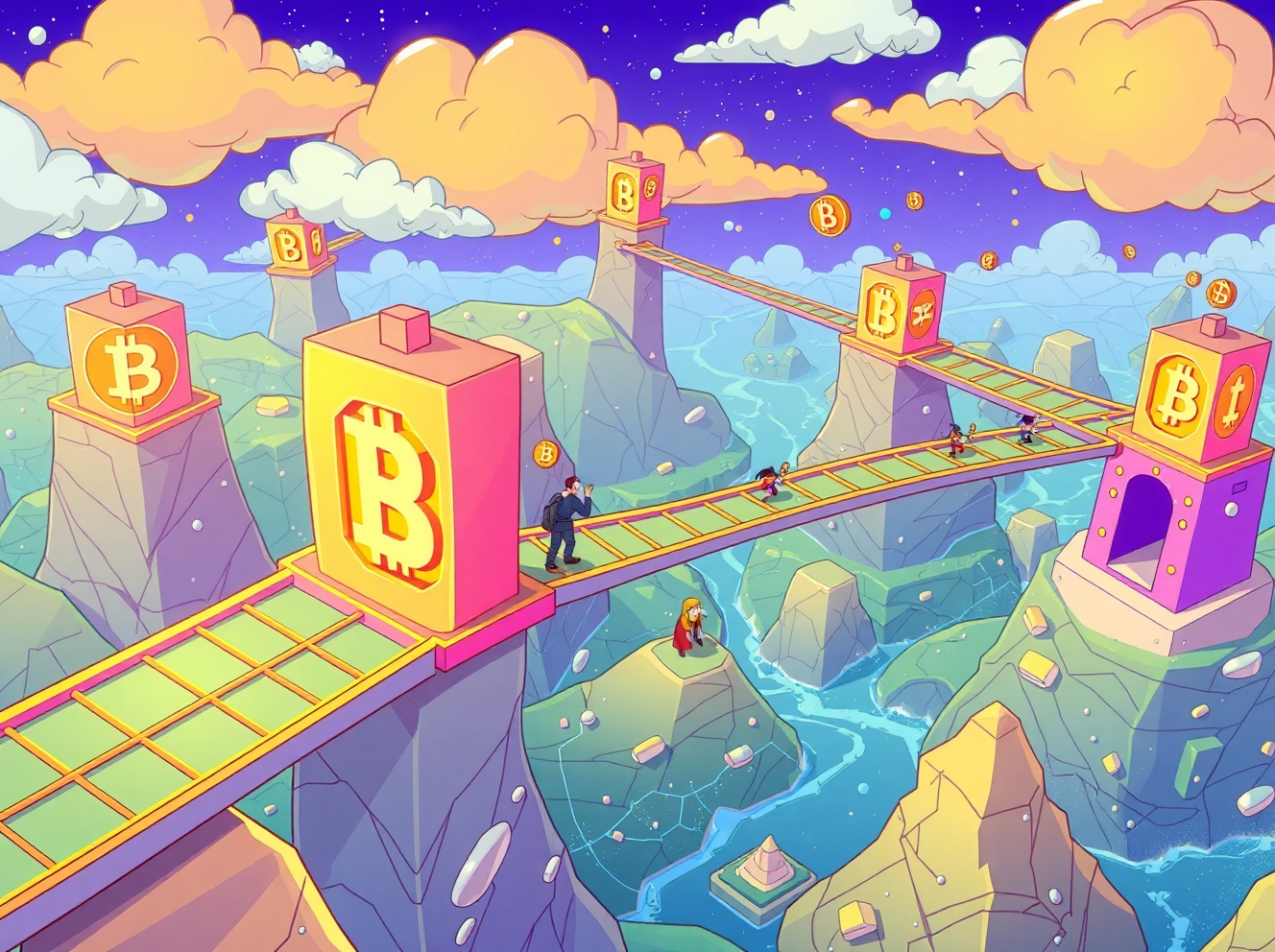
Qiao Wang argues that Layer 1 tokens face an existential threat: they lack distinct competitive advantages. Cross-chain bridges have become incredibly user-friendly, allowing developers to migrate between networks with surprising ease. This mobility creates a highly competitive environment where no single chain can maintain dominance for long.

The situation becomes more challenging when you consider that launching new chains has never been simpler. Wang emphasizes that switching blockchain ecosystems costs significantly less than migrating between cloud platforms like AWS. This low switching cost fundamentally undermines the long-term value proposition of Layer 1 tokens.

How Cross-Chain Technology Changes Everything

Cross-chain bridges have revolutionized how applications operate across different blockchain networks. Here’s what makes migration so accessible:

  • Most applications can move between chains without major technical hurdles
  • Only applications with highly complex smart contracts face migration challenges
  • Development tools and frameworks have standardized across multiple chains
  • User experience has improved dramatically across bridge interfaces

This interoperability means developers can chase better incentives, lower fees, or improved performance without being locked into a single ecosystem. Consequently, Layer 1 tokens must constantly compete to retain their application base.

The Vertical Integration Solution: Chains Owning Their Applications

Wang proposes a compelling solution for Layer 1 networks seeking sustainable competitive advantages. He suggests that chains must vertically integrate by directly owning their application layers. This strategy creates natural ecosystem lock-in and strengthens network effects.

Several prominent chains have already embraced this approach:

  • Solana has developed strong native applications and ecosystem projects
  • Base leverages its Coinbase integration for built-in user acquisition
  • Hyperliquid focuses on specialized financial applications
  • Tempo builds payment-focused solutions directly into its chain

This vertical integration creates stronger moats around Layer 1 tokens, making them more resilient to competitive pressures and migration trends.

What Does This Mean for Blockchain Investors?

For investors believing in blockchain technology’s long-term growth, Wang suggests focusing on chains that control their application layers. These Layer 1 tokens demonstrate stronger defensive characteristics and sustainable competitive advantages.

The traditional model of generic Layer 1 tokens competing purely on technical specifications appears increasingly vulnerable. Instead, chains with strategic vertical integration and owned application ecosystems show greater promise for long-term value retention.

Conclusion: The Future of Layer 1 Competition

The blockchain landscape is undergoing a fundamental shift. Layer 1 tokens can no longer rely on technical superiority alone. Sustainable competitive advantages now require strategic ecosystem development and application layer control. Chains that successfully implement vertical integration strategies will likely outperform their generic counterparts in the long run.

Frequently Asked Questions

What are Layer 1 tokens?

Layer 1 tokens are the native cryptocurrencies of base blockchain networks like Ethereum, Solana, or Bitcoin. They form the foundation upon which other applications and tokens are built.

Why do Layer 1 tokens lack competitive advantages?

They face intense competition because cross-chain bridges make migration easy, and launching new chains has become simpler, reducing switching costs for developers and users.

What is vertical integration in blockchain?

Vertical integration occurs when a blockchain network directly owns or controls applications built on its platform, creating stronger ecosystem lock-in and network effects.

Which chains are successfully implementing vertical integration?

Solana, Base, Hyperliquid, and Tempo are examples of chains that have adopted vertical integration strategies by developing or controlling key applications within their ecosystems.

How does this affect my investment strategy?

Focus on Layer 1 tokens with strong vertical integration and owned application ecosystems, as they demonstrate better defensive characteristics against competitive pressures.

Are all Layer 1 tokens facing these challenges?

While most face similar competitive pressures, chains with unique technological advantages or strong ecosystem development may maintain better competitive positioning.

Found this analysis insightful? Share this article with fellow crypto enthusiasts on social media to spread these crucial insights about Layer 1 token competitiveness!

To learn more about the latest blockchain trends, explore our article on key developments shaping cryptocurrency institutional adoption.

This post Revealing Truth: Why Layer 1 Tokens Struggle With Long-Term Value According to AllianceDAO Founder first appeared on BitcoinWorld.

Opportunità di mercato
Logo Swarm Network
Valore Swarm Network (TRUTH)
$0.009476
$0.009476$0.009476
+0.42%
USD
Grafico dei prezzi in tempo reale di Swarm Network (TRUTH)
Disclaimer: gli articoli ripubblicati su questo sito provengono da piattaforme pubbliche e sono forniti esclusivamente a scopo informativo. Non riflettono necessariamente le opinioni di MEXC. Tutti i diritti rimangono agli autori originali. Se ritieni che un contenuto violi i diritti di terze parti, contatta crypto.news@mexc.com per la rimozione. MEXC non fornisce alcuna garanzia in merito all'accuratezza, completezza o tempestività del contenuto e non è responsabile per eventuali azioni intraprese sulla base delle informazioni fornite. Il contenuto non costituisce consulenza finanziaria, legale o professionale di altro tipo, né deve essere considerato una raccomandazione o un'approvazione da parte di MEXC.

Potrebbe anche piacerti

Coinbase Slams ‘Patchwork’ State Crypto Laws, Calls for Federal Preemption

Coinbase Slams ‘Patchwork’ State Crypto Laws, Calls for Federal Preemption

The post Coinbase Slams ‘Patchwork’ State Crypto Laws, Calls for Federal Preemption appeared on BitcoinEthereumNews.com. In brief Coinbase has filed a letter with the DOJ urging federal preemption of state crypto laws, citing Oregon’s securities suit, New York’s ETH stance, and staking bans. Chief Legal Officer Paul Grewal called state actions “government run amok,” warning that patchwork enforcement “slows innovation and harms consumers.” A legal expert told Decrypt that states risk violating interstate commerce rules and due process, and DOJ support for preemption may mark a potential turning point. Coinbase has gone on the offensive against state regulators, petitioning the Department of Justice that a patchwork of lawsuits and licensing schemes is tearing America’s crypto market apart. “When Oregon can sue us for services that are legal under federal law, something’s broken,” Chief Legal Officer Paul Grewal tweeted on Tuesday. “This isn’t federalism—this is government run amok.” When Oregon can sue us for services that are legal under federal law, something’s broken. This isn’t federalism–this is government run amok. We just sent a letter to @TheJusticeDept urging federal action on crypto market structure to remedy this. 1/3 — paulgrewal.eth (@iampaulgrewal) September 16, 2025 Coinbase’s filing says that states are “expansively interpreting their securities laws in ways that undermine federal law” and violate the dormant Commerce Clause by projecting regulatory preferences beyond state borders. “The current patchwork of state laws isn’t just inefficient – it slows innovation and harms consumers” and demands “federal action on crypto market structure,” Grewal said.  States vs. Coinbase It pointed to Oregon’s securities lawsuit against the exchange, New York’s bid to classify Ethereum as a security, and cease-and-desist orders on staking as proof that rogue states are trying to resurrect the SEC’s discredited “regulation by enforcement” playbook. Oregon Attorney General Dan Rayfield sued Coinbase in April for promoting unregistered securities, and in July asked a federal judge to return the…
Condividi
BitcoinEthereumNews2025/09/18 11:52
Time Management For Entrepreneurs

Time Management For Entrepreneurs

When you’re managing everything on your own, time is your biggest asset. Yet while most entrepreneurs focus on leadership, growth and networking, they often overlook
Condividi
Techbullion2026/03/24 20:21
Vitalik Buterin lays out new Ethereum roadmap at EDCON

Vitalik Buterin lays out new Ethereum roadmap at EDCON

The post Vitalik Buterin lays out new Ethereum roadmap at EDCON appeared on BitcoinEthereumNews.com. At EDCON 2025 in Osaka, Ethereum co-founder Vitalik Buterin delivered fresh details of Ethereum’s technical roadmap, delineating both short-term scaling goals and longer-term protocol transformations. The immediate priority, according to slides from the presentation, is scaling at the L1 level by raising the gas limit while maintaining decentralization. Tools such as block-level access lists, ZK-EVMs, gas repricing, and slot optimization were highlighted as means to improve throughput and efficiency. A central theme of the presentation was privacy, divided into protections for on-chain “writes” (transactions, voting, DeFi operations) and “reads” (retrieving blockchain state). Write privacy could be achieved through client-side zero-knowledge proofs, encrypted voting, and mixnet-based transaction relays. Read privacy efforts include trusted execution environments, private information retrieval techniques, dummy queries to obscure access patterns, and partial state nodes that reveal only necessary data. These measures aim to reduce information leakage across both ends of user interaction. In the medium term, Ethereum’s focus shifts to cross-Layer-2 interoperability. Vitalik described trustless L2 asset transfers, proof aggregation, and faster settlement mechanisms as key milestones toward a seamless rollup ecosystem. Faster slots and stronger finality, supported by techniques like erasure coding and three-stage finalization (3SF), are also in scope to enhance responsiveness and security. The roadmap also includes Stage 2 rollup advancements to strengthen verification efficiency, alongside a call for broader community participation to help build and maintain these improvements. The long-term “Lean Ethereum” blueprint emphasizes security, simplicity and optimization, with ambitions for quantum-resistant cryptography, formal verification of the protocol, and adoption of ideal primitives for hashing, signatures, and zero-knowledge proofs. Buterin stressed that these improvements are not just for scalability but to make Ethereum a stable, trustworthy foundation for the broader decentralized ecosystem. This is a developing story. This article was generated with the assistance of AI and reviewed by editor Jeffrey Albus before publication.…
Condividi
BitcoinEthereumNews2025/09/18 03:22