Everybody keeps asking what the PayPal Mafia is up to, as if these guys ever went quiet. They didn’t. They just scattered into every corner of tech, politics, finance, crypto, space, and whatever new humanity-ending tech Silicon Valley spits out. And since we’re all living in this crazy timeline where tech bros seem determined to […]Everybody keeps asking what the PayPal Mafia is up to, as if these guys ever went quiet. They didn’t. They just scattered into every corner of tech, politics, finance, crypto, space, and whatever new humanity-ending tech Silicon Valley spits out. And since we’re all living in this crazy timeline where tech bros seem determined to […]

Musk, Thiel and Sacks emerge as power centers in Washington

2025/11/20 00:51
5 min di lettura
Per feedback o dubbi su questo contenuto, contattateci all'indirizzo crypto.news@mexc.com.

Everybody keeps asking what the PayPal Mafia is up to, as if these guys ever went quiet. They didn’t.

They just scattered into every corner of tech, politics, finance, crypto, space, and whatever new humanity-ending tech Silicon Valley spits out.

And since we’re all living in this crazy timeline where tech bros seem determined to be in charge of humanity’s future, it feels like the right time to point out that the crew that once fought to keep PayPal alive now sits right in the middle of the world’s power grid.

And yes, as someone who writes about Elon Musk, Peter Thiel, and Dave Sacks, I admit: I watch them the way some people watch sports.

Some might even call it an obsession.

But I mean, these guys turned Silicon Valley into their gym, pushing out companies like LinkedIn, Palantir, SpaceX, Affirm, YouTube, Yelp, Kiva, Glow, Slide, and Yammer.

These guys came from places like Stanford and the University of Illinois Urbana-Champaign, and they carried that same student-dorm energy into one of the wildest corporate survival fights ever.

Tracking how Thiel, Musk, and their glue Sacks push power

From the very beginning, Peter Thiel was crowned “don” of the PayPal Mafia, and it stuck because Peter just leans into it, since, you know… he’s Peter.

He ran PayPal, seeded Facebook, built Founders Fund, and chairs Palantir, which in 2025 teamed up with DOGE, the new Department of Government Efficiency run by Elon Musk inside the Trump administration, though the real partner was actually the Pentagon, but that’s a different story.

Moving on, Peter also pushed US$15 million into Protect Ohio Values, the fund that helped JD Vance climb into the Senate in 2022. JD has said Peter’s talk at Yale Law was “the most significant moment” of his time there.

Then there’s Elon Musk, the infamously eccentric billionaire who merged X.com with Confinity to create PayPal and then turned himself into a global headline generator. Elon owns SpaceX, runs Neuralink, keeps building The Boring Company, and still [unofficially] leads X after buying Twitter.

As of press time, Elon sits on a $500 billion net worth. He became Trump’s senior advisor, then the head of DOGE, and he personally donated over $250 million to Trump’s return campaign.

Elon and Peter hated each other at PayPal, it is known. That never changed. Back in ‘02, Elon said Peter schemed to push him out, and Peter never denied it.

But then again, Peter never denies accusations of him being awful, or sometimes even downright evil. Even when asked by reporters point-blank, he is known to either shrug it off or just laugh.

Still, somehow Dave Sacks remains close friends with both Elon and Peter, constantly running emotional support behind the scenes in a way that is as confusing as it is fascinating.

Dave was PayPal’s COO, and he now advises Trump on AI and crypto. David founded Geni.com, created Yammer, and built deep ties across the Valley. He’s the only person from the team who can still text both Elon and Peter without starting a civil war.

Tracking everyone else and the empire they built

Meanwhile, Max Levchin left PayPal and started Affirm while co-founding Glow. Scott Banister advised the early team and stayed involved in the Valley’s startup pipeline. Roelof Botha became a giant at Sequoia Capital. Steve Chen, Chad Hurley, and Jawed Karim left PayPal and invented YouTube, because of course they did.

Reid Hoffman built LinkedIn, invested in Facebook and Aviary, and now sits on Microsoft’s board while funding major Democratic campaigns. Ken Howery worked at Founders Fund and served as ambassador to Sweden under Trump’s earlier administration.

Eric Jackson wrote The PayPal Wars and went on to run WND Books and co-create CapLinked. Dave McClure left PayPal’s marketing side and became a super-angel through 500 Global. Luke Nosek, one of the original founders, later joined Founders Fund as well.

Keith Rabois jumped around LinkedIn, Square, Khosla Ventures, and Founders Fund. Jack Selby co-started Clarium Capital with Peter and now pushes investment across Arizona with AZ-VC. Premal Shah helped set up Kiva.org and sits on the Change.org board.

Russel Simmons and Jeremy Stoppelman created Yelp after leaving PayPal. Yishan Wong went from PayPal to Facebook, became Reddit’s CEO, and then started Terraformation. Yu Pan designed the early PayPal UI, helped build YouTube, and co-founded Kiwi Crate.

This network gets credited with reviving consumer tech after the 2001 dot-com crash. Their rise compares to the engineers who built Fairchild and later Intel back in the 1960s.

Tracking their political split

Peter, David, and Elon leaned right over the years, shaping libertarian and conservative ideas in public and inside Trump’s White House. Reid Hoffman landed on the opposite end, funding top Democratic efforts.

After Trump won in 2024, The Economist wrote that the PayPal Mafia would “take over America’s government.” It wasn’t far off. JD Vance became Vice President. Elon took DOGE. David stepped in as Trump’s crypto and AI advisor. Peter kept shaping the movement from the outside with networks, money, and ideology.

The New York Times recently called Peter “the most influential right-wing intellectual of the last 20 years.” His ideas pushed a generation of political newcomers. JD Vance began echoing Peter long before entering office.

The tension between Elon and Peter is real and old. Peter never apologized. Their teams joke about it. Their friends avoid the topic. But David, somehow, stayed close to both.

And in one of the strangest political side stories of this timeline, JD Vance himself repaired the Trump-Elon relationship after that very messy public breakup.

Yet somehow, after all the betrayals, near-collapses, and takeover attempts, the PayPal Mafia still acts like distant cousins who cannot quit each other.

Opportunità di mercato
Logo Threshold
Valore Threshold (T)
$0.006775
$0.006775$0.006775
+4.10%
USD
Grafico dei prezzi in tempo reale di Threshold (T)
Disclaimer: gli articoli ripubblicati su questo sito provengono da piattaforme pubbliche e sono forniti esclusivamente a scopo informativo. Non riflettono necessariamente le opinioni di MEXC. Tutti i diritti rimangono agli autori originali. Se ritieni che un contenuto violi i diritti di terze parti, contatta crypto.news@mexc.com per la rimozione. MEXC non fornisce alcuna garanzia in merito all'accuratezza, completezza o tempestività del contenuto e non è responsabile per eventuali azioni intraprese sulla base delle informazioni fornite. Il contenuto non costituisce consulenza finanziaria, legale o professionale di altro tipo, né deve essere considerato una raccomandazione o un'approvazione da parte di MEXC.

Potrebbe anche piacerti

Trump-backed WLFI  launches AgentPay SDK open-source payment toolkit for AI agents

Trump-backed WLFI  launches AgentPay SDK open-source payment toolkit for AI agents

The Trump family has expanded its presence in the crypto community with a major development for artificial intelligence (AI) agents. According to reports, World
Condividi
Cryptopolitan2026/03/20 19:03
Summarize Any Stock’s Earnings Call in Seconds Using FMP API
Summarize Any Stock’s Earnings Call in Seconds Using FMP API

Turn lengthy earnings call transcripts into one-page insights using the Financial Modeling Prep APIPhoto by Bich Tran Earnings calls are packed with insights. They tell you how a company performed, what management expects in the future, and what analysts are worried about. The challenge is that these transcripts often stretch across dozens of pages, making it tough to separate the key takeaways from the noise. With the right tools, you don’t need to spend hours reading every line. By combining the Financial Modeling Prep (FMP) API with Groq’s lightning-fast LLMs, you can transform any earnings call into a concise summary in seconds. The FMP API provides reliable access to complete transcripts, while Groq handles the heavy lifting of distilling them into clear, actionable highlights. In this article, we’ll build a Python workflow that brings these two together. You’ll see how to fetch transcripts for any stock, prepare the text, and instantly generate a one-page summary. Whether you’re tracking Apple, NVIDIA, or your favorite growth stock, the process works the same — fast, accurate, and ready whenever you are. Fetching Earnings Transcripts with FMP API The first step is to pull the raw transcript data. FMP makes this simple with dedicated endpoints for earnings calls. If you want the latest transcripts across the market, you can use the stable endpoint /stable/earning-call-transcript-latest. For a specific stock, the v3 endpoint lets you request transcripts by symbol, quarter, and year using the pattern: https://financialmodelingprep.com/api/v3/earning_call_transcript/{symbol}?quarter={q}&year={y}&apikey=YOUR_API_KEY here’s how you can fetch NVIDIA’s transcript for a given quarter: import requestsAPI_KEY = "your_api_key"symbol = "NVDA"quarter = 2year = 2024url = f"https://financialmodelingprep.com/api/v3/earning_call_transcript/{symbol}?quarter={quarter}&year={year}&apikey={API_KEY}"response = requests.get(url)data = response.json()# Inspect the keysprint(data.keys())# Access transcript contentif "content" in data[0]: transcript_text = data[0]["content"] print(transcript_text[:500]) # preview first 500 characters The response typically includes details like the company symbol, quarter, year, and the full transcript text. If you aren’t sure which quarter to query, the “latest transcripts” endpoint is the quickest way to always stay up to date. Cleaning and Preparing Transcript Data Raw transcripts from the API often include long paragraphs, speaker tags, and formatting artifacts. Before sending them to an LLM, it helps to organize the text into a cleaner structure. Most transcripts follow a pattern: prepared remarks from executives first, followed by a Q&A session with analysts. Separating these sections gives better control when prompting the model. In Python, you can parse the transcript and strip out unnecessary characters. A simple way is to split by markers such as “Operator” or “Question-and-Answer.” Once separated, you can create two blocks — Prepared Remarks and Q&A — that will later be summarized independently. This ensures the model handles each section within context and avoids missing important details. Here’s a small example of how you might start preparing the data: import re# Example: using the transcript_text we fetched earliertext = transcript_text# Remove extra spaces and line breaksclean_text = re.sub(r'\s+', ' ', text).strip()# Split sections (this is a heuristic; real-world transcripts vary slightly)if "Question-and-Answer" in clean_text: prepared, qna = clean_text.split("Question-and-Answer", 1)else: prepared, qna = clean_text, ""print("Prepared Remarks Preview:\n", prepared[:500])print("\nQ&A Preview:\n", qna[:500]) With the transcript cleaned and divided, you’re ready to feed it into Groq’s LLM. Chunking may be necessary if the text is very long. A good approach is to break it into segments of a few thousand tokens, summarize each part, and then merge the summaries in a final pass. Summarizing with Groq LLM Now that the transcript is clean and split into Prepared Remarks and Q&A, we’ll use Groq to generate a crisp one-pager. The idea is simple: summarize each section separately (for focus and accuracy), then synthesize a final brief. Prompt design (concise and factual) Use a short, repeatable template that pushes for neutral, investor-ready language: You are an equity research analyst. Summarize the following earnings call sectionfor {symbol} ({quarter} {year}). Be factual and concise.Return:1) TL;DR (3–5 bullets)2) Results vs. guidance (what improved/worsened)3) Forward outlook (specific statements)4) Risks / watch-outs5) Q&A takeaways (if present)Text:<<<{section_text}>>> Python: calling Groq and getting a clean summary Groq provides an OpenAI-compatible API. Set your GROQ_API_KEY and pick a fast, high-quality model (e.g., a Llama-3.1 70B variant). We’ll write a helper to summarize any text block, then run it for both sections and merge. import osimport textwrapimport requestsGROQ_API_KEY = os.environ.get("GROQ_API_KEY") or "your_groq_api_key"GROQ_BASE_URL = "https://api.groq.com/openai/v1" # OpenAI-compatibleMODEL = "llama-3.1-70b" # choose your preferred Groq modeldef call_groq(prompt, temperature=0.2, max_tokens=1200): url = f"{GROQ_BASE_URL}/chat/completions" headers = { "Authorization": f"Bearer {GROQ_API_KEY}", "Content-Type": "application/json", } payload = { "model": MODEL, "messages": [ {"role": "system", "content": "You are a precise, neutral equity research analyst."}, {"role": "user", "content": prompt}, ], "temperature": temperature, "max_tokens": max_tokens, } r = requests.post(url, headers=headers, json=payload, timeout=60) r.raise_for_status() return r.json()["choices"][0]["message"]["content"].strip()def build_prompt(section_text, symbol, quarter, year): template = """ You are an equity research analyst. Summarize the following earnings call section for {symbol} ({quarter} {year}). Be factual and concise. Return: 1) TL;DR (3–5 bullets) 2) Results vs. guidance (what improved/worsened) 3) Forward outlook (specific statements) 4) Risks / watch-outs 5) Q&A takeaways (if present) Text: <<< {section_text} >>> """ return textwrap.dedent(template).format( symbol=symbol, quarter=quarter, year=year, section_text=section_text )def summarize_section(section_text, symbol="NVDA", quarter="Q2", year="2024"): if not section_text or section_text.strip() == "": return "(No content found for this section.)" prompt = build_prompt(section_text, symbol, quarter, year) return call_groq(prompt)# Example usage with the cleaned splits from Section 3prepared_summary = summarize_section(prepared, symbol="NVDA", quarter="Q2", year="2024")qna_summary = summarize_section(qna, symbol="NVDA", quarter="Q2", year="2024")final_one_pager = f"""# {symbol} Earnings One-Pager — {quarter} {year}## Prepared Remarks — Key Points{prepared_summary}## Q&A Highlights{qna_summary}""".strip()print(final_one_pager[:1200]) # preview Tips that keep quality high: Keep temperature low (≈0.2) for factual tone. If a section is extremely long, chunk at ~5–8k tokens, summarize each chunk with the same prompt, then ask the model to merge chunk summaries into one section summary before producing the final one-pager. If you also fetched headline numbers (EPS/revenue, guidance) earlier, prepend them to the prompt as brief context to help the model anchor on the right outcomes. Building the End-to-End Pipeline At this point, we have all the building blocks: the FMP API to fetch transcripts, a cleaning step to structure the data, and Groq LLM to generate concise summaries. The final step is to connect everything into a single workflow that can take any ticker and return a one-page earnings call summary. The flow looks like this: Input a stock ticker (for example, NVDA). Use FMP to fetch the latest transcript. Clean and split the text into Prepared Remarks and Q&A. Send each section to Groq for summarization. Merge the outputs into a neatly formatted earnings one-pager. Here’s how it comes together in Python: def summarize_earnings_call(symbol, quarter, year, api_key, groq_key): # Step 1: Fetch transcript from FMP url = f"https://financialmodelingprep.com/api/v3/earning_call_transcript/{symbol}?quarter={quarter}&year={year}&apikey={api_key}" resp = requests.get(url) resp.raise_for_status() data = resp.json() if not data or "content" not in data[0]: return f"No transcript found for {symbol} {quarter} {year}" text = data[0]["content"] # Step 2: Clean and split clean_text = re.sub(r'\s+', ' ', text).strip() if "Question-and-Answer" in clean_text: prepared, qna = clean_text.split("Question-and-Answer", 1) else: prepared, qna = clean_text, "" # Step 3: Summarize with Groq prepared_summary = summarize_section(prepared, symbol, quarter, year) qna_summary = summarize_section(qna, symbol, quarter, year) # Step 4: Merge into final one-pager return f"""# {symbol} Earnings One-Pager — {quarter} {year}## Prepared Remarks{prepared_summary}## Q&A Highlights{qna_summary}""".strip()# Example runprint(summarize_earnings_call("NVDA", 2, 2024, API_KEY, GROQ_API_KEY)) With this setup, generating a summary becomes as simple as calling one function with a ticker and date. You can run it inside a notebook, integrate it into a research workflow, or even schedule it to trigger after each new earnings release. Free Stock Market API and Financial Statements API... Conclusion Earnings calls no longer need to feel overwhelming. With the Financial Modeling Prep API, you can instantly access any company’s transcript, and with Groq LLM, you can turn that raw text into a sharp, actionable summary in seconds. This pipeline saves hours of reading and ensures you never miss the key results, guidance, or risks hidden in lengthy remarks. Whether you track tech giants like NVIDIA or smaller growth stocks, the process is the same — fast, reliable, and powered by the flexibility of FMP’s data. Summarize Any Stock’s Earnings Call in Seconds Using FMP API was originally published in Coinmonks on Medium, where people are continuing the conversation by highlighting and responding to this story
Condividi
Medium2025/09/18 14:40
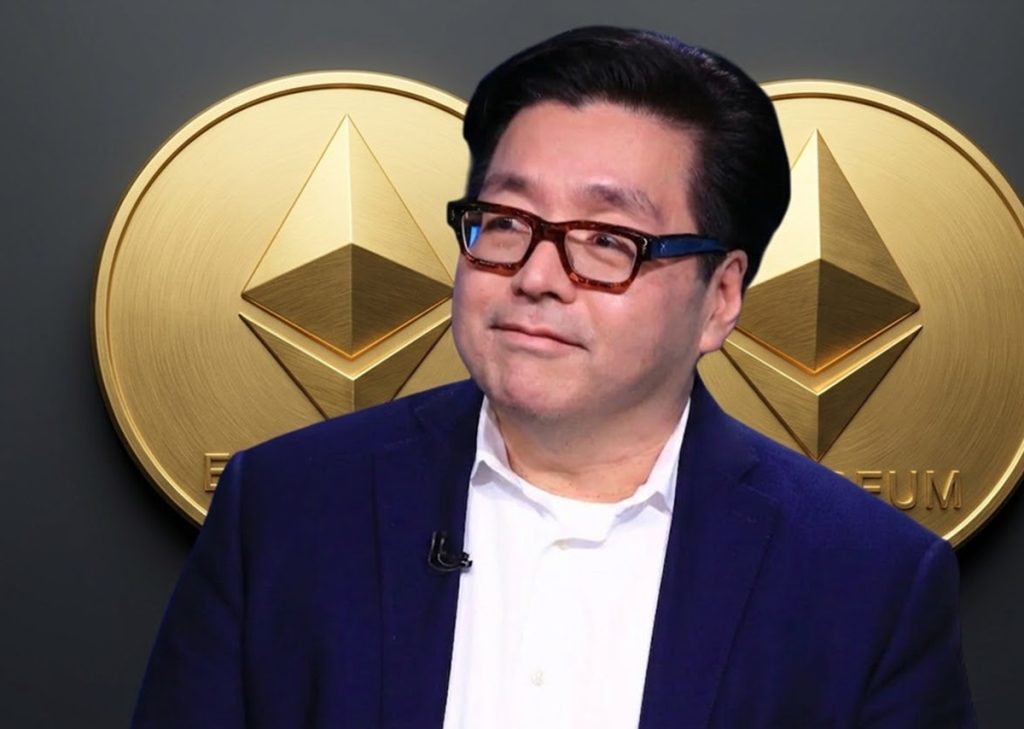
Tom Lee Declares That Ethereum Has Bottomed Out

Tom Lee Declares That Ethereum Has Bottomed Out

Experienced analyst Tom Lee conducted an in-depth analysis of the Ethereum price. Here are some of the highlights from Lee's findings. Continue Reading: Tom Lee
Condividi
Bitcoinsistemi2026/03/20 19:05