

IonQ, Rigetti, D-Wave Discuss Federal Funding Deal with U.S. Government
TLDR
- The Trump administration is negotiating to take equity stakes in quantum computing companies including IonQ, Rigetti Computing, D-Wave Quantum, Quantum Computing, and Atom Computing in exchange for federal funding
- Each company would receive minimum funding awards of $10 million from Washington according to the Wall Street Journal report
- Quantum computing stocks surged in premarket trading with D-Wave up 14%, IonQ up 13%, and Rigetti up 11% following the news
- U.S. Deputy Commerce Secretary Paul Dabbar, a former quantum computing executive, is leading the funding discussions with the companies
- A Commerce Department official told Reuters they are not currently negotiating with any of the companies, contradicting the WSJ report
The Trump administration is in discussions with several quantum computing companies about taking equity stakes in exchange for federal funding. The Wall Street Journal reported on Wednesday that companies including IonQ, Rigetti Computing, and D-Wave Quantum are considering agreements that would make the government a shareholder.
Each company involved in the talks would receive minimum funding awards of $10 million from Washington. Other companies such as Quantum Computing and Atom Computing are also considering similar arrangements according to the report.
The news sent quantum computing stocks higher in premarket trading on Thursday. D-Wave Quantum shares rose 14% while IonQ gained 13%. Rigetti Computing stock increased 11% and Quantum Computing climbed 13%.
D-Wave Quantum Inc., QBTS
Reuters could not immediately verify the Wall Street Journal report. A U.S. Commerce Department official told Reuters in an emailed statement that the department is not currently negotiating with any of the companies. IonQ declined to comment while other companies did not respond to requests for comment.
U.S. Deputy Commerce Secretary Paul Dabbar is leading the funding discussions with quantum computing companies according to the WSJ report. Dabbar previously worked as a quantum computing executive and served as an Energy Department official.
Government Investment Strategy
The potential quantum computing deals follow a pattern of government investment in U.S. companies. Earlier this year Trump announced the U.S. would take a 10% stake in Intel by converting government grants into an equity share.
The administration also arranged for the Pentagon to become the largest shareholder in MP Materials, a small mining company. That deal aimed to boost output of rare earth magnets. The U.S. government also secured a golden share with certain veto rights as part of a deal allowing Japan’s Nippon Steel to buy U.S. Steel.
Quantum Computing Technology
Quantum computers use qubits which can exist in multiple states simultaneously. This allows them to process data much faster than traditional binary-based computers.
However the technology faces challenges. Qubits are sensitive to environmental disturbances which can cause high error rates. This sensitivity remains a barrier to widespread quantum computing adoption.
Major tech companies have made progress in quantum computing recently. In February Microsoft unveiled a new chip and said quantum computing is years away rather than decades. Google and IBM have also predicted that fundamental changes in computing technology are closer than previously believed.
The quantum computing companies involved in the government funding discussions operate in different areas of the field. They are working to develop practical quantum computing systems for various applications.
The discussions represent the latest government effort to support domestic technology companies. The Trump administration has taken an active role in corporate investments across multiple sectors. These deals aim to maintain U.S. competitiveness in emerging technologies.
The post IonQ, Rigetti, D-Wave Discuss Federal Funding Deal with U.S. Government appeared first on Blockonomi.
Potrebbe anche piacerti

Tether Backs Ark Labs’ $5.2 Million Bet on Bitcoin’s Stablecoin Revival
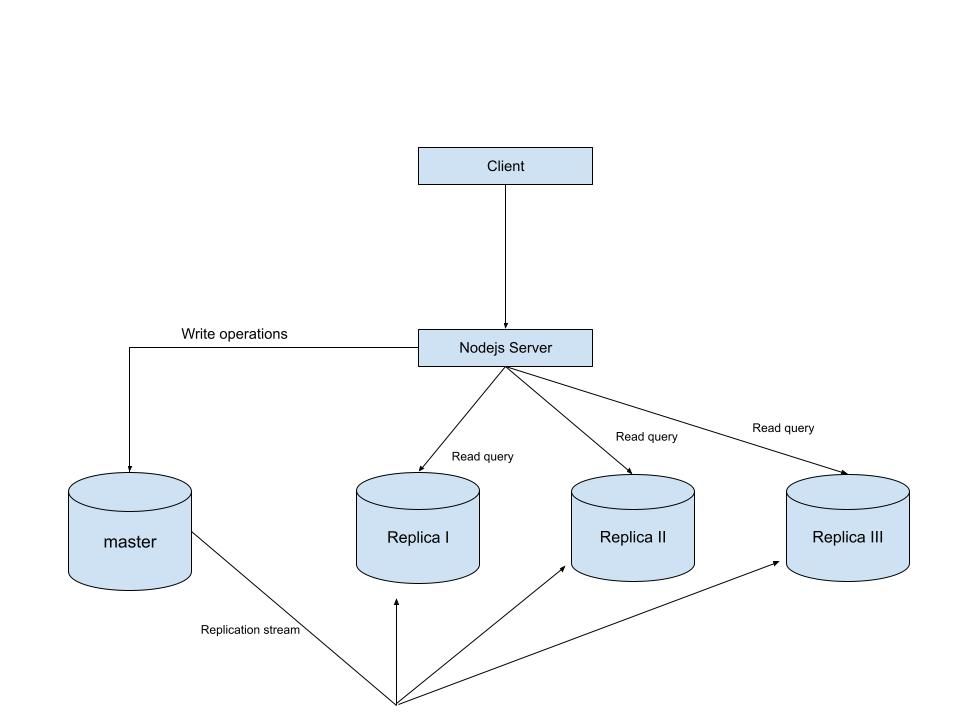
MySQL Single Leader Replication with Node.js and Docker
command: --server-id=1 --log-bin=ON The --server-id option gives each MySQL server in your replication setup its own name tag. Each one has to be unique and without it, replication won’t work at all. Another cool option not included here is binlog_format=ROW. This tells MySQL how to keep track of changes before passing them along to the replicas. By default, MySQL already uses row-based replication, but you can explicitly set it to ROW to be sure or switch it to STATEMENT if you’d rather log the actual SQL statements instead of row-by-row changes. \ Run our containers on docker Now, in the terminal, we can run the following command to spin up our database containers: docker-compose up -d \ Setting Up Our Master (Primary) Server To configure our master server, we would have to first access the running instance on docker using the following command docker exec -it mysql-master bash This command opens an interactive Bash shell inside the running Docker container named mysql-master, allowing us to run commands directly inside that container. \ Now that we’re inside the container, we can access the MySQL server and start running commands. type: mysql -uroot -p This will log you into MySQL as the root user. You’ll be prompted to enter the password you set in your docker-compose.yml file. \ Next, we need to create a special user that our replicas will use to connect to the master server and pull data. Inside the MySQL prompt, run the following commands: \ CREATE USER 'repl_user'@'%' IDENTIFIED BY 'replication_pass'; GRANT REPLICATION SLAVE ON . TO 'repl_user'@'%'; FLUSH PRIVILEGES; Here’s what’s happening: CREATE USER makes a new MySQL user called repl_user with the password replication_pass. GRANT REPLICATION SLAVE gives this user permission to act as a replication client. FLUSH PRIVILEGES tells MySQL to reload the user permissions so they take effect immediately. \ Time to Configure the Replica (Secondary) Servers a. First, let’s access the replica containers the same way we did with the master. Run this command in your terminal for each of the replica containers: \ docker exec -it <replica_container_name> bash mysql -uroot -p <replica_container_name> should be replace with the name of the replica container you are trying to setup b. Now it’s time to tell our replica where to get its data from. While inside the replica’s MySQL shell, run the following command to configure replication using the master’s details: CHANGE REPLICATION SOURCE TO SOURCE_HOST='mysql-master', SOURCE_USER='repl_user', SOURCE_PASSWORD='replication_pass', GET_SOURCE_PUBLIC_KEY=1; With the replication settings in place, let’s fire up the replica and get it syncing with the master. Still inside the MySQL shell on the replica, run: START REPLICA; This starts the replication process. To make sure everything is working, check the replica’s status with:
SHOW REPLICA STATUS\G; Look for Replica_IO_Running and Replica_SQL_Running — if both say Yes, congratulations! 🎉 Your replica is now successfully connected to the master and replicating data in real time.
Testing Our Replication Setup from the Node.js App Now that our replication is successfully set up, we can configure our Node.js server to observe the real-time effect of data being replicated from the master server to the replica server whenever we write to it. We start by installing the following dependencies:
npm i express mysql2 sequelize \ Now create a folder called src in the root directory and add the following files inside that folder connection.js, index.js and model.js. Our current directory should look like this We can now set up our connections to our master and replica server in the connection.js file as shown below
const Sequelize = require("sequelize"); const sequelize = new Sequelize({ dialect: "mysql", replication: { write: { host: "127.0.0.1", username: "root", password: "master", database: "replicaDb", }, read: [ { host: "127.0.0.1", username: "root", password: "slave", database: "replicaDb", port: 3307 }, { host: "127.0.0.1", username: "root", password: "slave", database: "replicaDb", port: 3308 }, { host: "127.0.0.1", username: "root", password: "slave", database: "replicaDb", port: 3309 }, ], }, }); async function connectdb() { try { await sequelize.authenticate(); } catch (error) { console.error("❌ unable to connect to the follower database", error); } } connectdb(); module.exports = { sequelize, }; \ We can now create a User table in the model.js file
const {DataTypes} = require("sequelize"); const { sequelize } = require("./connection"); const User = sequelize.define("User", { name: { type: DataTypes.STRING, allowNull: false, }, email: { type: DataTypes.STRING, unique: true, allowNull: false, }, }); module.exports = User \ and finally in our index.js file we can start our server and listen for connections on port 3000. from the code sample below, all inserts or updates will be routed by sequelize to the master server. while all read queries will be routed to the read replicas.
const express = require("express"); const { sequelize } = require("./connection"); const User = require("./model"); const app = express(); app.use(express.json()); async function main() { await sequelize.sync({ alter: true }); app.get("/", (req, res) => { res.status(200).json({ message: "first step to setting server up", }); }); app.post("/user", async (req, res) => { const { email, name } = req.body; let newUser = await User.build({ name, email, }); // This INSERT will go to the write (master) connection newUser = newUser.save({ returning: false }); res.status(201).json({ message: "User successfully created", }); }); app.get("/user", async (req, res) => { // This SELECT query will go to one of the read replicas const users = await User.findAll(); res.status(200).json(users); }); app.listen(3000, () => { console.log("server has connected"); }); } main(); When you make a POST request to the /users endpoint, take a moment to check both the master and replica servers to observe how data is replicated in real time. Right now, we are relying on Sequelize to automatically route requests, which works for development but isn’t robust enough for a production environment. In particular, if the master node goes down, Sequelize cannot automatically redirect requests to a newly elected leader. In the next part of this series, we’ll explore strategies to handle these challenges
