Nigel Farage has pledged to slash crypto taxes and establish a UK Bitcoin reserve if elected. Reform UK’s leader declared at the Digital Asset Summit in London on Monday that “when it comes to your industry, when it comes to growth in this industry, then I am your champion.” The proposed legislation would reduce the capital gains tax on crypto investments from 24% to a flat 10% and mandate that the Bank of England establish a Bitcoin reserve using approximately £5 billion worth of Bitcoin currently held from seized criminal assets. Reform has become the first major UK political party to accept crypto donations, currently receiving Bitcoin, Ethereum, Solana, and USD Coin through its website.Nigel Farage in Bitcoin ‘25 Conference | Source: The London Economic What Reform’s Crypto Bill Would Actually Do Farage’s platform mirrors the approach taken by U.S. President Donald Trump, who cultivated industry support before his 2024 election victory and has pursued a crypto-friendly agenda since taking office in January 2025. The Reform Party chief’s proposed bill would allow British taxpayers to pay taxes directly in Bitcoin, with funds either converted to pounds or directed to the reserve fund. Additionally, banks would be prohibited from denying or withdrawing services to customers based on lawful crypto-related activities, directly addressing industry concerns over “debanking.” Farage connected the debanking issue to his own experience, telling the conference crowd, “I went to 10 banks, all of whom refused me an account,” and adding, “No wonder so many people are going for Bitcoin—because they can’t close you down, and that is the ultimate freedom.” Meanwhile, Farage characterized the Bank of England’s plans for a central bank digital currency as “the ultimate authoritarian nightmare” and vowed to “stop it overnight” should Reform win the next election. He also targeted the Bank of England’s proposed stablecoin holding limits, capping personal holdings at £10,000 to £20,000 and business holdings at £10 million, calling the restrictions “frankly ridiculous.” According to Bloomberg, Farage claimed he had discussed the stablecoin caps directly with Andrew Bailey, the Governor of the Bank of England. The Reform leader stated that the UK government is falling behind international competitors and must act quickly to regulate the crypto industry to safeguard Britain’s position as a financial hub. Farage said “this whole area of digital assets and crypto just isn’t being talked about at all,” and pointed out that “we’ve got no regulated market.” He also said that if Reform wins the next election, his government would enact the Crypto Assets and Digital Finance Bill “very, very quickly.” Reform UK currently leads in numerous polling projections. However, Britain’s first-past-the-post electoral system presents a major structural challenge to translating that support into parliamentary seats, as demonstrated in the 2024 general election when Reform received 4.1 million votes but secured only five seats. The next UK general election is not expected until 2029, leaving four years for both political and market conditions to shift. Why Global Crypto Competition is Forcing UK Regulators to Act Britain’s regulatory environment now faces competitive pressure from the United States, where the Trump administration accelerated crypto-friendly policies, including the GENIUS Act for stablecoin oversight. The European Union has also instituted a unified regulatory framework for digital assets, creating incentives for UK policymakers to clarify their own approach to crypto regulation. Earlier this month, the Bank of England announced that it was considering exemption plans for its proposed stablecoin holding limits for crypto exchanges and other firms requiring large holdings for liquidity purposes. Most recently, Governor Andrew Bailey acknowledged that stablecoins could drive financial innovation and coexist with traditional banking systems. The Bank of England is also preparing to permit stablecoins as settlement assets in its Digital Securities Sandbox, a controlled environment for testing blockchain-based trading and issuance. The uncertain stance of the nation has prompted industry executives to warn that overly restrictive regulations in the UK will risk diverting business and talent to jurisdictions with more favorable crypto frameworks. As it stands now, the Financial Conduct Authority will complete its consultation on whether crypto firms should face the same regulatory standards as traditional financial institutions by year-end, with implementation expected to begin in January 2026Nigel Farage has pledged to slash crypto taxes and establish a UK Bitcoin reserve if elected. Reform UK’s leader declared at the Digital Asset Summit in London on Monday that “when it comes to your industry, when it comes to growth in this industry, then I am your champion.” The proposed legislation would reduce the capital gains tax on crypto investments from 24% to a flat 10% and mandate that the Bank of England establish a Bitcoin reserve using approximately £5 billion worth of Bitcoin currently held from seized criminal assets. Reform has become the first major UK political party to accept crypto donations, currently receiving Bitcoin, Ethereum, Solana, and USD Coin through its website.Nigel Farage in Bitcoin ‘25 Conference | Source: The London Economic What Reform’s Crypto Bill Would Actually Do Farage’s platform mirrors the approach taken by U.S. President Donald Trump, who cultivated industry support before his 2024 election victory and has pursued a crypto-friendly agenda since taking office in January 2025. The Reform Party chief’s proposed bill would allow British taxpayers to pay taxes directly in Bitcoin, with funds either converted to pounds or directed to the reserve fund. Additionally, banks would be prohibited from denying or withdrawing services to customers based on lawful crypto-related activities, directly addressing industry concerns over “debanking.” Farage connected the debanking issue to his own experience, telling the conference crowd, “I went to 10 banks, all of whom refused me an account,” and adding, “No wonder so many people are going for Bitcoin—because they can’t close you down, and that is the ultimate freedom.” Meanwhile, Farage characterized the Bank of England’s plans for a central bank digital currency as “the ultimate authoritarian nightmare” and vowed to “stop it overnight” should Reform win the next election. He also targeted the Bank of England’s proposed stablecoin holding limits, capping personal holdings at £10,000 to £20,000 and business holdings at £10 million, calling the restrictions “frankly ridiculous.” According to Bloomberg, Farage claimed he had discussed the stablecoin caps directly with Andrew Bailey, the Governor of the Bank of England. The Reform leader stated that the UK government is falling behind international competitors and must act quickly to regulate the crypto industry to safeguard Britain’s position as a financial hub. Farage said “this whole area of digital assets and crypto just isn’t being talked about at all,” and pointed out that “we’ve got no regulated market.” He also said that if Reform wins the next election, his government would enact the Crypto Assets and Digital Finance Bill “very, very quickly.” Reform UK currently leads in numerous polling projections. However, Britain’s first-past-the-post electoral system presents a major structural challenge to translating that support into parliamentary seats, as demonstrated in the 2024 general election when Reform received 4.1 million votes but secured only five seats. The next UK general election is not expected until 2029, leaving four years for both political and market conditions to shift. Why Global Crypto Competition is Forcing UK Regulators to Act Britain’s regulatory environment now faces competitive pressure from the United States, where the Trump administration accelerated crypto-friendly policies, including the GENIUS Act for stablecoin oversight. The European Union has also instituted a unified regulatory framework for digital assets, creating incentives for UK policymakers to clarify their own approach to crypto regulation. Earlier this month, the Bank of England announced that it was considering exemption plans for its proposed stablecoin holding limits for crypto exchanges and other firms requiring large holdings for liquidity purposes. Most recently, Governor Andrew Bailey acknowledged that stablecoins could drive financial innovation and coexist with traditional banking systems. The Bank of England is also preparing to permit stablecoins as settlement assets in its Digital Securities Sandbox, a controlled environment for testing blockchain-based trading and issuance. The uncertain stance of the nation has prompted industry executives to warn that overly restrictive regulations in the UK will risk diverting business and talent to jurisdictions with more favorable crypto frameworks. As it stands now, the Financial Conduct Authority will complete its consultation on whether crypto firms should face the same regulatory standards as traditional financial institutions by year-end, with implementation expected to begin in January 2026

Farage Pitches Himself as Crypto’s ‘Champion,’ Proposes UK Bitcoin Reserve and Tax Cuts

2025/10/14 03:52
4 min di lettura
Per feedback o dubbi su questo contenuto, contattateci all'indirizzo crypto.news@mexc.com.

Nigel Farage has pledged to slash crypto taxes and establish a UK Bitcoin reserve if elected. Reform UK’s leader declared at the Digital Asset Summit in London on Monday that “when it comes to your industry, when it comes to growth in this industry, then I am your champion.”

The proposed legislation would reduce the capital gains tax on crypto investments from 24% to a flat 10% and mandate that the Bank of England establish a Bitcoin reserve using approximately £5 billion worth of Bitcoin currently held from seized criminal assets.

Reform has become the first major UK political party to accept crypto donations, currently receiving Bitcoin, Ethereum, Solana, and USD Coin through its website.
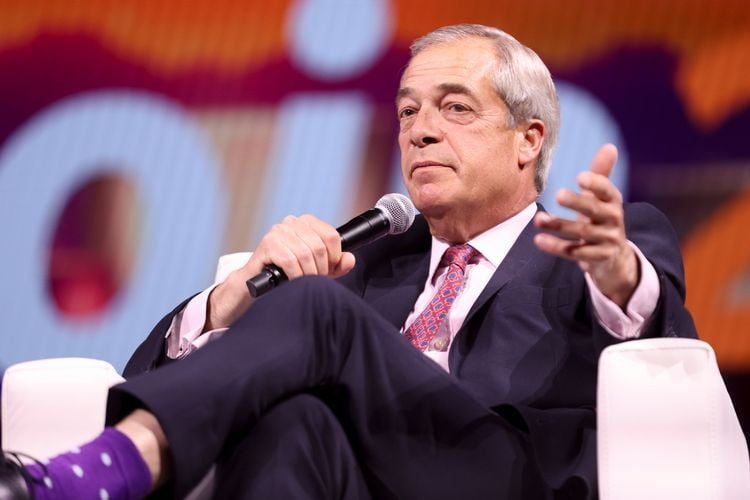
Farage Pitches Himself as Crypto's 'Champion,' Proposes UK Bitcoin Reserve and Tax CutsNigel Farage in Bitcoin ‘25 Conference | Source: The London Economic

What Reform’s Crypto Bill Would Actually Do

Farage’s platform mirrors the approach taken by U.S. President Donald Trump, who cultivated industry support before his 2024 election victory and has pursued a crypto-friendly agenda since taking office in January 2025.

The Reform Party chief’s proposed bill would allow British taxpayers to pay taxes directly in Bitcoin, with funds either converted to pounds or directed to the reserve fund.

Additionally, banks would be prohibited from denying or withdrawing services to customers based on lawful crypto-related activities, directly addressing industry concerns over “debanking.”

Farage connected the debanking issue to his own experience, telling the conference crowd, “I went to 10 banks, all of whom refused me an account,” and adding, “No wonder so many people are going for Bitcoin—because they can’t close you down, and that is the ultimate freedom.”

Meanwhile, Farage characterized the Bank of England’s plans for a central bank digital currency as “the ultimate authoritarian nightmare” and vowed to “stop it overnight” should Reform win the next election.

He also targeted the Bank of England’s proposed stablecoin holding limits, capping personal holdings at £10,000 to £20,000 and business holdings at £10 million, calling the restrictions “frankly ridiculous.”

According to Bloomberg, Farage claimed he had discussed the stablecoin caps directly with Andrew Bailey, the Governor of the Bank of England.

The Reform leader stated that the UK government is falling behind international competitors and must act quickly to regulate the crypto industry to safeguard Britain’s position as a financial hub.

Farage said “this whole area of digital assets and crypto just isn’t being talked about at all,” and pointed out that “we’ve got no regulated market.”

He also said that if Reform wins the next election, his government would enact the Crypto Assets and Digital Finance Bill “very, very quickly.”

Reform UK currently leads in numerous polling projections.

However, Britain’s first-past-the-post electoral system presents a major structural challenge to translating that support into parliamentary seats, as demonstrated in the 2024 general election when Reform received 4.1 million votes but secured only five seats.

The next UK general election is not expected until 2029, leaving four years for both political and market conditions to shift.

Why Global Crypto Competition is Forcing UK Regulators to Act

Britain’s regulatory environment now faces competitive pressure from the United States, where the Trump administration accelerated crypto-friendly policies, including the GENIUS Act for stablecoin oversight.

The European Union has also instituted a unified regulatory framework for digital assets, creating incentives for UK policymakers to clarify their own approach to crypto regulation.

Earlier this month, the Bank of England announced that it was considering exemption plans for its proposed stablecoin holding limits for crypto exchanges and other firms requiring large holdings for liquidity purposes.

Most recently, Governor Andrew Bailey acknowledged that stablecoins could drive financial innovation and coexist with traditional banking systems.

The Bank of England is also preparing to permit stablecoins as settlement assets in its Digital Securities Sandbox, a controlled environment for testing blockchain-based trading and issuance.

The uncertain stance of the nation has prompted industry executives to warn that overly restrictive regulations in the UK will risk diverting business and talent to jurisdictions with more favorable crypto frameworks.

As it stands now, the Financial Conduct Authority will complete its consultation on whether crypto firms should face the same regulatory standards as traditional financial institutions by year-end, with implementation expected to begin in January 2026.


Disclaimer: gli articoli ripubblicati su questo sito provengono da piattaforme pubbliche e sono forniti esclusivamente a scopo informativo. Non riflettono necessariamente le opinioni di MEXC. Tutti i diritti rimangono agli autori originali. Se ritieni che un contenuto violi i diritti di terze parti, contatta crypto.news@mexc.com per la rimozione. MEXC non fornisce alcuna garanzia in merito all'accuratezza, completezza o tempestività del contenuto e non è responsabile per eventuali azioni intraprese sulla base delle informazioni fornite. Il contenuto non costituisce consulenza finanziaria, legale o professionale di altro tipo, né deve essere considerato una raccomandazione o un'approvazione da parte di MEXC.

Potrebbe anche piacerti

Health Insurers To Cover Covid Vaccines Despite RFK, Jr. Moves

Health Insurers To Cover Covid Vaccines Despite RFK, Jr. Moves

The post Health Insurers To Cover Covid Vaccines Despite RFK, Jr. Moves appeared on BitcoinEthereumNews.com. The nation’s biggest health insurance companies will continue to cover vaccinations – including those against Covid-19 and seasonal flu – previously recommended by a federal advisory committee, America’s Health Insurance Plans said Wednesday, Sept. 17, 2025. In this photo is a free flu and Covid-19 vaccine shots available sign, CVS, Queens, New York. (Photo by: Lindsey Nicholson/Universal Images Group via Getty Images) UCG/Universal Images Group via Getty Images The nation’s biggest health insurance companies will continue to cover vaccinations – including those against Covid-19 and seasonal flu – previously recommended by a federal advisory committee. The announcement by America’s Health Insurance Plans (AHIP), which includes CVS Health’s Aetna, Humana, Cigna, Centene and an array of Blue Cross and Blue Shield plans as members, comes ahead of the first meeting of the reconstituted Advisory Committee on Immunization Practices, which now has new members chosen by U.S. Health and Human Services Secretary Robert F. Kennedy Jr., a vaccine critic. “Health plans are committed to maintaining and ensuring affordable access to vaccines,” AHIP said in a statement Wednesday. “Health plan coverage decisions for immunizations are grounded in each plan’s ongoing, rigorous review of scientific and clinical evidence, and continual evaluation of multiple sources of data.” The move by AHIP is good news for millions of Americans at a time of year when they flock to drugstores, pharmacies, physician’s offices and outpatient clinics to get their seasonal flu and Covid shots. Kennedy’s changes to U.S. vaccine policy have created confusion across the country over whether certain vaccines long covered by insurance would continue to be. AHIP has now provided some clarity for millions of Americans. “Health plans will continue to cover all ACIP-recommended immunizations that were recommended as of September 1, 2025, including updated formulations of the COVID-19 and influenza vaccines, with no cost-sharing…
Condividi
BitcoinEthereumNews2025/09/18 03:11
Standard Chartered’s Critical March Forecast Signals Monetary Policy Shift

Standard Chartered’s Critical March Forecast Signals Monetary Policy Shift

The post Standard Chartered’s Critical March Forecast Signals Monetary Policy Shift appeared on BitcoinEthereumNews.com. RBA Rate Hike: Standard Chartered’s Critical
Condividi
BitcoinEthereumNews2026/03/12 16:05
X1 EcoChain Partners with Symbiosis to Pioneer Cross-Chain Interoperability Ahead of Mainnet Launch

X1 EcoChain Partners with Symbiosis to Pioneer Cross-Chain Interoperability Ahead of Mainnet Launch

X1 EcoChain and Symbiosis are joining forces, making it possible to move assets seamlessly across 45-plus chains with mainnet launch right around the corner.
Condividi
Blockchainreporter2026/03/12 16:00