

Efiwe is bridging the no laptop, poor internet barrier by teaching coding with SMS
Chidi Nwaogu, Co-founder and CTO of Efiwe, started the journey with one problem in mind: learning to code is not easy. It is more difficult for Africans, for two main reasons. Access to a stable internet connection is one. Laptop adoption is another. And this is even worse for people in underserved communities with low income and poor living conditions.
“When students join a virtual class, I discovered that some don’t stay up to five minutes. They drop out. When I reached out, they kept saying the same thing. Oh, I wasn’t trying to drop out; my internet was so bad. And I can’t stay long enough because my data runs out,” Chidi noted.
In a particular cohort, 80 students enrolled, and only 6 graduated.
With more than half of Africans without laptops and about 33% experiencing either expensive or unstable internet, the gap to fill was glaring. It is not just about wanting to code; it’s about overcoming these obstacles, and then coding will be made easy.
Chidi resigned as an academic director of a Netherlands-based African-focused Edtech company to build a platform that addresses these challenges. After eight months, he had to discard what he built after realising the idea wasn’t addressing the needs.
Rewiring to what works took two months, leading to its launch on August 16, 2025
Efiwe is a mobile-first AI platform where learners can learn to code on their smartphones. It works in offline mode and supports 189 languages.
“You don’t need a computer. Everything. was designed for smartphones. As you’re also learning to code, you’re building something real. It’s not like you’re just passively learning,” Chidi noted.
Within two weeks of launch, Efiwe had over 2,000 active users from 76 countries. Chidi said a student completed 83 challenges in a single session on their phone. Also, every person who tried Efiwe completed at least 5 challenges on their first day.
Efiwe first launched in Ghana and Kenya, before extending the AI coding on smartphones to Nigerians. The platform also supports special learners through the use of sign language for coding.
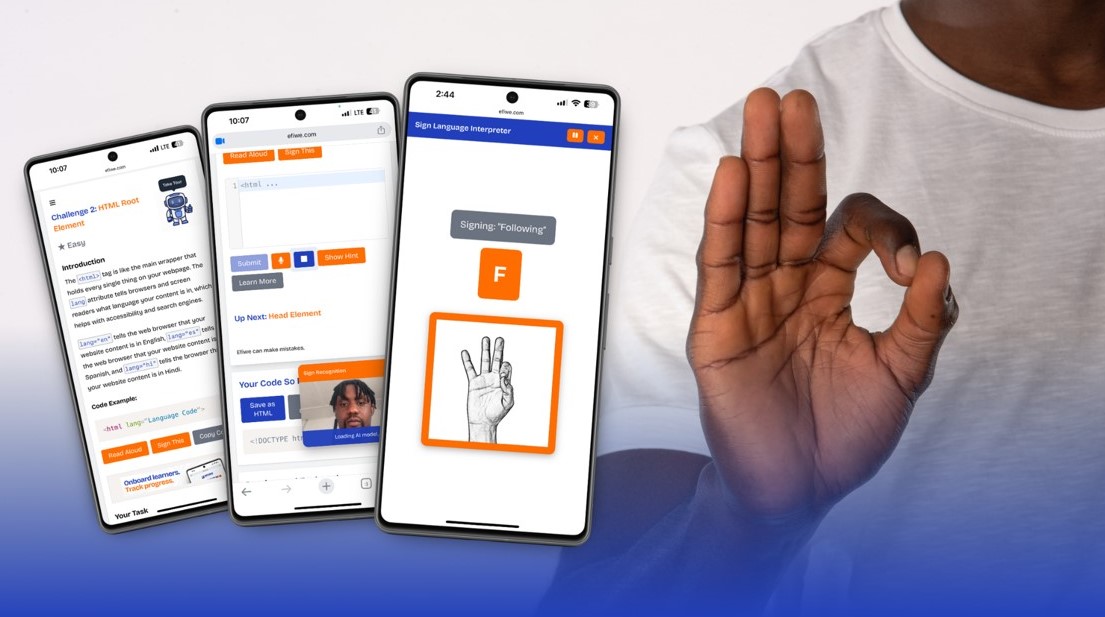 Efiwe – Sign language
Also Read: Sampson Ovuoba started coding at 13, dropped out of medical school to build a global developer tool.
Challenges of learning to code via USSD
The idea of learning to code with SMS stems from the need to create room for accessibility, especially for underserved communities and people with keypad phones.
This is one of the greatest challenges that Efiwe has faced so far. There were a couple of considerations, such as the 130-character limit, monitoring progress, and how learners without smartphones tend to practice.
Then, there was the problem of affordability. The cost of airtime for SMS responses can be huge for learners who are financially challenged to own a smartphone in the first place.
In response, Efiwe for SMS was built on WhatsApp and Facebook Messenger. By incorporating a simple language model, the response model was integrated into the USSD mode.
“Seeing how people are learning to code using SMS has been amazing,” Chidi noted, adding that the team soon fixed the character limit via SMS. By getting more than 130 characters via SMS, learners can save airtime while having an extensive response.
By texting “Efiwe” to 34461 via an MTN phone number, a learner gets started with N4/SMS.
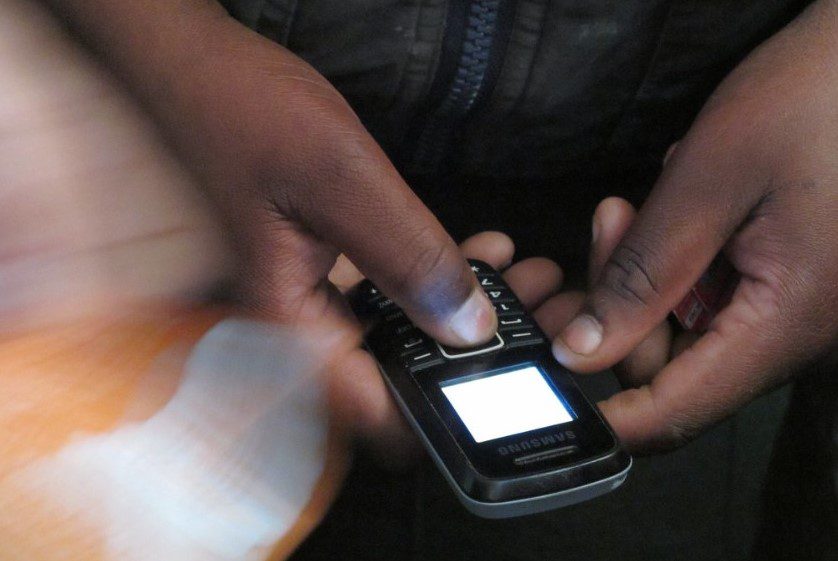 Keypad phone with no internet access
Considering the USSD’s focus on low-income and underserved individuals who want to learn coding, Chidi hinted that the team is working on making the SMS cost-free.
“We’re trying to switch from a shared shortcode to a premium SMS shortcode where we bear the cost of the inbound as well. That means the user gets to send SMS for free. Because these are less privileged people who use feature phones,” he said.
The next question is how to track users’ learning patterns and progress. The UX gap in the communication model doesn’t allow them to see the result of their code or let Efiwe identify their learning difficulties.
Chidi noted that the team is still working to fix the challenge. “We have not figured that out. How to allow them to see the result of their code? Hopefully, in the future, we figure that out. But at this moment, that’s the UX gap.”
How founders should help underserved communities
Most products today inadvertently exclude the less privileged by design and mode of delivery. This systematic divide broadens the existing social gap.
Today, it is imperative that founders create an inclusive mode to make the most impact.
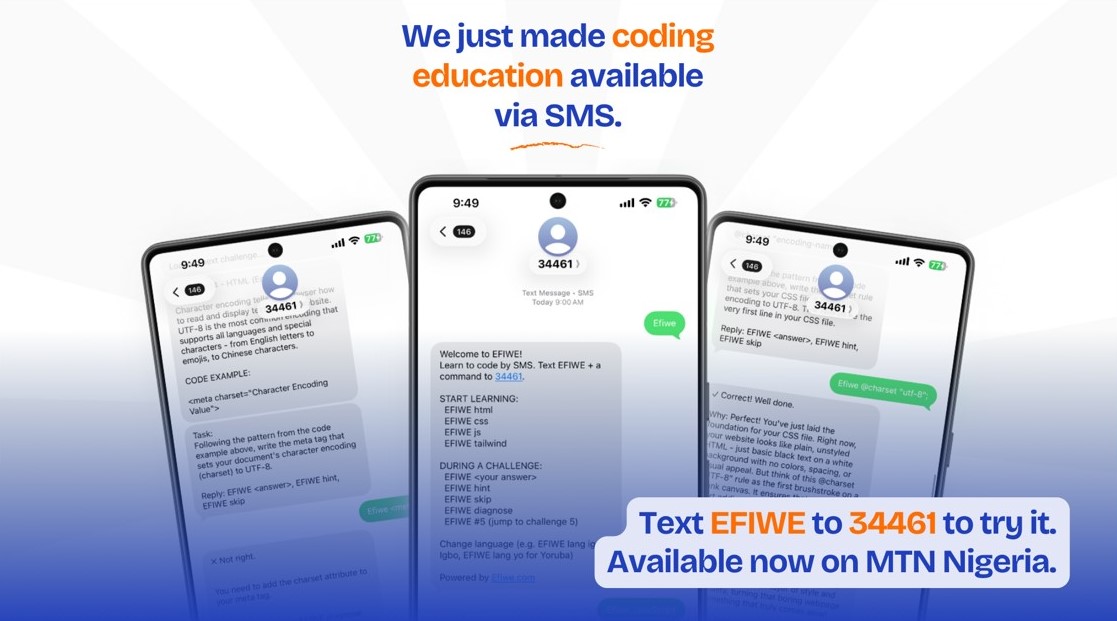 Efiwe – SMS bot
Chidi agrees with this notion by serving more users via USSD. He suggests that founders need to build to accommodate people who have no laptop and poor or no internet access.
“The first thing is for the private sector to not think about money first. They should think about impact,” adding that founders don’t think about the underserved because they feel they can’t afford the product.
“But if we keep building that way, then we are just literally creating no change whatsoever, creating the same divide that will exist forever,” he concluded.


Potrebbe anche piacerti

Bitcoin Open Interest Plunges 25% as Mass Liquidations Reset Crypto Derivatives Markets
Dogecoin Price Could Rebound If Wyckoff Accumulation Holds

Ripple Partner Thunes Unveils Development That Could Strengthen XRP’s Global Payment Narrative


Notizie di tendenza
Altro
