

SSI Vimana and Project Operion Transform Surgical Mobility
SSI Vimana and Project Operion Redefine Surgical Mobility at SMRSC 2026
A Shift From Hospitals to Deployment Networks
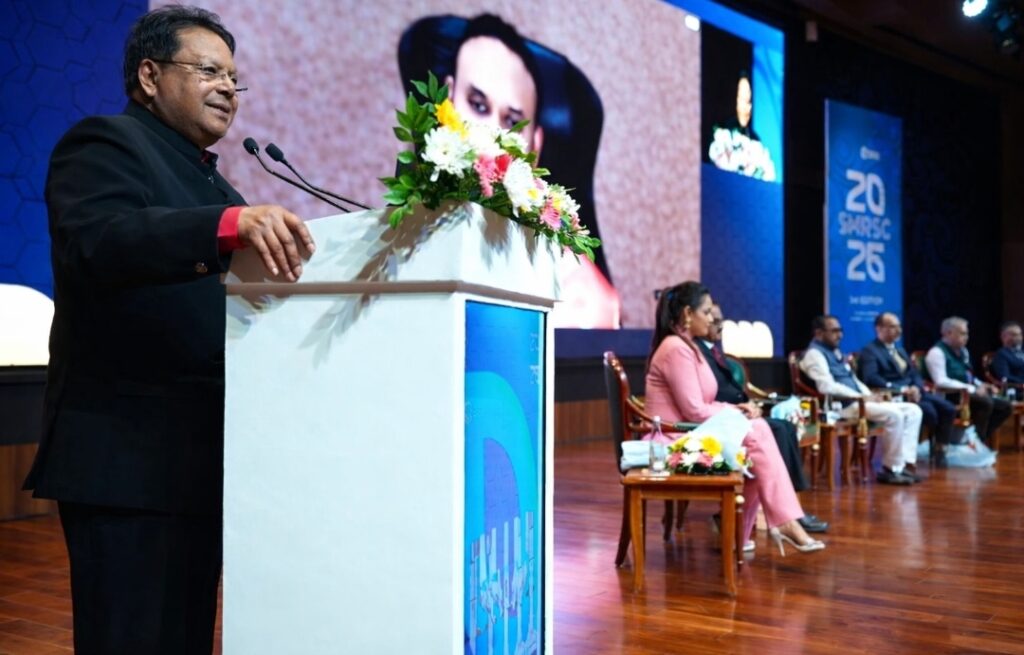
The unveiling of SSI Vimana and Project Operion at SMRSC 2026 signals a structural redefinition of surgical care. Within the first moments of the conference hosted by SS Innovations International, the narrative moved beyond incremental innovation toward a fundamental question: What if surgery is no longer tied to a place?
This becomes critical when emergency response, battlefield medicine, and rural healthcare expose the fragility of infrastructure-bound care. SSI Vimana and Project Operion are positioned precisely at this fracture point—introducing mobility, telepresence, and deployability into the surgical experience layer.
“SMRSC 2026 underlines our commitment to advancing surgical innovation… to make world-class surgical care more accessible to all.” — Dr. Sudhir Srivastava, Founder, Chairman and CEO, SS Innovations International
Why Static Healthcare Models Are Failing
At a structural level, traditional healthcare systems are designed around centralized, immobile infrastructure. Hospitals, operating rooms, and surgical expertise are geographically fixed, while demand is dynamic and often unpredictable.
From a CX standpoint, this creates a critical mismatch:
- Patients must travel to care
- Time delays increase mortality risk
- Remote and high-risk zones remain underserved
This becomes critical when the golden hour defines survival. Legacy models—ambulance logistics, referral chains, and centralized operating rooms—introduce friction that directly impacts outcomes.
“The focus today must be on ensuring that innovation is not only advanced, but also scalable and accessible…” — Dr. Mylswamy Annadurai
The deeper implication is clear: healthcare systems must evolve from facility-centric models to responsive, distributed care networks.
SSI’s Strategic Inflection Point
With SSI Vimana and Project Operion, SS Innovations International is executing a strategic pivot from product innovation to ecosystem orchestration.
Historically, robotic surgery focused on precision within controlled environments. SSI extends this paradigm by introducing:
- Mobility (drone deployment and wheeled OR systems)
- Telepresence (remote surgeon command centers)
- Interoperability (integration with existing infrastructure)
This is where the shift occurs: the operating room is no longer a fixed asset—it becomes a deployable service layer.
“India is fast emerging as a global hub for advanced medical technologies…” — Prataprao Jadhav
Strategically, this positions SSI as a full-stack surgical mobility platform provider, not just a robotics manufacturer.
Competition Is Still Infrastructure-Bound
Global leaders in robotic surgery have optimized precision, visualization, and minimally invasive techniques. However, their architectures remain fundamentally tied to hospital environments.
This creates a competitive asymmetry.
While L1 and L2 players focus on:
- Enhancing surgical accuracy
- Improving operating room workflows
SSI is solving for:
- Deployment latency
- Access in extreme environments
- Mobility-first surgical delivery
This becomes a category-defining move. Instead of competing within robotic surgery, SSI is expanding the category itself into mobility-driven care systems.
The deeper implication: competition will shift from robotics capability → deployment capability.
Engineering the Mobile Surgical Stack
At the core of SSI Vimana and Project Operion lies a tightly integrated, multi-layered system architecture.
SSI Vimana introduces:
- Heavy-lift autonomous drone deployment
- Dual 7-degree-of-freedom robotic arms
- Remote operation via SSI Mantra Command Center
- Capabilities such as haemorrhage control and trauma intervention
Project Operion complements this with:
- Overhead-integrated robotic systems
- Zero-footprint architecture eliminating spatial constraints
- Wheeled mobility enabling rapid deployment
- Low-latency telesurgery integration
This is where the innovation deepens. The system is not just robotic—it is network-native and deployment-aware, integrating:
- AI-assisted workflows
- Real-time telemetry
- Teleoperation frameworks
Operationally, this translates to a seamless orchestration of hardware, software, and connectivity layers, enabling surgery in environments previously considered inaccessible.
The CX Transformation Layer
From a CX standpoint, SSI Vimana and Project Operion fundamentally alter the experience equation.
Customer (Patient):
- Care reaches the patient instead of the reverse
- Reduced time-to-treatment improves survival probability
- Access expands to remote, rural, and high-risk zones
Business (Healthcare Providers):
- Expanded geographic footprint without physical expansion
- New service models (remote surgery, defence contracts, disaster response)
- Improved asset utilization
System (Healthcare Ecosystem):
- Transition to distributed care delivery
- Integration across defence, civilian healthcare, and emergency services
- Real-time responsiveness as a standard expectation
“SSI has taken another significant step towards reshaping surgical care… ensuring benefits reach underserved communities.” — Sri Madhusudan Sai
The deeper implication is the emergence of experience parity, where geography no longer determines care quality.
Maturity and Scalability Questions
Despite its transformational potential, scaling SSI Vimana and Project Operion introduces complex challenges.
At a structural level:
- Regulatory frameworks for drone-based surgical deployment remain nascent
- Cross-border telesurgery raises compliance questions
- Infrastructure readiness (connectivity, training) varies widely
This becomes critical when moving from controlled demonstrations to real-world deployments.
The current maturity level can be classified as transformational but early-stage scalable.
The gap is not technological—it is ecosystem readiness.
The trigger for widespread adoption will be:
- Defence use cases
- Disaster response validation
- Government-backed healthcare programs
Decision-Making for Enterprises
For healthcare providers and governments, the decision is not whether this model will emerge—but how to engage with it.
Build vs Buy vs Partner:
- Building such systems internally is impractical due to complexity
- Buying is limited due to market maturity
- Partnering with ecosystem leaders like SSI becomes the most viable strategy
Risk Assessment:
- Regulatory risk: High
- Operational risk: Medium
- Technology risk: Medium
Implementation Complexity: High
Strategically, early adopters gain:
- First-mover advantage in distributed care
- Capability leadership in emergency response
- Enhanced CX differentiation
Industry-Wide Ripple Effects
The introduction of SSI Vimana and Project Operion will reshape multiple industry layers:
- Talent: Rise of robotic surgeons and teleoperation specialists
- Competition: Shift toward mobility-first architectures
- Ecosystem: Convergence of healthcare, defence, AI, and aerospace
This is where the shift accelerates. Healthcare is no longer an isolated domain—it becomes part of a multi-industry operational network.
The deeper implication is the emergence of surgery-as-a-service, delivered on demand, anywhere.
The Future: Surgery Without Boundaries
The trajectory set by SSI Vimana and Project Operion points toward a future where surgical care is:
- Location-independent
- Real-time responsive
- Digitally orchestrated
This becomes critical as global healthcare systems face increasing pressure to deliver equitable, timely, and high-quality care.
The deeper implication is not just technological—it is philosophical.
Healthcare is transitioning from infrastructure ownership to experience delivery.
And in that future, the operating room is no longer a place.
It is a capability—deployed wherever it is needed.
The post SSI Vimana and Project Operion Transform Surgical Mobility appeared first on CX Quest.


Potrebbe anche piacerti

Metaplanet buys 5,075 Bitcoin in Q1 to become 3rd-largest treasury

Najin, One of the Last White Rhinos, Killed in Poaching Attack




