Scott Bessent Urges Congress to Pass Clarity Act for Crypto Rules
Treasury Secretary Scott Bessent has called on Congress to pass the Clarity Act, a bipartisan bill that would establish a formal regulatory framework for U.S. crypto markets. The push from the nation’s top financial official signals growing urgency around digital asset legislation as Bitcoin trades near $71,074 amid extreme fear in the market.
What Scott Bessent Said About the Clarity Act
Bessent urged Congress to pass the Digital Asset Market Clarity Act and get it to President Donald Trump for signature this spring, according to Reuters. He said clarity on the bill would give “great comfort to the market” amid ongoing volatility.
The statement carries weight coming from Treasury, which has historically deferred to the SEC and CFTC on crypto oversight. Bessent’s direct involvement suggests the White House views market-structure legislation as a near-term priority, not a back-burner issue.
How the Clarity Act Would Reshape U.S. Crypto Oversight
The Clarity Act, formally designated H.R.3633, was introduced on May 29, 2025 by Rep. J. French Hill. The bill creates a federal framework where the CFTC would generally regulate digital commodities while the SEC retains jurisdiction over securities-linked digital asset activity.
That division matters. Today, exchanges, token issuers, and investors operate under overlapping and sometimes contradictory guidance from multiple agencies. The Clarity Act would draw a statutory line between commodity-like tokens and securities-linked ones, giving market participants a single compliance standard to follow.
The bill passed the House on July 17, 2025 with strong bipartisan support, clearing the chamber by a vote of 294-134. The Senate received it on September 18, 2025 and referred it to the Banking, Housing, and Urban Affairs Committee, where it currently sits.
Policy groups have lined up behind the bill. Coin Center, a Washington-based crypto policy think tank, published a statement supporting passage, with executive director Peter Van Valkenburgh writing that the organization “supports the passage of the Digital Asset Market Clarity (CLARITY) Act of 2025.”
The political dynamics around the bill remain heated. Senator Cynthia Lummis, a vocal crypto proponent, has publicly clashed with industry figures over the legislation’s direction.
Source: @SenLummis on X
Why This Congressional Push Matters Now
Bessent’s call comes at a moment of pronounced market stress. Bitcoin traded at $71,074 at press time, down 0.38% over the past 24 hours, with a market cap of roughly $1.42 trillion. The Crypto Fear & Greed Index sits at 14, deep in “Extreme Fear” territory.
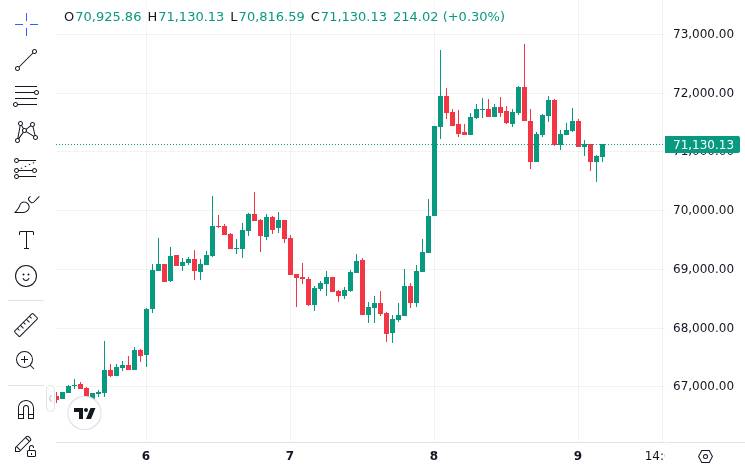 CoinMarketCap market data view included to frame the latest move in Scott Bessent.
Regulatory uncertainty has been a persistent drag on institutional participation. Firms like Morgan Stanley, which recently launched a Bitcoin ETF product drawing $34 million in day-one inflows, have moved cautiously into crypto precisely because the rules remain unclear. A statutory framework could accelerate that institutional pipeline.
The Senate Banking Committee has not scheduled a markup for H.R.3633. If the committee advances the bill this spring, as Bessent is pushing, it would still need a full Senate vote before reaching Trump’s desk. Any delay past the current session risks resetting the legislative clock entirely.
Meanwhile, broader macro risks continue to weigh on crypto sentiment. Bitcoin’s recent rebound has looked fragile against geopolitical headwinds, and even Ethereum Foundation treasury activity has drawn market scrutiny.
For market participants, the next concrete signal to watch is whether the Senate Banking Committee schedules hearings or a markup on the Clarity Act. Until then, Bessent’s comments remain a statement of intent, not legislative action.
Disclaimer: This article is for informational purposes only and does not constitute financial or investment advice. Cryptocurrency and digital asset markets carry significant risk. Always do your own research before making decisions.


Potrebbe anche piacerti
![[Rappler Investigates] When health is wealth in a poor country](https://www.rappler.com/tachyon/2026/04/safer-metro-manila-dilg-remulla.png?resize=75%2C75&crop=285px%2C0px%2C802px%2C802px)
[Rappler Investigates] When health is wealth in a poor country

Zhao Changpeng Reveals Why Bear Markets Create Unbeatable Web3 Opportunities