BitcoinWorld zkSync Lite Shutdown: The End of an Era for Ethereum’s First ZK Rollup In a significant move for the Ethereum scaling landscape, the team behind zkSync has announced the planned shutdown of its pioneering zkSync Lite service next year. If you’ve been in the crypto space for a few years, you might remember this name as a trailblazer. But what does this shutdown really mean for the ecosystem […] This post zkSync Lite Shutdown: The End of an Era for Ethereum’s First ZK Rollup first appeared on BitcoinWorld.BitcoinWorld zkSync Lite Shutdown: The End of an Era for Ethereum’s First ZK Rollup In a significant move for the Ethereum scaling landscape, the team behind zkSync has announced the planned shutdown of its pioneering zkSync Lite service next year. If you’ve been in the crypto space for a few years, you might remember this name as a trailblazer. But what does this shutdown really mean for the ecosystem […] This post zkSync Lite Shutdown: The End of an Era for Ethereum’s First ZK Rollup first appeared on BitcoinWorld.

zkSync Lite Shutdown: The End of an Era for Ethereum’s First ZK Rollup
2025/12/08 06:55
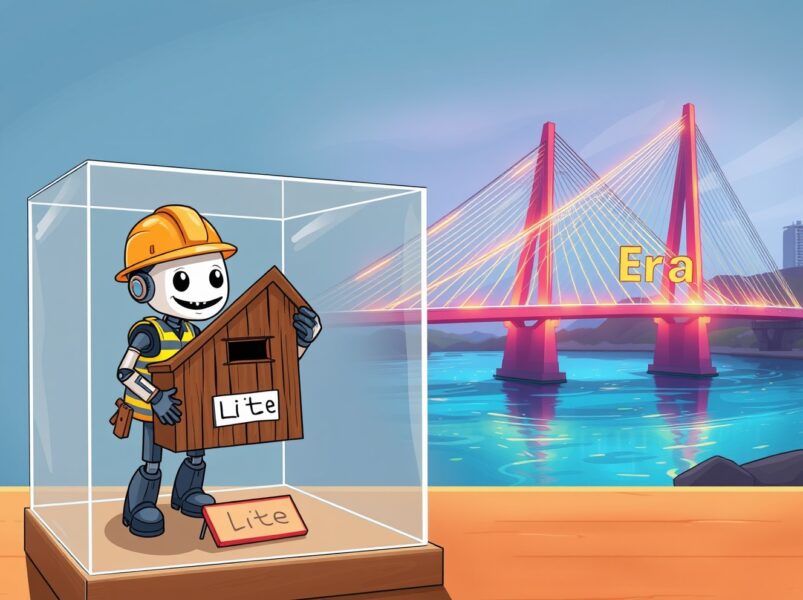
A cartoon illustrating the planned zkSync Lite shutdown as a positive upgrade to a newer network.

BitcoinWorld

zkSync Lite Shutdown: The End of an Era for Ethereum’s First ZK Rollup

In a significant move for the Ethereum scaling landscape, the team behind zkSync has announced the planned shutdown of its pioneering zkSync Lite service next year. If you’ve been in the crypto space for a few years, you might remember this name as a trailblazer. But what does this shutdown really mean for the ecosystem and, more importantly, for you? Let’s break down the announcement and explore the future beyond zkSync Lite.

What is the zkSync Lite Shutdown All About?

The official announcement came via the platform X, where zkSync stated it will phase out the zkSync Lite service in the coming year. Crucially, the team framed this not as a failure, but as a natural evolution. They explained that zkSync Lite has “already served its purpose” and that its retirement will not impact the operations of the main zkSync Era network. This is a key point for user confidence.

Launched back in 2020, zkSync Lite (originally known as zkSync 1.0) holds a special place in history as Ethereum’s very first ZK rollup. It provided vital early scaling solutions, enabling features like:

  • Fast and cheap token transfers
  • Basic NFT minting and trading
  • A proof-of-concept for secure, scalable Layer 2 technology

Why is zkSync Lite Being Phased Out?

Think of this like upgrading from an old, reliable flip phone to a modern smartphone. The flip phone served its purpose perfectly, but technology has moved on. The same is true for zkSync Lite. The newer zkSync Era network, which launched in 2023, is simply a more advanced, full-featured successor. Therefore, maintaining two parallel networks is inefficient.

Here are the core reasons behind the decision:

  • Technological Supersession: zkSync Era offers a fully-fledged, EVM-compatible smart contract platform, while Lite was primarily for payments.
  • Resource Consolidation: The development team can focus all its energy on improving and securing the single, more powerful zkSync Era chain.
  • User Migration: Encouraging all activity to move to the more capable network creates a stronger, unified ecosystem.

What Should zkSync Lite Users Do Now?

First, don’t panic. The shutdown is scheduled for next year, which gives everyone ample time to prepare. The most important action is to migrate any assets you still have on the zkSync Lite network over to zkSync Era or back to Ethereum Mainnet. The zkSync team will undoubtedly provide clear, step-by-step guides and tools for this process as the deadline approaches.

For developers who built on Lite, this is a call to action to port your applications to zkSync Era. The newer platform’s EVM compatibility makes this transition far smoother than it would have been otherwise. This consolidation ultimately benefits everyone by pooling liquidity and users into one vibrant ecosystem.

The Bigger Picture: What This Means for Ethereum Scaling

The retirement of zkSync Lite is a sign of a healthy, maturing technology stack. It shows that the ZK rollup space is evolving rapidly, with early prototypes making way for production-ready solutions. zkSync Era, along with competitors like Starknet and Polygon zkEVM, are now battling it out in the arena of general-purpose ZK rollups.

This move reinforces a critical lesson for the crypto industry: successful innovation often means knowing when to sunset older systems to focus on the future. The core promise of zkSync Lite—scaling Ethereum securely with zero-knowledge proofs—is not dying; it’s being fulfilled on a grander scale.

Conclusion: A Graceful Exit for a Pioneer

The planned zkSync Lite shutdown marks the end of an important chapter in Ethereum’s scaling journey. It was the proof that ZK technology could work in practice, paving the way for everything that has followed. While it’s always bittersweet to see a pioneer step aside, this transition is a net positive, signaling growth, confidence, and a focused path forward for the zkSync ecosystem. Users have time to adapt, and the entire community can now rally behind the more powerful zkSync Era network.

Frequently Asked Questions (FAQs)

Q1: When exactly will zkSync Lite shut down?
A: The official announcement states “next year,” but a specific date has not been provided yet. The team will announce the exact timeline well in advance.

Q2: Will I lose my funds if they are on zkSync Lite?
A: No. You will not lose funds. You will need to migrate your assets (tokens, NFTs) off the Lite network before the shutdown date using official migration tools.

Q3: Does this affect the zkSync Era network or the ZK token?
A: No. The shutdown is specifically for the older zkSync Lite network. The zkSync Era chain continues operating normally, and this decision is unrelated to the ZK token’s functionality.

Q4: Why not keep both networks running?
A: Maintaining a secure blockchain network requires significant resources. Sunsetting Lite allows the developers to concentrate all security and innovation efforts on the superior zkSync Era network.

Q5: How do I migrate my assets from zkSync Lite?
A> The zkSync team will release detailed instructions and user-friendly migration portals. Keep an eye on their official blog and social channels for updates.

Q6: What happens to NFTs minted on zkSync Lite?
A: You will need to migrate them to zkSync Era or Ethereum Mainnet to ensure they remain accessible and tradable after the shutdown.

Found this guide to the zkSync Lite shutdown helpful? The world of Ethereum scaling is moving fast. Help others stay informed by sharing this article on X (Twitter) or your favorite crypto community forum!

To learn more about the latest Ethereum scaling trends, explore our article on key developments shaping Ethereum’s Layer 2 ecosystem and its future adoption.

This post zkSync Lite Shutdown: The End of an Era for Ethereum’s First ZK Rollup first appeared on BitcoinWorld.

Disclaimer: The articles reposted on this site are sourced from public platforms and are provided for informational purposes only. They do not necessarily reflect the views of MEXC. All rights remain with the original authors. If you believe any content infringes on third-party rights, please contact service@support.mexc.com for removal. MEXC makes no guarantees regarding the accuracy, completeness, or timeliness of the content and is not responsible for any actions taken based on the information provided. The content does not constitute financial, legal, or other professional advice, nor should it be considered a recommendation or endorsement by MEXC.

You May Also Like

Upbit to Raise Cold Wallet Ratio to 99% Amid Liquidity Concerns

Upbit to Raise Cold Wallet Ratio to 99% Amid Liquidity Concerns

The post Upbit to Raise Cold Wallet Ratio to 99% Amid Liquidity Concerns appeared on BitcoinEthereumNews.com. South Korea’s largest cryptocurrency exchange, Upbit, announced plans to increase its cold wallet storage ratio to 99%, following a major security breach last month. The announcement comes as part of a comprehensive security overhaul following hackers’ theft of approximately 44.5 billion won ($31 million) in Solana-based assets on November 27. Upbit Strengthens Security After Second November 27 Breach According to operator Dunamu, Upbit currently maintains 98.33% of customer digital assets in cold storage as of late October, with only 1.67% held in hot wallets. The exchange stated it has completed a full wallet infrastructure overhaul and aims to reduce hot wallet holdings to below 1% in the coming months. Dunamu emphasized that customer asset protection remains Upbit’s top priority, with all breach-related losses covered by the company’s reserves. Sponsored Sponsored The breach marked Upbit’s second major hack on the same date six years ago. In 2019, North Korean hacking groups Lazarus and Andariel stole 342,000 ETH from the exchange’s hot wallet. This time, attackers drained 24 different Solana network tokens in just 54 minutes during the early morning hours. Under South Korea’s Virtual Asset User Protection Act, exchanges must store at least 80% of customer assets in cold wallets. Upbit significantly exceeds this threshold and maintains the lowest hot wallet ratio among domestic exchanges. Data released by lawmaker Huh Young showed that other Korean exchanges were operating with cold wallet ratios of 82% to 90% as of June. Upbit Outpaces Global Industry Standards Upbit’s security metrics compare favorably with those of major global exchanges. Coinbase stores approximately 98% of customer funds in cold storage, while Kraken maintains 95-97% of its funds offline. OKX, Gate.io, and MEXC each keep around 95% of their funds in cold wallets. Binance and Bybit have not disclosed specific ratios but emphasize that the majority of…
Share
BitcoinEthereumNews2025/12/10 13:37
Tidal Trust Files For ‘Bitcoin AfterDark ETF’, Could Off-Hours Trading Boost Returns?

Tidal Trust Files For ‘Bitcoin AfterDark ETF’, Could Off-Hours Trading Boost Returns?

The post Tidal Trust Files For ‘Bitcoin AfterDark ETF’, Could Off-Hours Trading Boost Returns? appeared on BitcoinEthereumNews.com. Tidal Trust has filed for the first Bitcoin AfterDark ETF with the U.S. SEC. The product looks to capture overnight price movements of the token. What Is the Bitcoin AfterDark ETF? Tidal Trust has filed with the SEC for its proposed Bitcoin AfterDark ETF product. It is an ETF that would hold the coin only during non-trading hours in the United States. This filing also seeks permission for two other BTC-linked products managed with Nicholas Wealth Management. Source: SEC According to the registration documents, the ETF would buy Bitcoin at the close of U.S. markets and then sell the position the following morning upon the reopening of trading. In other words, it will effectively hold BTC only over the night “The fund trades those instruments during U.S. overnight hours and closes them out shortly after the U.S. market opens each trading day,” the filing said. During the day, the fund’s assets switch to U.S. Treasuries, money-market funds, and similar cash instruments. That means even when the fund has 100% notional exposure to Bitcoin overnight, a substantial portion of its capital may still sit in Treasuries during the day. Eric Balchunas, senior ETF analyst cited earlier research and said, “most of Bitcoin’s gains historically occur outside U.S. market hours.” If those patterns persist, the Bitcoin AfterDark ETF token will outperform more traditional spot BTC products, he said. Source: X Balchunas added that the effect may be partly driven by positioning in existing Bitcoin ETFs and related derivatives activity. The SEC has of late taken an increasingly more accommodating approach toward crypto-related ETFs. This September, for instance, REX Shares launched the first Ethereum Staking ETF. It represented direct ETH exposure and paid out on-chain staking rewards.  Also on Tuesday, BlackRock filed an application for an iShares Staked Ethereum ETF. The filing states…
Share
BitcoinEthereumNews2025/12/10 13:00
Tempo Testnet Goes Live with Stablecoin Tools and Expanded Partners

Tempo Testnet Goes Live with Stablecoin Tools and Expanded Partners

The post Tempo Testnet Goes Live with Stablecoin Tools and Expanded Partners appeared on BitcoinEthereumNews.com. The Tempo testnet, developed by Stripe and Paradigm, is now live, enabling developers to run nodes, sync the chain, and test stablecoin features for payments. This open-source platform emphasizes scale, reliability, and integration, paving the way for instant settlements on a dedicated layer-1 blockchain. Tempo testnet launches with six core features, including stablecoin-native gas and fast finality, optimized for financial applications. Developers can create stablecoins directly in browsers using the TIP-20 standard, enhancing accessibility for testing. The project has secured $500 million in funding at a $5 billion valuation, with partners like Mastercard and Klarna driving adoption; Klarna launched a USD-pegged stablecoin last month. Discover the Tempo testnet launch by Stripe and Paradigm: test stablecoins, run nodes, and explore payment innovations on this layer-1 blockchain. Join developers in shaping the future of crypto payments today. What is the Tempo Testnet? Tempo testnet represents a pivotal milestone in the development of a specialized layer-1 blockchain for payments, created through a collaboration between Stripe and Paradigm. This public testnet allows participants to run nodes, synchronize the chain, and experiment with essential features tailored for stablecoin operations and financial transactions. By focusing on instant settlements and low fees, it addresses key limitations in traditional blockchains for real-world payment use cases. Source: Patrick Collison The Tempo testnet builds on the project’s foundation, which was first announced four months ago, with an emphasis on developer-friendly tools. It supports a range of functionalities that prioritize reliability and scalability, making it an ideal environment for testing before the mainnet rollout. As per the official announcement from Tempo, this phase will involve ongoing enhancements, including new infrastructure partnerships and stress tests under simulated payment volumes. One of the standout aspects of the Tempo testnet is its open-source nature, inviting broad community involvement. This approach not only accelerates development…
Share
BitcoinEthereumNews2025/12/10 13:01